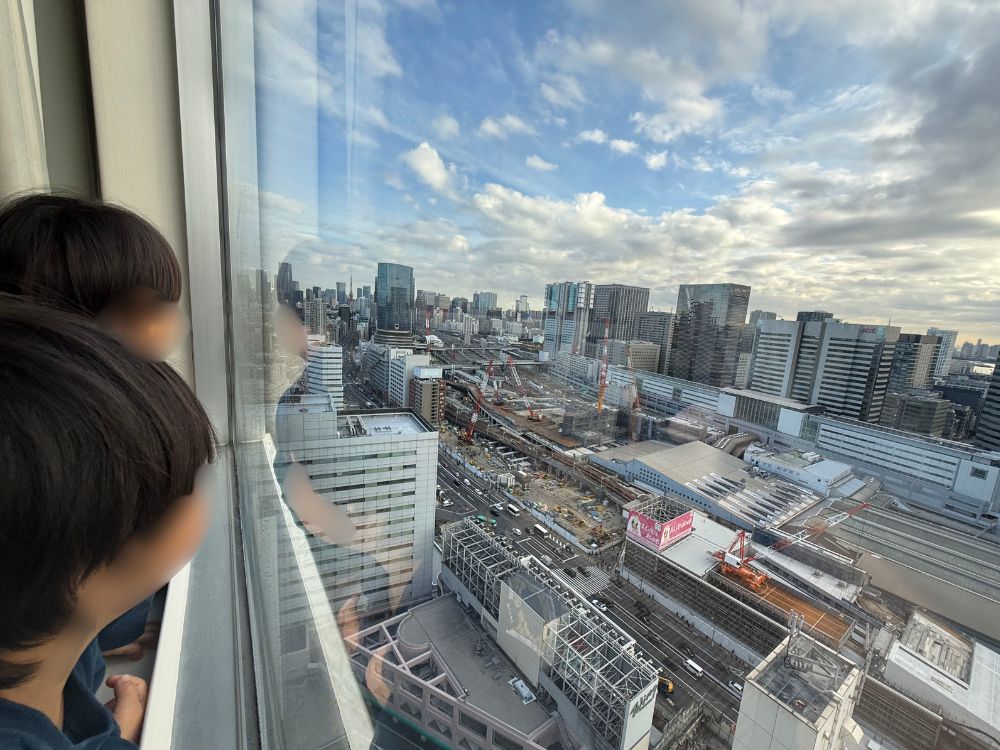
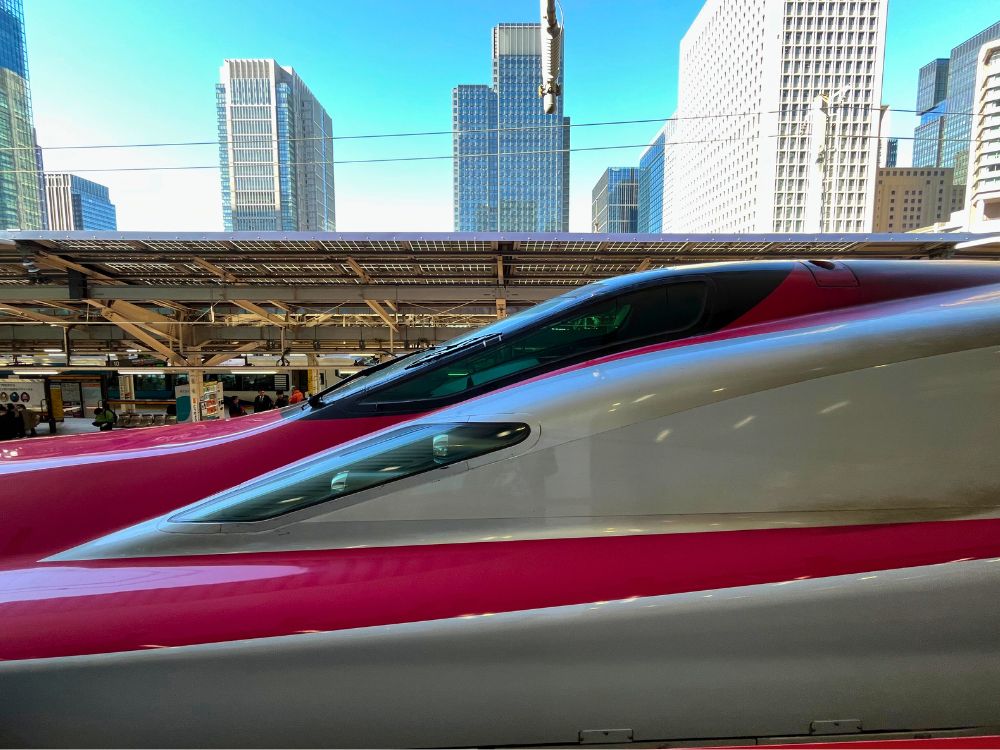
Traveling from Tokyo to Akita Station with a 2-year-old and a 4-year-old! I’ll be sharing detailed tips to make the journey easier for parents, along with specific things to watch out for when taking the Shinkansen with little ones.
Our schedule for this trip
I chose these specific time slots when booking because I wanted to make sure the kids could nap on both the way there and back.
[Outbound] Depart Tokyo 11:56 ⇨ Arrive Akita 15:50
[Inbound] Depart Akita 13:10 ⇨ Arrive Tokyo 17:04

While you don’t have to worry about specific departure times with non-reserved seating, the Komachi train consists entirely of reserved seats, so I made sure to decide on our schedule well in advance.
All aboard! How to enjoy the wait at Tokyo Station
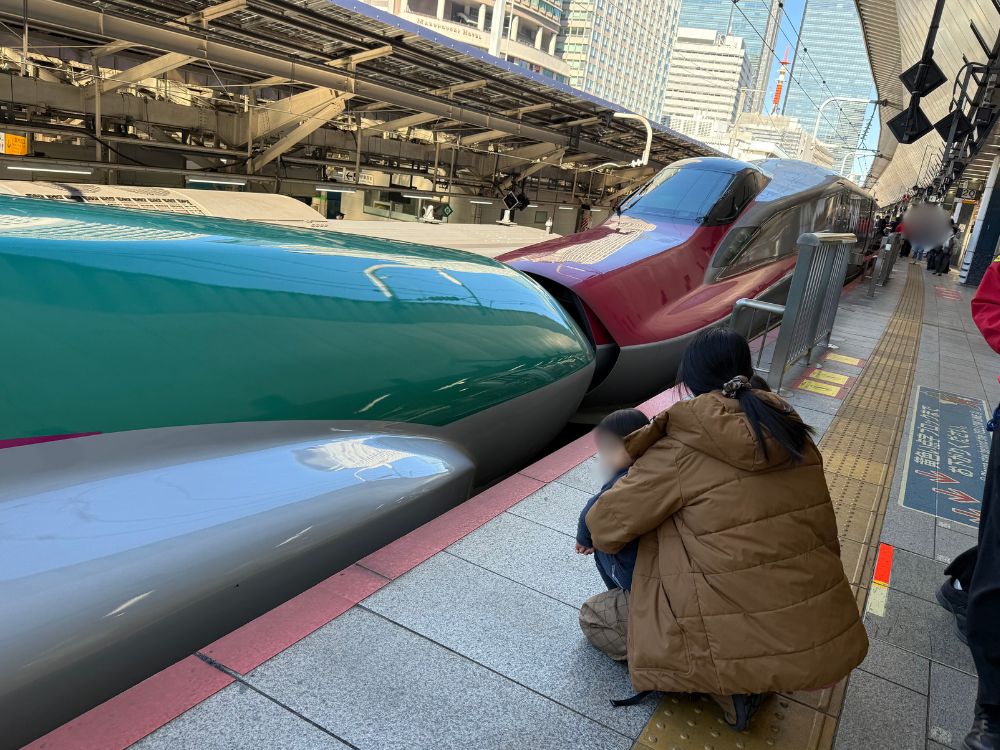
We arrived at Tokyo Station around 10:30 AM. After picking up some food and snacks at the station, we headed toward the platform. Until our scheduled departure at 11:56, we passed the time watching the Shinkansen trains pulling in one after another, as well as the local trains on the adjacent tracks.
Trains that we saw!
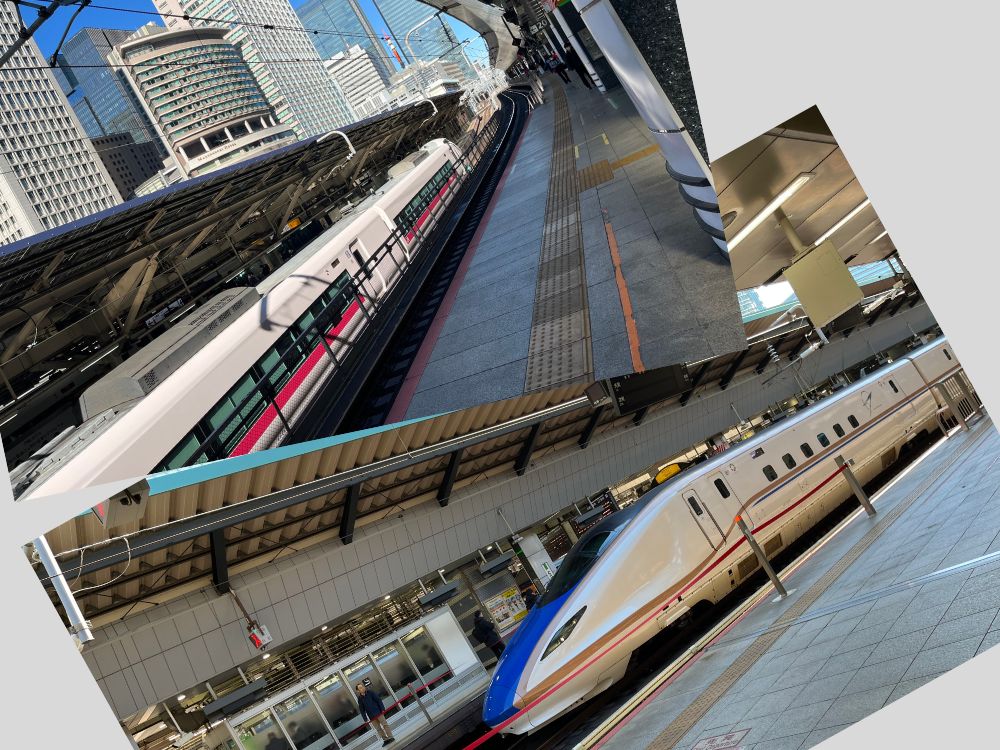
The Hakutaka (a popular Hokuriku Shinkansen train!), the Toki, the Yamabiko, and more.
Local lines (Platforms 9 & 10):
The Saphir Odoriko, the Tokiwa, and the Ueno-Tokyo Line.
It was a bit chilly while we waited, but as fellow train enthusiasts, the kids and I had a blast taking it all in.
You can catch the famous “coupling” of the Hayabusa and Komachi trains near Car 10.
How the kids spent their time on the Shinkansen
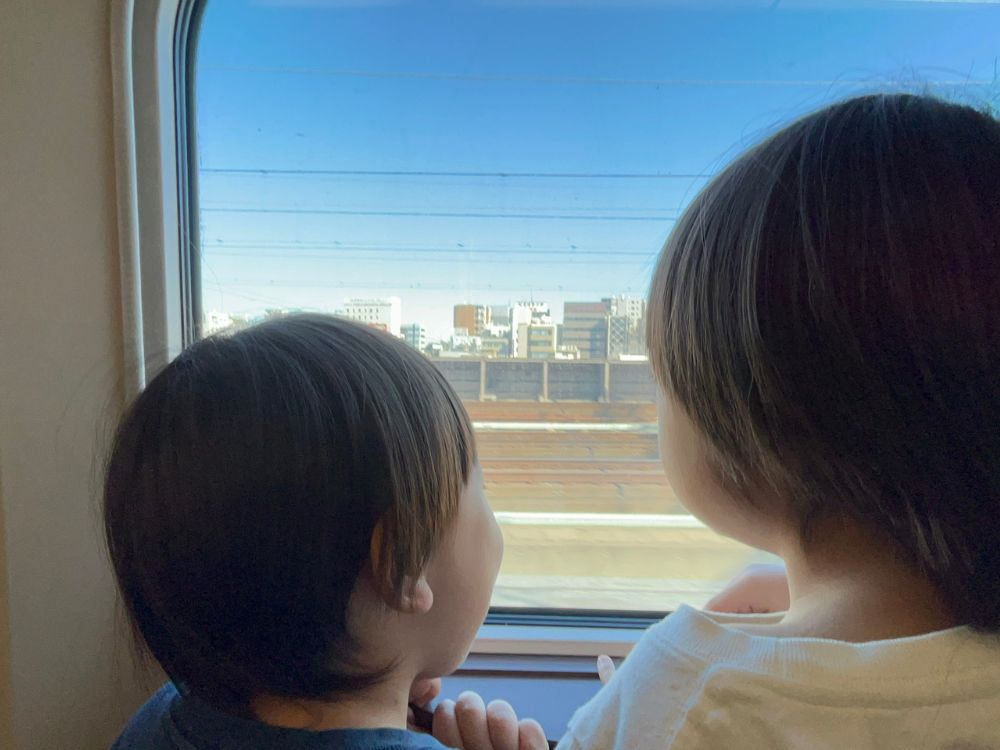
Right after departure, the kids were absolutely thrilled watching all the other trains zoom past our window!
Just after passing Omiya Station, you can spot the Railway Museum, and for a while, you get a beautiful, clear view of Mount Fuji.
We enjoyed the food we picked up at Tokyo Station, but about an hour into the trip… as expected, the “Can I use the iPad?” chorus began (lol).
Part of me really wanted them to keep looking out the window, but I totally get how kids can get bored during a long trip, so I handed the iPads over to both of them.
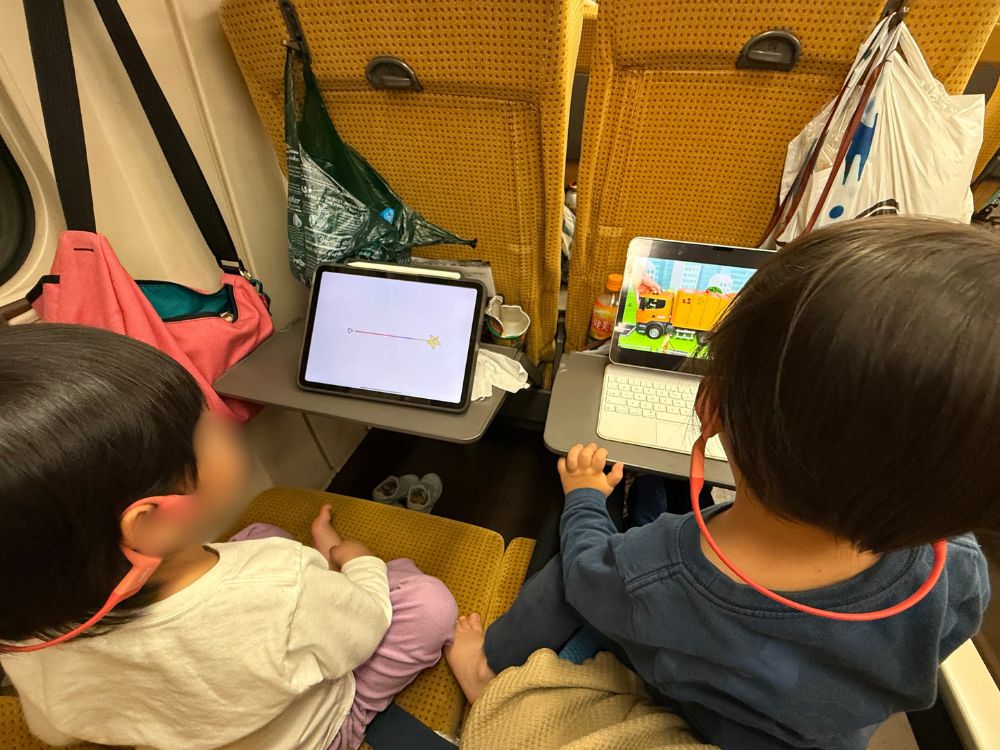
After that, my younger son napped for a little over an hour, and my eldest managed to squeeze in about 30 minutes of sleep.
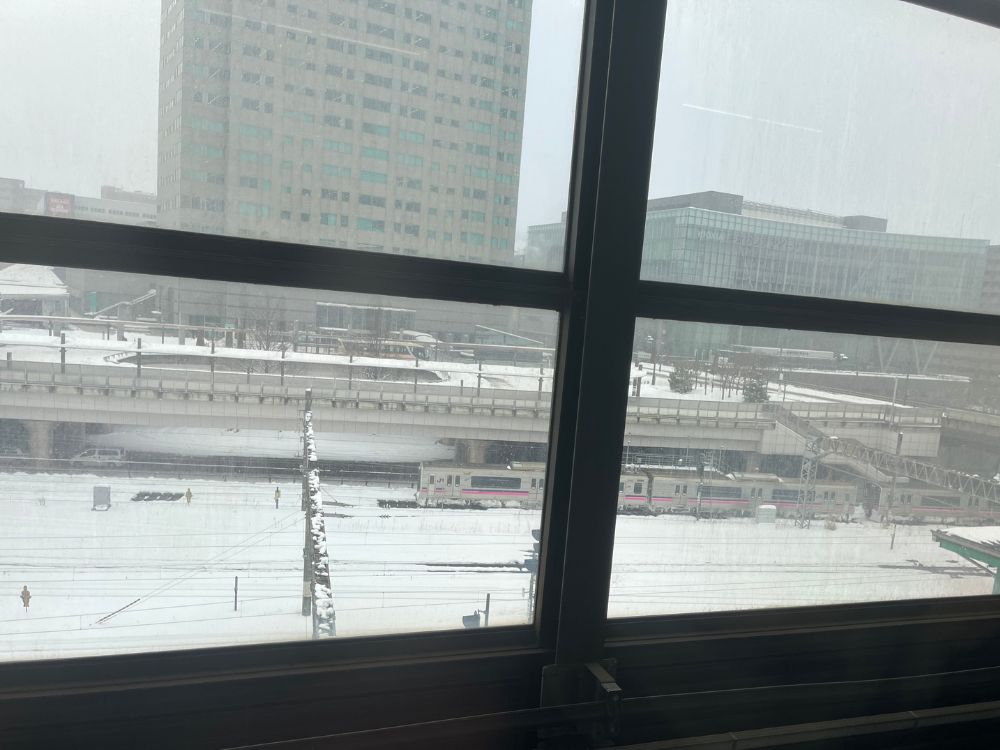
When they woke up, the view outside the window was a world of pure white snow!!
We spent the rest of the time simply gazing out at the pure white world passing by.
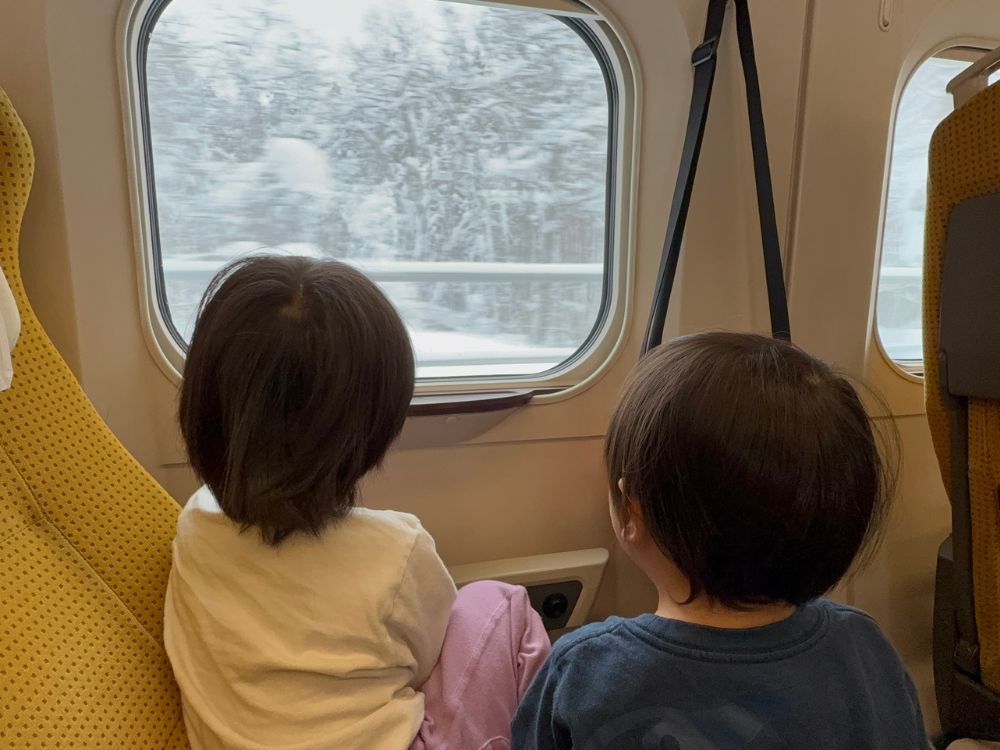
It started getting a bit chaotic (lol). How we spent the final hour.
As we got within the final hour of our trip, the kids—as you’d expect—started getting a bit restless and bored.
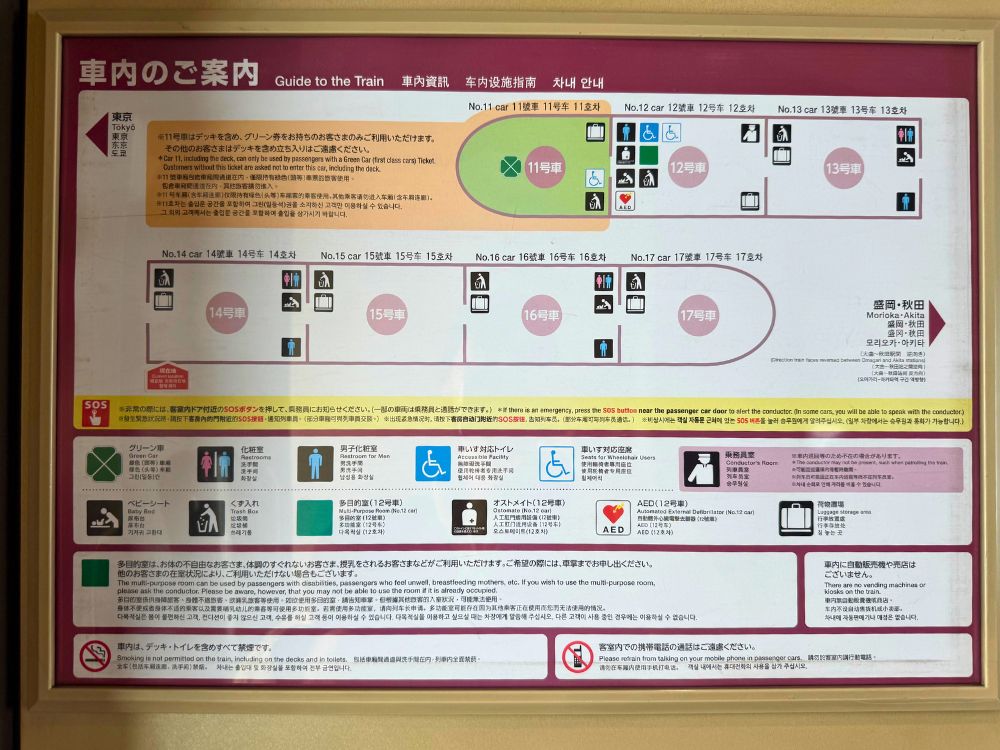
We went to the restroom together, and since the train wasn’t crowded, we decided to go on a little “train exploration” to pass the time.
Utilizing the Multipurpose Room (Tamokuteki-shitsu)
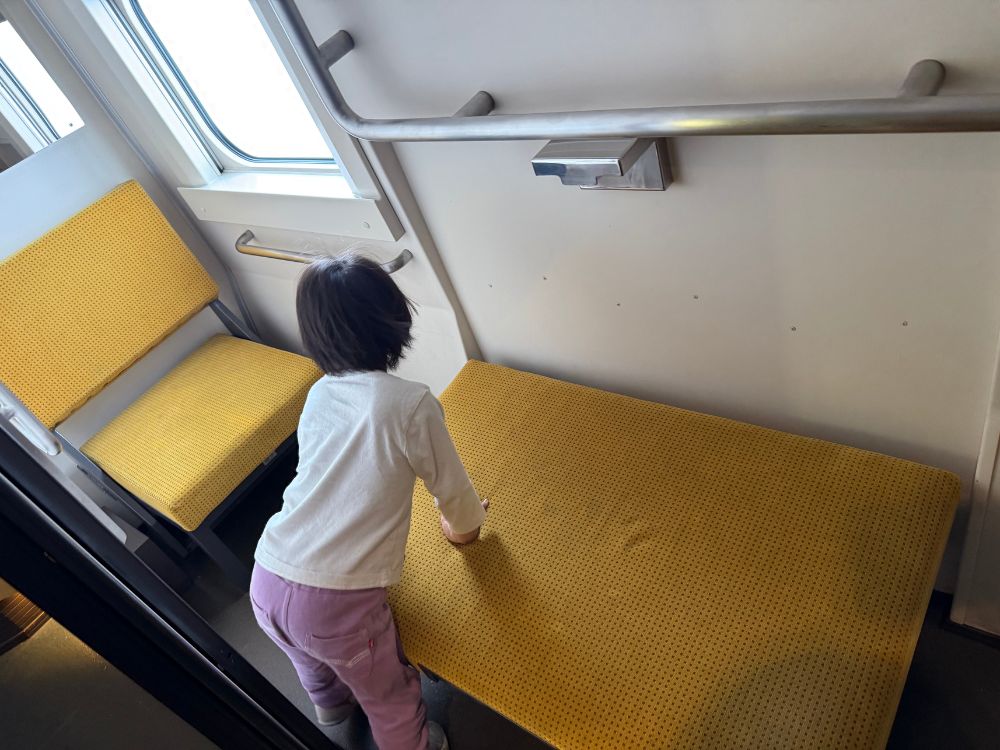
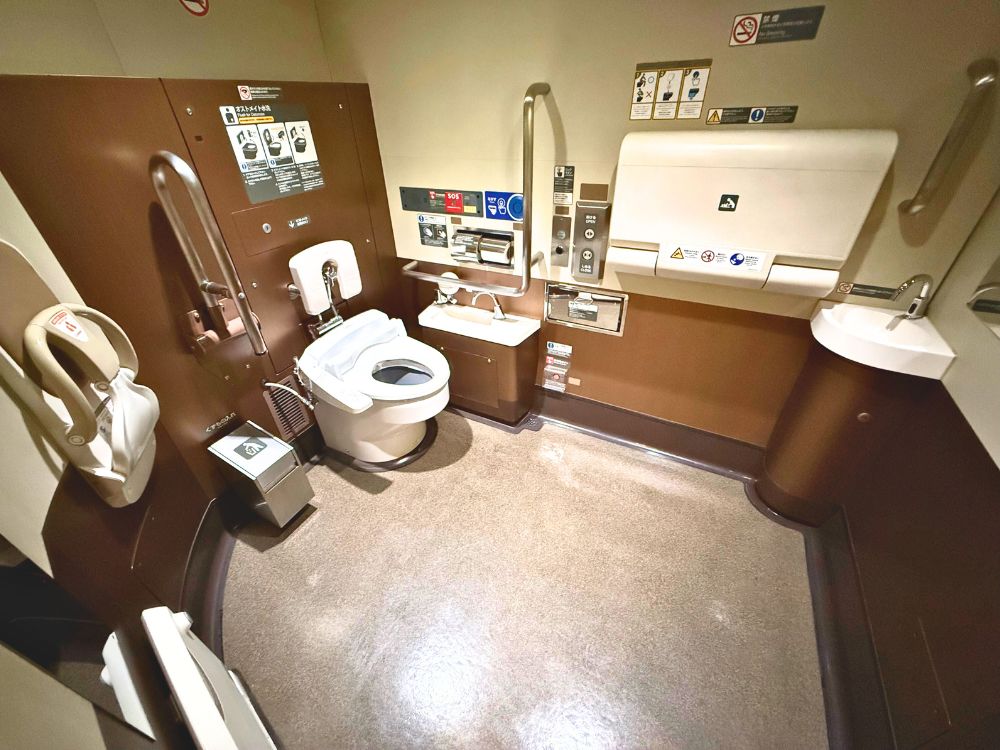
The Komachi features a multipurpose room (Tamokuteki-shitsu) in Car 12. While it’s primarily a barrier-free facility, it can also be used for those feeling unwell to lie down, or as a space for changing clothes or breastfeeding.
Actually, this was our second Shinkansen trip. The last time we took the Hayabusa to Hakodate, my younger son was only two months old. Back then, whenever I nursed him, my eldest would always want to be right there with us, so this room was a lifesaver.
As I nursed this time around, I told the kids, “I used to nurse you in a room just like this when you were little.” Unlike on a plane, there are no seatbelts to worry about, so you have a lot more freedom to move around.
Japanese-quality restrooms!
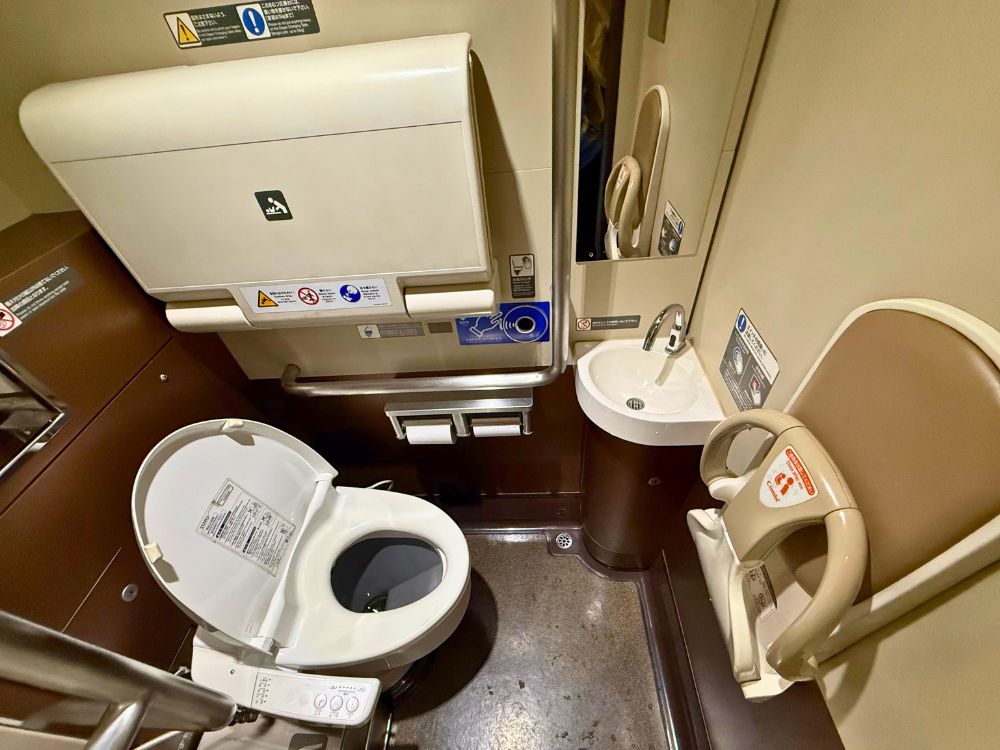
The restrooms themselves are compact, but they’re equipped with diaper changing tables and baby chairs, which really gives you peace of mind.
There are also spacious, wheelchair-accessible restrooms available.
Things you should know specifically about the Shinkansen
I’ve put together a summary of the key points to watch out for that I noticed during this trip.
Tips for not getting lost at Tokyo Station
Tokyo Station is so complex that even Japanese locals get lost there (trust me, with my terrible sense of direction, I was wandering all over the place! lol). The most reliable way is to just ask a station staff member. Also, there are Shinkansen icons and illustrations everywhere, so as long as you follow those signs, you should be able to make it!
Check the timetable carefully
Shinkansen trains arrive and depart one after another in quick succession. Even if you’re at the right platform, the train currently stopped there might be the one scheduled right before yours, so be sure to double-check the departure time!
Be speedy when getting on and off.
At Tokyo Station, the time between cleaning and boarding is surprisingly tight. Also, at intermediate stations, the train may only stop for about a minute. Especially when the train is running late, they try to keep the stopping time as short as possible to get back on schedule. That’s why many people gather their luggage and line up at the exit before the train even arrives at the station. On my way back, I saw some travelers from abroad who weren’t ready and almost missed their stop, so moving early is a golden rule!
Watch the gap between the train and the platform.
Around Car 13 of the “Komachi” we rode this time, there was a gap of about 20 cm between the train and the platform. You need to be very careful when handling strollers and luggage.

My younger son is at that age where he wants to do everything himself. Since it looked like he might fall if I let him walk, I put him in a baby carrier. The gap is wide enough that a small child could actually fall through, so please be extremely careful with their footing.
It’s surprisingly shaky!
People often say, “Japanese Shinkansen don’t shake,” and while it’s true they feel incredibly smooth and quiet when you’re seated, you’ll definitely feel some swaying when you’re standing and moving around. It’s best to hold onto something for support when walking through the aisles with children to stay safe!
Regarding luggage storage areas.
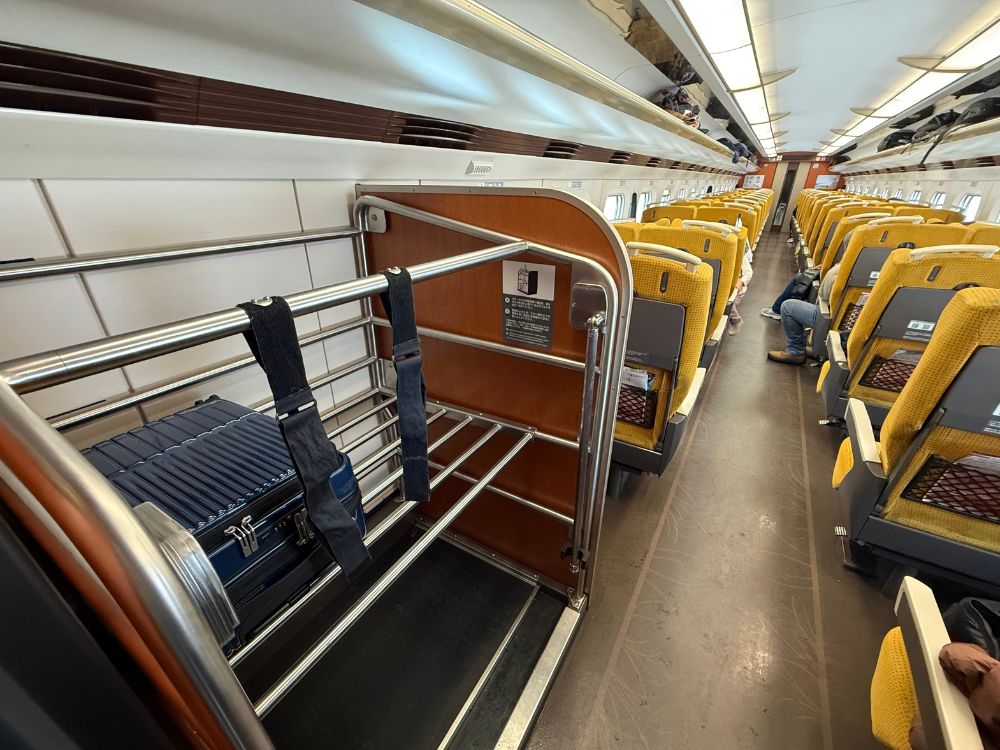
In Japan, you almost never hear stories about luggage being stolen or going missing after being stored. I think you can feel perfectly safe leaving your bags on the overhead racks.
By the way, the legroom is so spacious that we actually placed our luggage on the floor in front of our seats to prevent our son from falling off the chair while he was sleeping.
Enjoy Your Trip!
Compared to flying, the Shinkansen offers more spacious seats and excellent facilities, including large restrooms and diaper-changing stations. Since there are no seatbelt signs, it’s surprisingly easy to travel with small children.
On our way back, the train was nearly full from Sendai to Tokyo, so we had to be a bit more mindful of those around us. However, if you choose a less crowded time, you can move around quite freely. I hope this article helps make your next Shinkansen trip with kids even smoother!