
While many websites introduce the highlights of Hikone Castle, I’d like to share its charms in detail from a parent’s perspective so you can get a real sense of what the experience is like.
日本語版はこちら↓
About Hikone Castle
The Real Deal from 400 Years Ago, Not a Reconstruction
Unfortunately, many Japanese castles were lost to war or fire and are now modern reconstructions. However, Hikone Castle is a precious site where the original castle tower and buildings—completed in 1622 after about 20 years of construction—remain intact. It is also famous as one of the five castles designated as National Treasures in Japan.
This castle was built in the early Edo period, just as the Sengoku (Warring States) period came to an end. During the Edo era, it served as the seat of the Hikone Domain, ruled by the Ii family, who were high-ranking retainers of the Tokugawa Shogunate. Interestingly, the army of the first head of the family, Ii Naomasa, wore armor lacquered entirely in red, earning them the fearsome nickname “The Red Devils” (Akazonae). Because of this legacy, it is said that the soldiers at this castle continued to wear red armor throughout the Edo period. When you visit Shiga Prefecture, you’ll often see red konjac (a firm, jelly-like health food) sold as a souvenir; its unique color actually originates from this “Red Devil” tradition!
It isn’t just Hikone Castle itself; the vast gardens (Genkyu-en), the moats surrounding the fortress, and the original layout of the castle town are all preserved, allowing you to enjoy the atmosphere of the era throughout the entire area.
By the way, there are only 12 castles in Japan that still have their original towers. Since they are scattered across different regions, Himeji Castle is relatively easy to access from Kobe, while Matsumoto Castle is convenient to visit from Tokyo.
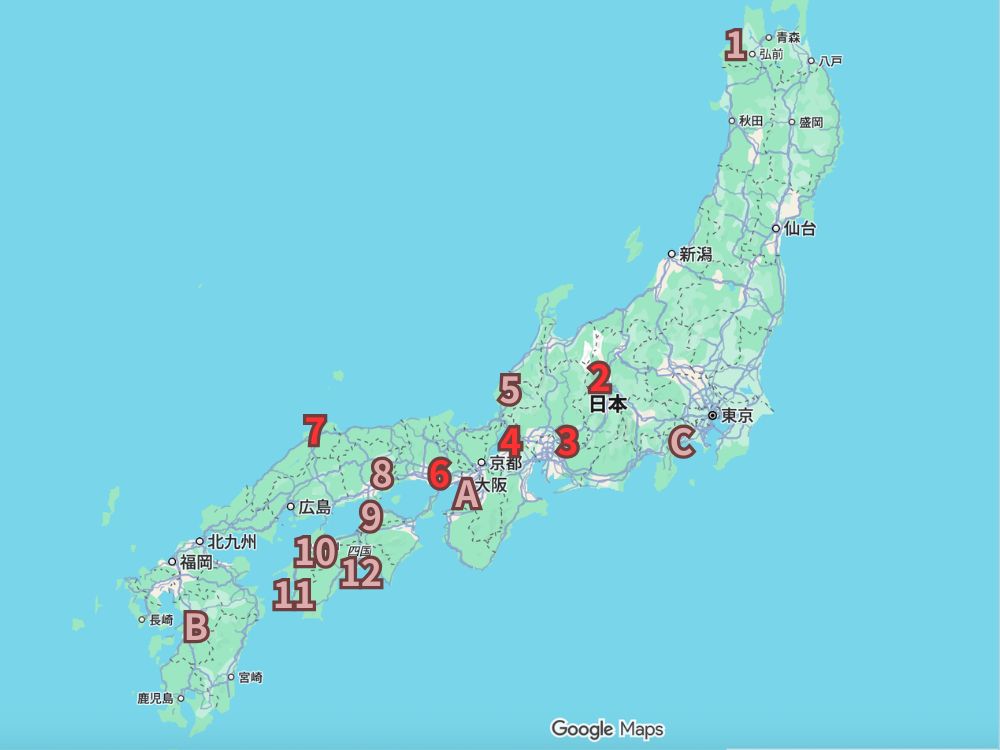
- Hirosaki Castle (Aomori Prefecture)
- Matsumoto Castle (Nagano Prefecture)
- Inuyama Castle (Aichi Prefecture)
- Hikone Castle (Shiga Prefecture)
- Maruoka Castle (Fukui Prefecture)
- Himeji Castle (Hyogo Prefecture)
- Matsue Castle (Shimane Prefecture)
- Bitchu Matsuyama Castle (Okayama Prefecture)
- Marugame Castle (Kagawa Prefecture)
- Iyo Matsuyama Castle (Ehime Prefecture)
- Uwajima Castle (Ehime Prefecture)
- Kochi Castle (Kochi Prefecture)
In addition, while they are reconstructions, A. Osaka Castle (Osaka Prefecture), B. Kumamoto Castle (Kumamoto Prefecture), and C. Odawara Castle (Kanagawa Prefecture) are very famous. Even if the castle tower itself is a reconstruction, the stone walls often remain exactly as they were back then, and the rebuilt towers are based strictly on historical records, so you can still feel the atmosphere of the past.
Also, because they are modern reconstructions, they are equipped with elevators, making them wonderful spots where you can tour the castle tower even with a wheelchair or a stroller.
Other famous sites include Hiroshima Castle and Nagoya Castle, but they are currently closed for reconstruction work.
Aiming for World Heritage Status
Hikone Castle is currently aiming to be registered as a UNESCO World Heritage site. Under the World Heritage system, assets that hold the same type of value from the same era cannot be registered separately. Since Himeji Castle was registered back in 1992 as a masterpiece of human creative genius—representing the wooden castle architecture of the early 17th century—it beat Hikone Castle to the punch.
Because of this, Hikone Castle is reportedly taking a different approach for its own registration. The day it officially becomes a World Heritage site might be just around the corner!
About Access
Parking
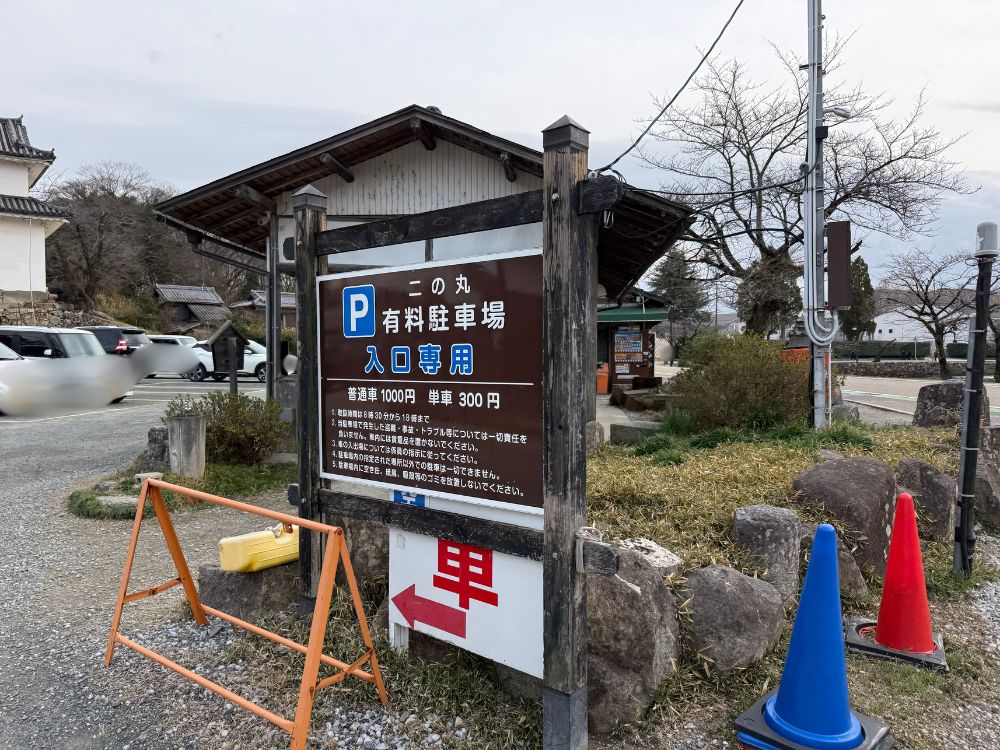
There are several parking lots located within the castle walls of Hikone Castle. The fee was 1,000 yen ($6.50) per day, but please note that they are only open until 6:00 PM.
Right outside the parking lot, there was a mysterious-looking mailbox.
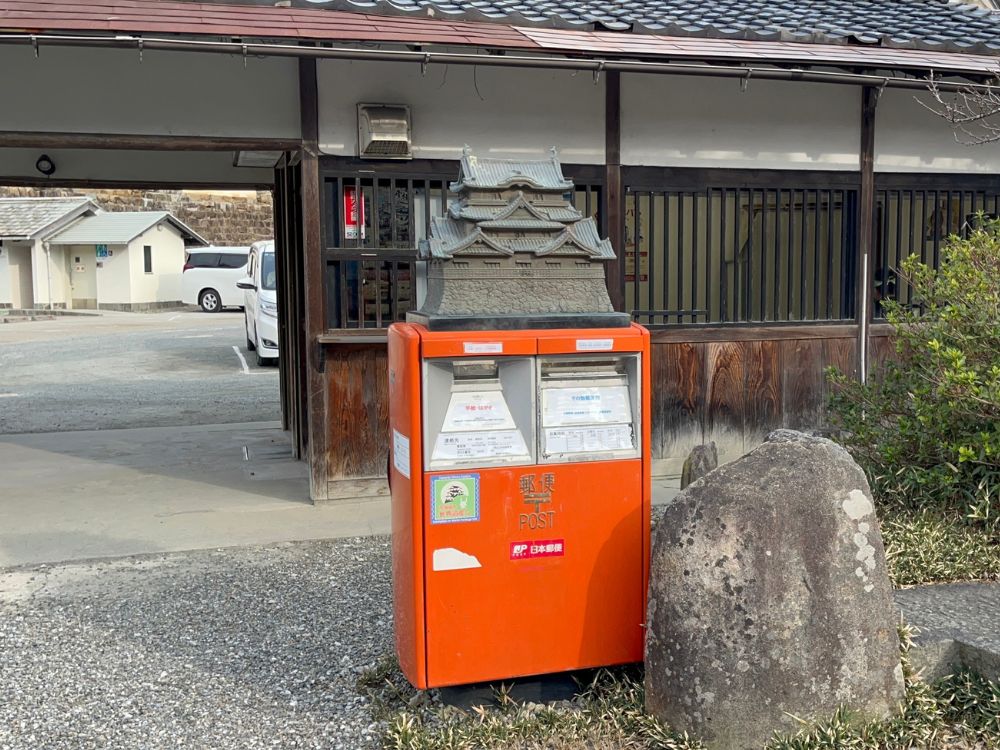
The parking lot shown on the map below, located just a short distance away, offers hourly rates and stays open longer, so it might be a cheaper option if you’re just stopping by or planning to stroll around the town.
Off to explore Hikone Castle!
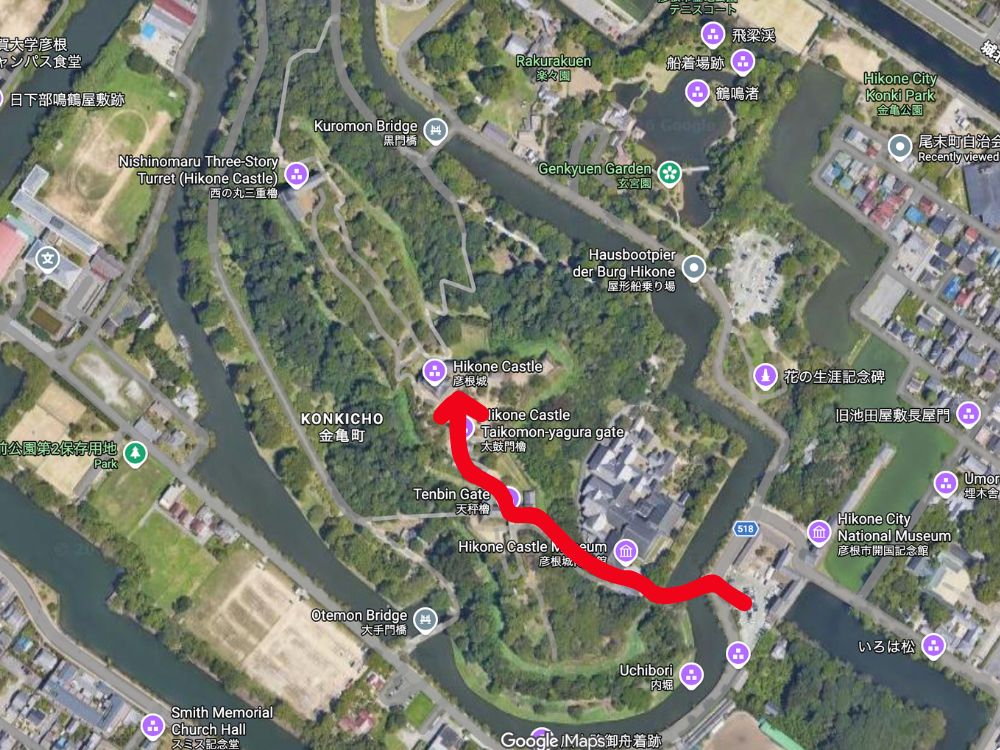
Since I didn’t have much time on this visit, I parked in the lot closest to the gate and followed this route up to the castle tower. It took about an hour and a half for the round trip.
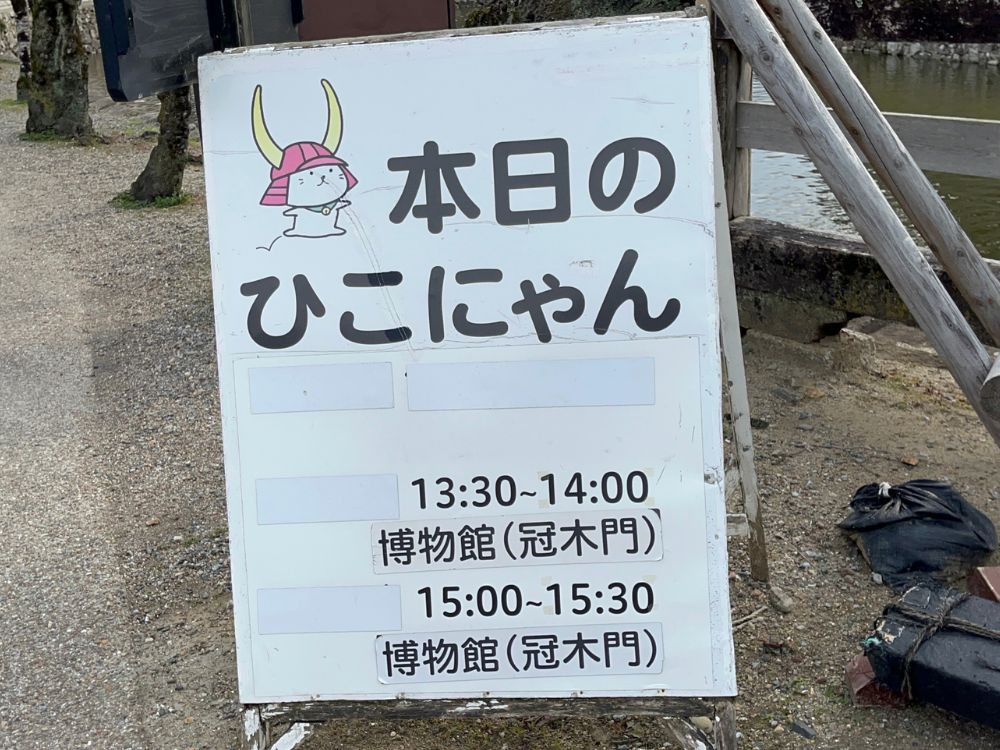
I found Hikonyan!
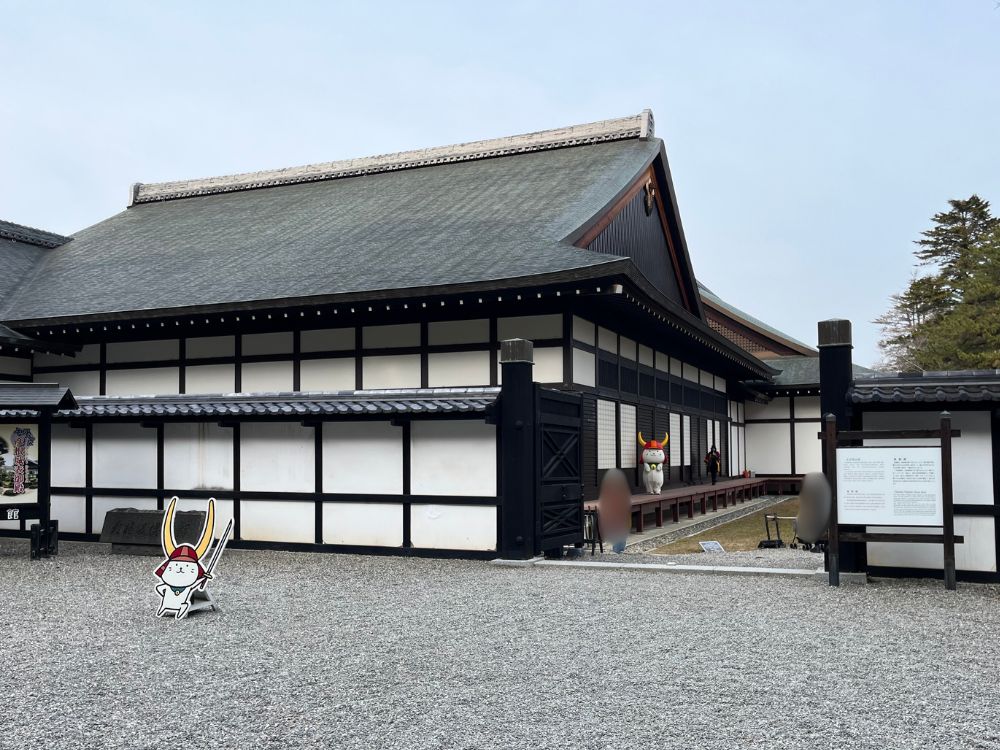
He is a legend among the 3,000+ “Yuru-chara” (regional mascot characters) in Japan, having famously taken first place in the very first popularity contest.
I spotted a sign right by the ticket booth—and better yet, I actually got to meet the real Hikonyan in person!
Hikonyan is modeled after the legendary “maneki-neko” (beckoning cat) that is said to have saved the second feudal lord, Naotaka Ii, from a lightning strike. He even wears the iconic red-lacquered “Akasonae” helmet of the Ii clan.

It seems Hikonyan appears around Hikone Castle every day. If you search for “Hikonyan appearance schedule,” you can find the specific times and locations for the day. Be sure to check it out!
The route up to the castle
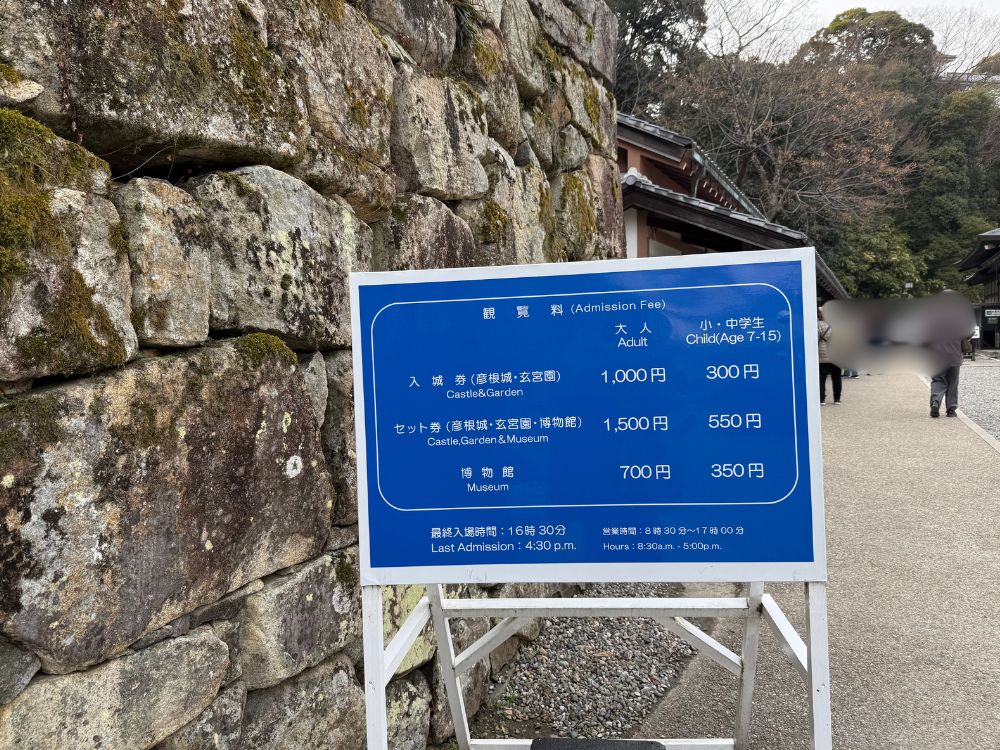
After getting my fill of Hikonyan, it was finally time to head for the castle tower.
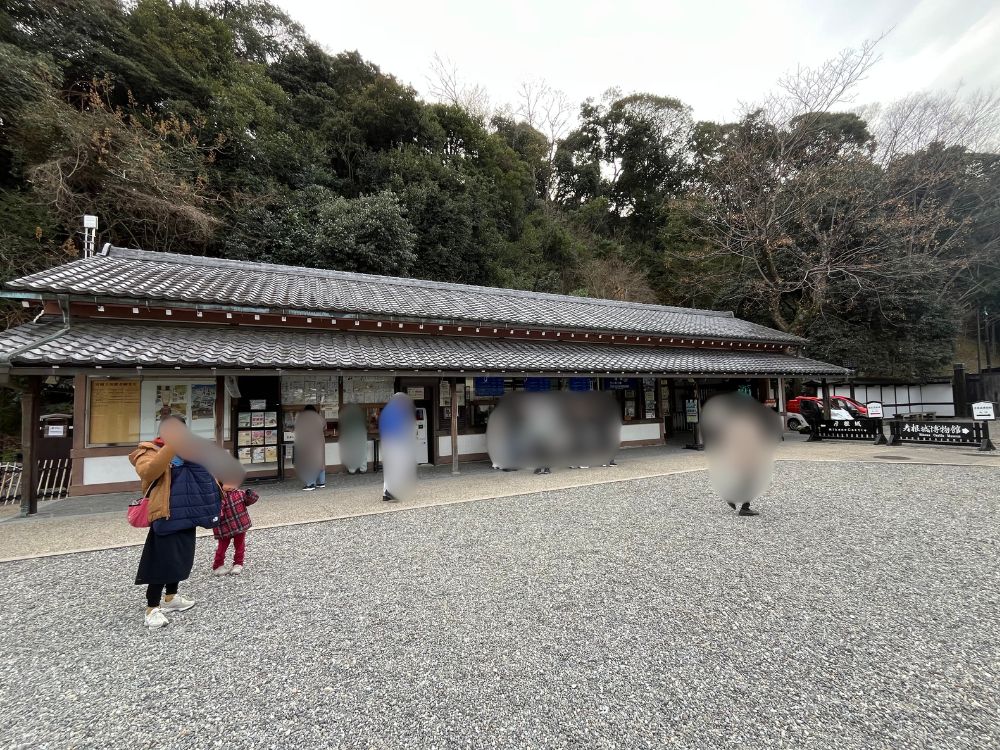
First, I headed over to the counter to buy a ticket.
You buy your tickets here. The path leading straight back from this point takes you right up to the castle tower.
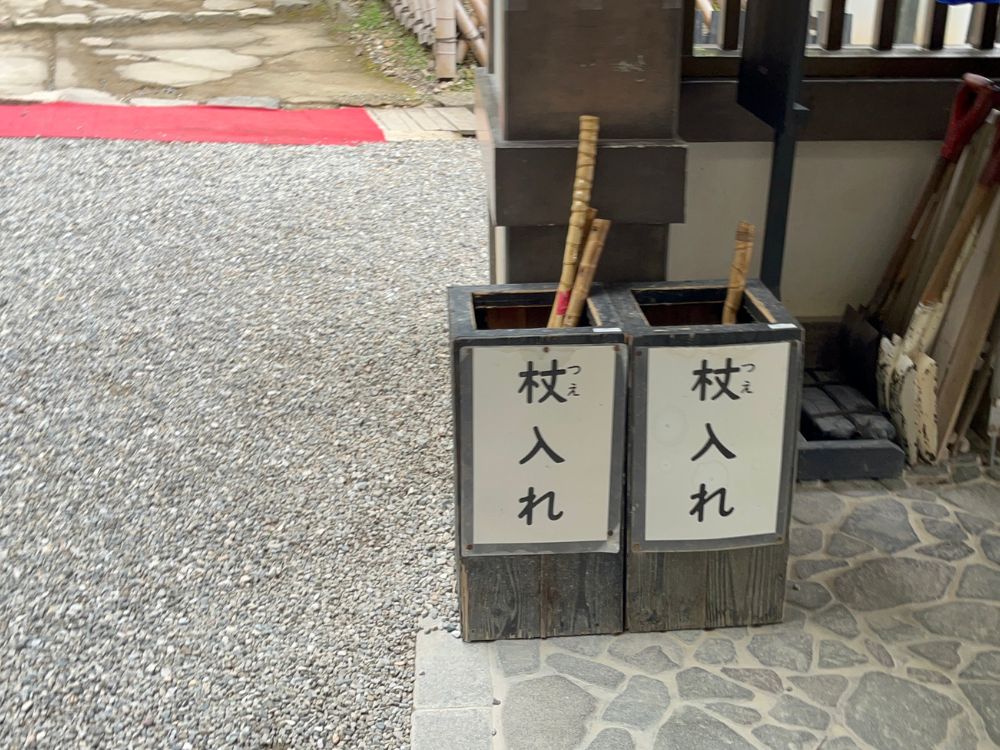
By the way, walking sticks are available to borrow for free.
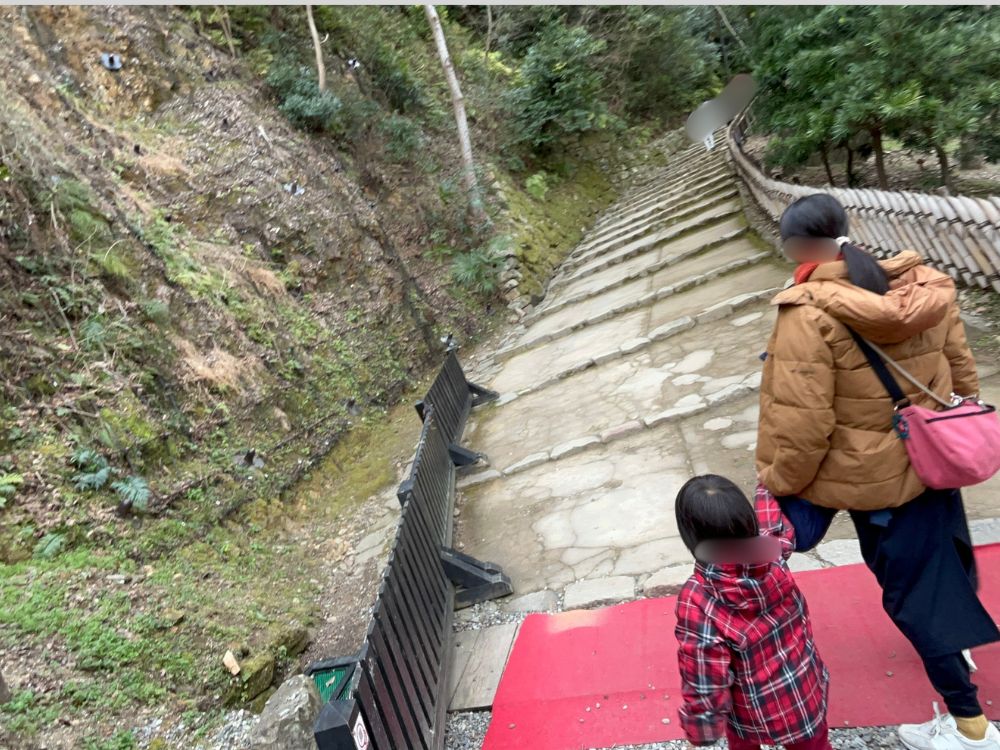
The stairs you’ll climb are long, but each step is quite shallow.
The path curves slightly despite the clear view, and the surrounding walls are steep, rugged cliffs designed to be difficult to climb.
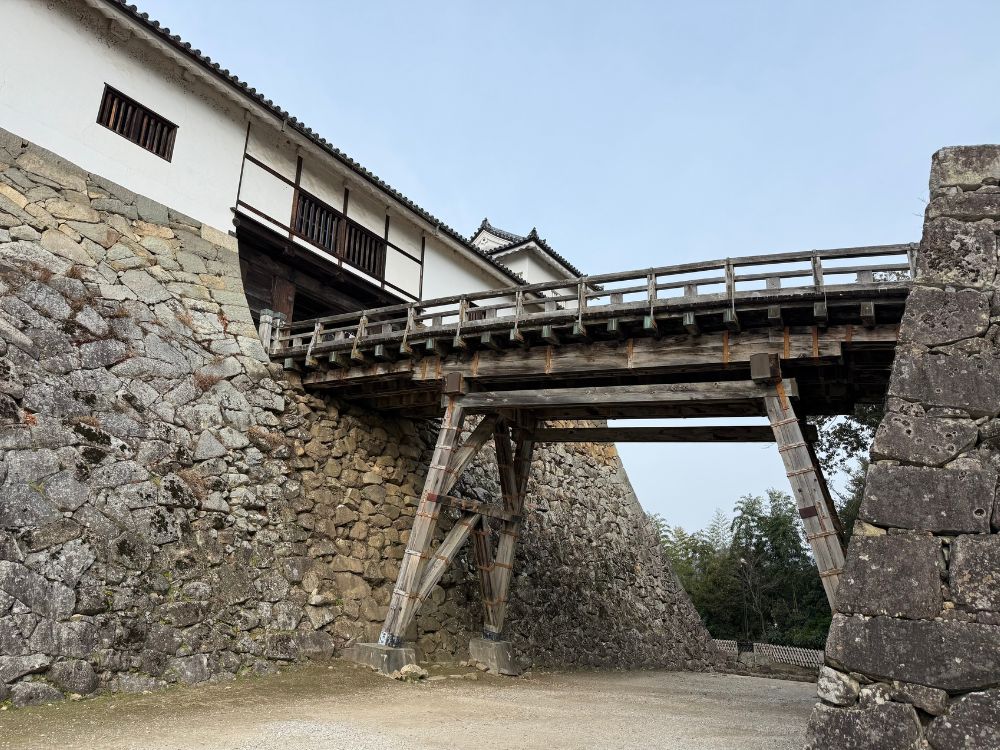
Once you reach the top, you’ll find yourself in front of the castle gate. You are forced to loop around and cross a bridge to get inside.
Since there is nowhere to hide, it would be terrifying if you were on the attacking side.
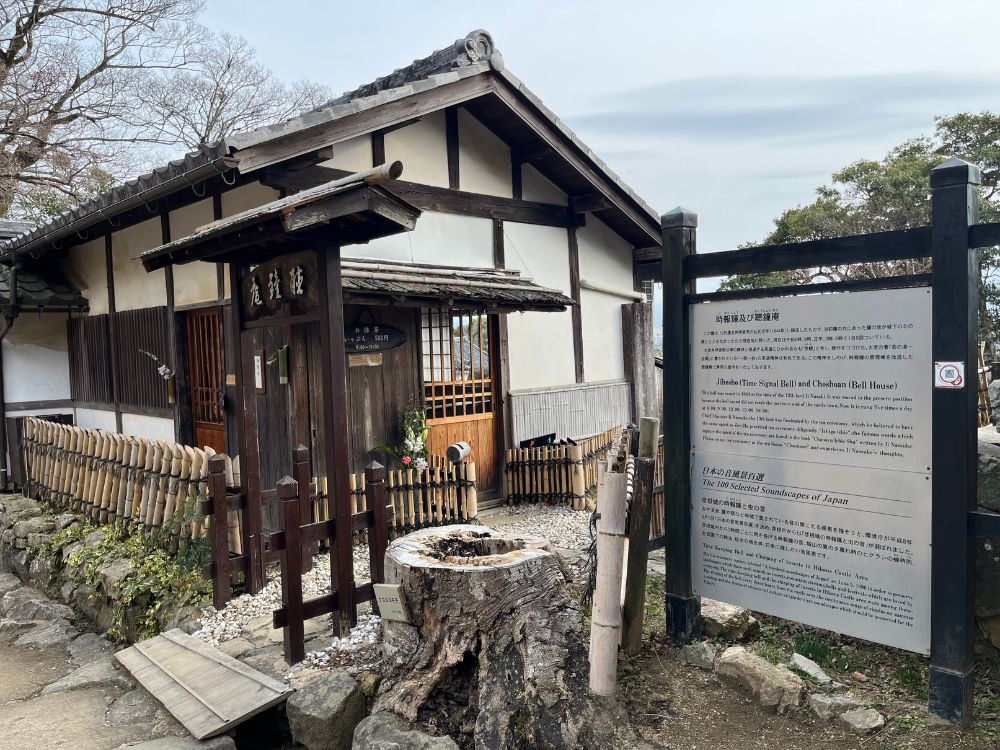
Now, once you pass through the gate and climb for a bit, you’ll come across a tea house where you can take a break.
Just a little further up, you’ll encounter a flat Hikonyan cutout before finally reaching the castle tower.
While many castles across Japan only have their stone walls remaining, the true charm of Hikone Castle is that the original castle tower still stands exactly as it was (and in such a brilliant white!).
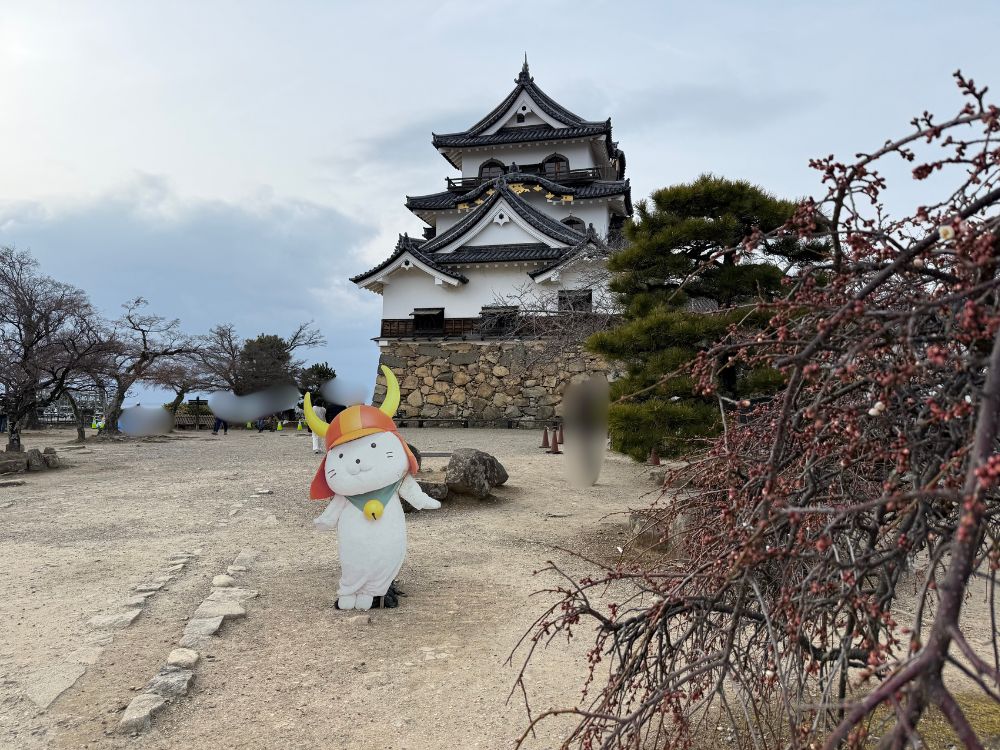

When visiting a castle, you can make so many discoveries by imagining yourself as either an attacker or a defender while heading toward the Tenshu (the main castle tower). If you find yourself wondering, “Why did they build it this way?” you’ll often find the answer waiting for you on the nearby information boards. (From your history-loving Dad)
Inside Hikone Castle…
Upon entering the Tenshu (main castle tower), there is a getabako (shoe locker) where you must remove your shoes before going inside.
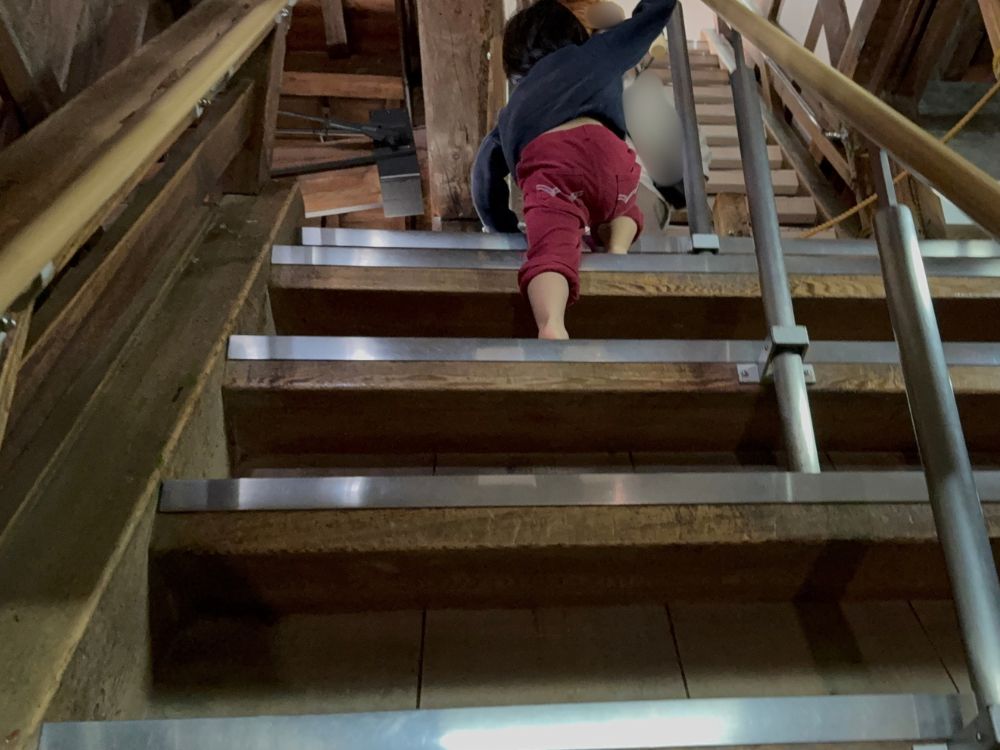
Once inside, you’ll be faced with stairs that are steeper than anything you’ve likely ever seen!
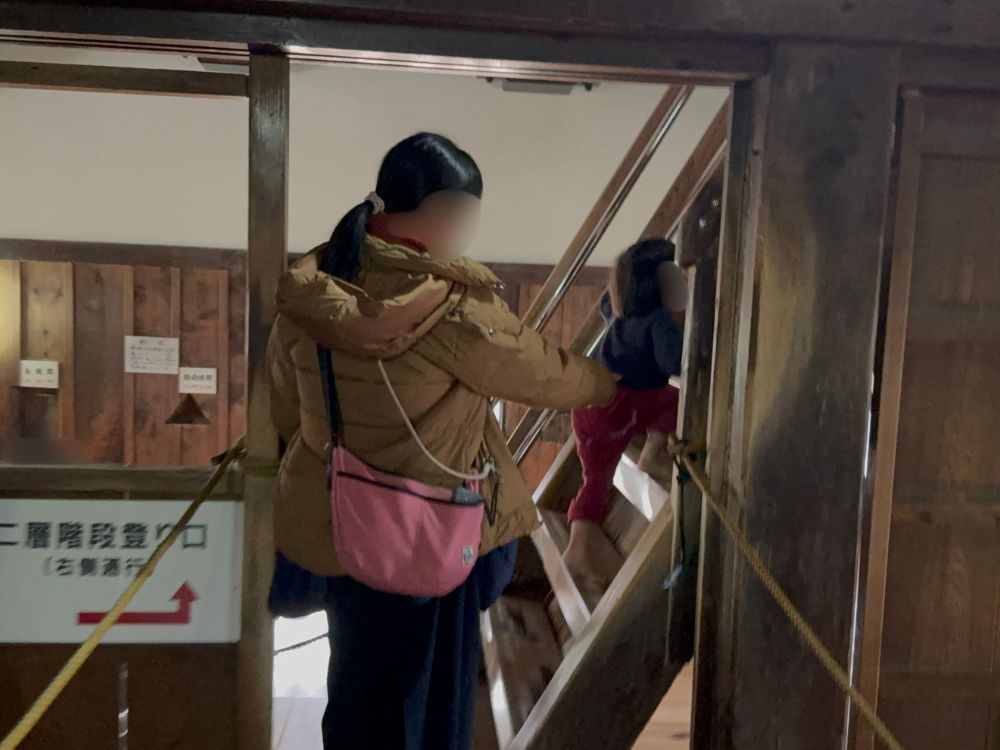
The stairs are at a surprising 62-degree angle. This was reportedly designed to make it difficult for enemies to climb, and it remains exactly as it was back then.
My eldest son happily makes his way up.
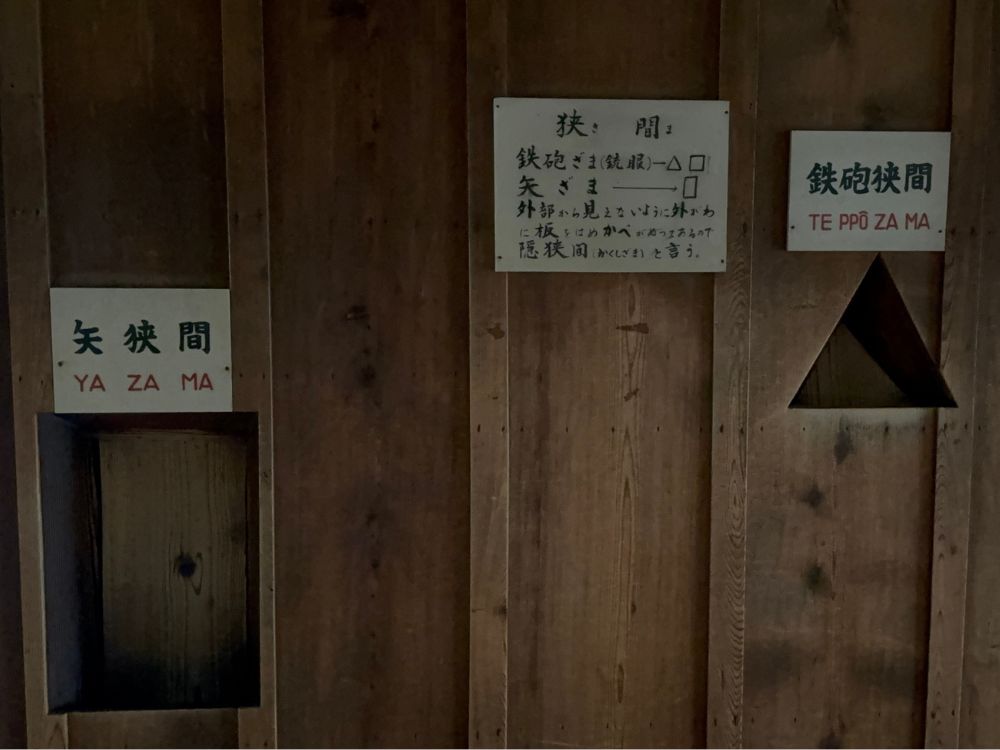
Along the way, you can also see various hazama (arrow slits) in the walls as you look around.
While there are very few instances where castles with these types of main towers were actually attacked—with exceptions like the Siege of Osaka or the conflicts during the end of the Edo period—these holes were designed for offensive use. You can find them built into the outer castle walls as well.
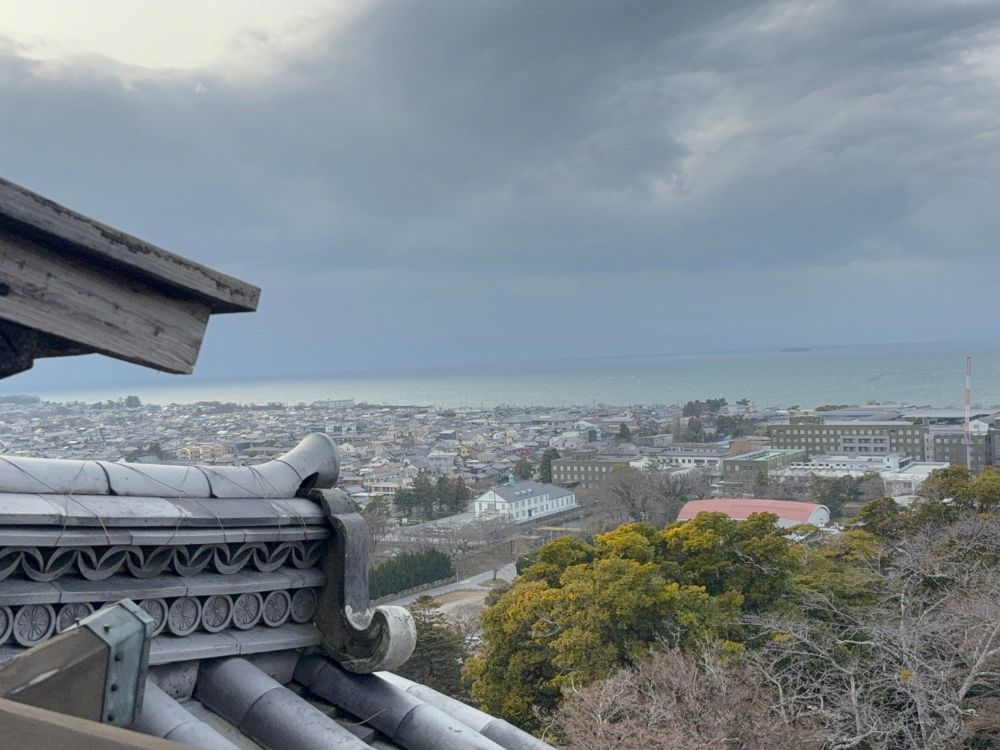
After climbing the steep stairs for about three floors, you reach the top level. From there, you can enjoy a panoramic view of Lake Biwa and the surrounding city.
It makes you realize what a crucial location this was, overlooking Lake Biwa for maritime transport and the Tokaido road to the south.
You might wonder if they used these steep stairs every day, but that wasn’t the case. Generally, the Tenshu was used primarily as a final line of defense in the event of a battle or as an observation post to keep watch over the surroundings.
Because of this, day-to-day government business was typically conducted in the residences located below.
Recommended Clothing
I recommend wearing pants or clothes that are easy to move in. Since you have to take off your shoes to go inside, and slipping and falling would be a serious matter, prioritize ease of movement!
I even had my eldest son take off his socks to walk around.
I saw some people in skirts, but they had to be extremely careful going up and down. Even if you assume no one is looking, you can’t exactly look up either, which made for some awkward moments (sweat).
Also, you have to climb quite a lot of stairs just to reach the Tenshu. Since it’s located on top of a hill, there is no shade; it felt like a place that would be very hot in the summer and cold in the winter, so I highly recommend bringing proper gear for the heat or cold!
About Strollers
Since the castle remains in its original historic state, it is not barrier-free. Because there are long flights of stairs even before you reach the Tenshu (main tower), using a stroller would be very difficult. For children who might not be walking yet, I highly recommend bringing a baby carrier!
Observation Space
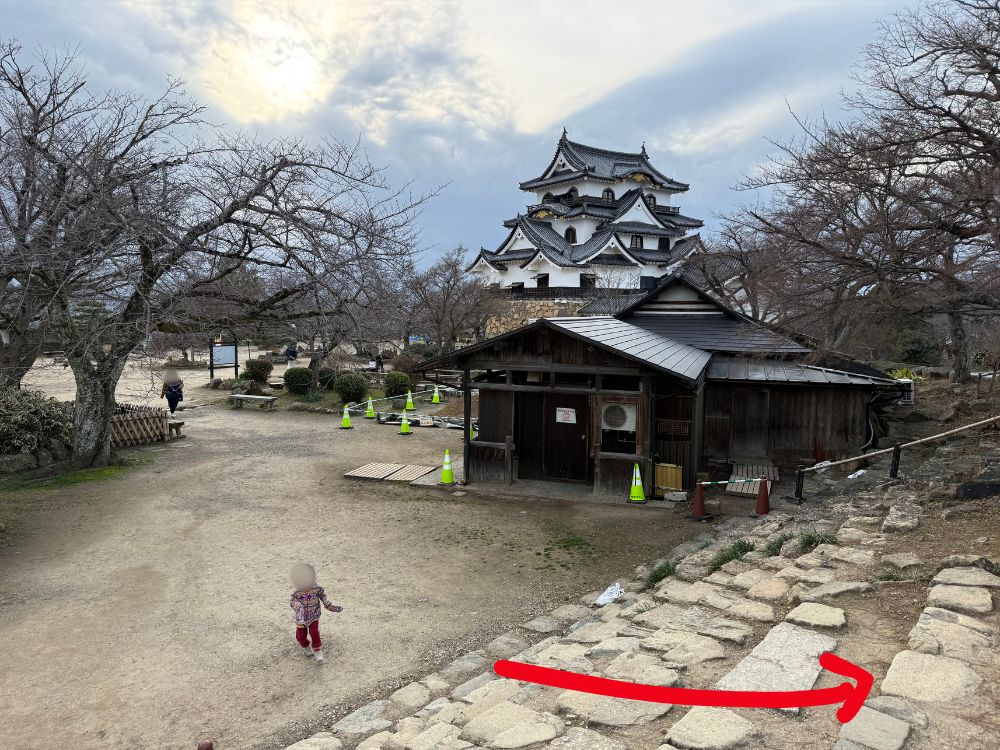
After exiting the castle and climbing a little further to the edge, you will find…
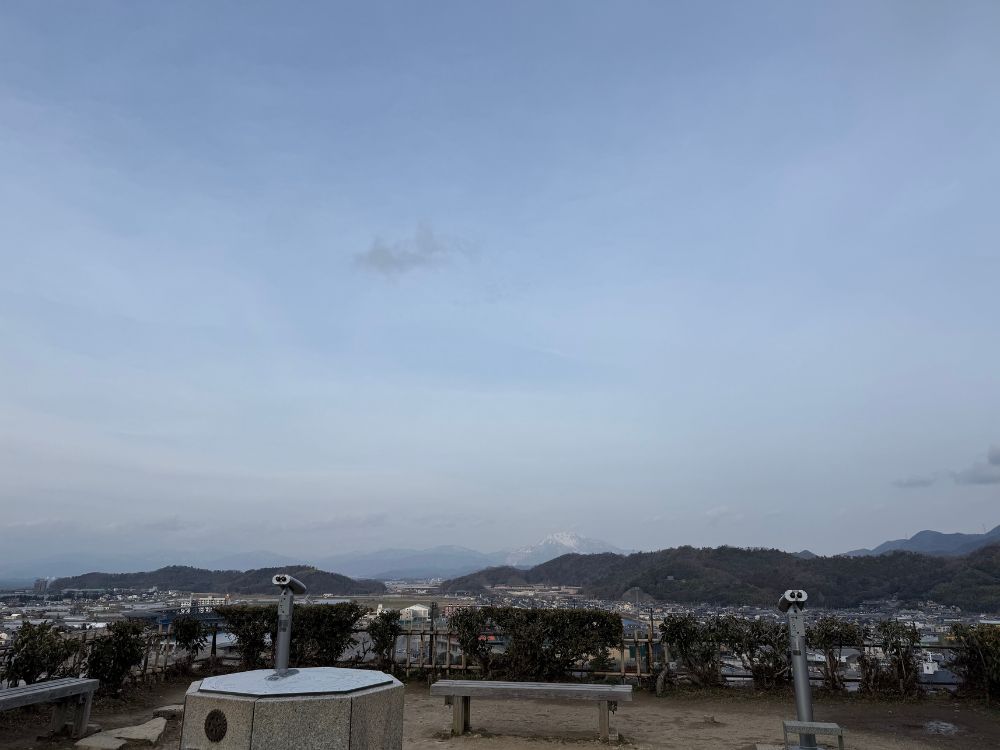
there is an observation space, and they even had telescopes available!
Closing Thoughts
I wouldn’t say I was originally interested in castles, but learning that this structure has remained standing for over 400 years—never destroyed and never overtaken—made me feel honored to step inside. It left me with a strong desire to see it preserved forever.
My husband, who loves history so much that he even studied it in university, was absolutely thrilled! (lol)
I also realized that children can enjoy it just as much as adults, though from a completely different perspective. While my younger son had to be carried due to an injury the day before, my eldest son actually did two full laps of the Tenshu from top to bottom! I think he treated it like a jungle gym (lol).
With so many plum and cherry trees planted around the grounds, I’d love to come back someday when they are in full bloom. I hope this helps you plan your own trip!
Find Great Hotel Deals Near Hikone Castle!