
Akita is buzzing with events in February, like the Yokote Kamakura Festival and the Namahage Sedo Festival. However, January seems to be the quiet off-season; when I looked it up beforehand, there didn’t seem to be much going on.
Since we didn’t rent a car, our travel range was limited. My youngest isn’t quite at the age to enjoy playing in the snow yet, and my eldest absolutely loves museums. I figured this was a sign we had to go, so we decided to pay a visit.
It was much more impressive than I imagined, and we had a great time, so let me show you what it’s like!
- Basic Info & Access
- From Oga Station to the Museum
- Fueling up at “Komachi” first!
- 2nd Floor: Humanities Exhibition Room
- 1st Floor: Nature Exhibition. Walking on Whale Bones!?
- An Unexpected Twist: No Taxis to be Found?
- 2nd Floor: Waku-Waku Exploration Room (Kids’ Discovery Area)
- The taxi finally arrived!
- In closing,
Basic Info & Access
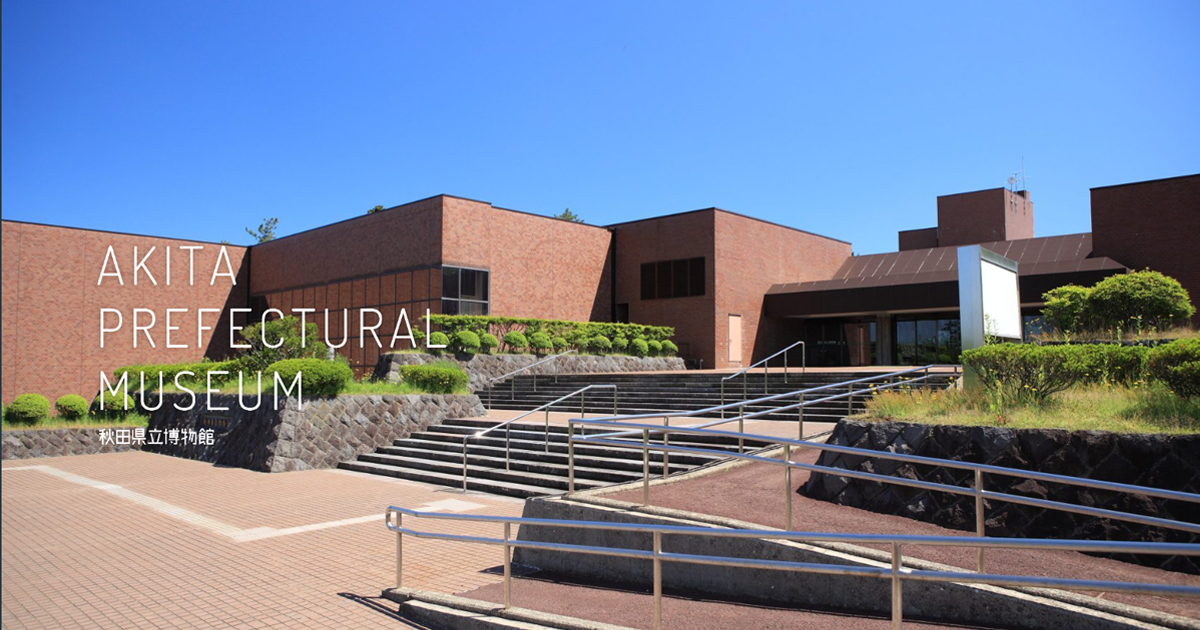
Fortunately, both admission and parking are free!
From Oga Station to the Museum
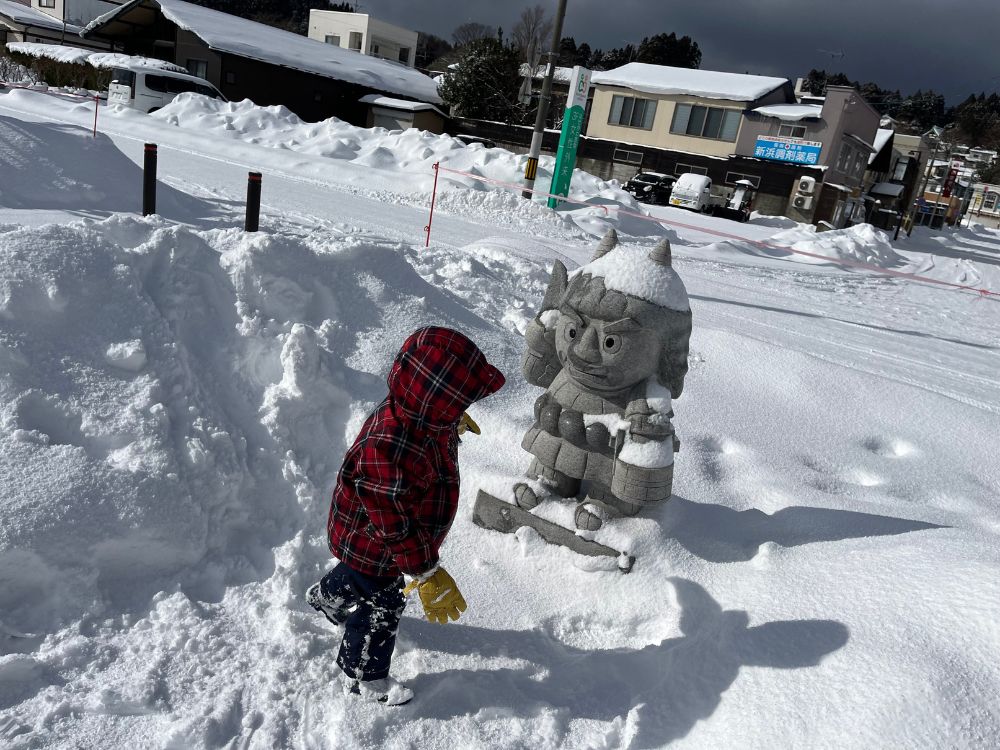
After arriving at JR Oga Station and playing with snow for a bit in front of the station…
We took the Oga Line back toward Akita to Oiwake Station. On the way, a lovely person struck up a conversation with us. When I mentioned we were heading to the Prefectural Museum, they shared a fascinating tip: you can actually walk over whale bones! That really got our hopes up.
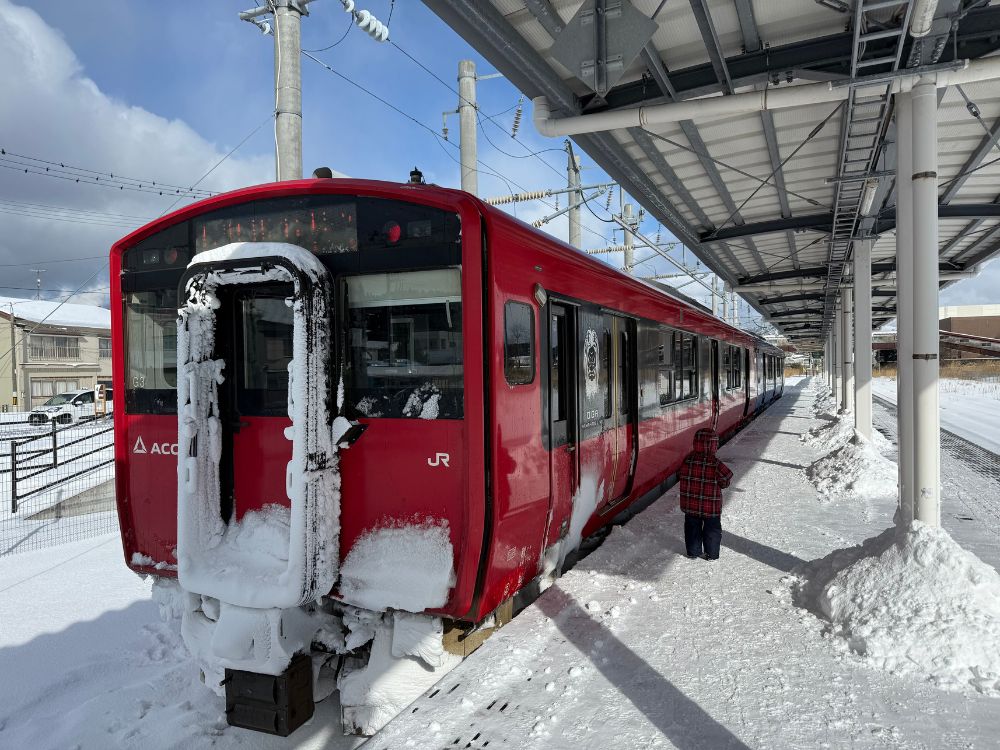
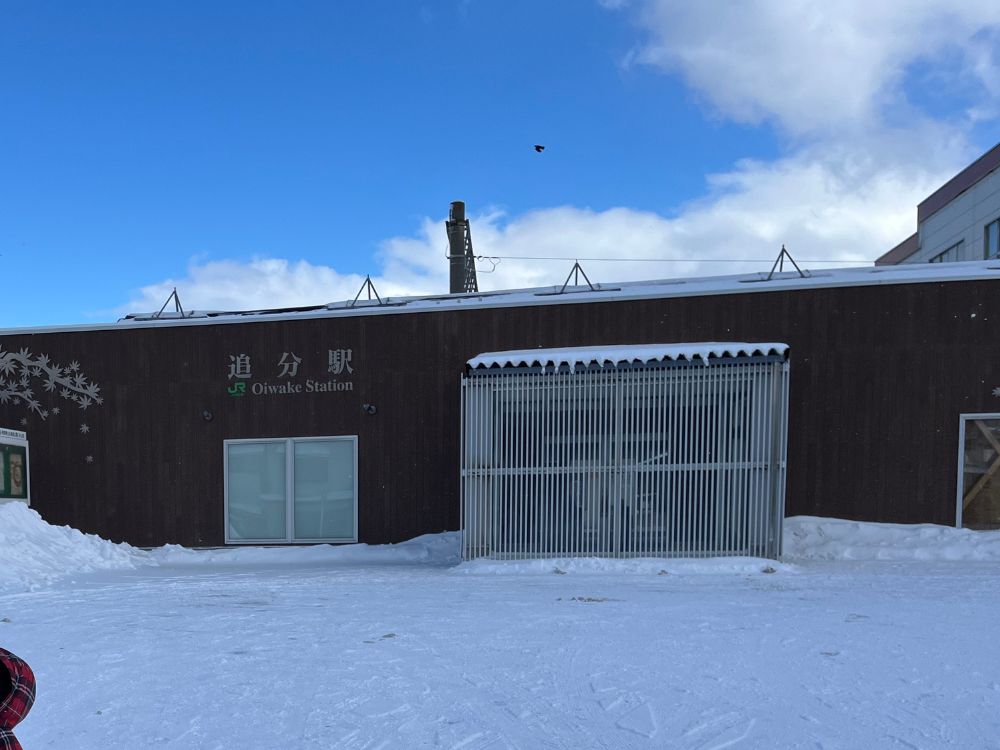
We arrived at Oiwake Station in about 40 minutes. It was a nice, clean station, but there weren’t any convenience stores nearby.
It seems taxis don’t usually wait around there; instead, there was a sign with a taxi company’s phone number. When I called, they told me there were no cars available in the area at the moment and it would be a one-hour wait for a pickup.
It’s about a 20-minute walk from here to the Akita Prefectural Museum. My husband was a little grumpy that we couldn’t catch a taxi (lol), but as someone who loves going for walks, I thought a stroll through the fresh snow sounded like fun! So, we decided to head there on foot.
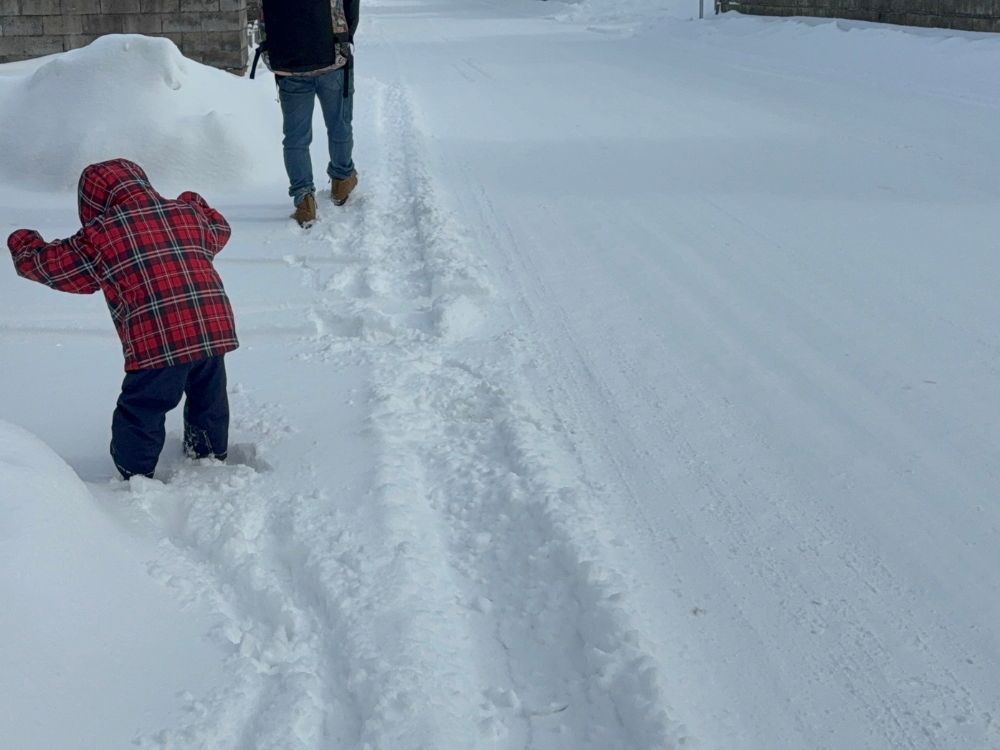
My eldest walked while I carried my youngest. My eldest had fun trekking through the fluffy snow, but he really persevered through the cold and the distance.
Along the way, some parts were shoveled and others weren’t, so there were stretches where we were buried in snow up to our ankles (thankfully, we were geared up, so it wasn’t cold!).
My eldest made progress by alternating between walking and being carried.
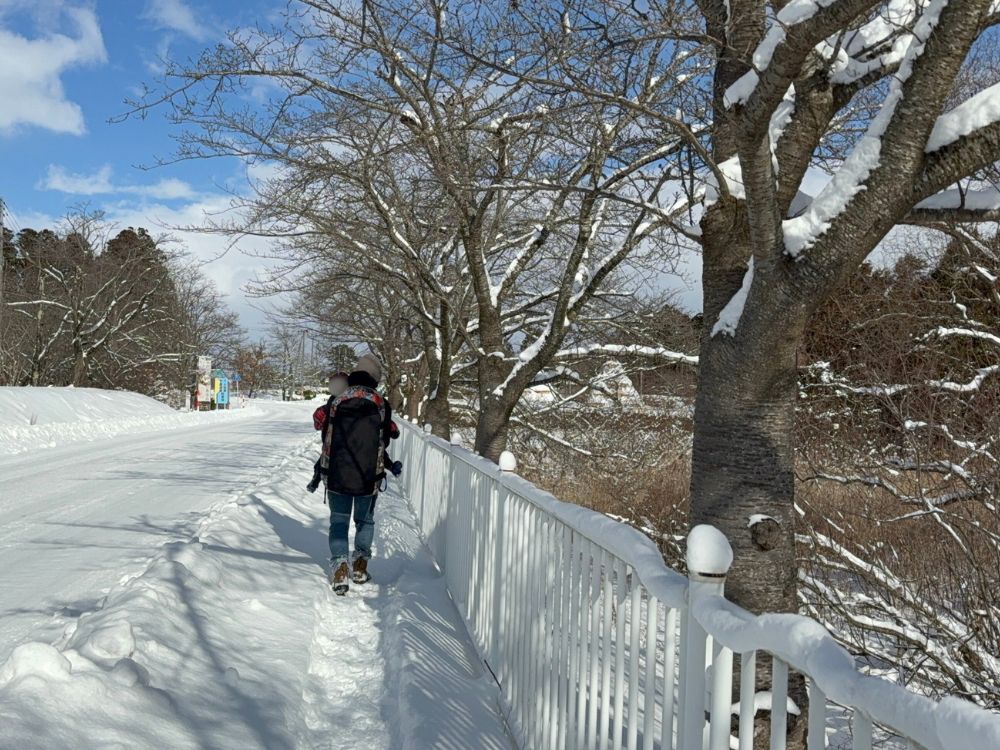
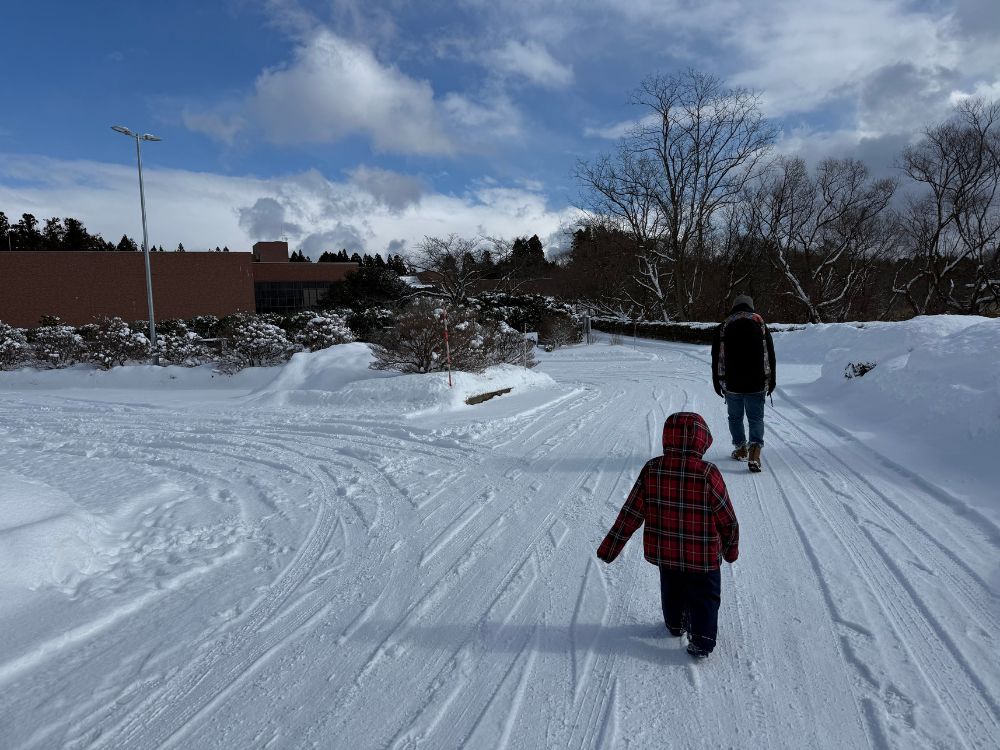
It took us about 30 minutes to reach the museum. We made it!
The scenery along the way was beautiful, making it a truly enjoyable walk!
Fueling up at “Komachi” first!
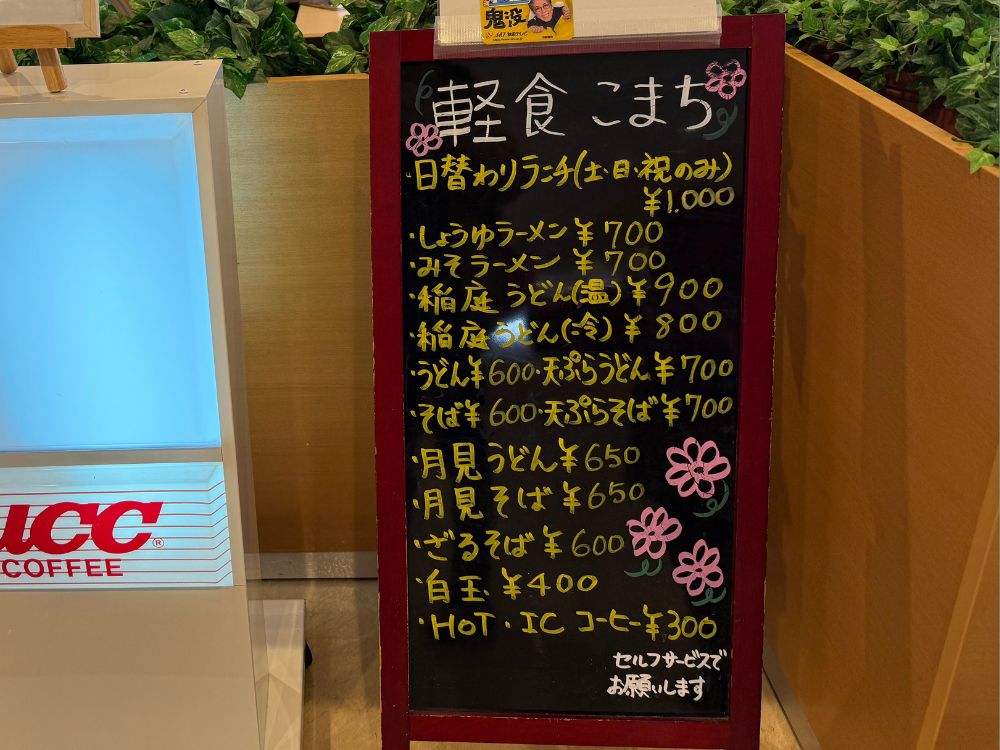
After all that walking, we arrived right at lunchtime and were absolutely starving.
Located at the back of the second floor, there is a casual dining spot called “Komachi”
The menu offers various noodle dishes such as ramen, udon, and soba. The daily lunch special was a beef bowl (Gyudon).
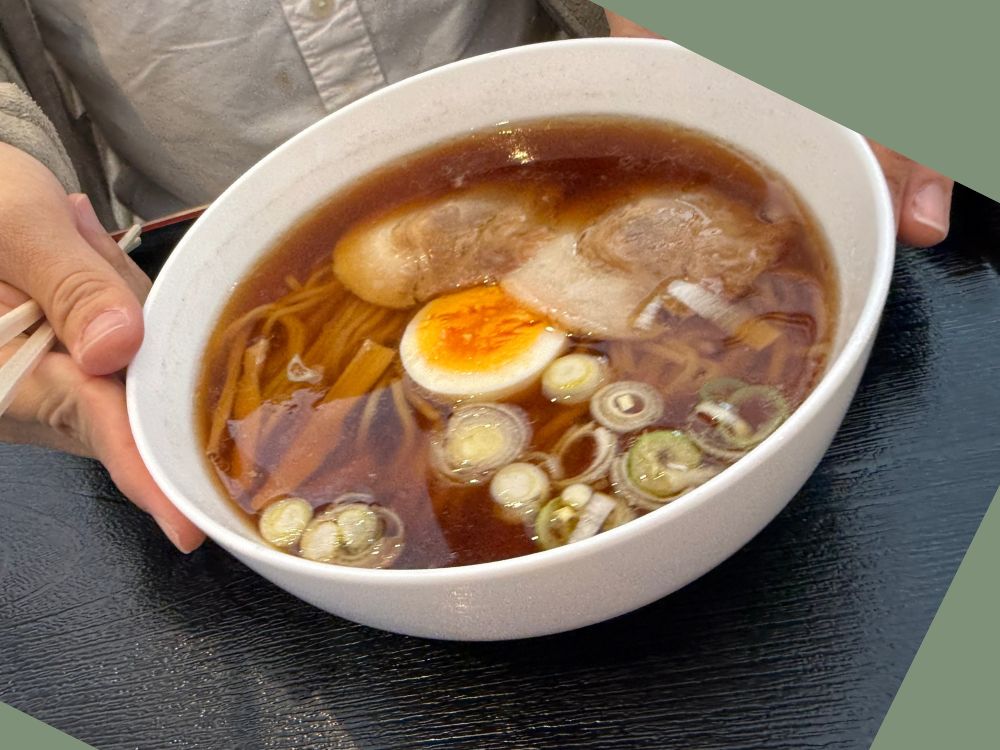
My husband ordered the ramen.
It was the kind of classic ramen you’d find at any local cafeteria, but after that long walk, it really hit the spot.
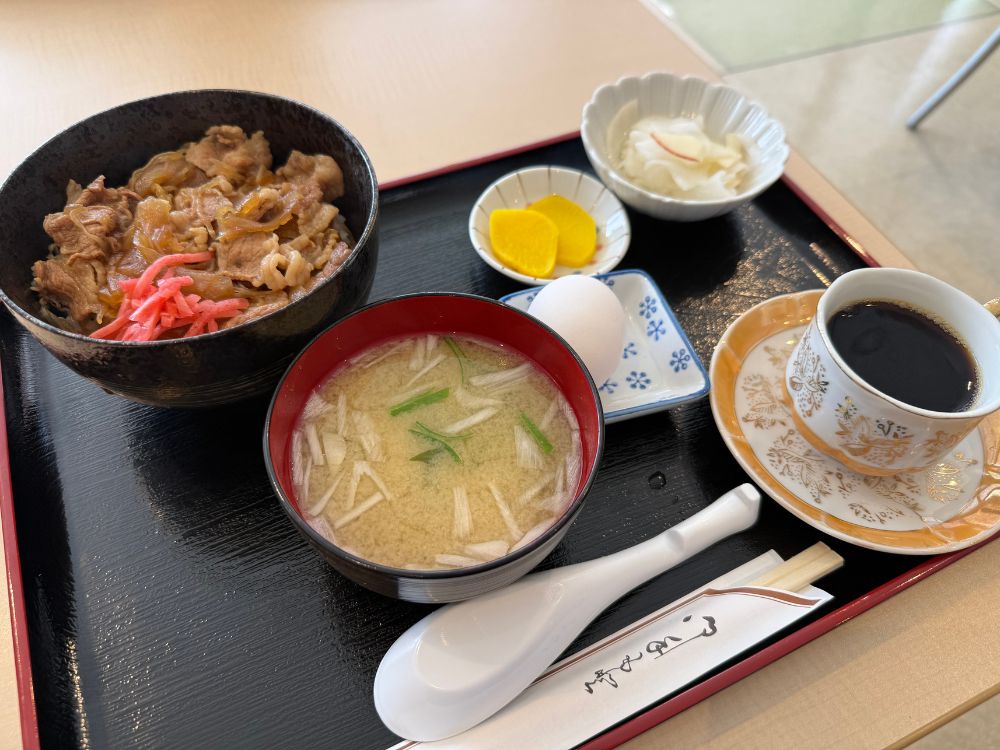
I ordered the beef bowl.
It came with a raw egg on the side. I’m not really a fan of raw eggs, so I “gifted” it to my husband (lol).
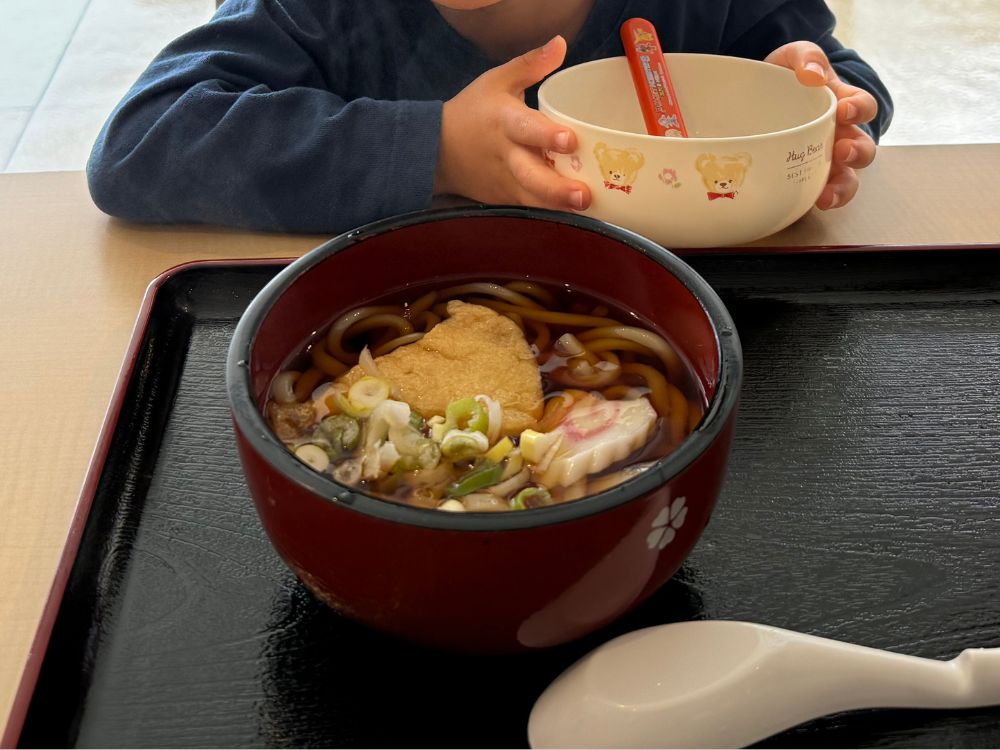
My eldest son ordered the udon.
He finished it in the blink of an eye.
It warmed our souls after that freezing walk (lol). Since my youngest was napping, we were actually able to enjoy our meal at a relaxing pace (we let him eat once he woke up).
The prices were quite reasonable, ranging from $4.00 to $6.50 (600–1,000 yen).
2nd Floor: Humanities Exhibition Room
Once our bellies were full, we headed to the exhibition area. We started with the Humanities Exhibition Room on the same floor.
I hope this doesn’t sound rude, but I did wonder, “Would a kid even find this interesting?” However, he fully enjoyed it in his own unique way. My eldest son loves museums, so he was overjoyed, explaining what he saw to me through his own worldview.
Even at just four years old, he seemed to be learning with genuine interest—repeatedly watching an explanatory video about how ancient villages were formed and telling me all about it, or sharing what he learned from the museum guide about traditional dwellings.
On the other hand, my youngest was terrified of the Great Buddha statue and turned into a total “carry-me monster.” On the bright side, at least it kept him from running around! (lol)
Looking back, I don’t think I would have found this fun when I was a child… but as an adult, I realized there are so many precious artifacts on display. I felt truly grateful that we could see all of this for free.
1st Floor: Nature Exhibition. Walking on Whale Bones!?
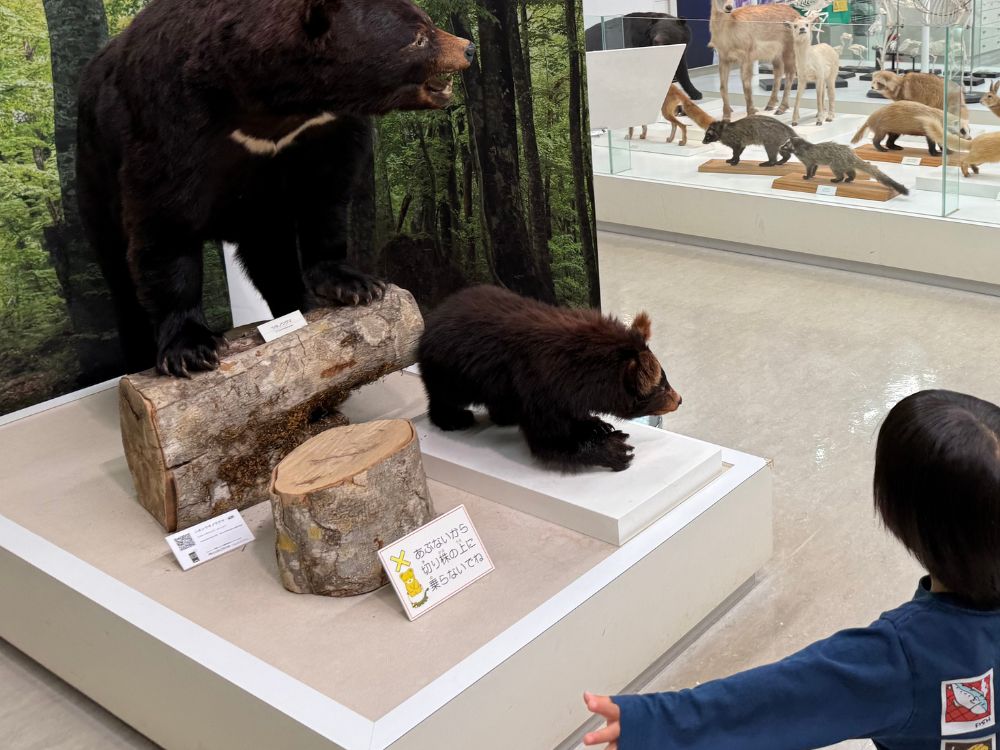
Next, we headed down to the first floor to see the Nature Exhibition. This area allows photography! It features a wide variety of displays, including taxidermy animals, rocks and minerals, and even exhibits on crude oil.
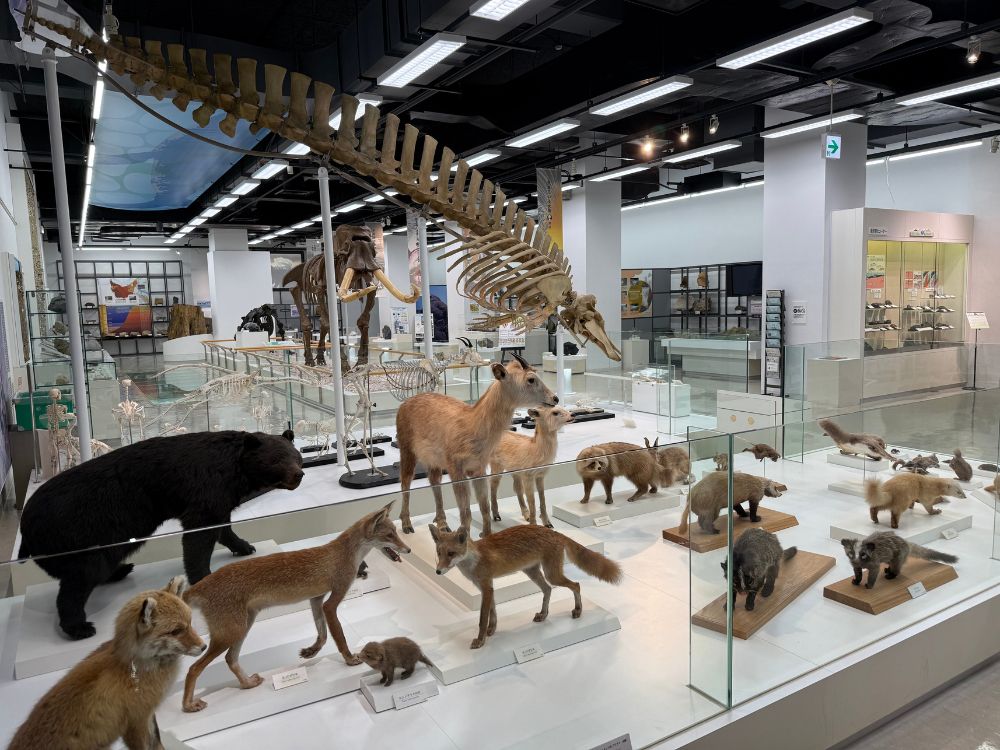
In addition to the mammoths and whales, there were skeletal displays of all kinds of creatures, from penguins to frogs and turtles. My son seemed puzzled, wondering, “Is this really what a turtle looks like inside?”
The taxidermy was also beautiful and very realistic, so even my two-year-old was having a great time.
When my youngest shouted that he found a bear, my eldest ran over to see and was absolutely stunned by its size!
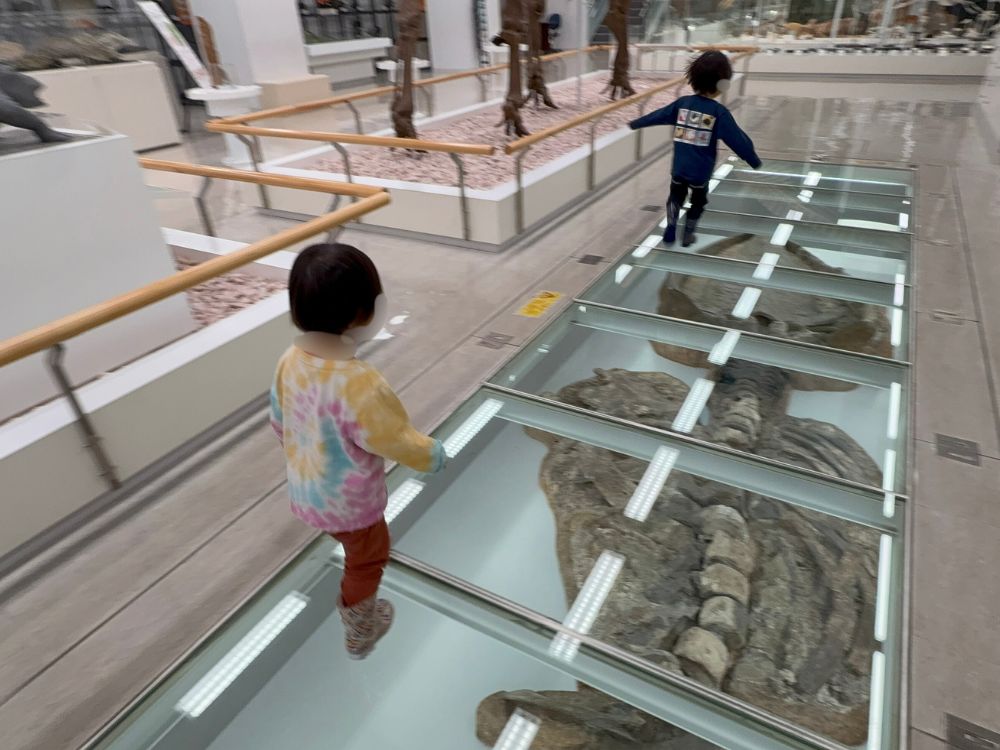
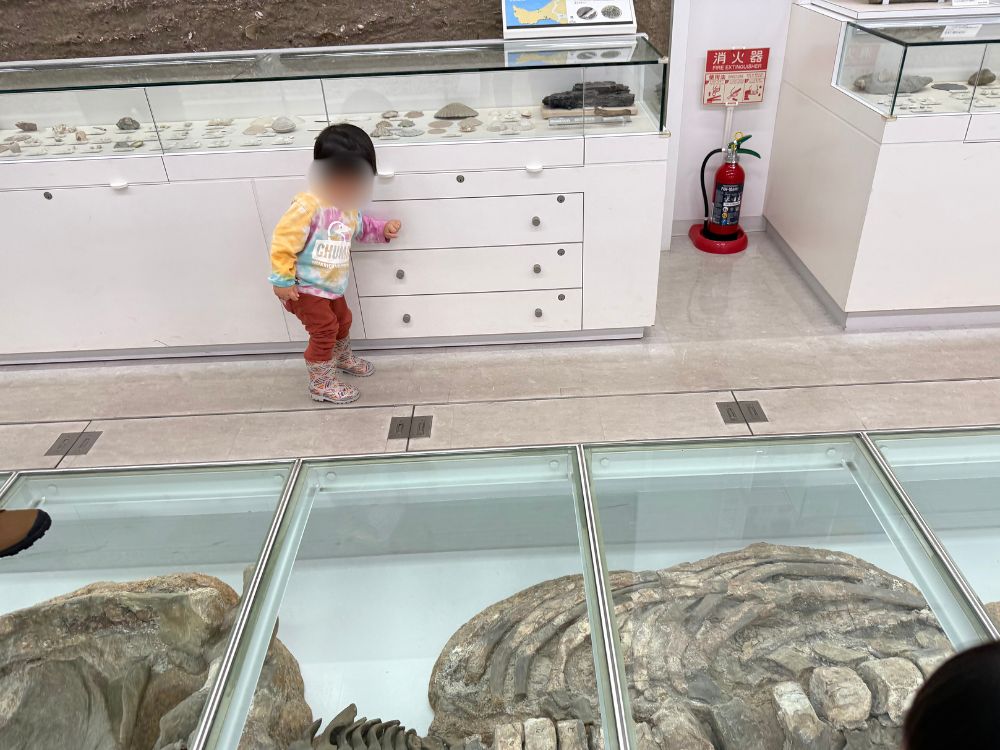
Deep in the exhibit, we finally found the area where you can walk over whale bones—just like the person we met on the Oga Line had told us about! My eldest son was so excited, shouting, “I finally got to see it!” He had a blast walking back and forth across the bones over and over again.
At first, my youngest was terrified that the transparent floor might give way! He was walking with his knees wobbling and his butt sticking out—he looked so funny and adorable (lol).
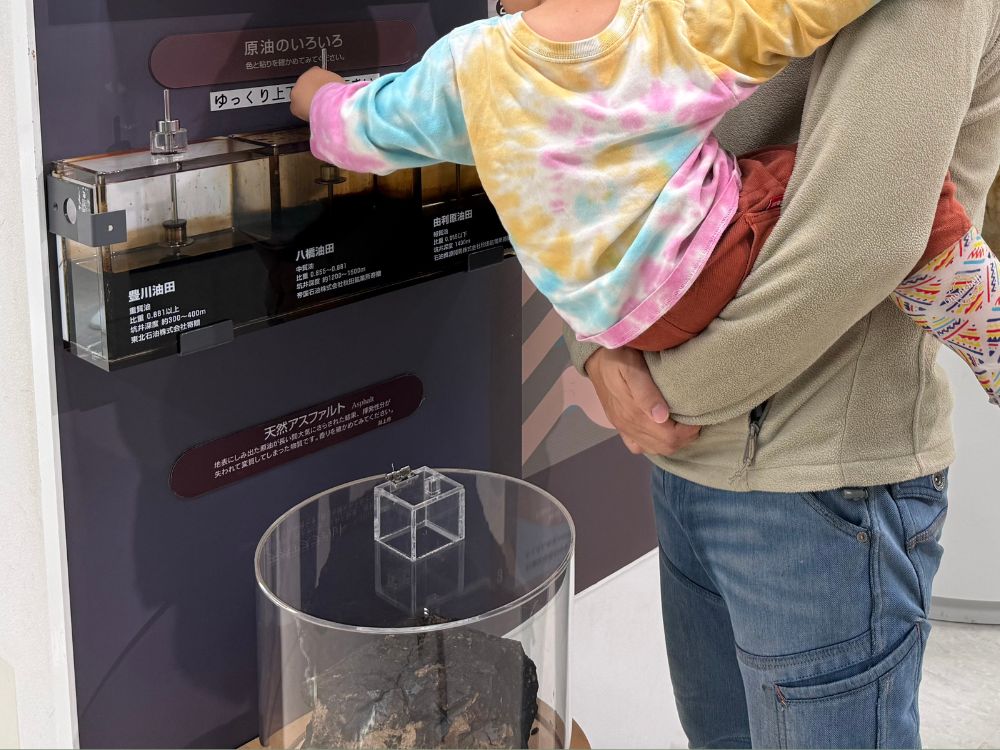
Akita Prefecture is one of the few crude oil-producing regions in Japan. Perhaps because of that, there was an exhibit where you could actually experience the texture of crude oil.
An Unexpected Twist: No Taxis to be Found?
We tried to call a taxi through an app since our train was coming up, but none were available. A taxi appeared on the screen for a split second, but it was canceled before I could even finish the booking. It seems they only accept requests if a car is already in the immediate area.
Between the limited number of taxis and the fact that they only serve specific zones, we had no choice but to push our train back by about two hours.
2nd Floor: Waku-Waku Exploration Room (Kids’ Discovery Area)
An Unexpected and Wonderful Encounter
But that taxi mishap had a silver lining: we stumbled upon a wonderful encounter.
It happened to be the day of the weekly “Storytelling Session,” where volunteers read picture books to visitors. We sat down in the tatami area and listened as three volunteers read a book each.
One high school volunteer chose a book called “Zigmonta the Hole-Fixer” (Anafusagi no Zigmonta). While it was a bit long for a 2 and 4-year-old, it was a huge hit with me and my husband.
Zigmonta is a spider who excels at mending clothes. He works with all his heart, treating each item as someone’s treasure, but he begins to question his purpose in life as everyone starts preferring brand-new things.
The illustrations were stunning, and the story was so thought-provoking that we bought it on the spot.


The kids were getting a bit fussy and grumpy because it was right around their nap time. Still, I look forward to reading it to them slowly at home once they’re a little bit older. It’s a story I want to cherish with them.
Fun Kids’ Space!
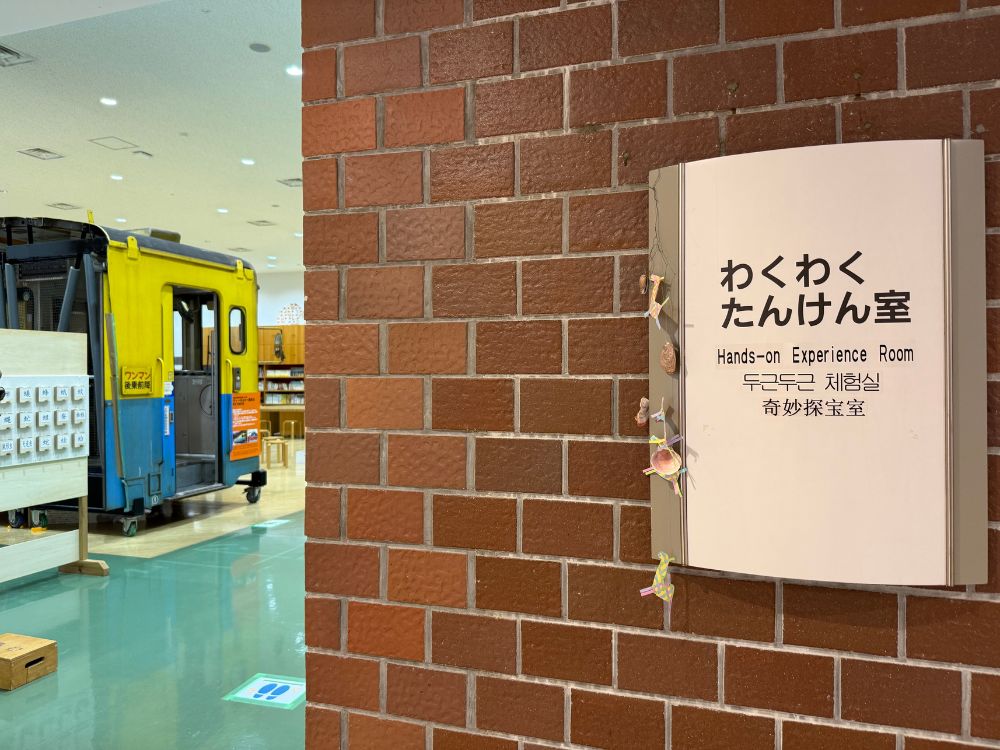
In the same area, the Waku-Waku Exploration Room was packed with various other interactive corners for kids to enjoy.
Sit in the Train’s Driver’s Seat!
There was a real train nose cone where kids could freely sit in the driver’s seat and play with the controls.
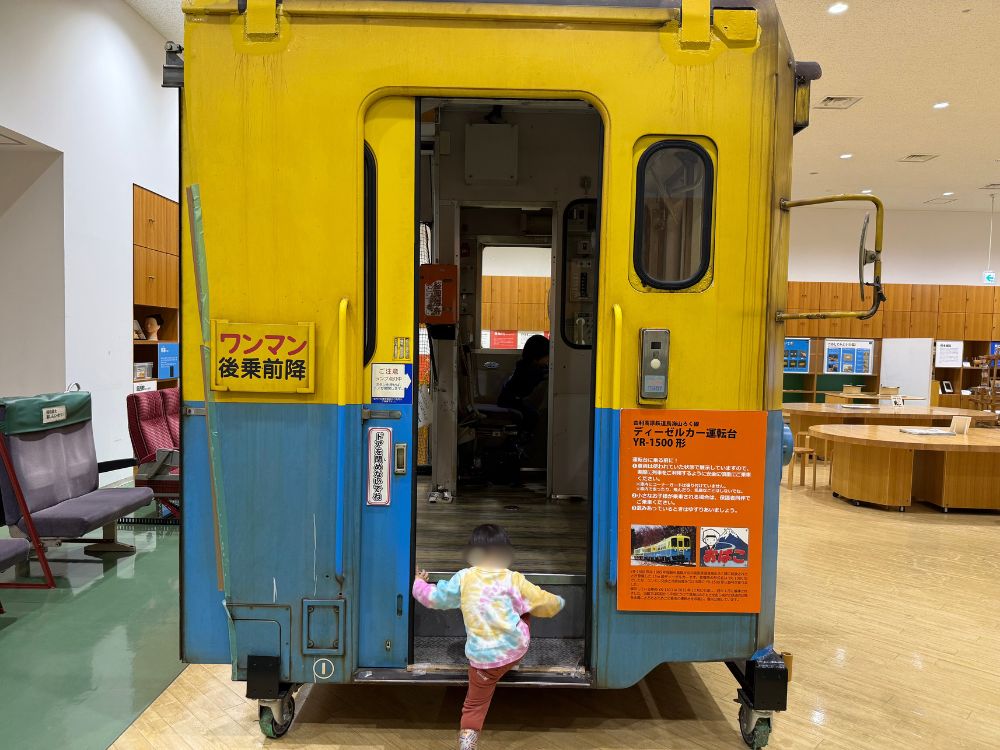
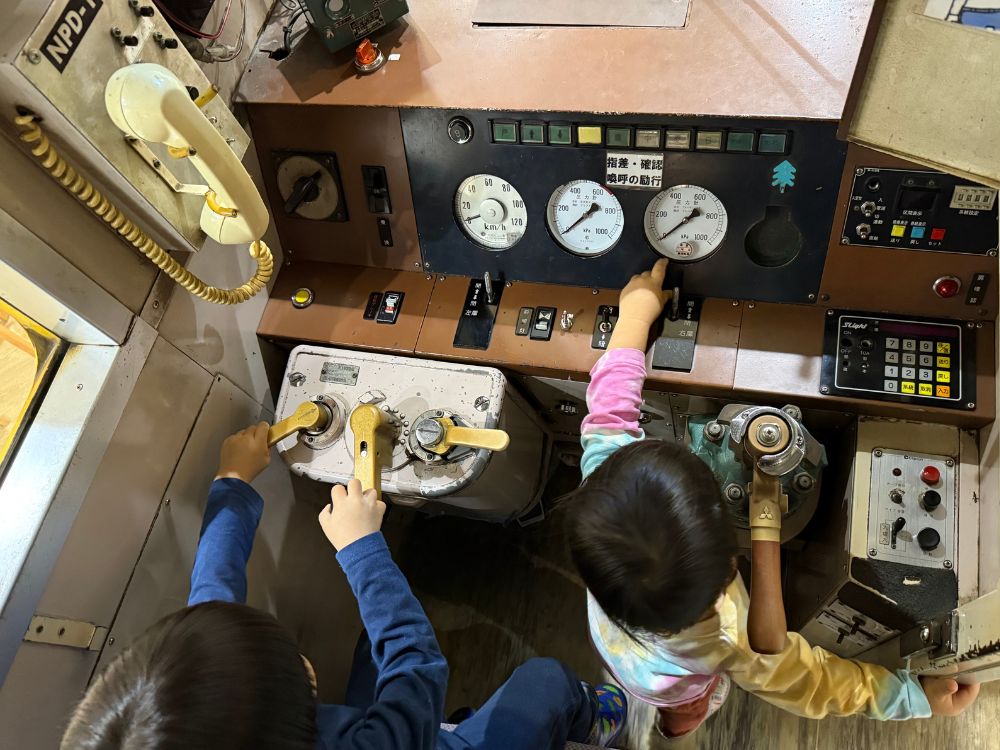
The kids were so excited to be in a real driver’s seat. They kept fighting over whose turn it was, but they had a blast!
Play with Traditional Japanese Toys!
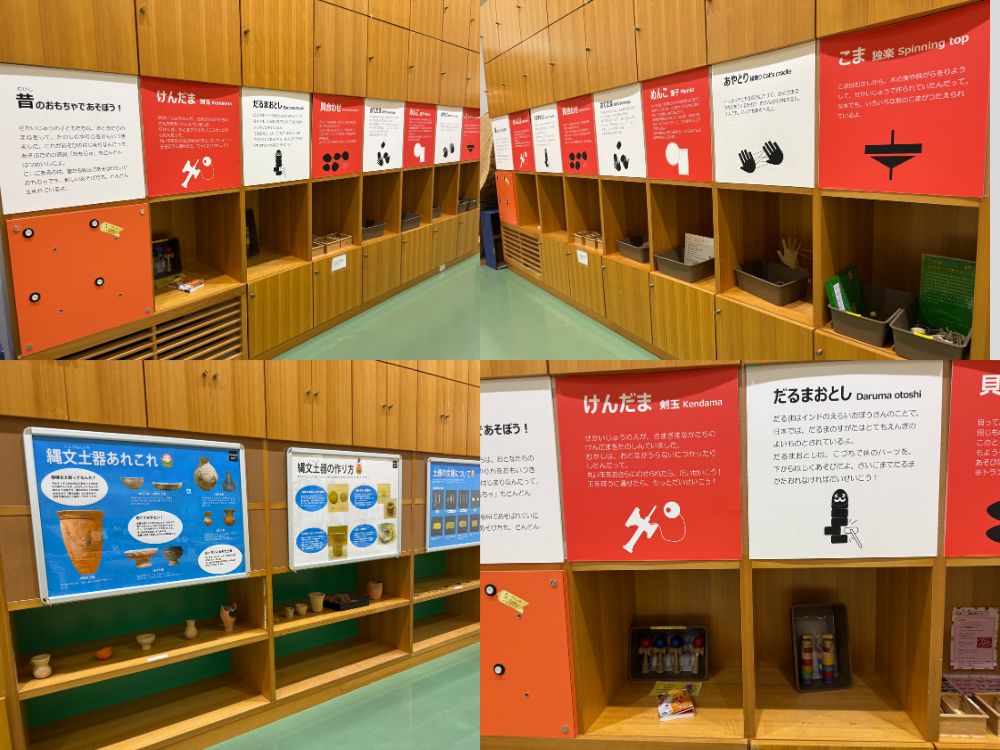
You can try out various classic Japanese toys, such as:
- Kendama: A traditional cup-and-ball game that challenges your focus and agility.
- Daruma-otoshi: A game where you use a small hammer to knock out wooden blocks from a stack without letting the top piece (Daruma) fall.
- Otedama: Traditional beanbags used for juggling and rhythmic games.
A Rare Find: Jomon Pottery
Uniquely, they also have Jomon-style pottery on display and for hands-on exploration. The Jomon period dates back over 10,000 years, and this pottery is famous for its intricate cord-marked patterns, representing one of the world’s oldest ceramic cultures.
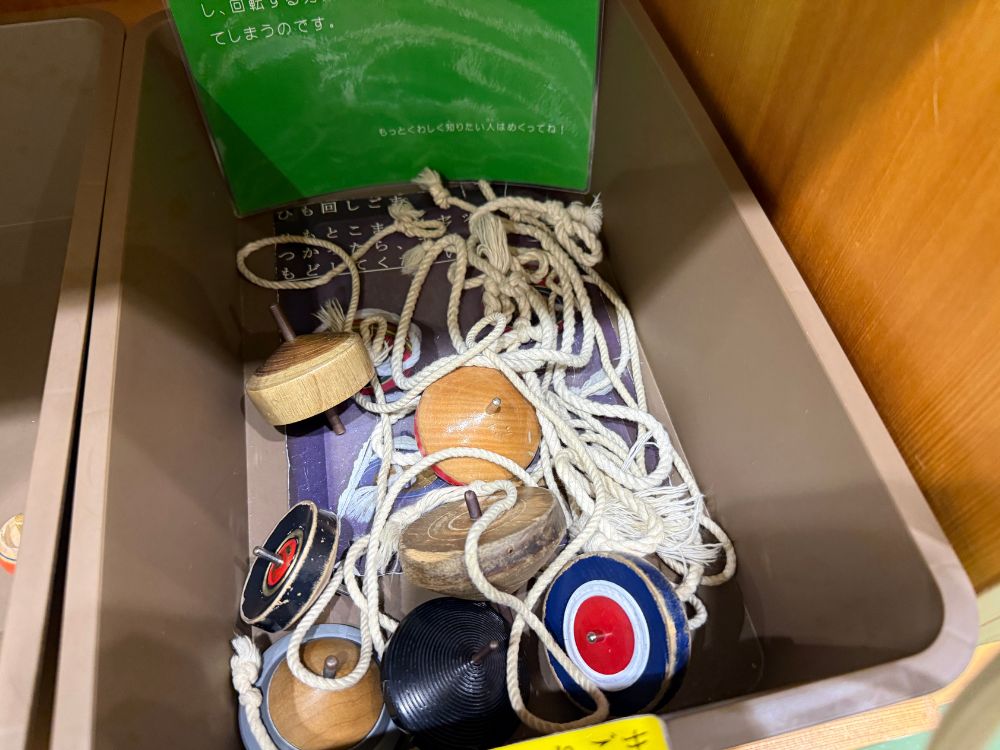
Koma (Traditional Spinning Tops)
These are classic Japanese tops spun with a string or by hand. It’s a simple yet addictive game that has been loved by children in Japan for centuries.
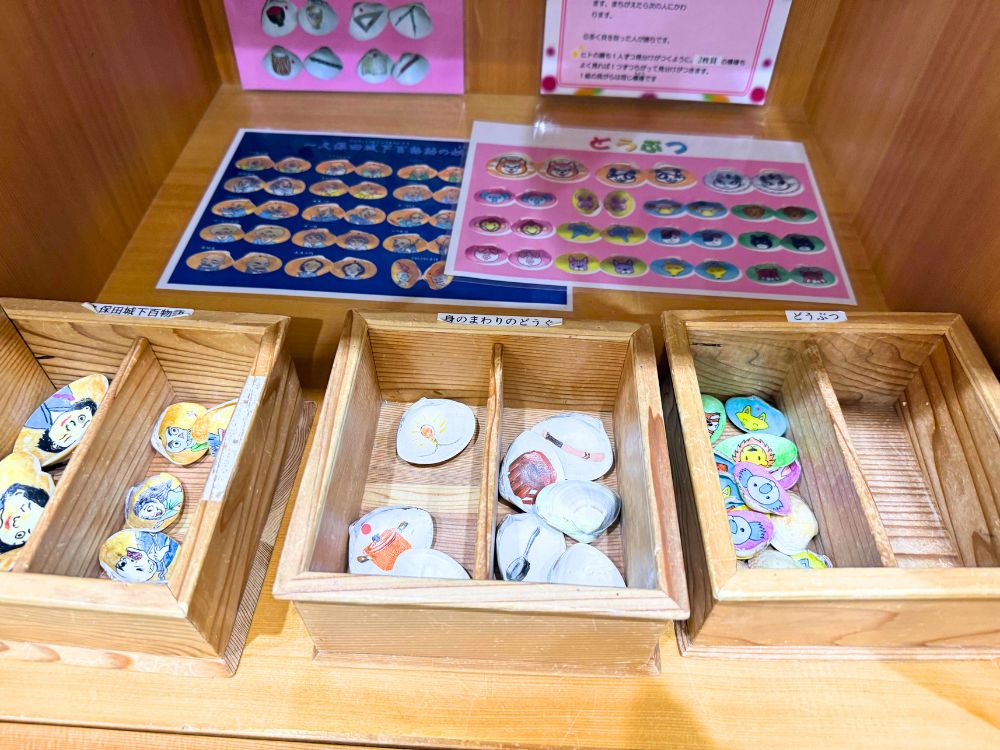
Kai-awase (Shell-matching)
This is a traditional Japanese game using beautifully painted clam shells. It’s a classic memory game where you try to find the two halves that fit perfectly together—similar to a card matching game, but with a touch of ancient Japanese elegance.
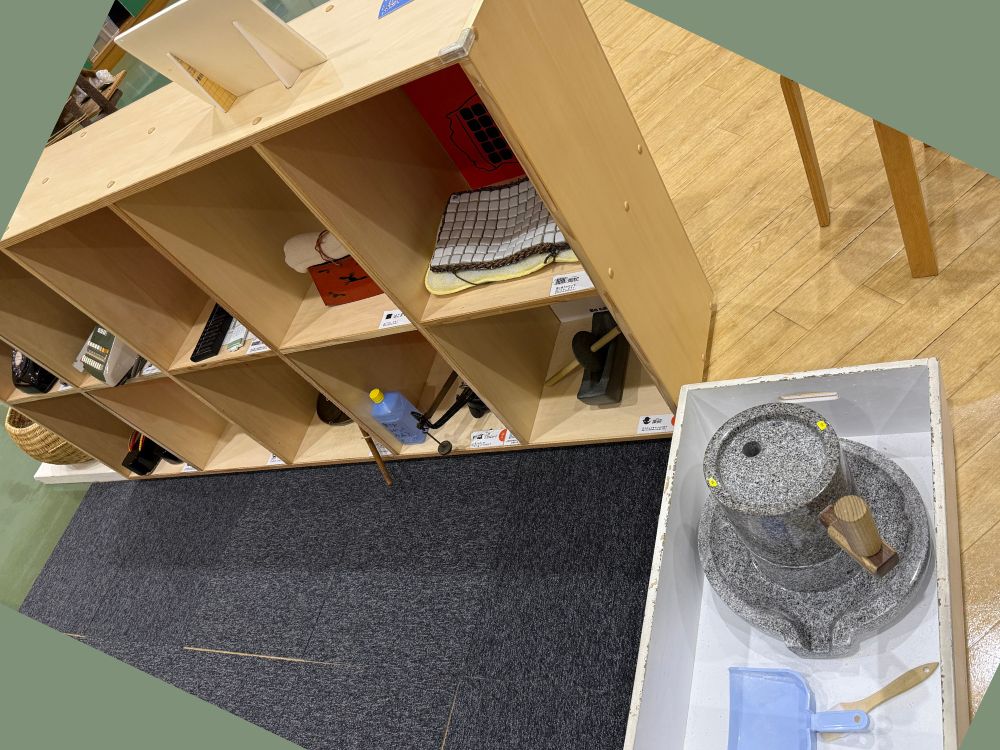
Miniature Stone Mills (Ishi-usu)
There were even unique items like mini stone mills. In the old days, these were used to grind grains into flour by hand. It’s a rare and fascinating chance to see and touch traditional tools that are hardly seen in modern life.
You were able to pick up and play with everything! Even though I live in Japan, this was the first time I’ve ever seen a place like this!
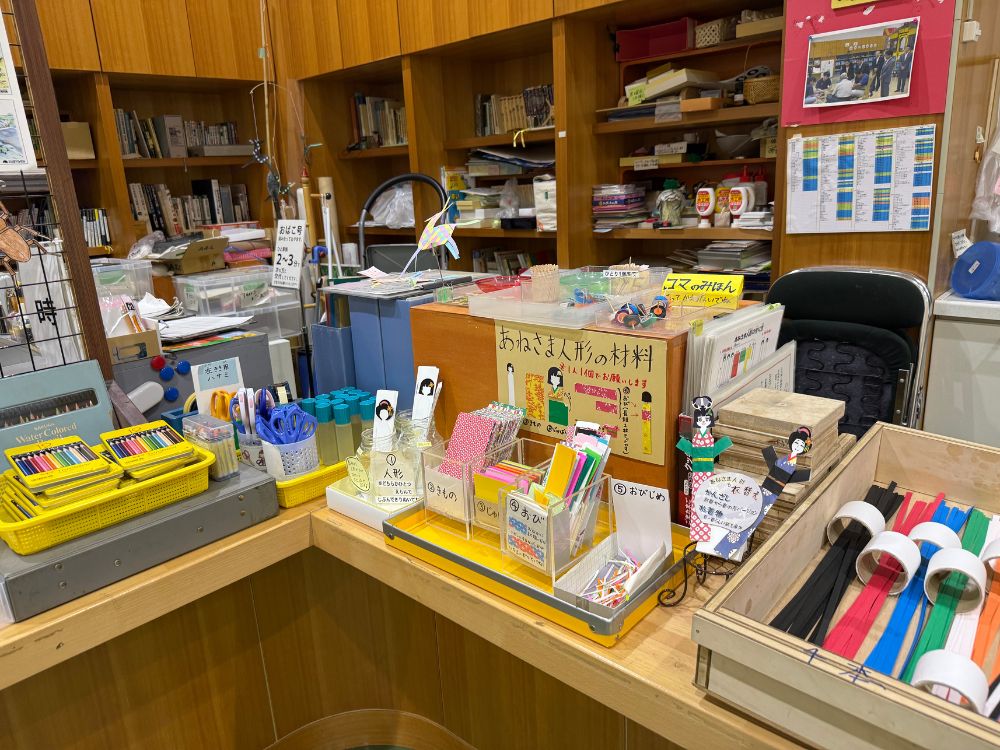
Japanese style Craft Corner
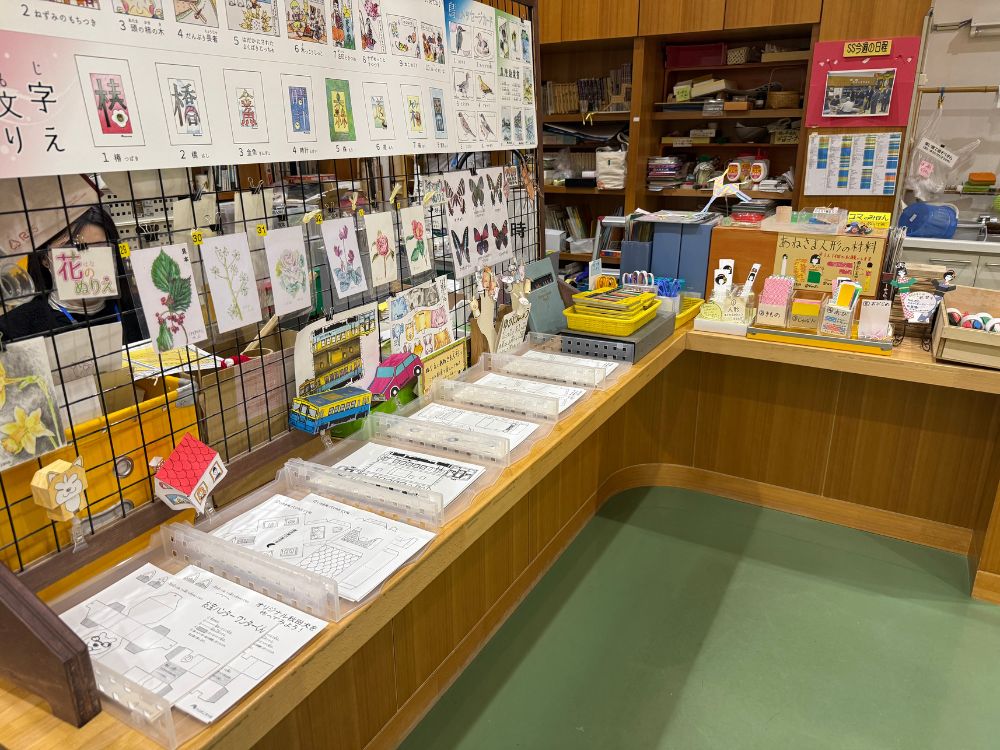
There were coloring sheets and all the materials needed to make your own Hina dolls (traditional dolls for the Girl’s Festival).
If you ask the staff, they will be happy to help you get everything ready and set up.
Picture Book Corner
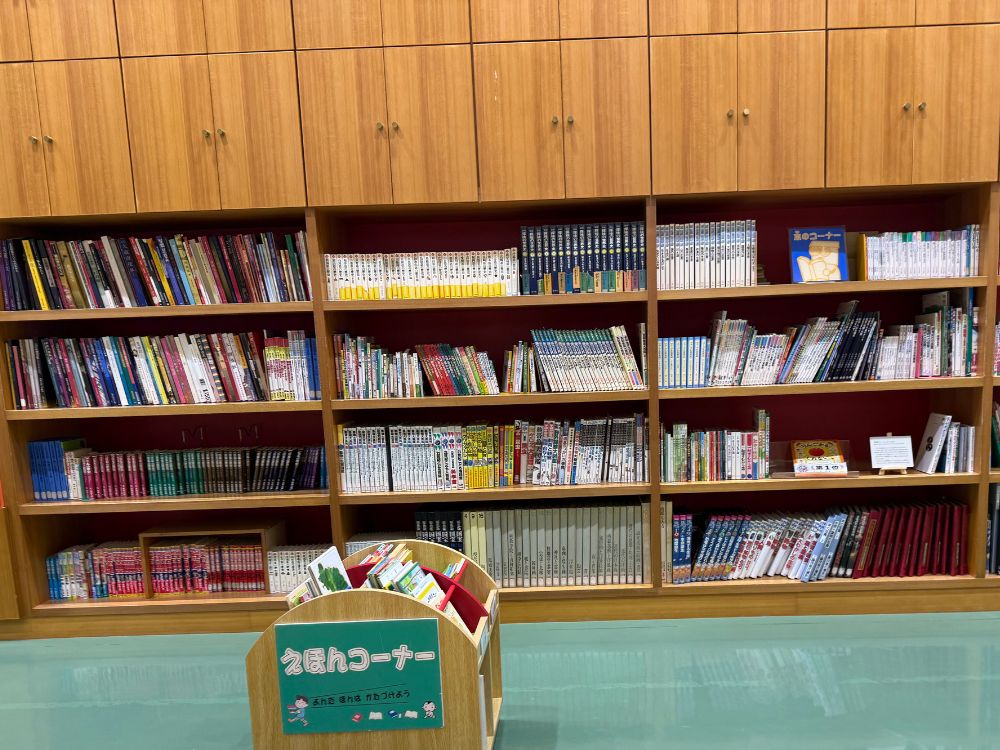
While many of the books, such as encyclopedias, seemed geared toward elementary school students and older, there was also a selection of picture books. Even though they are in Japanese, the illustrations in children’s books are so cute that they’re fun just to look at!
The taxi finally arrived!
I managed to book a taxi about an hour in advance by calling a local company directly to ensure we would make the next train from Oiwake Station. It turns out that taxi companies have specific jurisdictions based on the station or area, so it’s important to research this beforehand.
A kind receptionist at the museum also gave me some advice, and the company that covers Oiwake Station was Shin-Showa Taxi (the one listed on the station sign). Anticipating a similar situation at our next destination, Funakoshi Station, I contacted Misaki Kanko Taxi after finding them on the website below. I gave them our arrival time to secure a booking. In both cases, there were no extra dispatch fees!

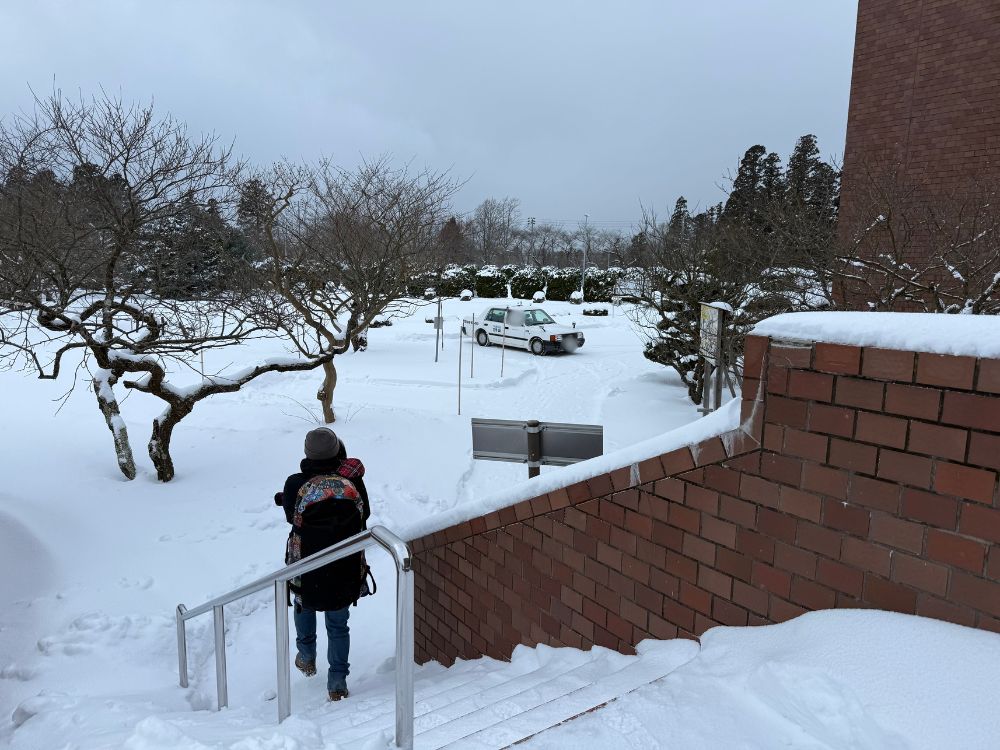
The taxi pickup point at the museum was a bit separate from the main parking lot (it’s closer to the 1st-floor entrance). Since it was a snowy day and we left from the 2nd-floor entrance, the path was a little confusing to find.
Since it was a short distance, we arrived at Oiwake Station for around 1,000 yen. By then, the snow was falling even harder. I’m so glad we decided to call a taxi!
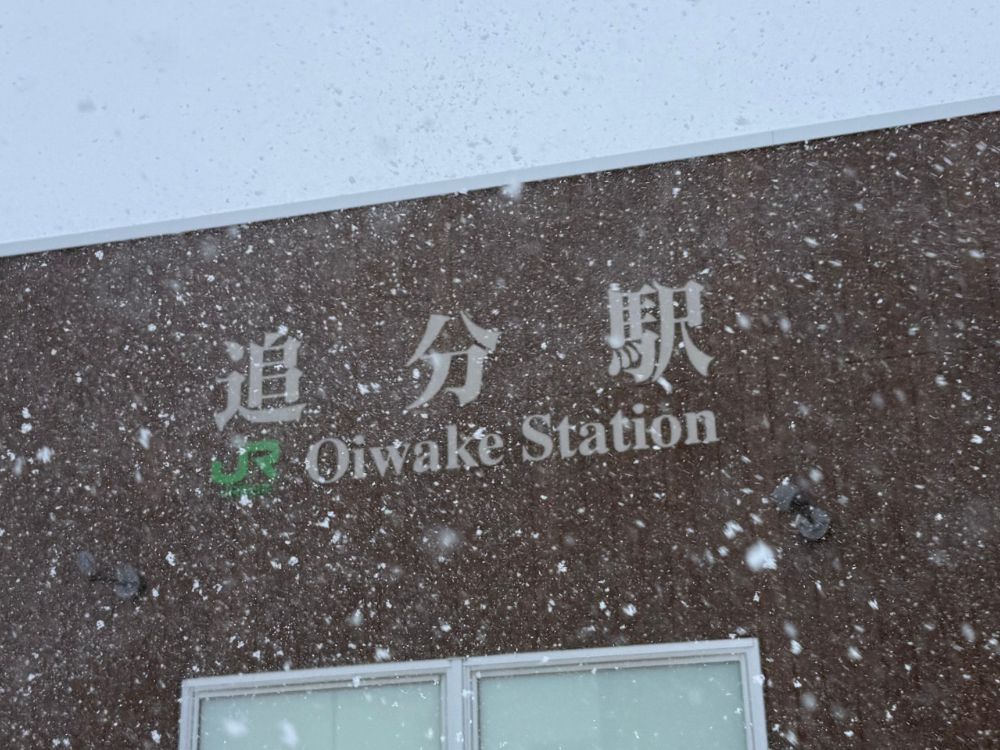
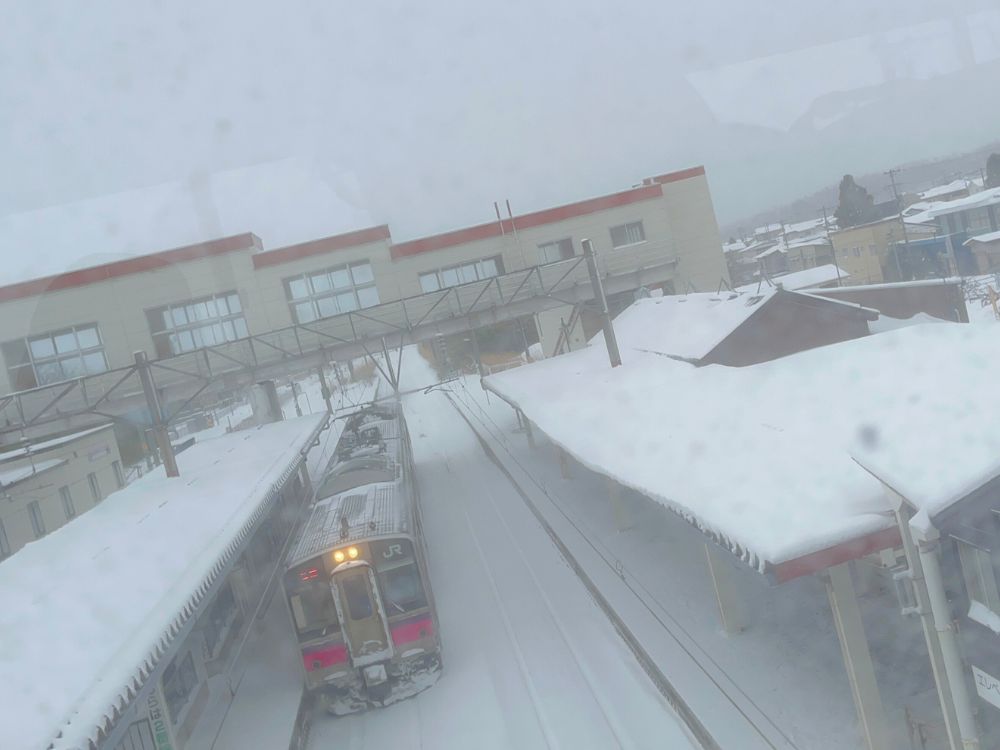
We headed toward Funakoshi Station, watching the snow fall silently and steadily all around us.
In closing,
Compared to a national museum, it felt medium-sized, but the content was incredibly rich and fulfilling.
The humanities exhibition on the 2nd floor gives you a real sense of old Japan, while the nature section on the 1st floor was plenty of fun even for my 2-year-old son. If your kids enjoy crafts, they will have a blast in the “Waku-waku Exploration Room.”
It was a wonderful place where you can enjoy everything—including admission—for free and without needing to bring anything!
I hope you find this information helpful.