Unexpected trouble during a fun trip—it’s the last thing anyone wants, but “just in case” is always a possibility. Even as a nurse, I found myself completely overwhelmed. I’ve put together this detailed guide so that if an emergency ever happens, you’ll know exactly what to do.
If you are in a rush, please jump straight to section 6 of the table of contents: “Common Steps for Everyone.”
日本語版はこちら↓
*This article was written for informational purposes. I hope you find it helpful.
- What happened to my second son?
- Where did we go first for advice, and what did we do?
- Finding a clinic seemed impossible.
- The next morning, I headed to the clinic for an examination.
- Summary of my second son’s situation
- Summary of Consultation Hotlines for Your Trip
- Other Multilingual Telephone Services
- My Personal Reviews of These Useful Apps
- Tips for Visiting a Hospital in Japan
- Final thoughts
What happened to my second son?
He was having a blast playing in the hotel’s kids’ area, but then…
Since it was just a small slide, I left him with my husband for a moment to go grab a sip of water. That is exactly when the incident happened.

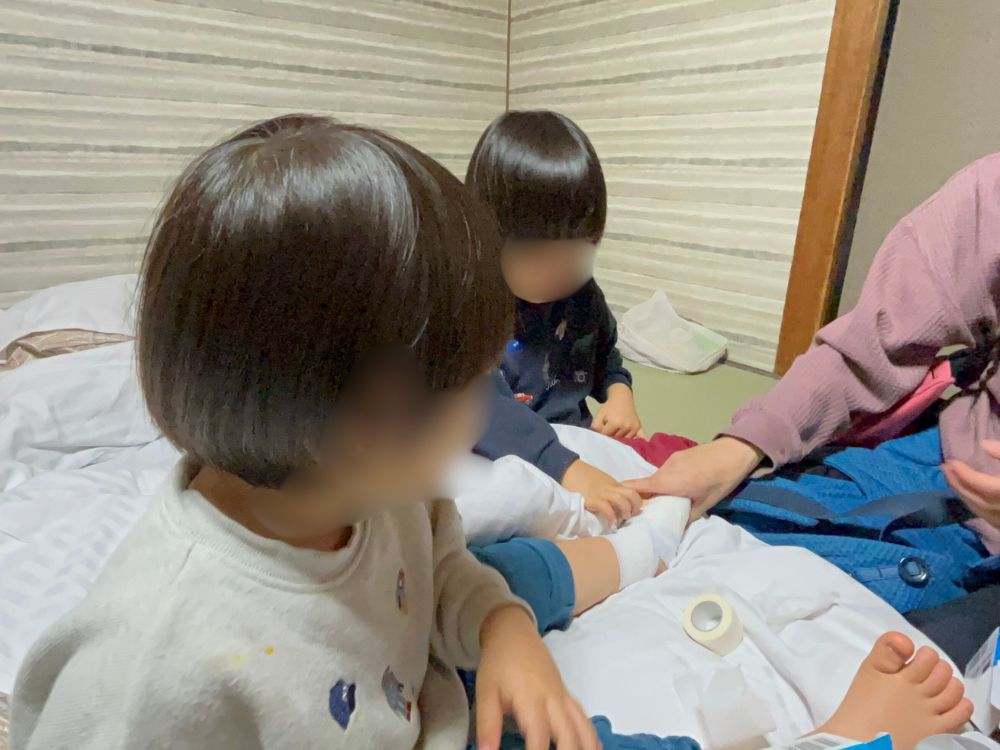
It looked like he might have stepped on a ball while landing from the slide and twisted his ankle.
I had prepared myself for a potential fall from the bouldering wall and was watching that closely, but the accident happened on the tiny slide instead. I thought, “Of all things, this one…?” but his foot started swelling up, and he could no longer walk.
My second son has a very high pain tolerance. Normally, he’s the type of kid who keeps running around even if he’s falling and bleeding.
But this time, even a light touch made him cry out in pain.
My husband actually has a history of breaking a bone in his hand and not realizing it for a week—which resulted in it healing crookedly—so I was worried that a misaligned foot might affect his whole body’s balance. Because of that, we decided to consider seeing a doctor just in case.
Where did we go first for advice, and what did we do?
Even as a local, you have no idea about the area when you’re traveling. To make matters worse, it was around 8:00 PM.
I wondered if there were any orthopedic clinics open at night.
We went back to our room to search for options. However, since we had no clue where to start, I asked my husband to go down to the hotel front desk to ask for information.
At the same time, I also had him ask if they had anything we could use for icing the injury.
Front desk response
The front desk provided us with the phone number for a nighttime emergency consultation service.
It seemed like the staff offered to call for us, but since I’m a nurse, my husband figured it would be better for me to speak with them directly to confirm the details, so he just took the number.
They were also kind enough to lend us an ice pack.
When I don’t have a proper ice pack on hand, I usually put ice and a little bit of water into an “odor-sealing diaper bag” and apply that to the affected area.
You can always wrap ice in a towel or clothes, but a real ice pack is a lifesaver because it doesn’t get too cold and provides just the right amount of cooling.
At most hotels in Japan, ice is available for free. Some have ice machines located in common areas, while others will bring it to your room if you call the front desk.
If you are calling them, simply saying “Ko-o-ri ku-da-sa-i” (Please give me some ice) will get the message across.
When I called the number they gave me, I found out there were almost no orthopedic clinics open at night in the area. I was only introduced to one hospital, which was a 40-minute drive away.
When I called that hospital, they told me they couldn’t take X-rays at night.
They told me, “Without an X-ray, we can’t determine if it’s a fracture. If you absolutely feel the need for an examination now, you’ll have to use your own judgment and call an ambulance.”
Since it didn’t seem like an emergency that required an ambulance, and he was already about to fall asleep anyway, we decided to just wait and see how he was doing the next morning.
The “RICE” method for treating injuries like sprains and bruises
There is a well-known initial treatment for injuries called “RICE.” By performing these steps early on, you can minimize damage to the injured area and expect a more effective recovery.
- Rest:This prevents secondary aggravation. It helps suppress further damage to blood vessels or nerves and keeps the pain from intensifying.
- Icing:This lowers the tissue’s metabolic rate to minimize inflammation and swelling. It also helps numb the pain.
- Compression:This suppresses internal bleeding and swelling in the affected area. Since excessive pressure can cause circulatory issues, make sure to monitor the skin color while applying it.
- Elevation:The goal here is to reduce swelling. By raising the injured area higher than the heart, you reduce blood flow to the site and keep the swelling down.
Compression and elevation can be difficult depending on the situation, but resting and icing are things almost anyone can do. For my son, I just focused on keeping him still in my arms while continuously icing the injury.
Finding a clinic seemed impossible.
Since the swelling had started to go down, I figured it probably wasn’t a fracture and decided to hold off on seeing a doctor until the next day. If it had been an obvious break, I think I would have gone to a hospital even if it were a bit far.
While I felt it would be okay until tomorrow, I was still worried he might forget about the pain and try to walk on it, or that my eldest son might accidentally step on the injury. To prevent that, we decided to head to a drugstore to buy some bandages and other supplies.
Convenient Japanese Drugstores
There are numerous drugstores all over Japan. While many in urban areas are open 24 hours, those in more rural regions often close around 8:00 PM.
While the term “drugstore” might sound a bit specific (or even slightly clinical) in some contexts, these stores in Japan are essentially a hybrid of a supermarket and a pharmacy, stocking everything from food and diapers to medicine.
They are incredibly versatile and can be found almost everywhere. Some of the most famous chains include:
- Matsumoto Kiyoshi
- Welcia
- Sugi Pharmacy
- Tsuruha Drug
- Cosmos Pharmaceutical
- Cocokara Fine
- Sun Drug
Try searching for “Drugstore” on Google Maps.
I’ll list the items I bought at a Japanese drugstore for your reference.
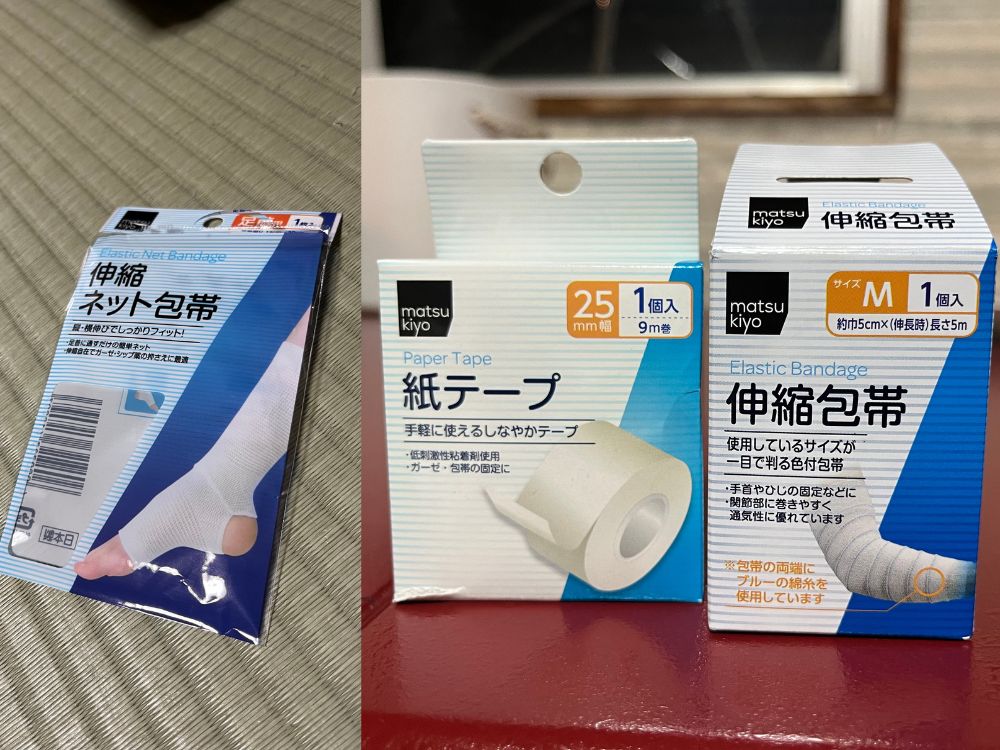
- 伸縮包帯:Elastic bandages
- 紙テープ:Paper medical tape
- 伸縮ネット包帯:Elastic net bandages
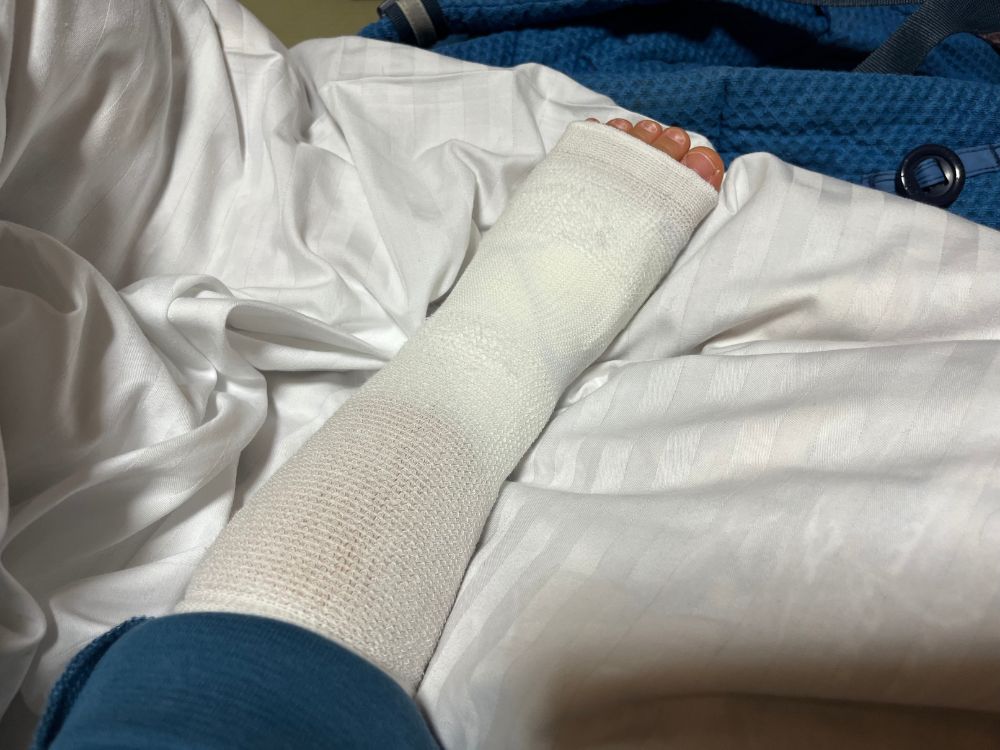
I kept the area rested with these until bedtime, and made sure to take them off before going to sleep.

Drugstores sell a wide variety of items—not just for injuries, but also medicine for fevers, diapers and wipes if you run out, goods to deal with the heat or cold, and even snacks and drinks. While some types of medicine can only be purchased during the day when a pharmacist is on duty, being able to get what you need quickly without a hospital prescription makes them a reliable resource for Japanese people. By the way, the prices are quite affordable, too.
The next morning, I headed to the clinic for an examination.
The next morning, the redness had faded, but the swelling and heat were still there.
He could walk, but would ask to be carried after just two or three steps. Since walking with an unnatural gait isn’t good, I decided to take him to a clinic just in case.
When I called the place I had consulted with the night before, they told me the orthopedic specialist wasn’t in this time (and also mentioned that, while they couldn’t be sure, the wait would likely be over two hours).
The response over the phone was a bit off-putting, so I looked for another place nearby and found one about 10 minutes from the hotel.
When I called them, they were very kind and said they could see him. We headed to the clinic first thing in the morning.
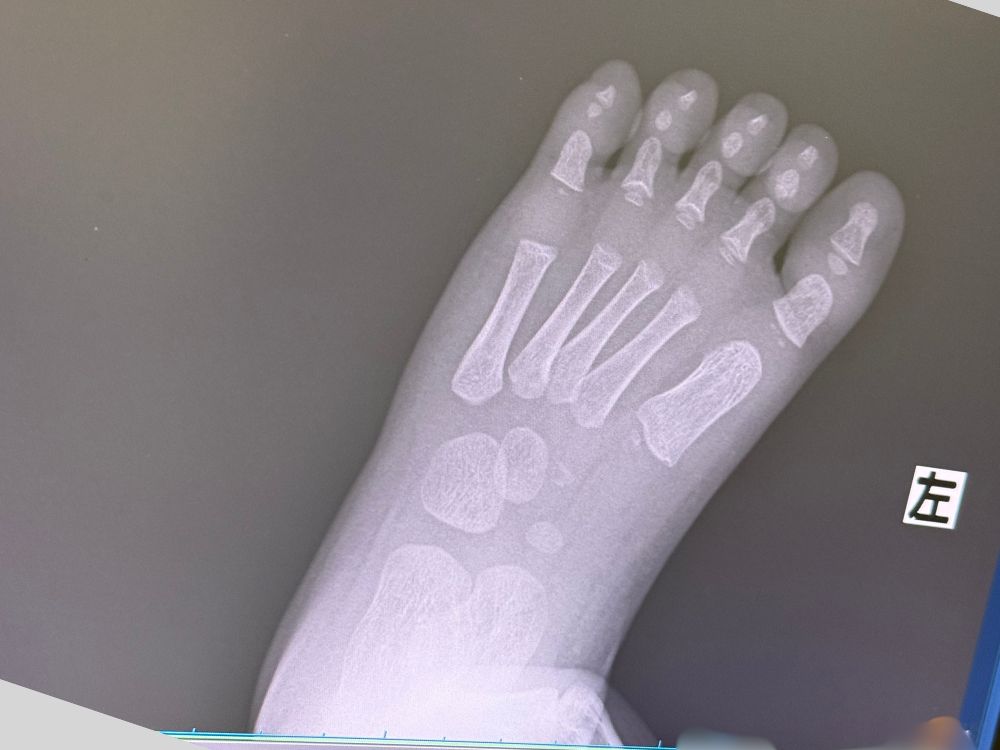
We had an X-ray taken just in case, and the results showed that it wasn’t a fracture.
Since it was still swollen, I was given some shippu (medicated cooling patches) and told not to let him soak in the bathtub for two or three days.
Another thing the doctor mentioned was that for children around my second son’s age (about 2 years old), it’s best to just let them decide. If he feels like walking, he can walk; if he says it hurts, then I should just carry him.
Summary of my second son’s situation
Injuries while traveling can be really stressful.
What helped me the most this time was the telephone consultation service.
By explaining the situation to a third party, it allowed us to organize our own thoughts and seek professional guidance.
Even for medical professionals, it can be difficult to make the right judgment when it comes to yourself or your own family. For an injury like this one that wasn’t clearly obvious, I felt even more conflicted about whether or not to see a doctor.
In the end, though, going to the clinic gave me a huge sense of relief. Plus, I even got to see his cute little foot bones on the X-ray (lol).
I will describe multilingual telephone consultation services later, but if you are at a hotel, the front desk staff can help, and there will always be someone on the street who will assist you if you speak up. Japanese people can be shy, and many still lack confidence in their English skills, but as a race, we just can’t leave someone in trouble alone (lol).
Of course, everyone has their own circumstances, so not every single person may be able to help, but please don’t hesitate to reach out!
Summary of Consultation Hotlines for Your Trip
The #8000 and #7119 services I’m about to explain are primarily in Japanese, but if you say “English, please,” it seems they can set up a three-way call with an interpreter. Depending on the operator available, they also support various languages like Chinese, Korean, and Spanish, so I highly recommend asking if you can speak in your own language first!
“#8000” (Child Emergency Telephone Consultation)
| Target Age | Children under 15 years old. |
| Operating Hours | Generally covers hours when regular clinics are closed, such as weekday nights (from around 7:00 PM to the following morning) and all day on weekends and holidays. Some regions offer 24-hour support. |
| Service Area | Available nationwide. You will be automatically connected to the consultation desk of the prefecture you are calling from. |
| Staff | Based on guidelines from the Ministry of Health, Labour and Welfare, the service is staffed by qualified professionals such as nurses and pediatricians. |
| Strengths | Many of the staff members are said to have extensive experience in childcare. They can provide specific advice tailored to the situation—such as what to do if a child vomits repeatedly in the middle of the night, how to handle hydration, or whether you should seek immediate medical attention. |
They can also provide information on medical institutions if necessary, so this seems like the best place to call when a child needs help during hours when regular hospitals are likely closed.
“#7119” (Emergency Help Center)
| Target Age | All ages. |
| Operating Hours | Many regions offer 24-hour support. While hours vary by prefecture, they generally cover all times when regular hospitals are closed. |
| Service Area | Available nationwide. You will be automatically connected to the consultation desk of the prefecture you are calling from. If you cannot connect, searching for “[Location Name] 7119” or “[Location Name] Emergency Consultation” will help you find the local status quickly. |
| Staff | Consultations are handled by nurses, doctors, or advisors trained under medical supervision. |
| Strengths | Since this is the dedicated hotline for when you aren’t sure whether to call an ambulance, they are highly specialized in determining the level of urgency. |
If you are an adult or find yourself unsure whether or not to call an ambulance, I recommend calling this number.
By the way, my younger brother actually used #7119 when he was stung by a hornet. Apparently, he started feeling dizzy while he was on the phone, and they ended up instructing him to call an ambulance immediately. Calling an ambulance right away can feel like a big deal, but by consulting here first, you can feel relieved knowing they will help you make the best possible choice for the situation.
119 (Fire and Ambulance)
This is the emergency number for “Fire and Ambulance” when you should call an ambulance without hesitation.
While #7119 and #8000 are for when you’re unsure, if there’s a clear life-threatening situation—such as unconsciousness or severe bleeding—please choose 119 immediately.
Ambulances in Japan can be used free of charge regardless of your nationality.
What to expect when calling 119
- “Is it a fire or an ambulance?” ⇨ Clearly state, “Kyukyu” (It’s an ambulance).
- “Where are you?” This is the most important part.
If you know the address: Provide the city, town, and house number.
If you don’t know the address: Mention a nearby landmark, convenience store, park, or intersection name.
Look for the address sticker on a vending machine.
Check the address plate on a utility pole.
(If you have a smartphone) Check your current location on a map app or Handing the phone to someone nearby to answer for you is also a reliable way to get the information across accurately. - “What happened? (Current situation)” ⇨ Briefly explain “who,” “since when,” and “what symptoms.”
- “Your name and phone number.”
Provide your own information as the caller. Keep the phone you used for the call nearby and ready to answer, as they may call you back later to confirm the situation.
Three-way calling system: Many municipalities have introduced simultaneous interpretation involving the fire department (119) + the caller + an interpretation center. Even if you don’t understand the language, stay on the line and try to explain the situation without hanging up.
Other Multilingual Telephone Services
Japan Visitor Hotline (JNTO)
Phone: 050-3816-2787
You can consult them 24/7, 365 days a year, in English, Chinese, and Korean for emergencies. While call charges apply, the consultation itself is free.
They cover a wide range of topics, not only injuries and illnesses but also accidents, lost children, and disaster information (including natural disasters like earthquakes, tsunamis, and weather warnings). They even provide general tourist assistance, such as recommendations for sightseeing spots and advice on transportation access.
The service is staffed by operators fluent in multiple languages rather than medical professionals. While they may not have specialized medical knowledge, the fact that they can refer you to hospitals 24 hours a day should provide great peace of mind.
My Personal Reviews of These Useful Apps
「Safety tips」
For foreigners, there is a feature that allows you to search for nearby hospitals that offer support in foreign languages. Since there is a lot of text to navigate, I think calling a consultation hotline is the best option in the case of a sudden illness or injury.
However, since you can quickly get information during disasters—such as earthquake, volcanic eruption, or evacuation updates—it might be a good idea to keep this as a “talisman” (safety precaution) just in case.
「VoiceTra」
This is a voice translation app developed by Japan’s NICT (National Institute of Information and Communications Technology). Since it is for research purposes, it is completely free to use.
It supports 31 languages (recently expanded to 33 in some updates). You simply select your own language and the language you want to translate into, and it performs the translation for you.
Voice input is available for most languages. It is highly accurate because it shows you the sentence it heard in Japanese, the translated sentence, and then a “reverse translation” of that result back into Japanese so you can verify the meaning. The interface is very simple, making it exceptionally easy to operate.
While various AI translation tools are evolving, the strength of this app lies in its specialization in spoken Japanese. Although it is not ideal for long, complex texts, it is very familiar with Japan-specific culture and place names, and its precision in recognizing Japanese speech is a major advantage.
Tips for Visiting a Hospital in Japan
- Passport: Always carry it for identification and medical safety.
- Payment: Expect to pay 100% upfront. (Keep receipts for your insurance claim!)
- Cash is King: Small clinics often don’t accept credit cards; carry enough Yen.
- Start Small: Visit a local “Clinic” first to avoid high “referral fees” at large hospitals.
- Pharmacy: Medicine is sold at separate pharmacies, not usually at the hospital.
- 4-Day Rule: Prescriptions expire 4 days after the issue date—get your meds quickly!
- Communication: Have a list of your allergies and current medications ready.
- Translation: Use apps like VoiceTra to explain symptoms accurately.
- Receipts: Ask for an English medical certificate if you need it for your insurance.
I’ve covered the general points above, but regarding insurance, it really depends on the type of policy you have.
Some require you to report the injury beforehand, while others allow you to skip the out-of-pocket payment at the counter if you notify them in advance. Please make sure to check the details of your own insurance!
Keep your passport handy and contact your insurance provider. Remembering these two steps will give you peace of mind.
Final thoughts
Troubles while traveling—especially abroad—can be incredibly stressful, but everything will work out! Don’t hesitate to reach out to those around you; getting help from others will surely make your experience much smoother and more secure.
I hope this article proves helpful for your journey!