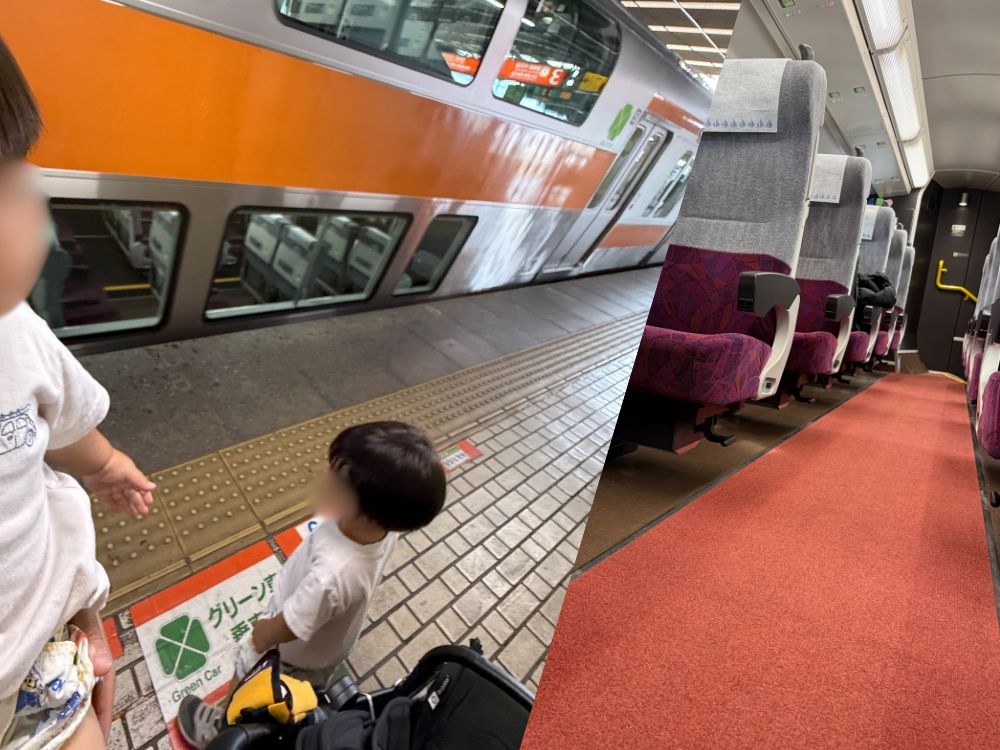
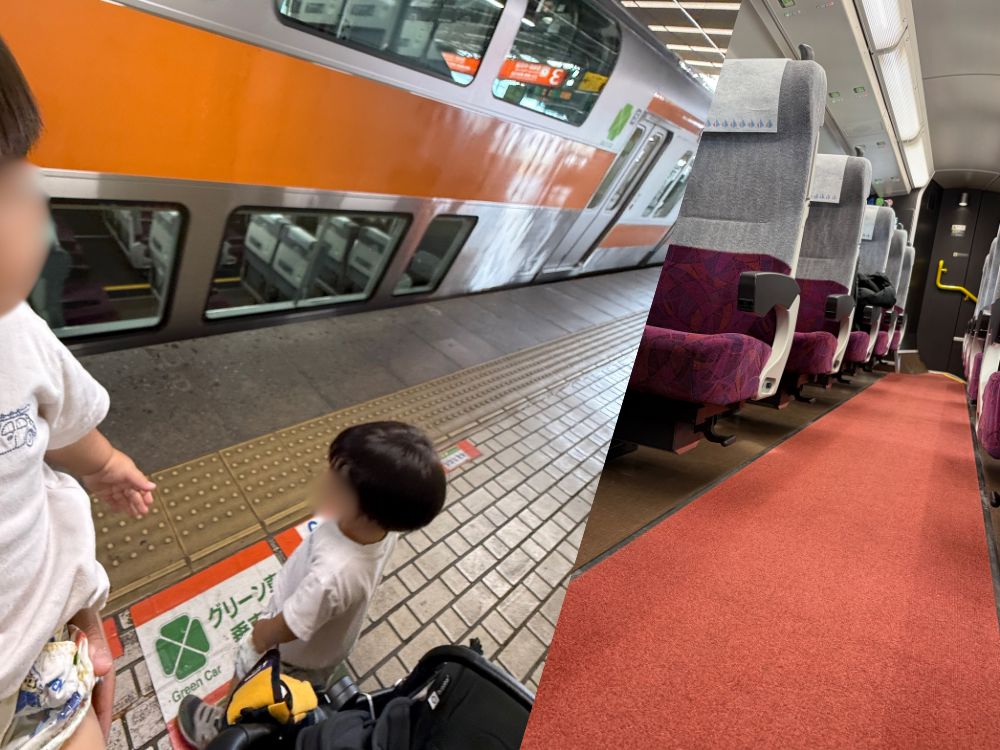
I’ve been making great use of the Green Car on the Chuo Line — honestly, it’s what makes day trips into Tokyo with my kids actually doable! When I tell friends and family how convenient it is, though, it seems like there’s still a bit of a barrier to trying it for the first time.
Green Cars aren’t exclusive to the Chuo Line — they’re also available on the Joban Line, Shonan-Shinjuku Line, and several other routes, and they’re incredibly family-friendly.
I’ve put together everything you need to know about the Green Car right here, so I hope it’s helpful!
日本語版はこちら↓
Why I Recommend It
Free Seats for Preschoolers!
Elementary school-aged children (ages 6–11) ride at half the adult fare, but children under 6 (preschool age) can ride free — up to 2 children per adult.
I don’t usually need all three seats, but just having the seat next to me available makes such a difference. No more worrying about my kids accidentally kicking the person next to them or having a meltdown in a packed train car — it makes the whole journey so much calmer. I’m genuinely grateful for it.
During busy times, giving each child their own seat might not always be possible, but using one adult seat plus one seat for the kids works perfectly fine.

Once, on the way home from a family trip, we all boarded together during a busy time. My husband and I had each of the kids sitting on our laps, when a staff member came over and kindly offered us four seats. So thoughtful!
Staff Patrol the Car Regularly
Staff check the color of the indicator light above each seat and assist passengers as needed. There’s always a reassuring sense of having someone around — and when the car wasn’t too busy, they even gave the kids little cards as a gift! It can be tricky during peak hours, but if you ask, they’ll often hand one over.
As I mentioned with the preschooler policy, the staff proactively checking in makes it a very comfortable experience. They patrol quite frequently, so if you ever need help, don’t hesitate to call out to them!
You Can Get Off Mid-Route Without Any Issue
As long as you don’t exit through the ticket gates, you can transfer to another train going in the same direction. This means you can hop onto a faster train, or stop at a station along the way to grab a bento box. You could even board a train bound for Ome (青梅) and switch to a Takao (高尾)-bound train further along — it’s really flexible.
Even if you need an emergency toilet stop, just board the next train and tap your Suica card on the sensor above the seat again — you’re good to go!
You’ll need to tap again before getting off, but if you forget, a staff member will take care of it for you.
This same method works if you want to change seats mid-journey too!
Tap your Suica on the sensor above your current seat (light turns red), move to a new seat, and tap again (light turns green) — seat change complete! Great for when a better seat opens up, or when your little one suddenly decides they want to sit somewhere else.
Trains Run Frequently
Limited express trains like the “Azusa” and “Kaiji” run less frequently and are fully reserved, so there’s always that pressure of “we absolutely cannot miss this train.” Green Cars run much more often, so you can go at your own pace — even if the kids are having a moment.
Power Outlets & Wi-Fi On Board
Being able to charge your devices is such a bonus. I often see people charging their phones or laptops during the ride.
To use the Wi-Fi, set up the “JR-EAST_FREE_Wi-Fi” access point and register with your email address. I tested it one evening around 8:30 PM when the regular cars were completely packed — the Green Car was about 70% full. On the upper deck, I got around 25 Mbps, which is fast enough for smooth browsing and YouTube.
※ In the lower section at the end of the car (separated by a door), the signal was weaker — I only got a few hundred kbps, maxing out at about 2 Mbps. Even sending LINE messages was a struggle there.
There’s a Trash Can
Being able to toss your trash before getting off — after enjoying snacks and drinks during the ride — is a small but wonderful perk. My routine is to head to the landing area with the kids one stop before our destination, throw away the rubbish, and get ready to disembark.
Seats Can Be Rotated
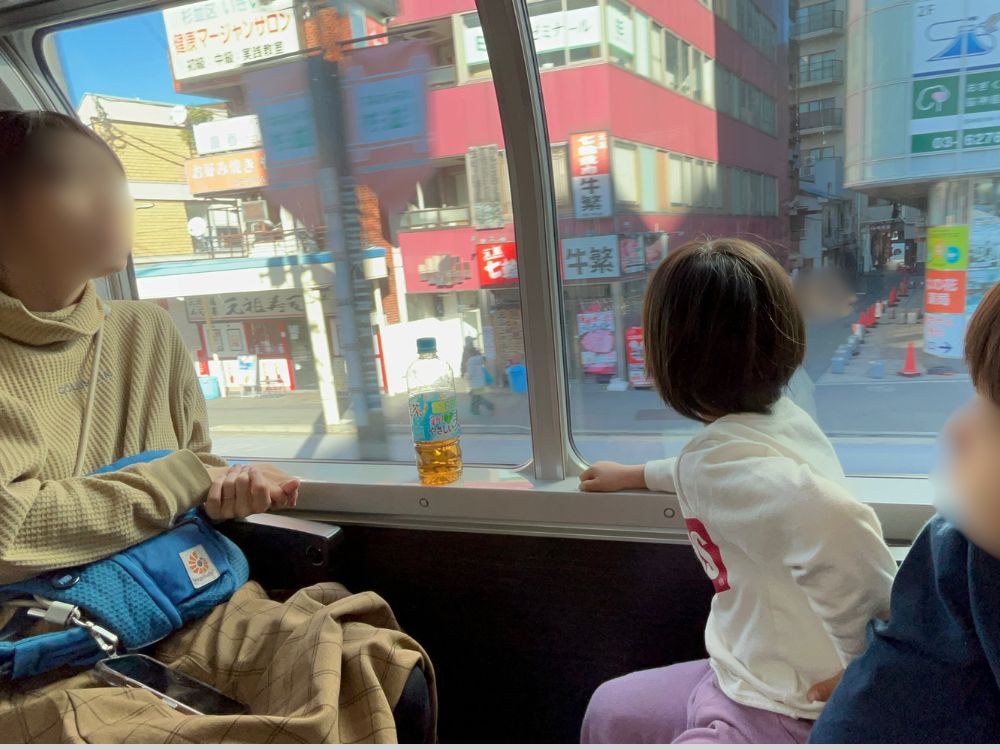
If you’re using all four seats, you can rotate them to face each other — just like on a Shinkansen (bullet train). When we did this as a family, a staff member came over and suggested it for us, and the kids were absolutely thrilled.
Press the pedal at the base of the seat to unlock it, then rotate — it’s easier than it sounds!
How to Buy a Ticket & Fares
Here’s a breakdown of the fares. Buying in advance with Suica is by far the better deal.
| Distance | Advance Purchase: Suica Green Fare | On-Board Purchase / No Suica |
| Up to 50km (e.g. Tokyo–Hachioji) | ¥750 (approx. $5.00 USD) | ¥1,010 (approx. $6.75 USD) |
| Up to 100km (e.g. Tokyo–Otsuki) | ¥1,000 (approx. $6.70 USD) | ¥1,260 (approx. $8.40 USD) |
How to Buy with Suica
Mobile Suica (Smartphone App)
Open the Mobile Suica app → tap “Green Ticket” at the bottom → tap “New Purchase” → enter your boarding and alighting stations → tap “Next” in the top right → review the confirmation screen, select your payment method, and complete the purchase.
Tickets are valid on the day of purchase only.
For Refunds
Refunds through the Mobile Suica app incur a flat fee of ¥220 (approx. $1.50 USD).
If you weren’t able to board due to a full car, let a staff member know on board. You can also get a refund at a ticket window (みどりの窓口 — a staffed service counter found at major JR stations).
Note: Once you tap the sensor above a seat, the ticket can no longer be refunded, so be careful.
Physical Suica Card
Insert (or place) your Suica card at a ticket machine in the station, select your destination, and pay from your card balance.
For Visitors from Abroad — About Welcome Suica
- Physical Card (Welcome Suica): Available for immediate purchase at dedicated vending machines in airports and major stations. No deposit required.
- Mobile (Welcome Suica Mobile): Download the app and set it up via Apple Pay (iPhone). You can issue and top up the card before or after arriving in Japan.
Having one of these set up will make your whole trip so much smoother — not just for the Green Car, but for all your travel around Japan!
Where to Put Your Stroller on the Green Car
Since the Green Car is double-decker, there’s a landing area at the base of the stairs. It has handrails, and as long as your stroller can be secured, you’re welcome to leave it there unfolded. I didn’t know this at first and tried to carry it all the way to my seat — navigating those narrow stairs and aisles with a stroller is quite the challenge! Ever since a staff member showed me the landing area, I leave the stroller and bulkier bags there and just bring essentials and snacks to my seat.
How to Spend the Ride
Eating and drinking in regular train cars can feel a bit awkward, but the Green Car has fold-out tray tables and eating is officially permitted. Since cleaning up food spills with kids is no fun, I try to pack snacks that are less likely to make a mess.
The windows are low enough that the kids can see the scenery from their seats, so I let them take their shoes off and relax freely.
The tray table is attached to the seat in front of you, so I make sure the kids don’t bang on it too hard!
Upper Deck or Lower Deck — Which is Better?
Personally, I’d recommend the upper deck for families with kids. The view is obviously better up there, but I also get the impression that the lower deck tends to attract passengers who specifically want a quieter, more peaceful ride.
The upper deck feels a bit livelier — people chatting with friends, working on laptops, or traveling with kids. It’s a more relaxed, social atmosphere.
The lower deck, on the other hand, seems to be preferred by those who want to read or sleep undisturbed.
As long as there are empty seats, you’re free to move between decks — so feel free to try both!
If the vibe around you feels a little uncomfortable, just move to a different spot. No need to stress about it!
What You Can See Out the Windows (Tokyo toward Tama Area)
Left Side (South-Facing)
Just after departing Tokyo Station, you’ll spot plenty of Shinkansen (bullet trains) and local trains passing by!
The scenery gradually shifts from a dense skyline of high-rise buildings to quiet residential streets. If you’re heading all the way to Otsuki, the dramatic gorges past Takao are truly spectacular.
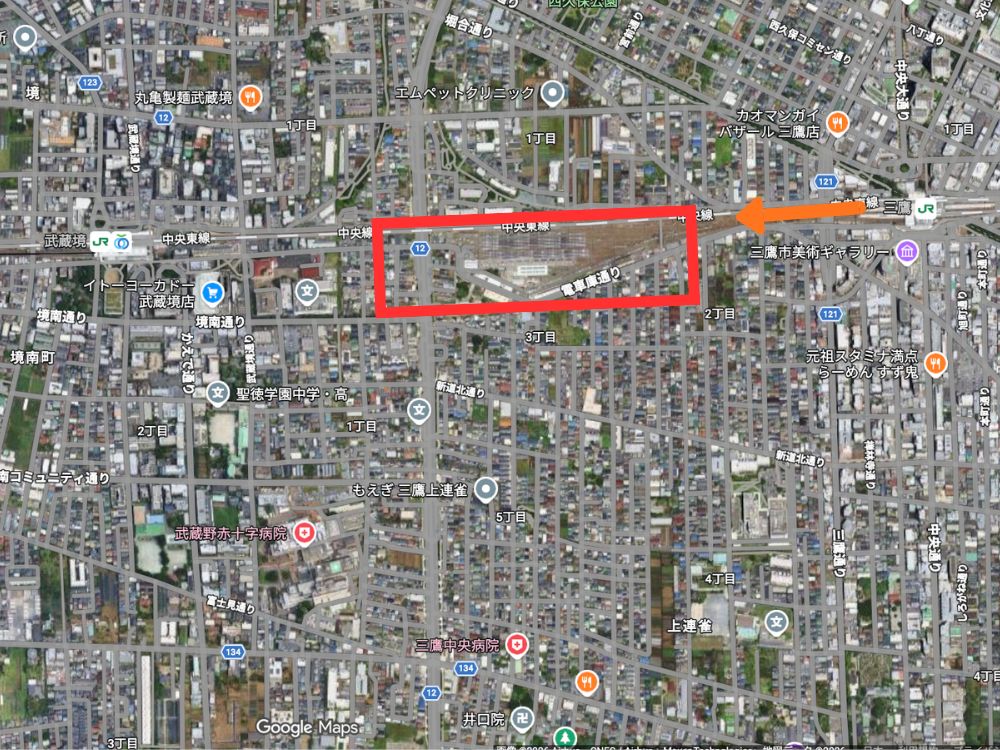
Between Mitaka and Musashi-Sakai stations, you’ll pass the Mitaka Train Depot, where you can spot rolling stock used on the Tozai Line and Sobu Line.
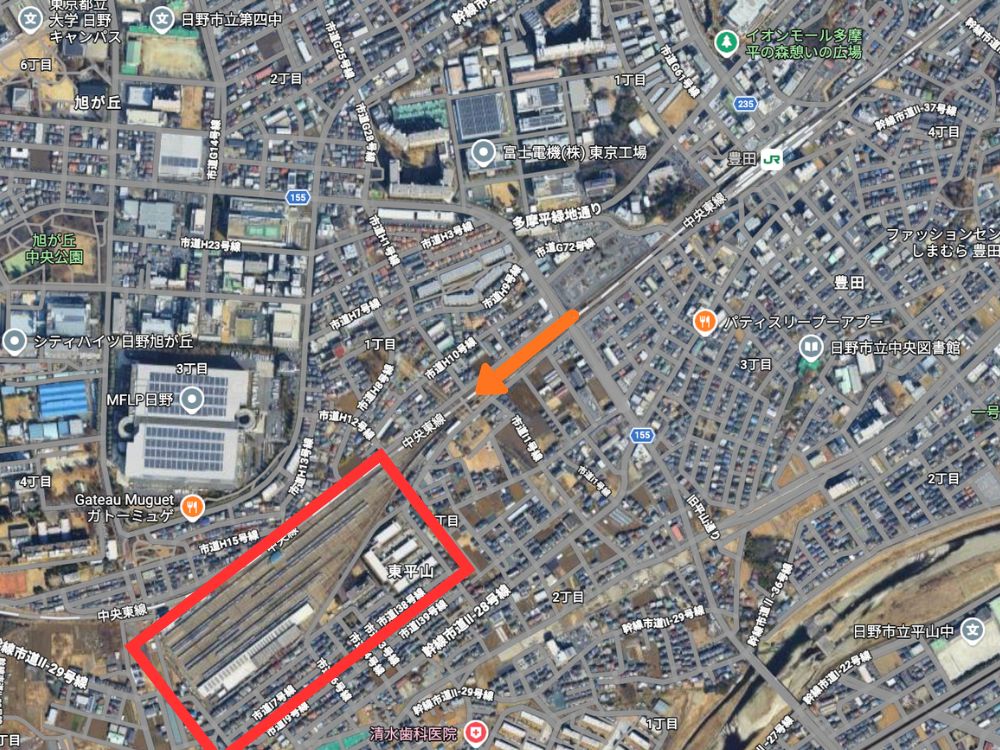
Between Hino and Toyota stations, the Toyota Train Depot comes into view — rows upon rows of Chuo Line and limited express trains lined up side by side. Even if you’re not a train enthusiast, it’s genuinely impressive (ha)!
Since my kids are big train fans, this is the side we tend to choose!
Right Side (North-Facing)
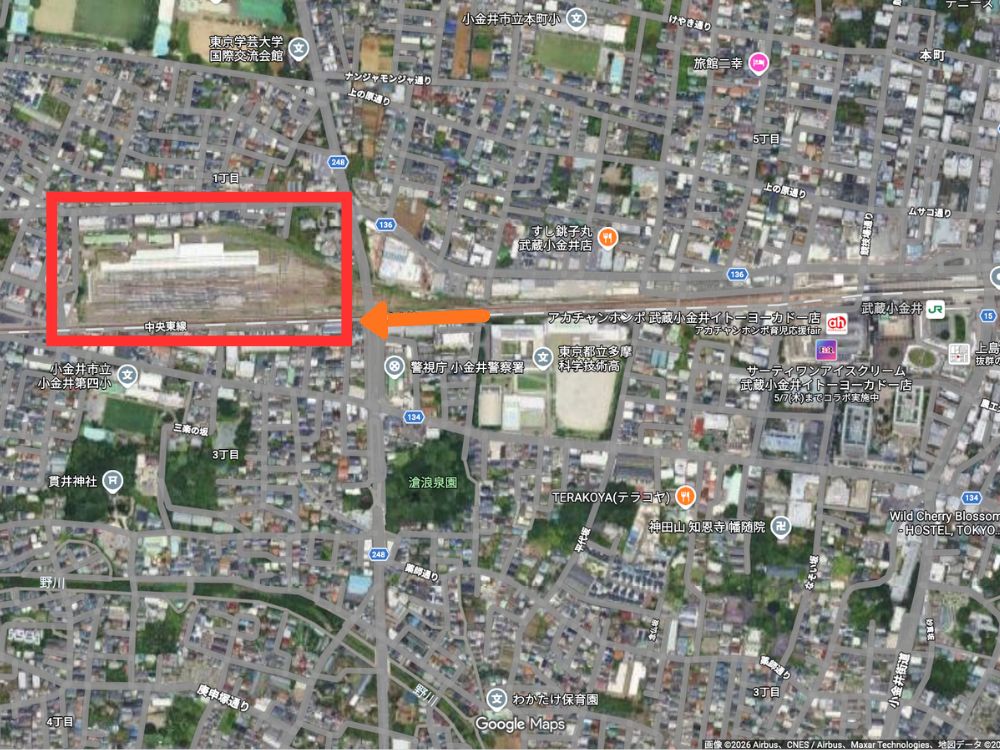
Between Musashi-Koganei and Kokubunji stations, you’ll find the Toyota Depot Musashi-Koganei Branch, where — depending on the time of day — a large number of Chuo Line trains are visible.
On the evening outbound journey, the setting sun can be quite glaring on the left side — but this side stays comfortable.
Which Seat Should You Choose?
My personal recommendation is seats near the staircase. If the kids get restless and want to get up, they can head straight to the landing area without disturbing other passengers.
It’s also easy to pop over to the stroller to grab something, and getting on and off the train is so much simpler.
Front Row: Great if you’re worried about your kids accidentally kicking the seat in front.
Back Row: Perfect when you want to recline without feeling guilty about the person behind you.
Either way, if you manage to snag one of these — lucky you!
Things to Watch Out For
You’re Charged Just for Being in the Landing Area
If there are no seats available and you need to move to a regular car, a refund is possible — but once you’ve tapped the sensor, it becomes difficult, so be mindful of that.
As mentioned earlier, if you couldn’t get a seat because the car was full, there’s no handling fee for the refund. Just let a staff member on board know and they’ll sort it out smoothly.
The Cars Adjacent to the Green Car Can Get Crowded
Not every Chuo Line train has a Green Car, so passengers who don’t use it tend to cluster in the cars on either side of the Green Car section. If you want to avoid the crowd, the cars at the far ends of the train are generally less busy.
There’s No Diaper-Changing Area in the Green Car
There is a toilet in Car 4 (the Green Car), but the accessible/multi-purpose restroom is in Car 6 (or Car 4 on trains without a Green Car). It’s best to take care of diaper changes before boarding, but if you need to step off at a station to use the facilities and re-board, there’s no extra charge as long as you don’t exit through the ticket gates.
Wrapping Up
Riding the Green Car makes me wonder how I ever managed with the regular cars. It’s just that much more comfortable.
Green Cars are available on more than just the Chuo Line — you’ll find them on the Yokosuka Line, Joban Line, Shonan-Shinjuku Line, and more. Details like power outlets and restrooms vary by train, but the way you ride is essentially the same across all of them. If you’re planning a trip, I genuinely recommend giving it a try!
I hope this was helpful. Thank you so much for reading all the way to the end!