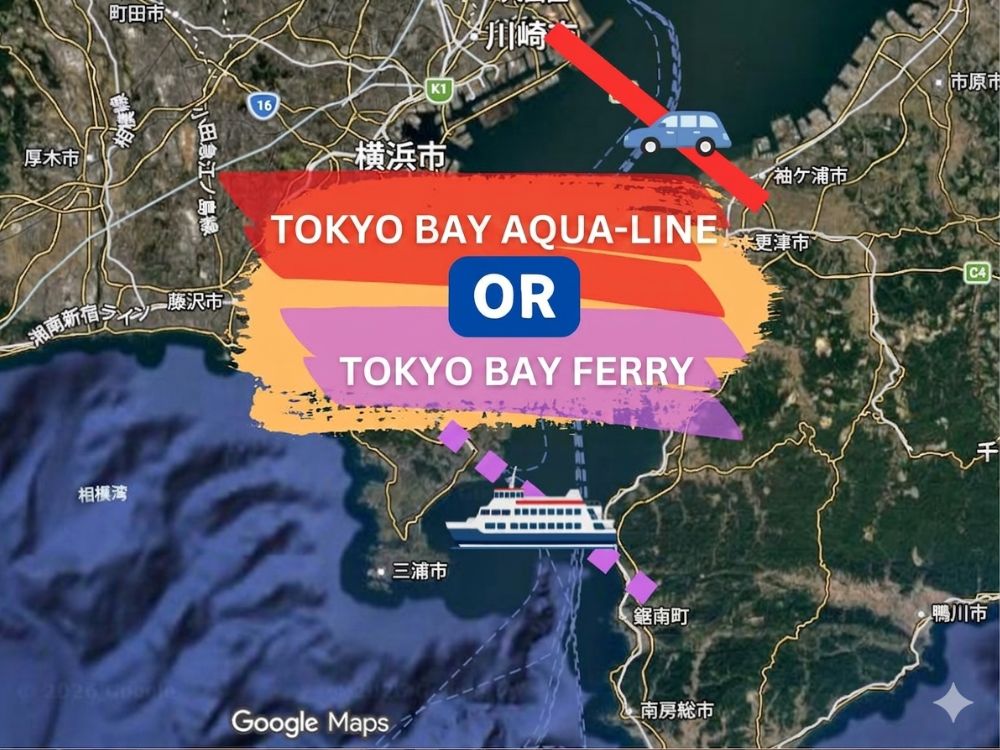
I always assumed the Tokyo Bay Aqua-Line was the only way to travel between Tokyo and the Boso Peninsula in Chiba — but it turns out there’s a car ferry running right nearby!
We usually drive the Aqua-Line both ways, but one day I thought — wait, there’s a ferry! — and decided to try it on a trip to Tateyama.
We drove in via the Aqua-Line from the Tokyo side, then took the Tokyo Bay Ferry from Chiba back across to Kanagawa on the return. This post covers what both experiences were like and the best spots to visit along the way.
Aqua-Line vs. Tokyo Bay Ferry: A Full Comparison
From Tokyo or Kanagawa, there are roughly three ways to reach the Boso Peninsula.
On the map below, the blue sections are expressways. The Ken-O Expressway (light blue) tends to stay fairly clear, but the Wangan/Higashi-Kanto/Keiyo routes (dark blue) frequently back up around the toll plazas — even on weekdays during commute hours.
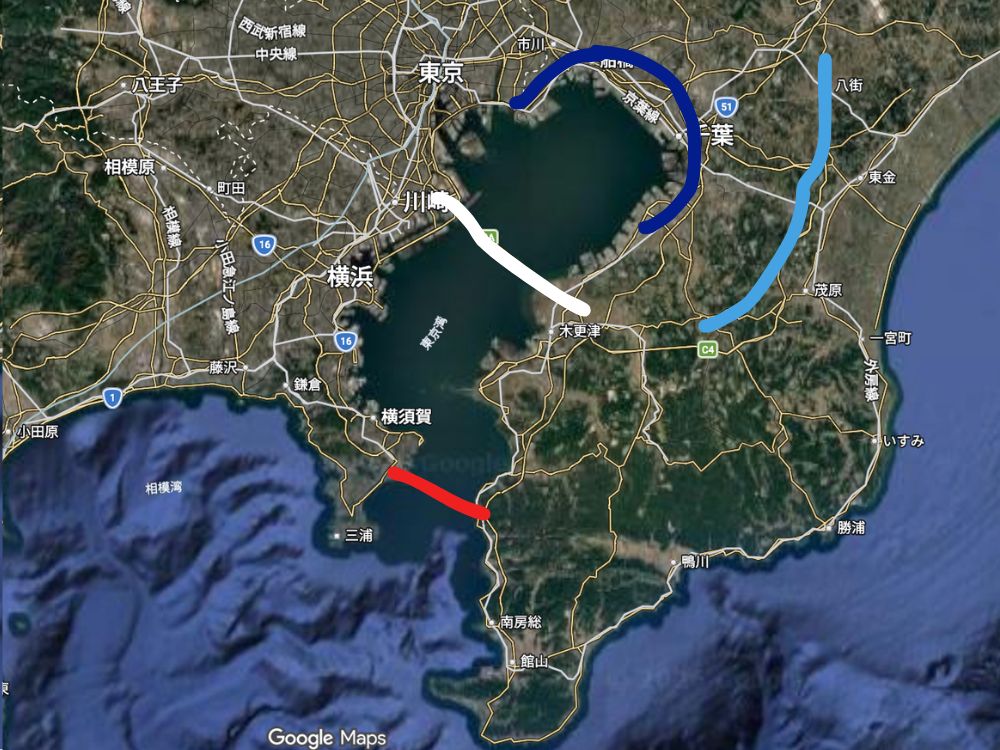
The white line is the Aqua-Line. When merging from the Metropolitan Expressway Bay Shore Route onto the Aqua-Line, traffic can back up well before the junction on busy days.
Personally, if you’re not used to Japanese expressway driving, it’s easy to miss the timing to merge and overshoot the Aqua-Line exit.
When heavy traffic is expected, we often exit the expressway and enter the Aqua-Line from a regular road instead. The time difference isn’t huge, but once you’re stuck in a queue on the Aqua-Line, there are no rest stops for over an hour until Umihotaru — so the safer option is worth it.
The red line is the ferry route. You drive to the tip of the Miura Peninsula and board there, arriving at Kanaya Port on the Chiba side.
The Tokyo Bay Aqua-Line is a ~15km toll road that crosses Tokyo Bay, connecting Kawasaki City (Kanagawa Prefecture) and Kisarazu City (Chiba Prefecture) via a combination of undersea tunnel and elevated bridge.
Umihotaru (literally “sea firefly”) is a rest stop built on an artificial island at the midpoint of the Aqua-Line. The 5-story building has restaurants, shops, and an observation deck with panoramic views of Tokyo Bay. On clear days, you can see Mount Fuji. It’s a popular stop when crossing the Aqua-Line — but it gets very crowded on weekends.
Travel Time Comparison
By Road (via Aqua-Line)
The Aqua-Line is about 15km, so when traffic is clear it takes around 15 minutes to cross. On busy weekends and holidays, it can take up to an hour just to get through — and that’s before you factor in the backup leading up to the entrance. Merging can feel stressful, and there’s nowhere to stop once you’re on it.
By Ferry (Kanaya Port → Kurihama Port)
The crossing takes about 40 minutes. Plan to arrive at the port 30 minutes to an hour before departure to buy tickets and join the waiting queue.
Depending on your destination, when you factor in the drive to the port, the total travel time is often not that different from the Aqua-Line.
Cost Comparison (Standard Car, One Way)
Here’s a rough comparison of Aqua-Line tolls vs. Tokyo Bay Ferry fares.
- Aqua-Line (ETC): ¥800 (~$5) weekdays / ¥400–¥1,600 (~$3–$10) weekends & holidays (varies by time of day) + expressway fees before and after
- Tokyo Bay Ferry: ¥4,900 (~$32) for a standard car including the driver’s passenger fare + ¥1,000 (~$6) per additional adult / ¥500 (~$3) per child
Aqua-Line Congestion Tips
Peak congestion — especially Sunday afternoons between around 3 PM and 6 PM — also means higher tolls and a very crowded Umihotaru. If your schedule is flexible, adjusting your departure time can make a big difference!
To use the ETC lanes on the Aqua-Line, you need an ETC card separate from the in-car unit. You can rent an ETC card from most rental car companies — just ask when you pick up the car. Without an ETC card, you’ll pay the cash toll rate, which is roughly 3x the ETC price for a standard car. It’s well worth renting one!
Ferry Schedule & Buying Tickets
On weekdays, ferries run every 2 hours. On weekends and holidays, they run every hour. Service runs from around 6 AM to 7 PM.
There are no reservations — it’s first come, first served for everyone. During peak periods like Golden Week (early May) and Obon (mid-August), you may need to wait for 1–2 sailings, so plan to arrive with extra time.
Ferries may be cancelled or delayed in bad weather, particularly during typhoon season (July–October). Check the official website or call ahead the day before or morning of your trip to confirm sailings.
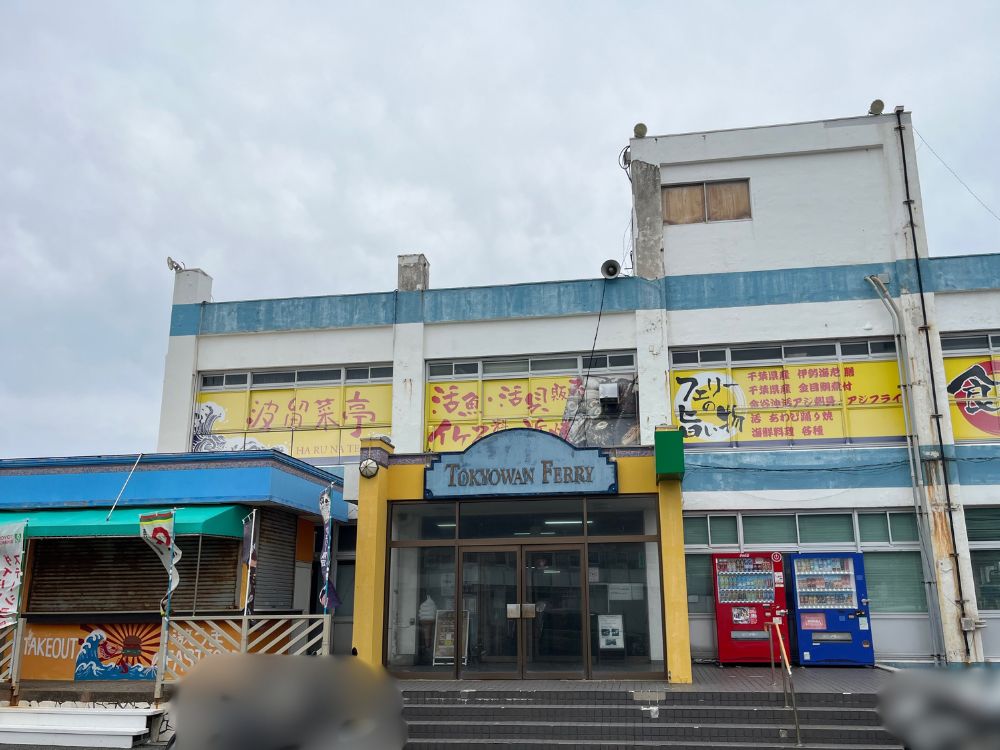
The ticket office at Kanaya Port (Chiba side) is in this building.
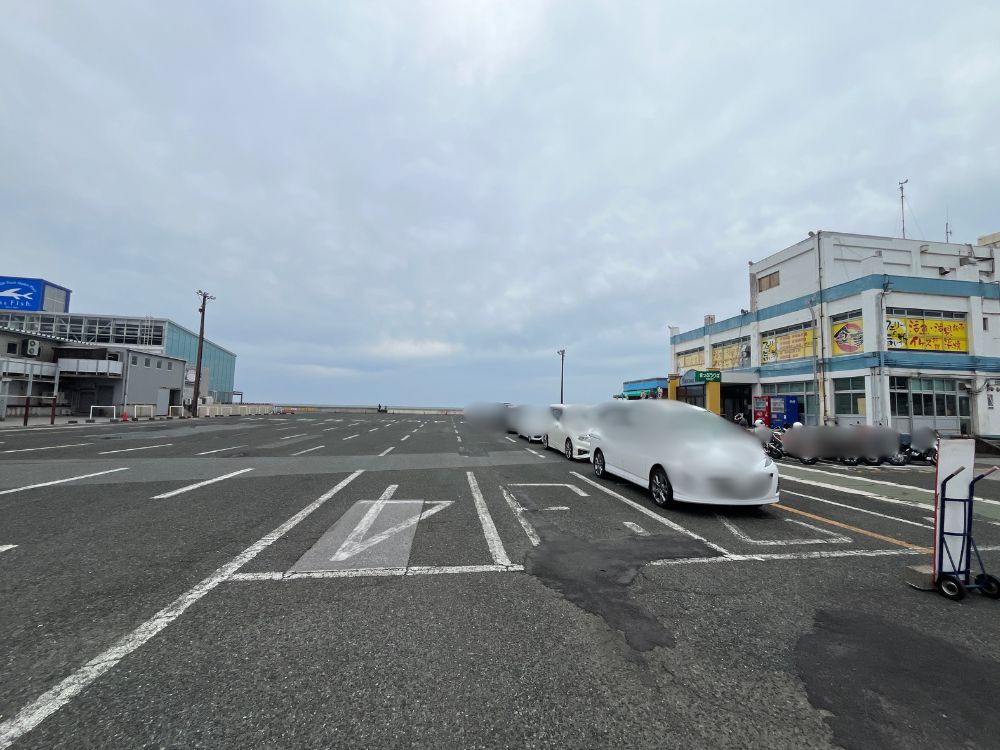
You queue your car like this — your position in line becomes your boarding order. It’s fine to park first and then go buy your ticket.
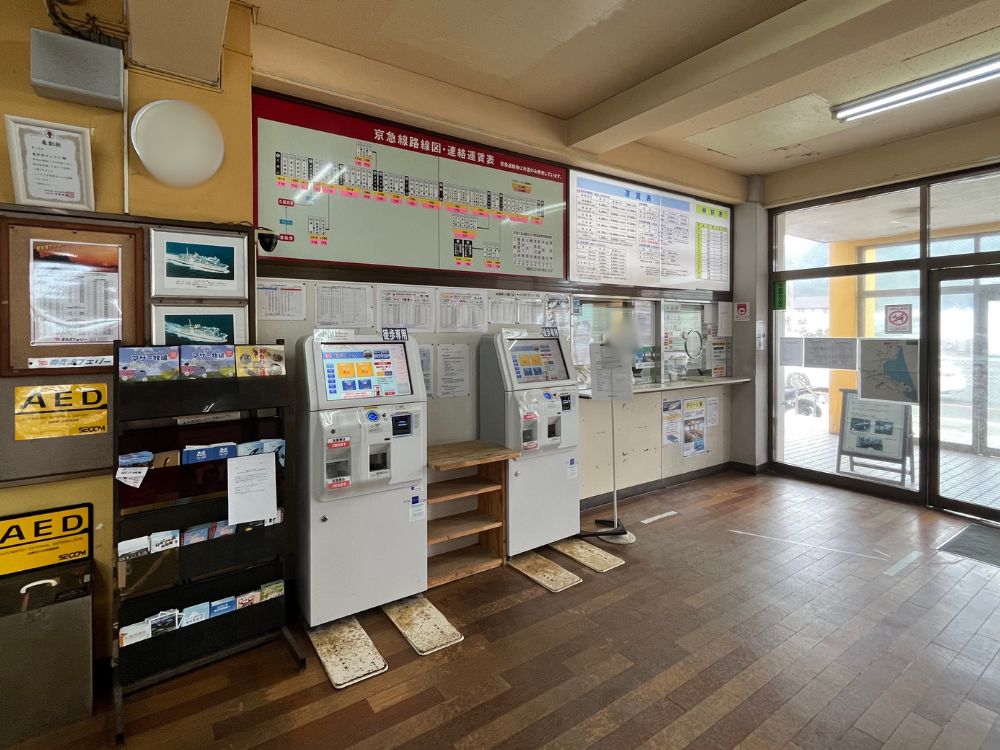
The ticket machines are for walk-on passengers only. If you’re arriving by car or motorcycle, buy your ticket at the staffed counter.

Tickets are available at the counter near the boarding area. Boarding starts about 20 minutes before departure — and since everyone boards in their car, getting your ticket early gives you peace of mind!
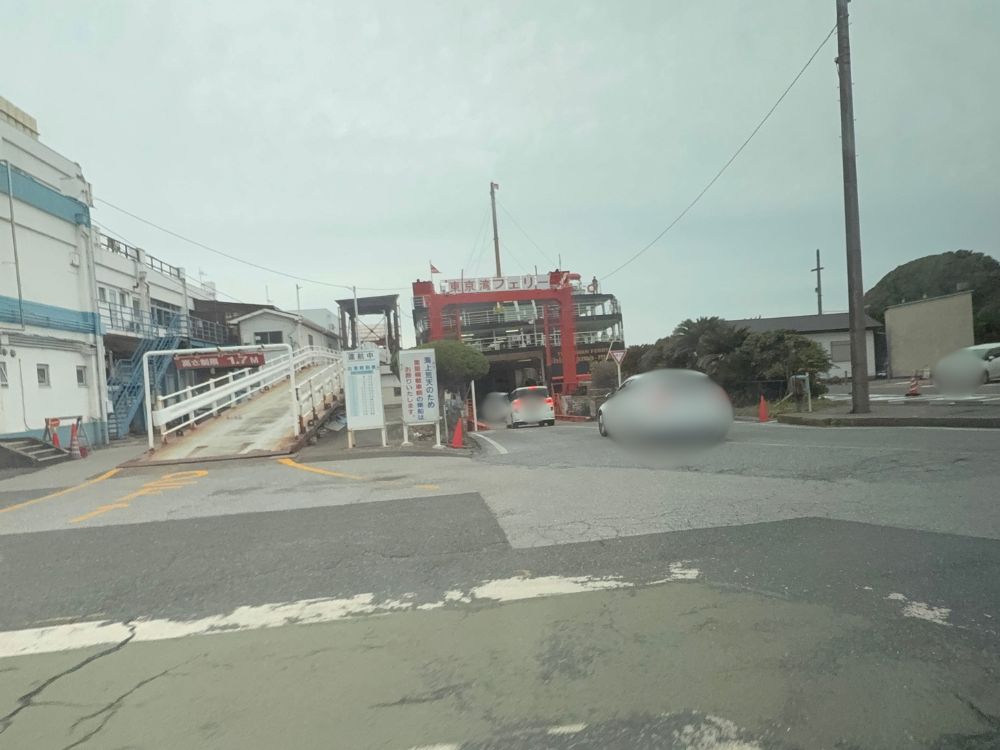
Follow the staff directions as you board. Passengers stay in their cars as they drive on.
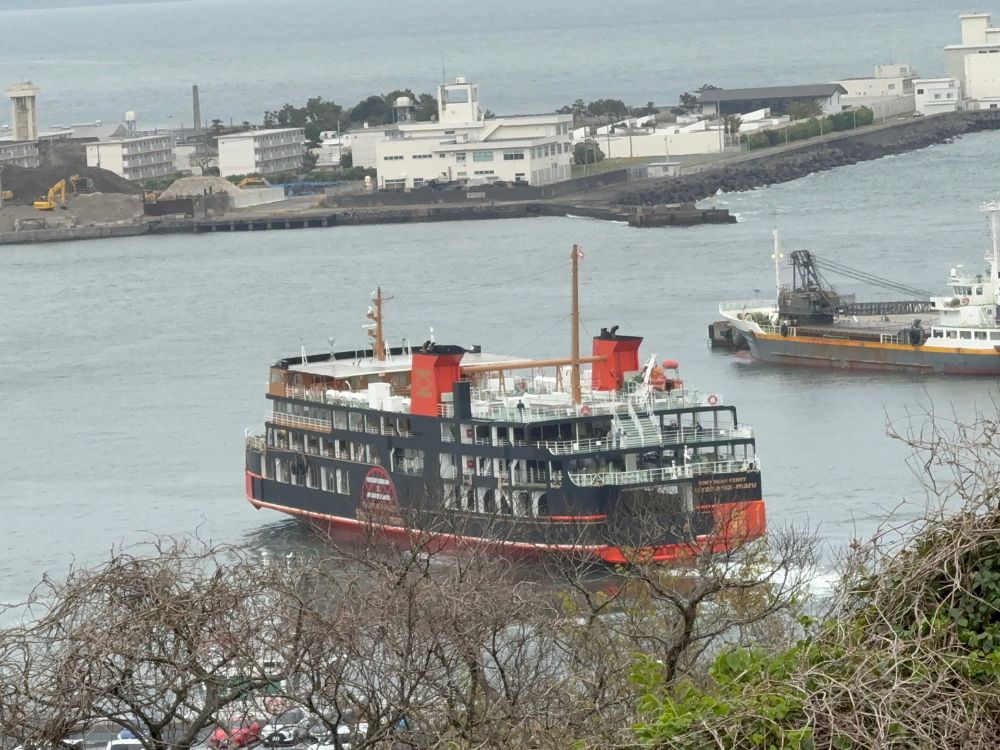
Two ferries alternate on the route — the Kanaya Maru (white) and the Shirahama Maru (black, with a “Black Ship” wrap design). Which one you get is part of the fun!
We got the Shirahama Maru — the black ship version!
Inside the Ferry
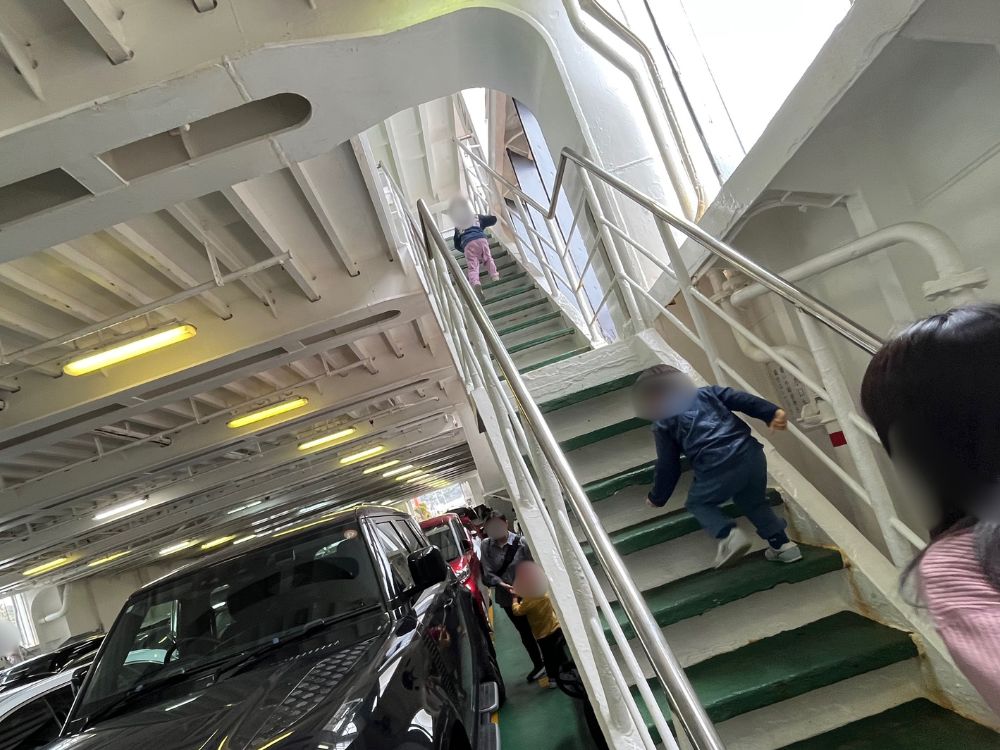
After parking your car, head up to the passenger decks. Watch your step — the floor can be wet!
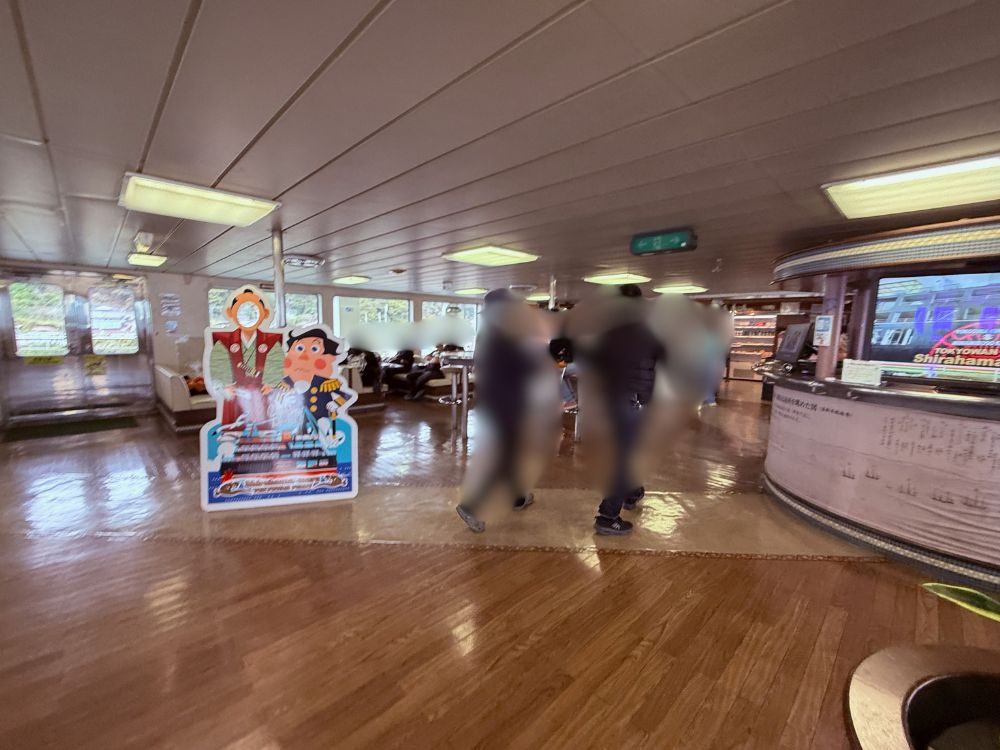
It’s surprisingly spacious inside — the passenger area is spread over two floors.
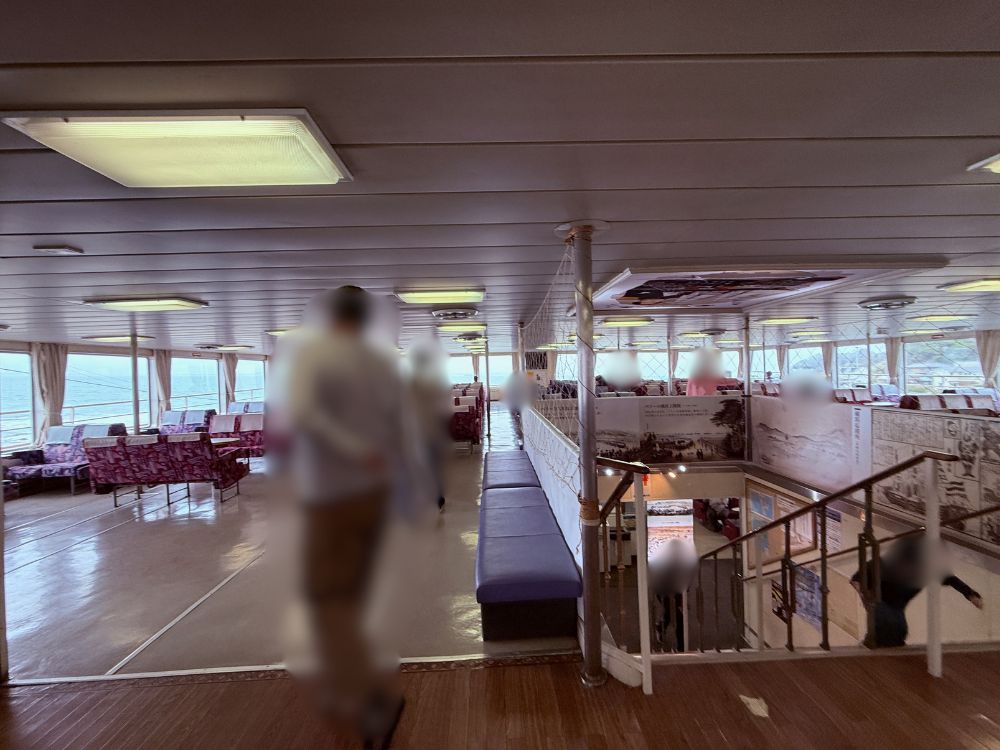
An interior staircase connects the two floors.
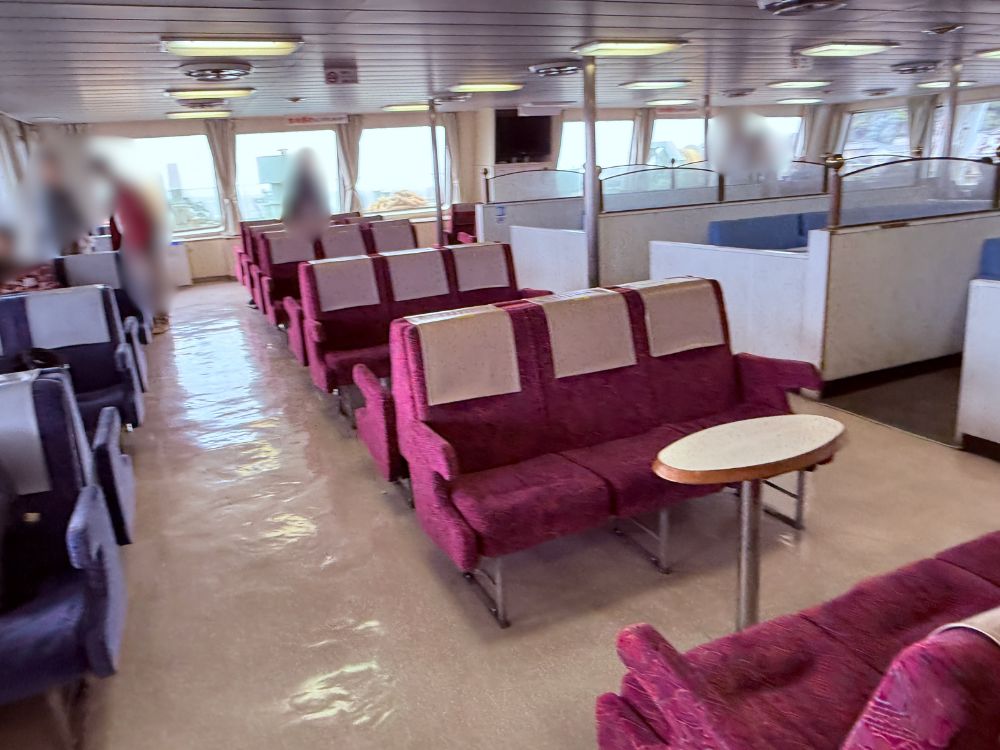
The seating inside has a comfortable, relaxed feel.
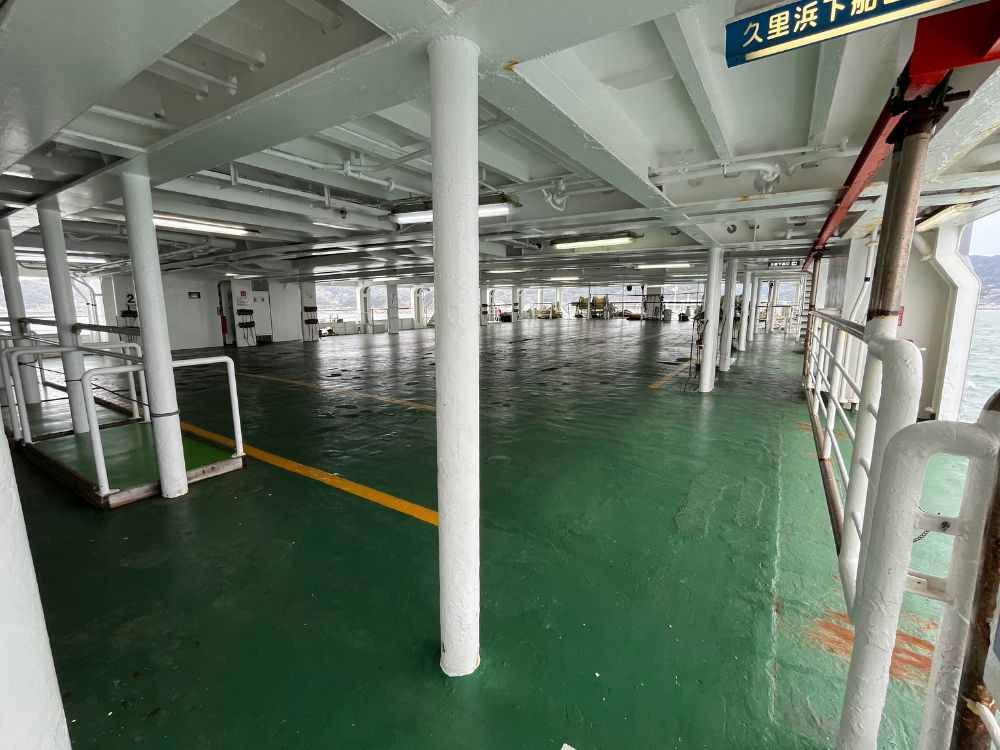
The rear deck on the first floor is very spacious — open air but nothing set up there.
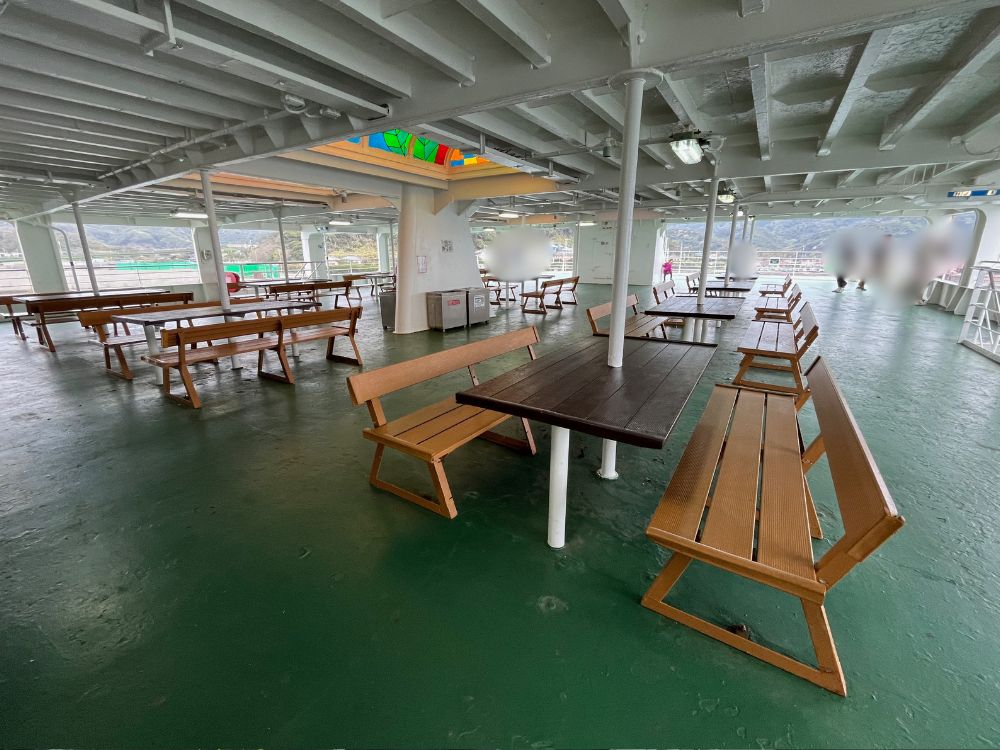
The second floor is partially open-air, but the covered section has benches and tables — great for grabbing a snack from the onboard shop. On a clear day, the sea breeze up here is lovely.
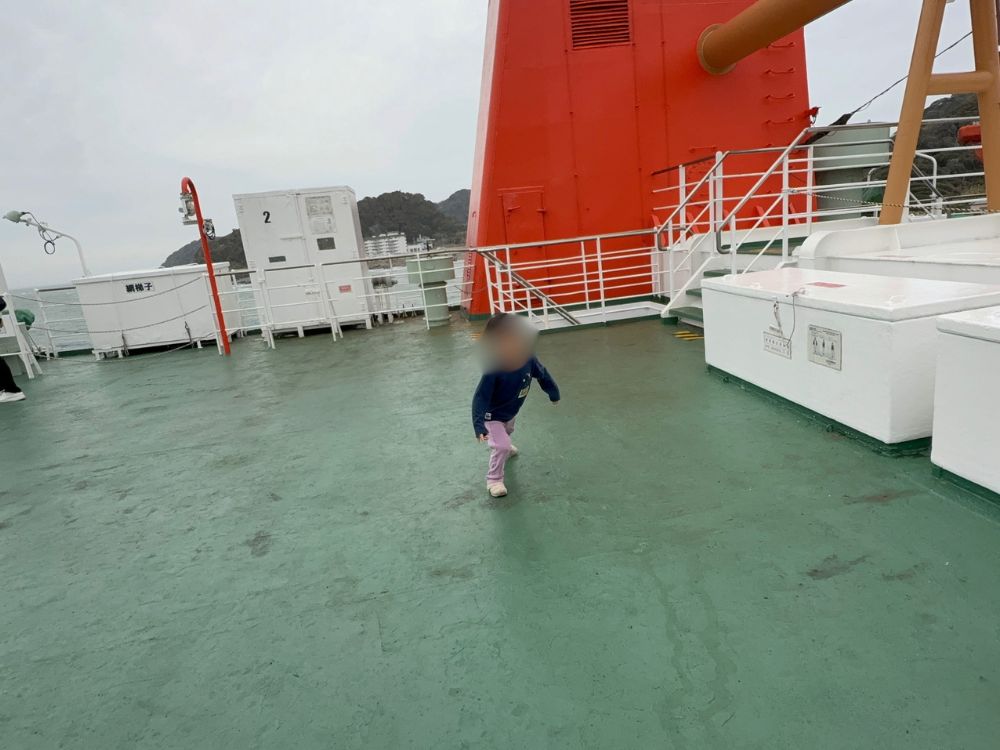
The rooftop deck is huge — the kids (and the dads) were absolutely thrilled up there.
When travel itself becomes part of the adventure, that’s something a car trip just can’t match!
The Private Room (Green Room)
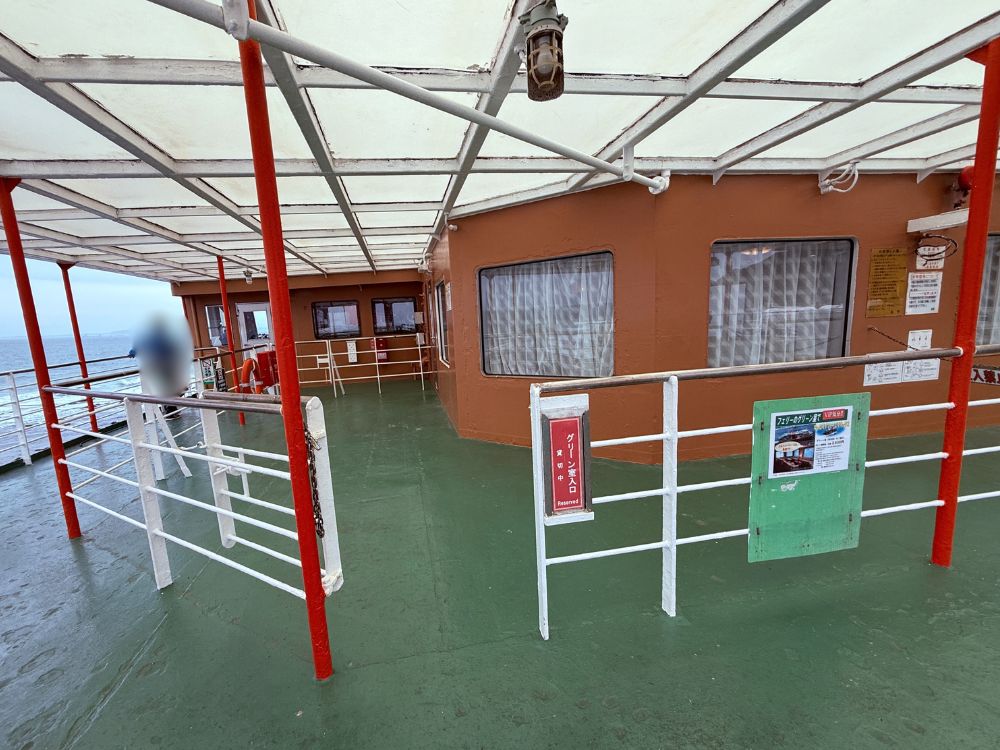
On the top deck there’s a paid private room — the Green Room. The fee is ¥3,500 (~$23) per room, and it can accommodate up to 20 people. Just mention it when you buy your boarding ticket at the counter.
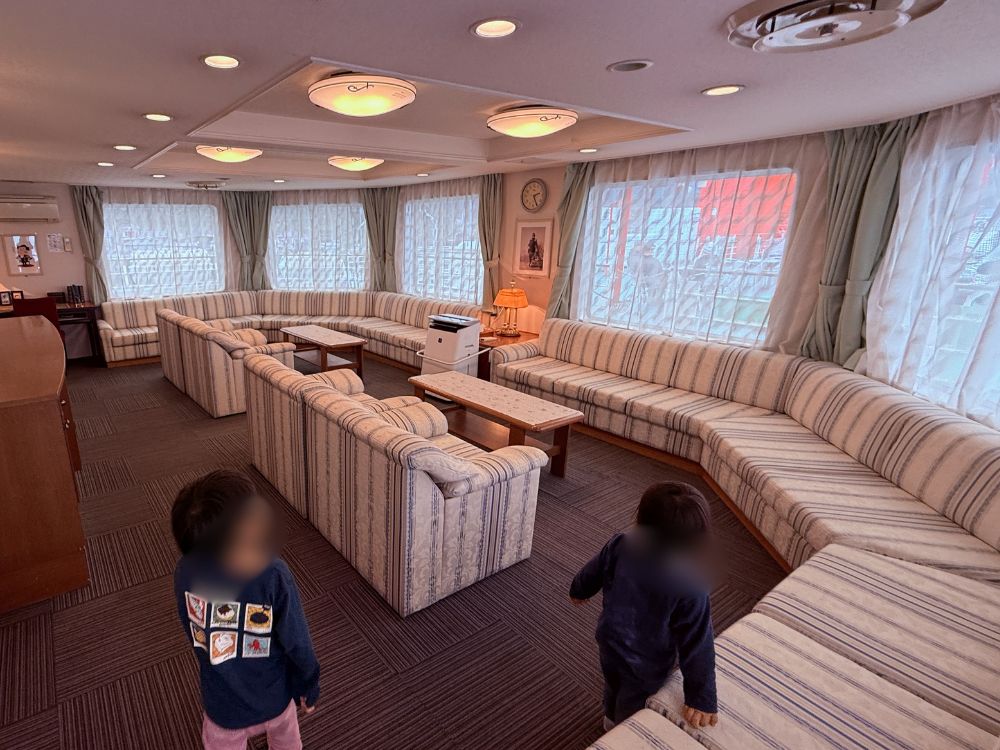
It’s at the front of the ship, so the windows face the deck rather than the open sea — not a full ocean view, but it’s a spacious, comfortable private space.
We tried the Green Room since we were two families together. Honestly, the crossing is only 40 minutes — and with the ocean views outside, I think the open decks are more than enough to enjoy the experience. Not sure it’s worth the extra cost!
Onboard Shop
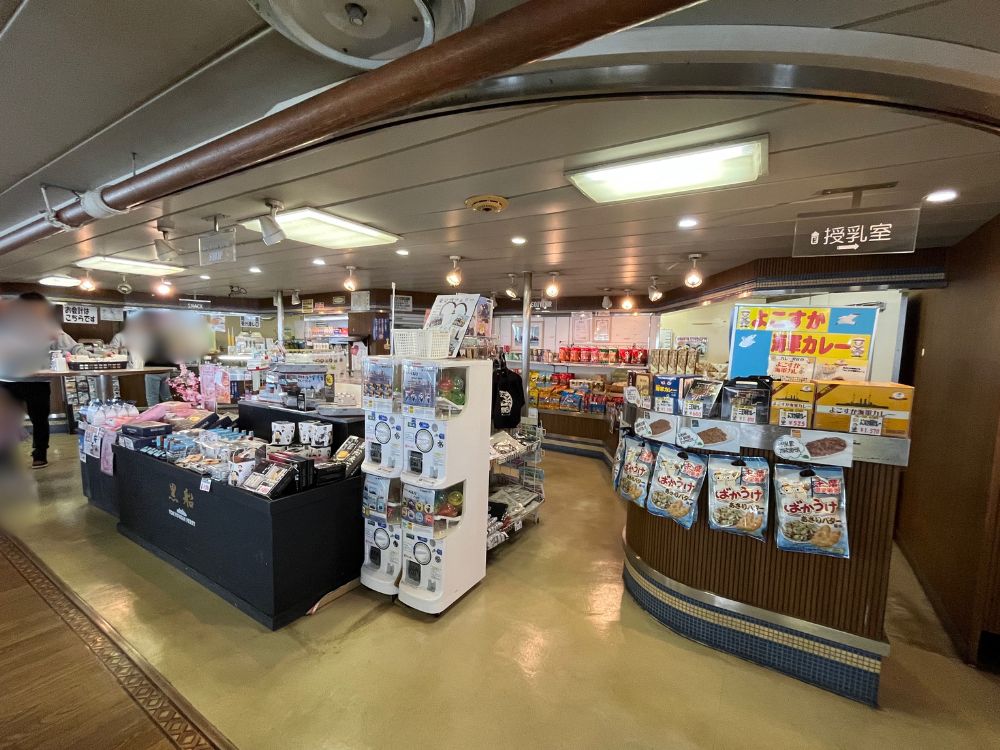
There’s a small shop onboard selling light snacks. We didn’t buy anything this time, but they also carry souvenirs alongside the food.
Nursing Room & Baby Facilities
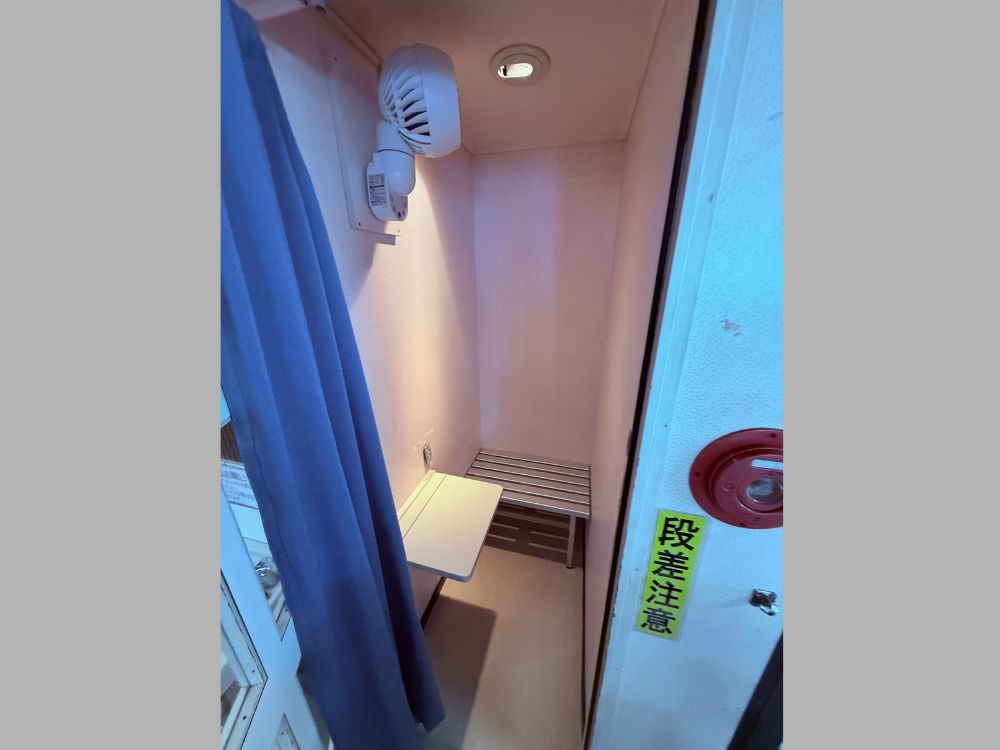
There’s a nursing room right next to the onboard shop — a small single-person space.
There’s a diaper changing table in the women’s restroom (my husband confirmed there wasn’t one in the men’s).
The crossing is only about 40 minutes, so you can usually time feeds around it — but it’s reassuring to know the option is there just in case!
What to Do Nearby
Kanagawa Side (Kurihama Port) | Kurihama Flower Country
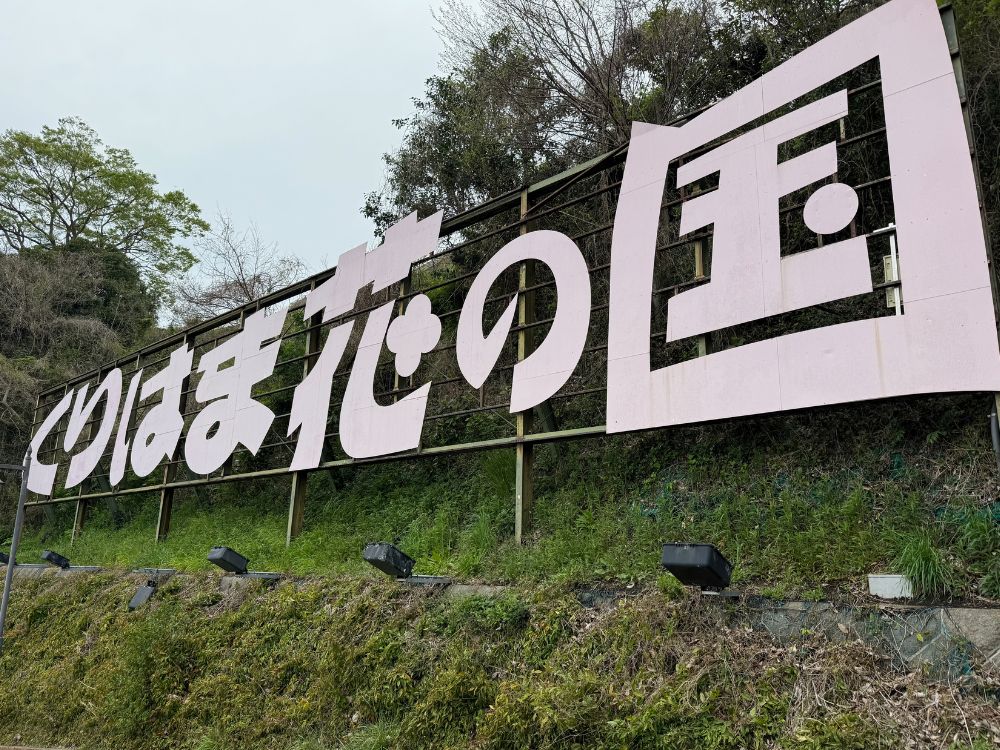
Just a 10-minute walk from Kurihama Port is Kurihama Hana no Kuni (Flower Country) — a free public park in Kanagawa.
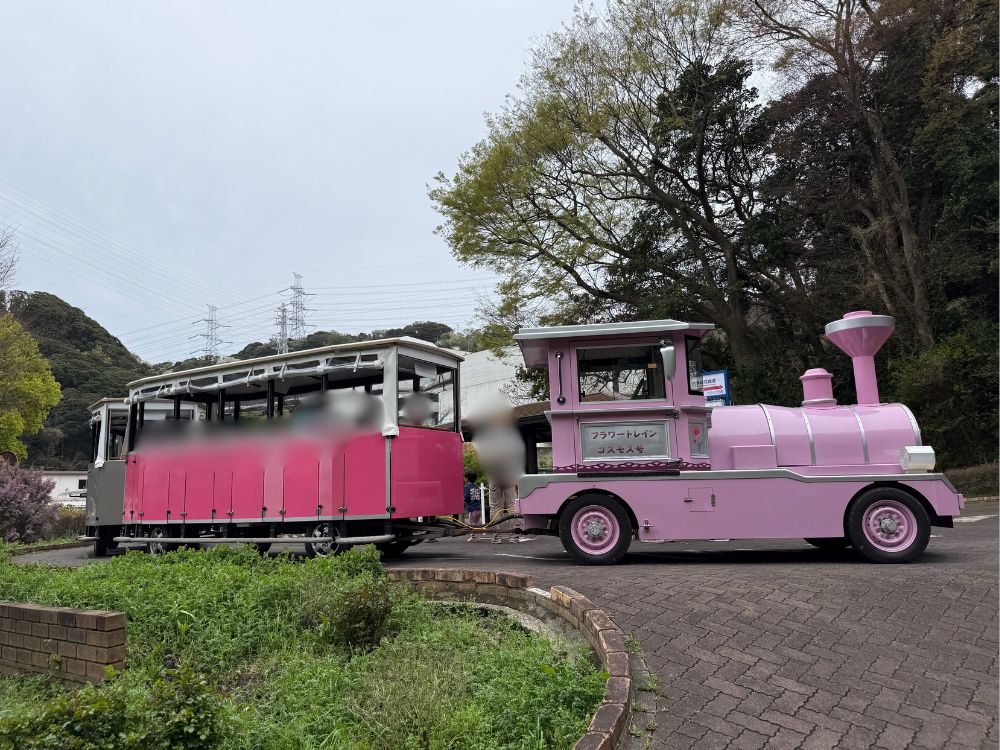
In spring, 1 million poppies bloom; in autumn, it’s 1 million cosmos. The park is so large it has its own park train — a steam locomotive-style bus — running through the grounds.
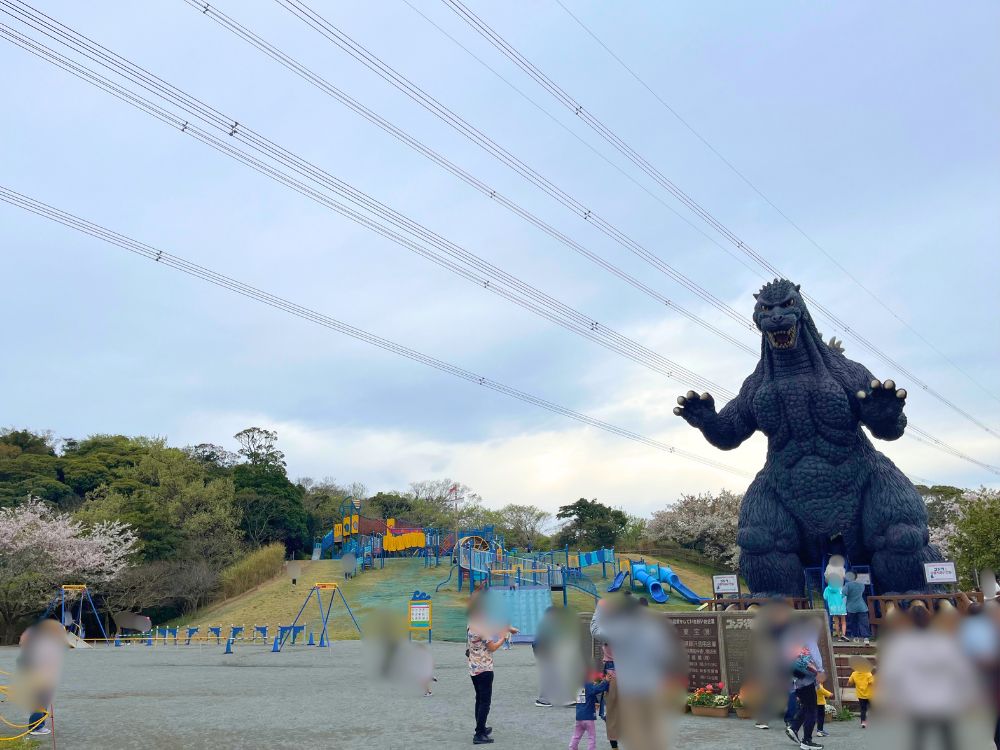
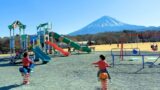
There are several play areas in the park. The “Adventure Land” zone has a giant 10-meter Godzilla slide that sent the kids absolutely wild! There’s also a rope slide, climbing frames, and a bouldering wall — plenty of room to run around.
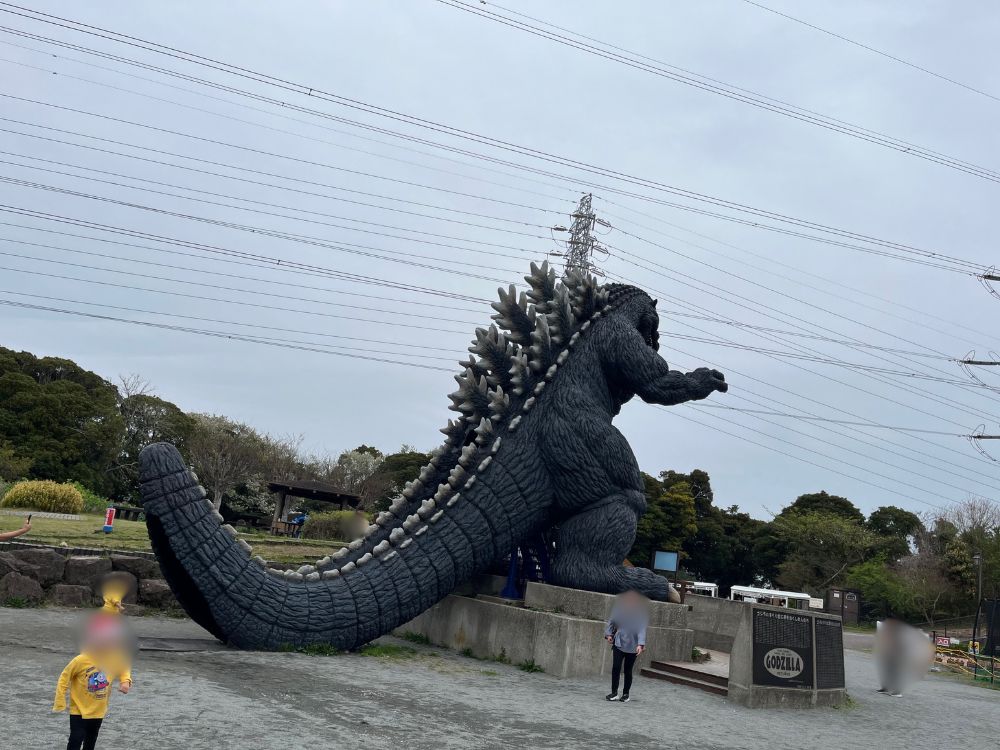
You slide out from Godzilla’s tail!
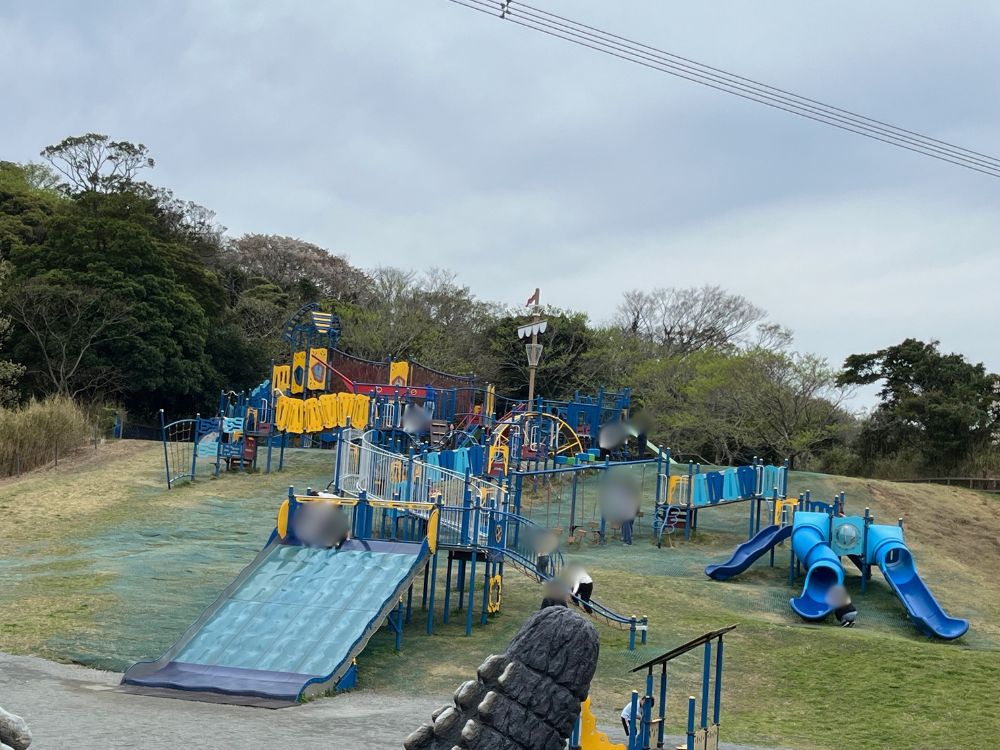
The playground equipment is great — the kids had a fantastic time.
There are also beautifully maintained seasonal flower areas perfect for a stroll. Best of all — entry is free (some facilities have a small fee)!
Chiba Side (Kanaya Port)
Shops & Restaurants at the Port
Right next to Kanaya Port on the Chiba side, you’ll find souvenir shops and restaurants. There’s local Chiba food to browse and enjoy, plus sit-down dining options.
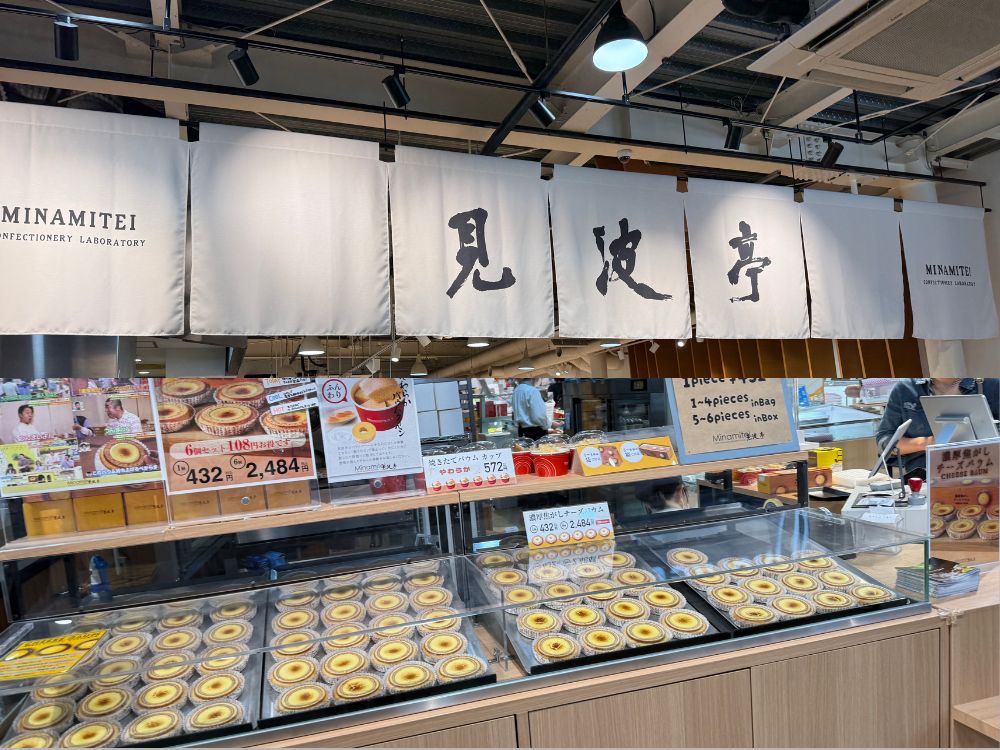
Mihatatei is a Baumkuchen shop using Chiba-grown ingredients — a proper local specialty. The Baumkuchen (a German-style layered cake, very popular in Japan) was delicious, and so was the cheesecake!
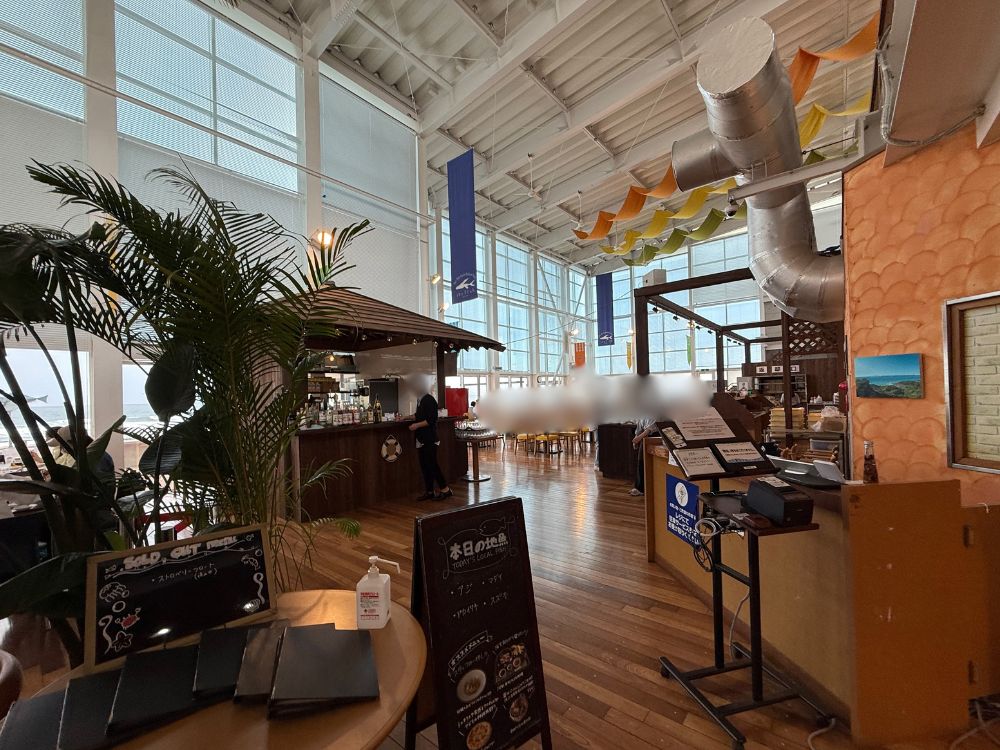
There was also an Italian restaurant with a sea view!
I forgot to take photos, but there were also souvenir shops and a stall selling fresh local fish!
It’s hard to eat everything on the spot, but just browsing the stalls is fun in itself. If you’re driving, you can pick things up to enjoy on the road — takeaway local food is one of the best parts of a road trip!
Major Chiba Attractions Nearby
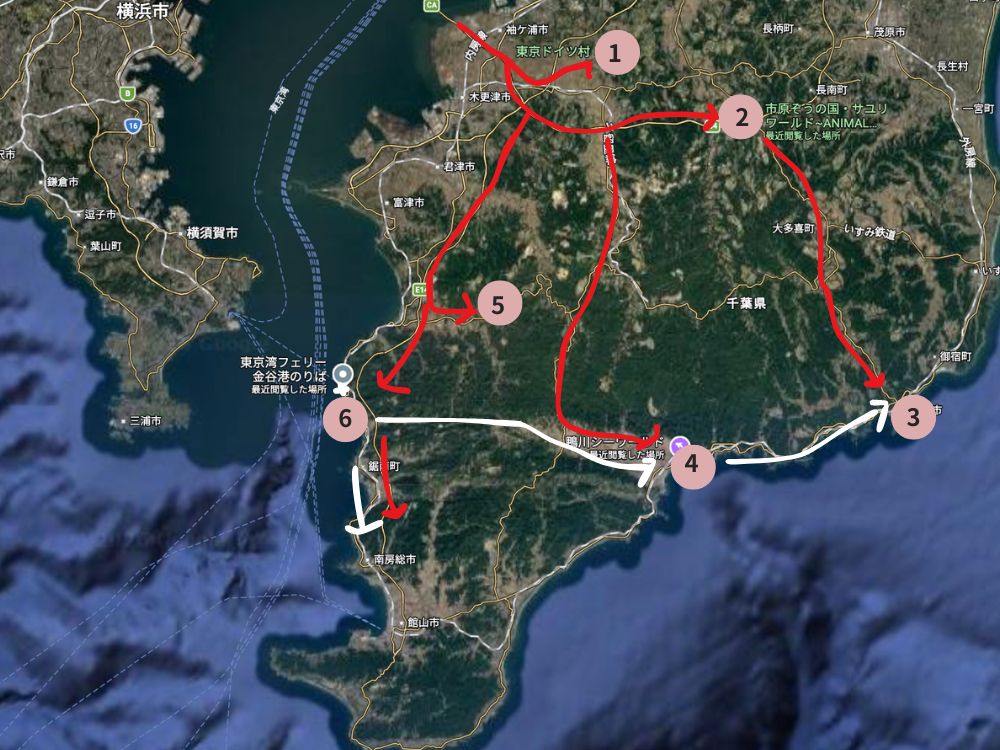
Here’s a look at the main attractions on the Chiba side, and how they map out from each route.
- Tokyo German Village (~20 min from Aqua-Line / ~50 min from Kanaya Port)
- Ichihara Elephant Kingdom (~30 min from Aqua-Line / ~50 min from Kanaya Port)
- Katsuura (~60 min from either route)
- Kamogawa Sea World (~70 min from Aqua-Line / ~40 min from Kanaya Port)
- Mother Farm (~30 min from Aqua-Line / ~30 min from Kanaya Port)
- Mount Nokogiri Ropeway (~5 min from Kanaya Port / ~40 min from Aqua-Line)
1. Tokyo German Village — A large theme park with flower fields, rides & famous winter illuminations. Admission: adults ¥1,000 (~$6) / children ¥500 (~$3)
2. Ichihara Elephant Kingdom — Home to Japan’s largest herd of elephants (9 individuals). Daily elephant shows, feeding & riding experiences. Admission: adults ¥1,800 (~$12) / elementary school students ¥900 (~$6) / under 3 free
3. Katsuura — A coastal town famous for one of Japan’s three great morning markets, local tantanmen ramen (a chili oil–based ramen unique to Katsuura), and beaches for swimming and tide pool exploration.
4. Kamogawa Sea World — Marine theme park famous for dramatic orca shows, plus dolphins, sea lions & beluga whales. Combo ticket available with Mother Farm.
5. Mother Farm — A 250-hectare farm with panoramic views of Mount Fuji and Tokyo Bay. Daily events including sheep parades, cow milking & animal encounters.
6. Mount Nokogiri Ropeway — Just 5 min by car from Kanaya Port. Mount Nokogiri (named for its jagged saw-tooth ridgeline) is home to Nihon-ji Temple, the dramatic “Hell’s Peek” clifftop overhang, and a giant carved Buddha. Allow 1–2 hours.
Aqua-Line or Ferry — Which Should You Choose?
On cost alone, the Aqua-Line is the better deal — but the right choice really depends on where you’re starting from and what you want out of the journey.
What stood out about the ferry was how much it added to the trip. The crossing itself becomes an activity — a chance to stretch your legs, let the kids loose on the deck, and take a proper break from driving.
The Aqua-Line carries the risk of traffic jams; the ferry can be affected by bad weather. Both have their trade-offs.
If you’re heading to the southern Boso Peninsula — Tateyama, Kamogawa — and want to avoid traffic while adding something extra to the trip, the ferry is a great option. One combination we’d recommend: take the Aqua-Line early in the morning on the way in, then enjoy the ferry at a relaxed pace on the way back, bypassing the evening congestion!
Wrapping Up
The ferry was genuinely fun — and the Baumkuchen at Kanaya Port was absolutely delicious. We’re definitely coming back!
Hope this helps you plan your trip. Thanks so much for reading all the way through!