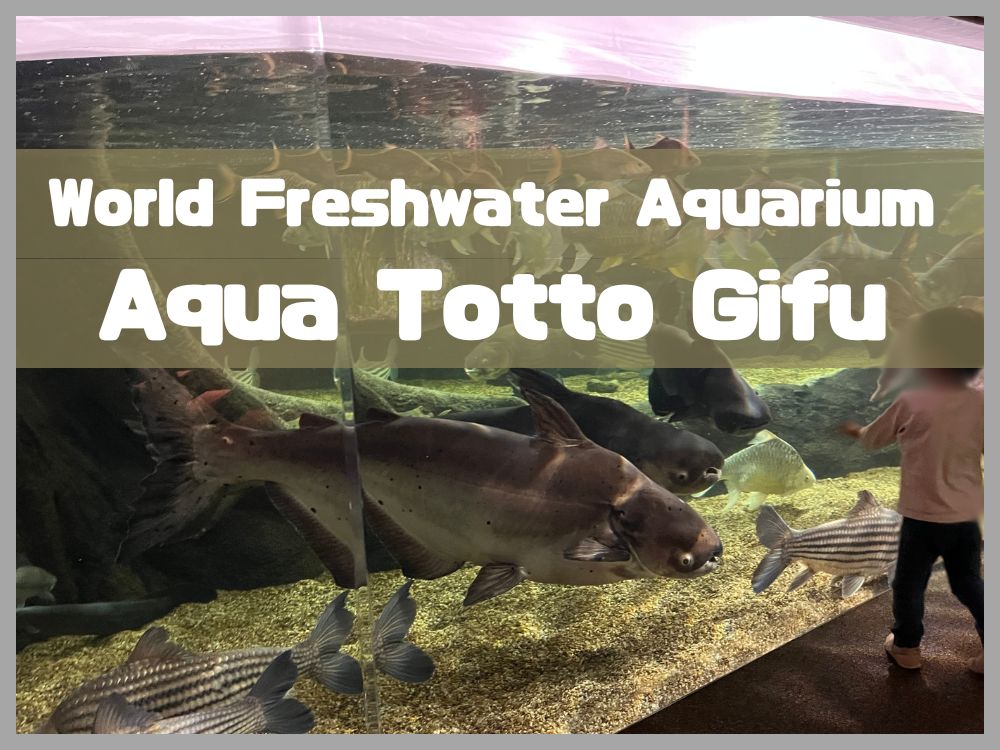
This time we visited Aqua Toto, the World Freshwater Aquarium in Gifu Prefecture.
It’s a spot you can reach straight from a highway oasis on the expressway, and you can enjoy it no matter the weather since it’s all indoors — it turned out to be way more fun than we expected, so I want to share everything great about it.
- Basic info for the World Freshwater Aquarium, Aqua Toto Gifu
- How convenient it is to access directly from the expressway
- What’s on display on each floor and the highlights
- Nearby facilities (Ferris wheel, park, food)
- Info for families with kids (restrooms, nursing room, discounts)
- What Is Aqua Toto Gifu?
- Access & Basic Info
- Fun Even Before You Go In! Nearby Facilities
- Into the Aquarium!
- “Freshwater Means Plain” Was a Total Misconception! 3 Highlights
- Info for Families With Kids (Strollers, Diaper Changing, Nursing Room)
- How Long to Plan For & How to Get Around
- Who Is This Best For?
- In Summary
What Is Aqua Toto Gifu?
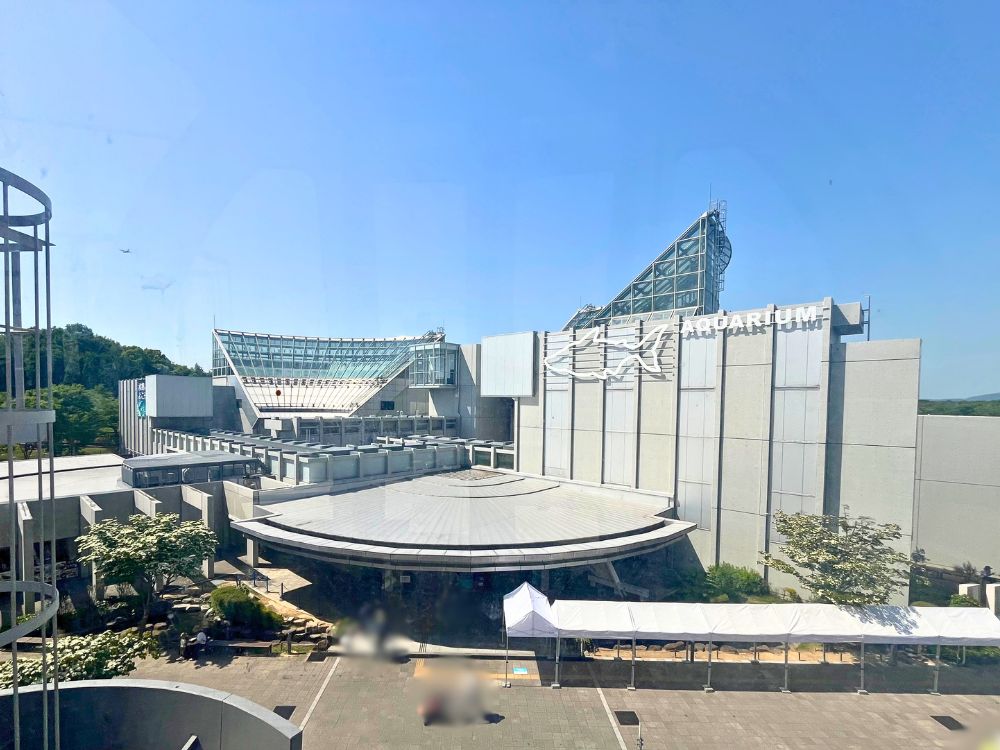
Aqua Toto Gifu (official name: World Freshwater Aquarium) is located in Kakamigahara City, Gifu Prefecture, and is one of the largest aquariums in the world dedicated entirely to freshwater fish.
Built around the theme of “the Kiso Three Rivers and the Nagara River, from source to mouth, plus freshwater fish from around the world,” it houses about 260 species and 28,500 specimens.
Access & Basic Info
You Can Enter Straight From a Highway Oasis!
One of Aqua Toto Gifu’s biggest draws is that it’s right next to the Kawashima PA/Highway Oasis on the Tokai-Hokuriku Expressway (accessible from either direction) — a “highway oasis” is a rest stop built right into a park or attraction, so you can walk straight into the aquarium without ever officially exiting the highway!
You can of course also access it from regular roads, and there’s free parking for 1,400 cars.
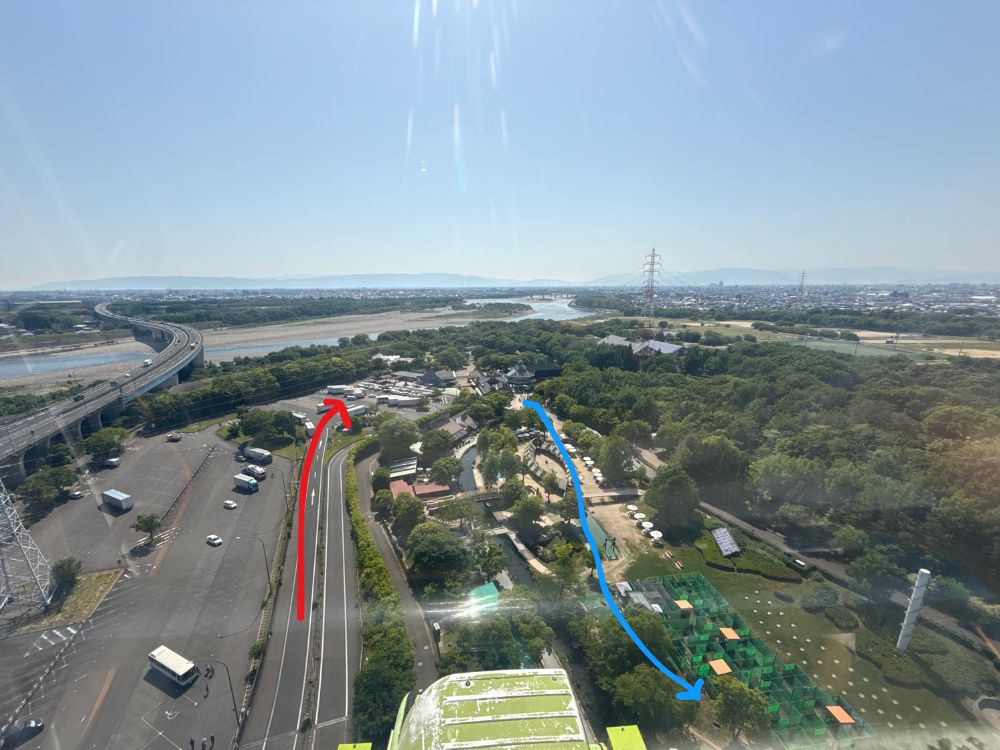
Exit the highway following the red line, park in the parking area,
then walk along the blue line and you’ll get there!
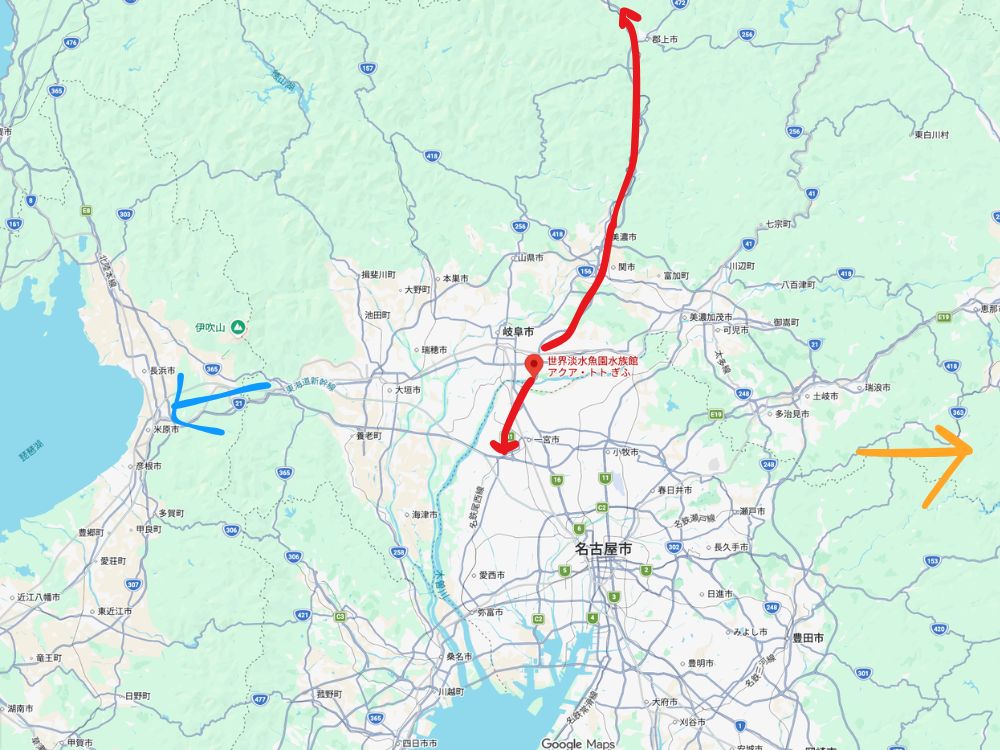
The Tokai-Hokuriku Expressway runs north-south, connecting the Nagoya area with Ishikawa Prefecture (red).
The yellow arrow points toward Tokyo, and the blue arrow points toward Osaka.
Hours & Admission
- Address: 1453 Kasada-cho, Kawashima, Kakamigahara City, Gifu Prefecture
- Hours: Weekdays 9:30 AM–5:00 PM (last entry 4:00 PM) / Weekends & holidays 9:30 AM–6:00 PM (last entry 5:00 PM)
- Closed: Generally open year-round (closed a few times a year alongside the surrounding River Park’s closures)
- Admission: Adults 1,780 yen (approx. $11.87), junior/senior high schoolers 1,400 yen (approx. $9.33), elementary schoolers 900 yen (approx. $6.00), preschoolers (age 3+) 500 yen (approx. $3.33)
- Parking: Free, 1,400 spaces

I feel like you can tell how big an aquarium is just from its admission price (lol). I really appreciate that the kids’ pricing is broken down so specifically!
Fun Even Before You Go In! Nearby Facilities
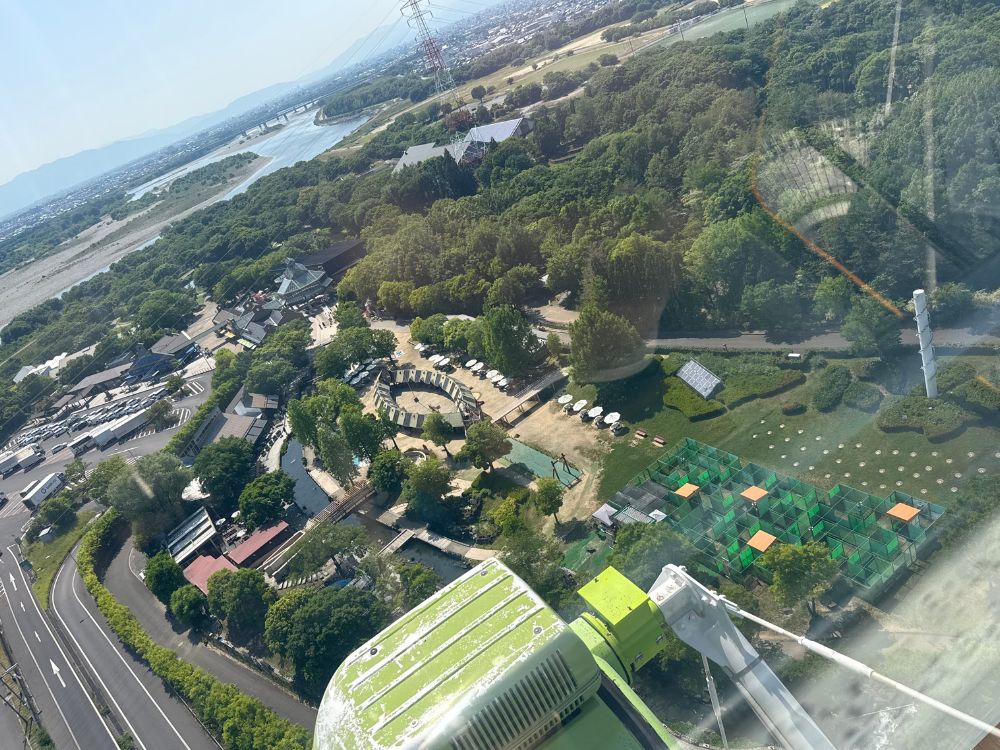
The area around the aquarium is a park zone called “Oasis Park,” and there are plenty of appealing spots even before you go inside.
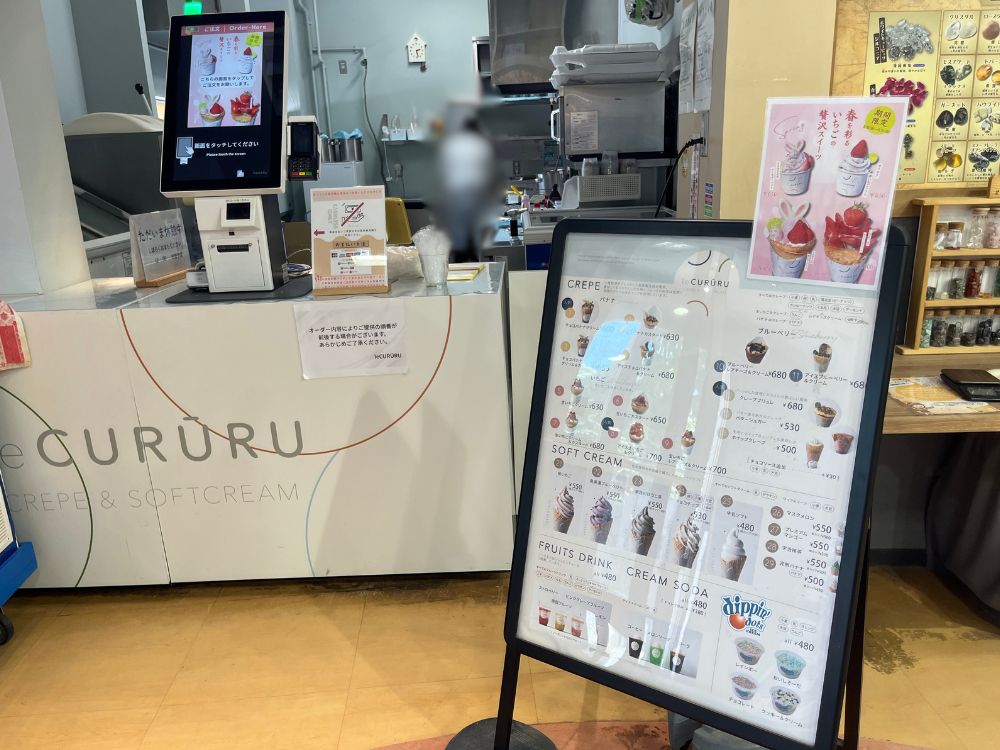
There’s an ice cream shop and food stalls, and
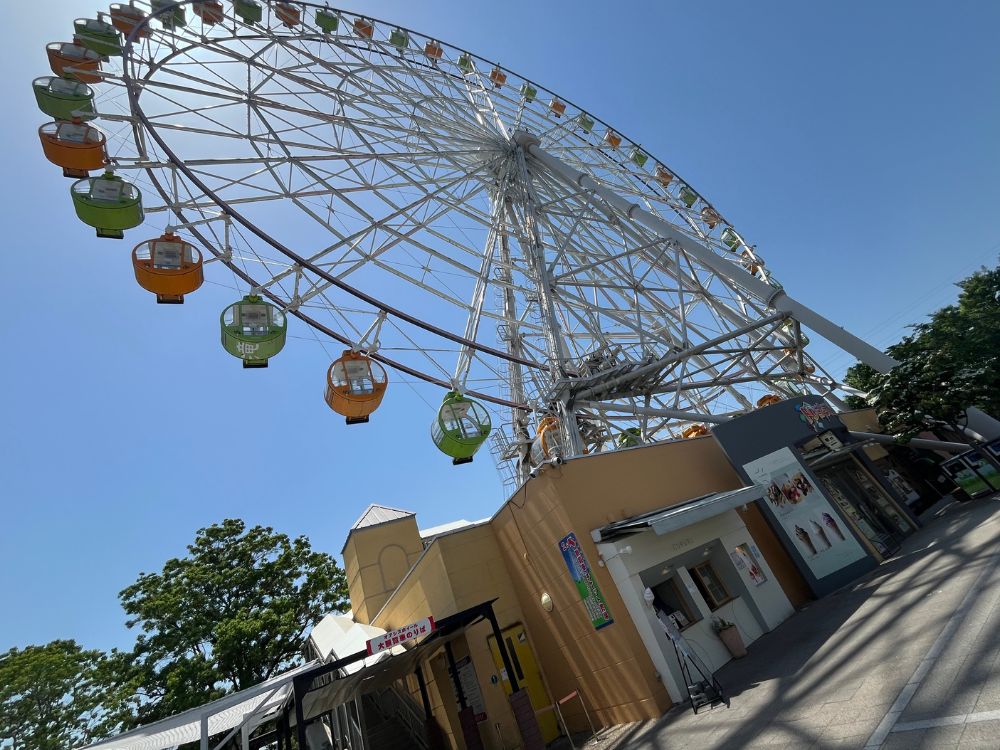
there’s also a Ferris wheel called the “Oasis Wheel.” One rotation takes about 12 minutes.
It’s bigger than you’d expect.
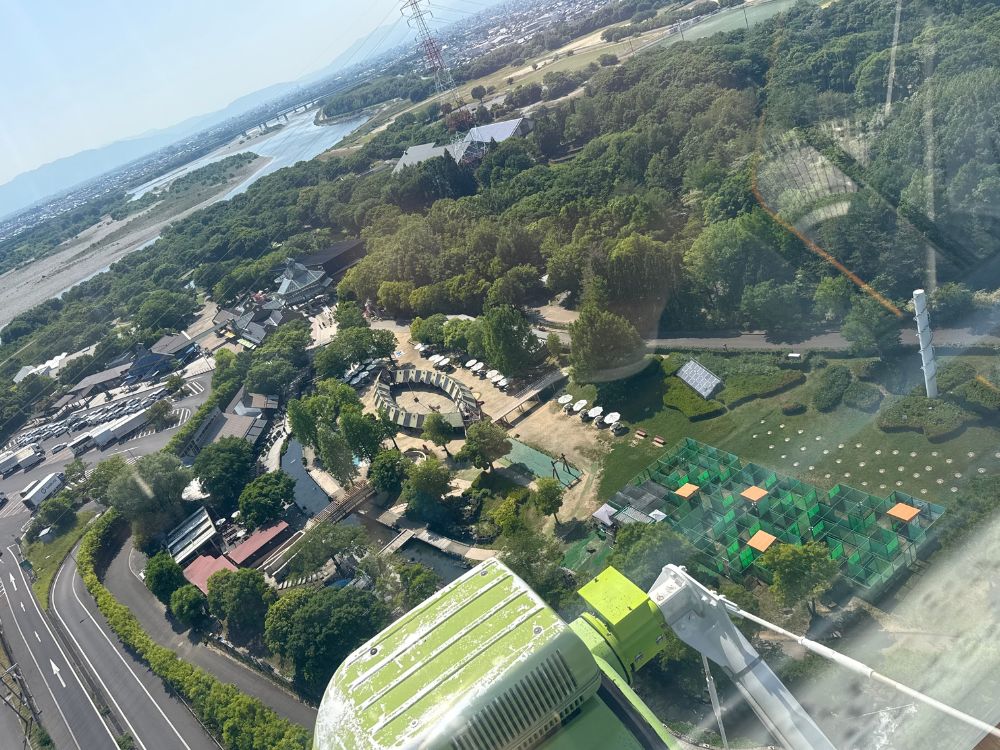
There’s an outdoor space where kids can play, and more
it’s a fun area for running around or just stopping by for a bit.
Into the Aquarium!
Aqua Toto Gifu is a 4-story building. You take the elevator up to the 4th floor first, then work your way down through the exhibits as you walk.
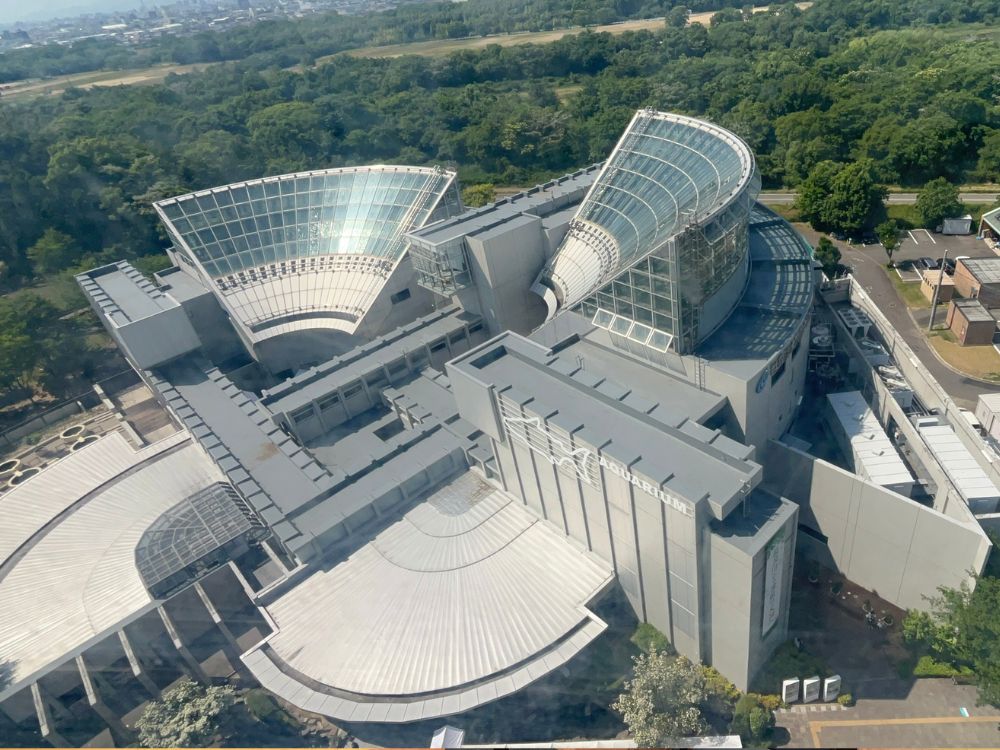
Seen from the sky (the Ferris wheel), it has an odd shape. The reflective parts are glass, and the way it brings in natural light for the exhibits is really beautiful.
4th Floor: Nagara River Headwaters Area
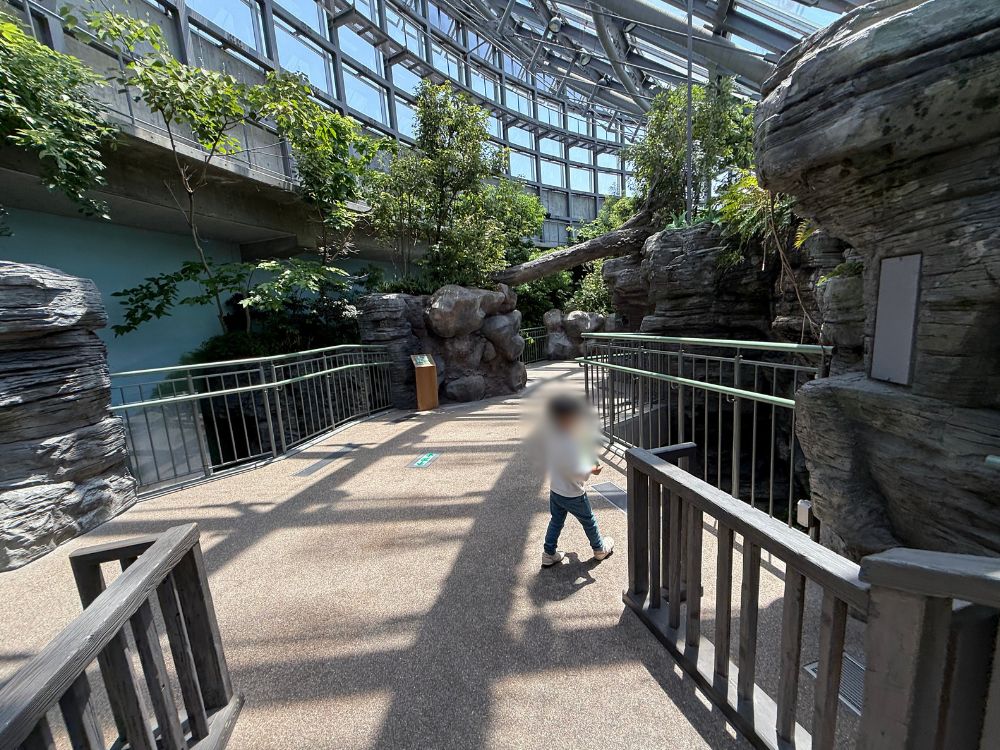
The 4th floor is the Nagara River headwaters area. It recreates the waterfalls and ravines of Kamasudani in Takasu-cho, Gujo City, in an open space filled with greenery and natural light.
It’s laid out like a single bridge.
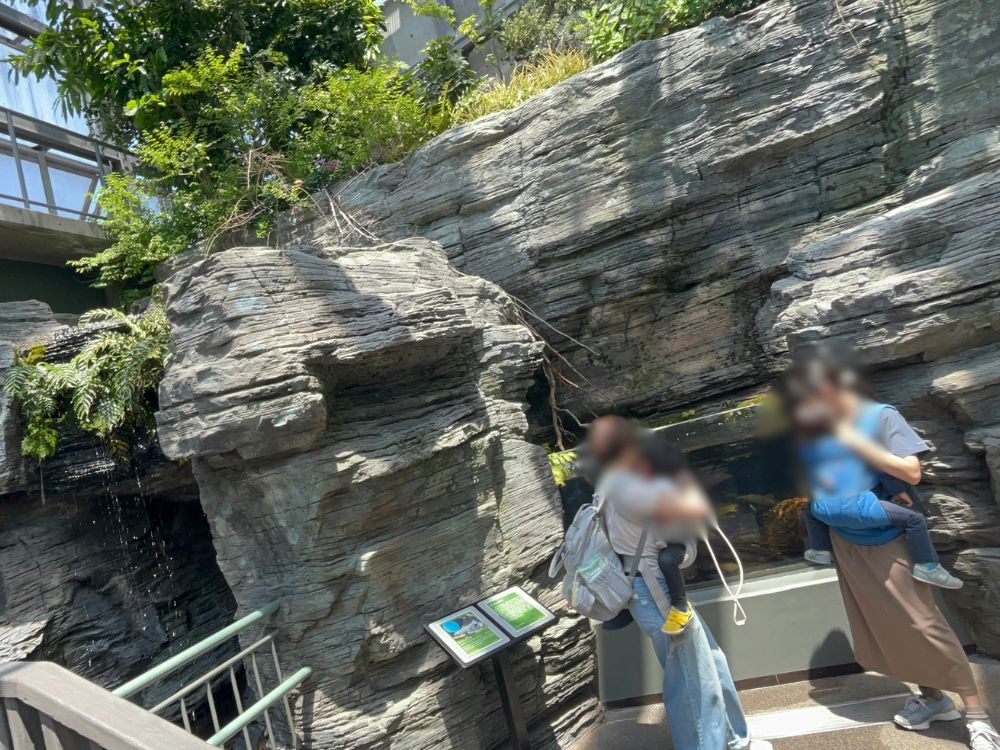
There are tanks tucked between the rocks, and the water falls down to the floor below.
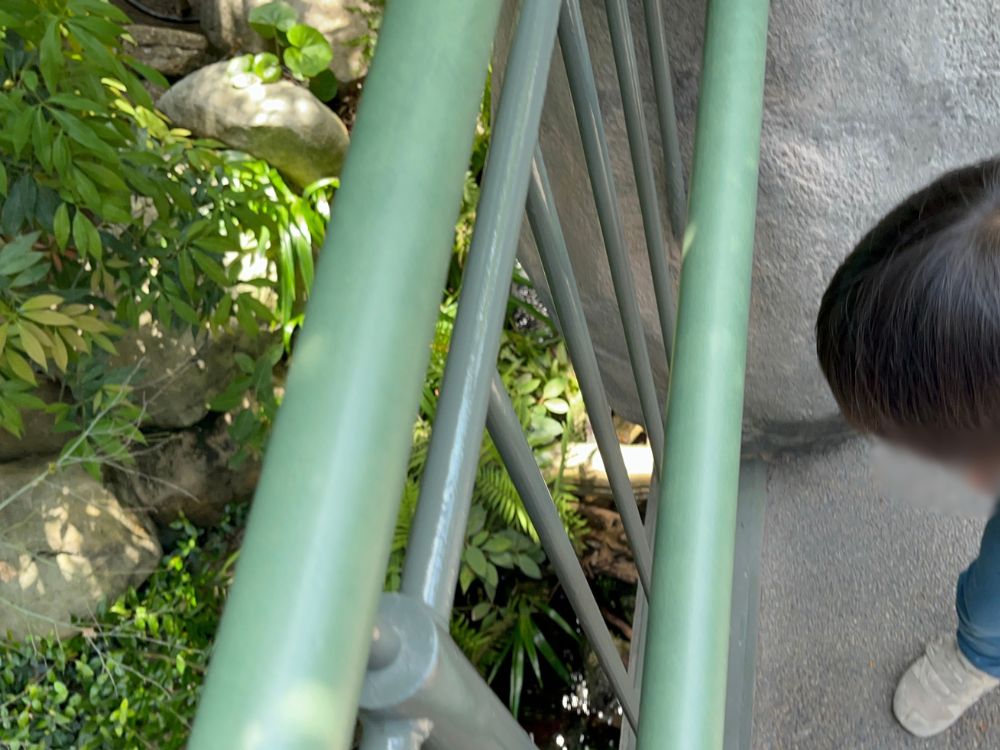
Look over the edge of the bridge and you can see fish swimming below.
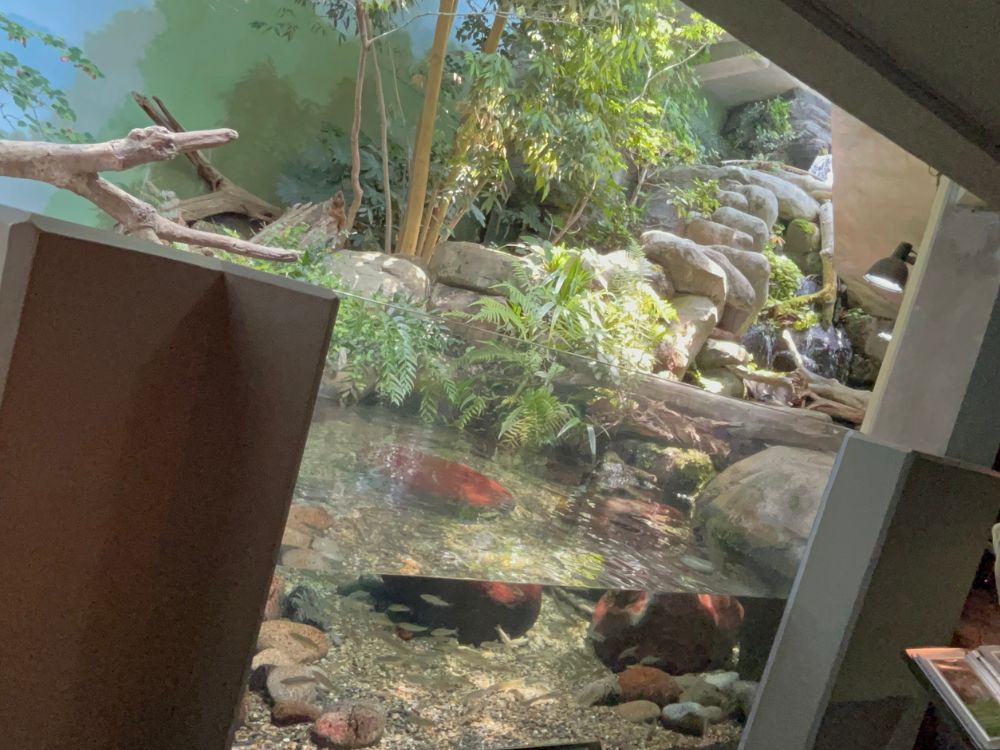
Head down to the 3rd floor and you can see that same tank — from above you could only see the surface of the water, but change your angle and you can see all the way to the riverbed. It’s designed for fun little discoveries like that!
In the tank recreating a waterfall pool, you can also spot the Nagara River’s symbol fish, the satsukimasu and amago trout.
3rd Floor: Nagara River, Upstream to Downstream
The 3rd floor recreates the Nagara River from upstream to downstream. It reproduces the river environments of Gujo, Mino, Hashima, and Kaizu cities, spreading out into a nostalgic, classic Japanese landscape.
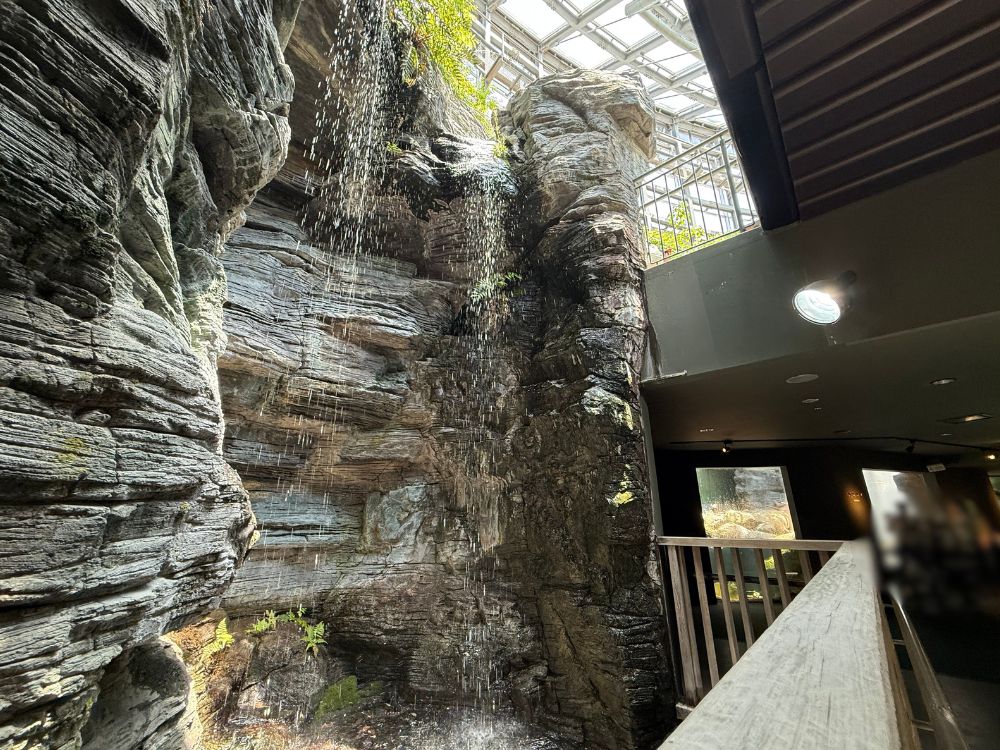
The rock surfaces are made to look really realistic, and the water falls in all kinds of ways — sometimes forcefully, sometimes gently.
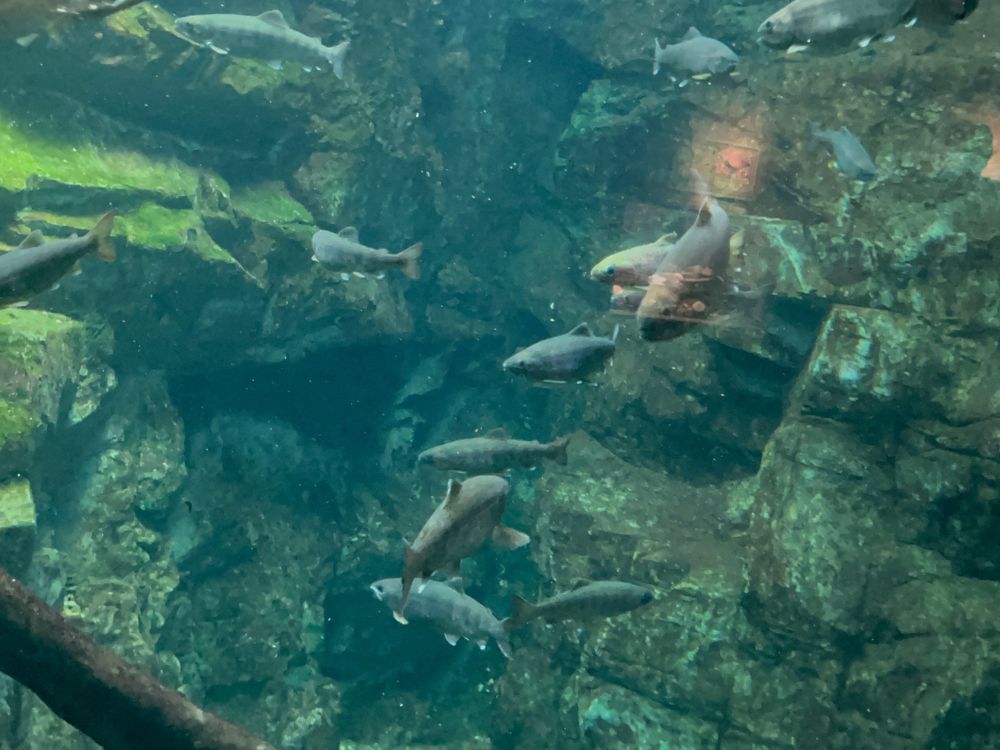
One especially large waterfall pool is built quite deep, and it’s full of river fish.
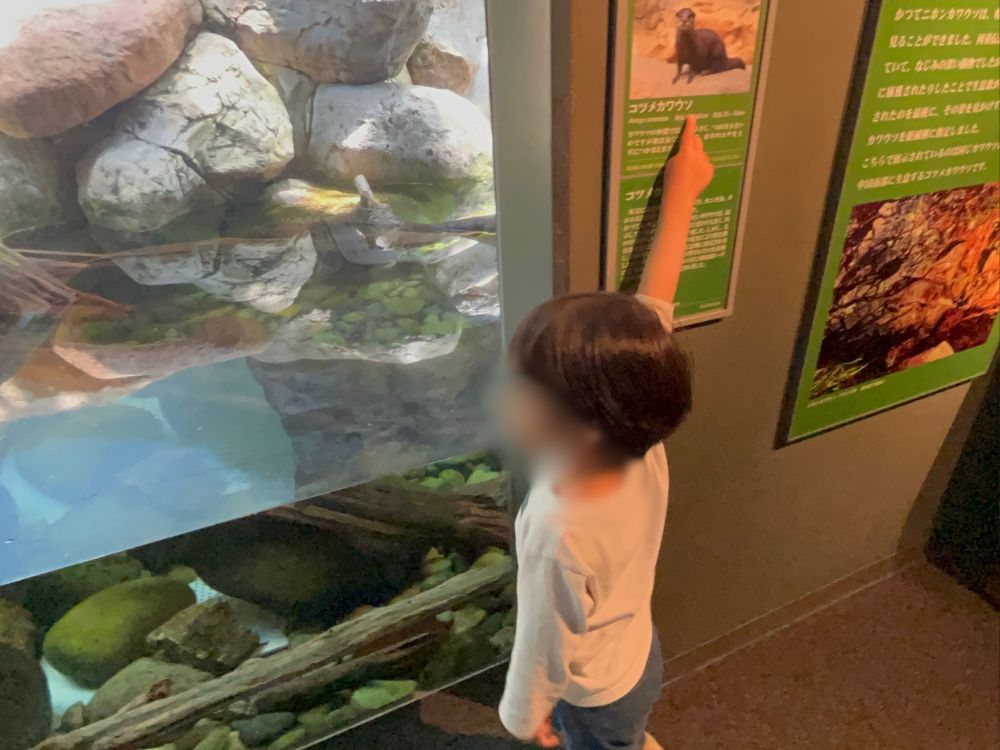
There’s the Asian small-clawed otter, displayed in place of the Japanese river otter (declared extinct in 2012), the Japanese giant salamander — a Special Natural Monument, Japan’s highest-level government designation for protected natural treasures — and plenty of animals kids will easily warm up to, like ayu sweetfish, little egrets, and spot-billed ducks!
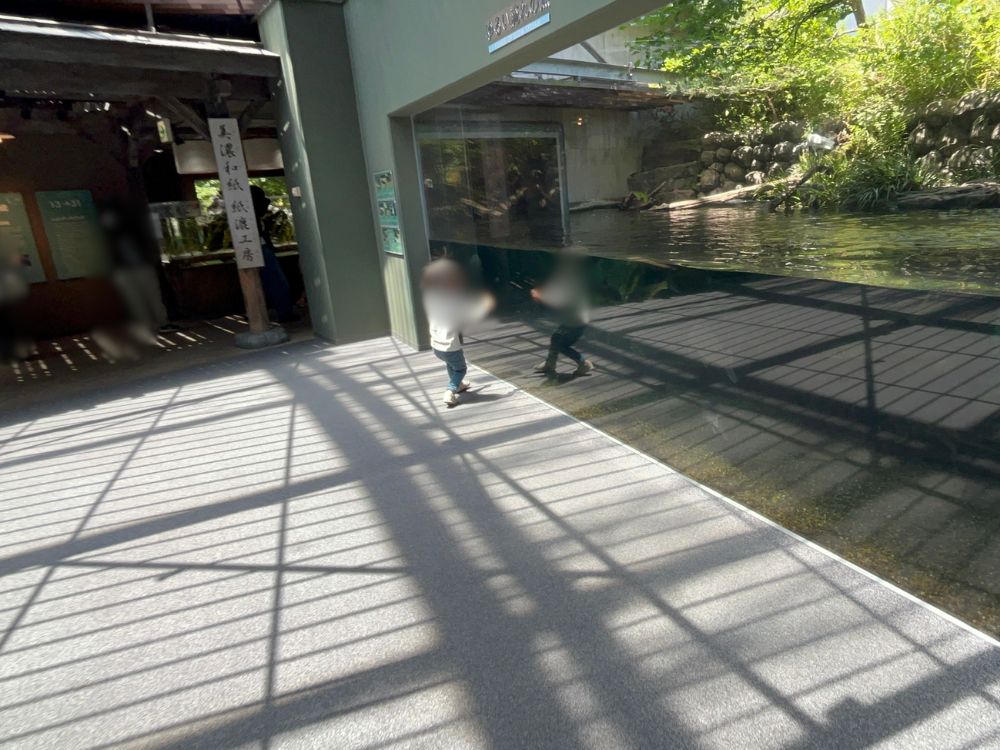
Since the 4th floor doesn’t block the light, the 3rd floor is also bright and open thanks to natural light.
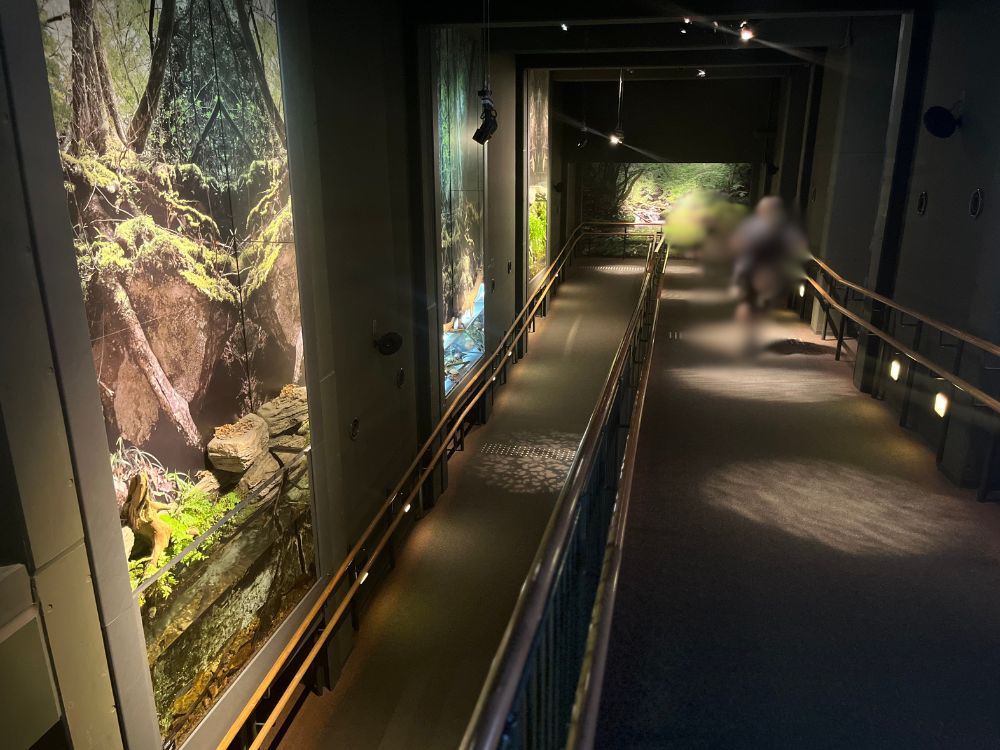
By the way, the walkways connecting the floors are gentle slopes, so wheelchairs and strollers can get around without any trouble.
Elevators are available too.
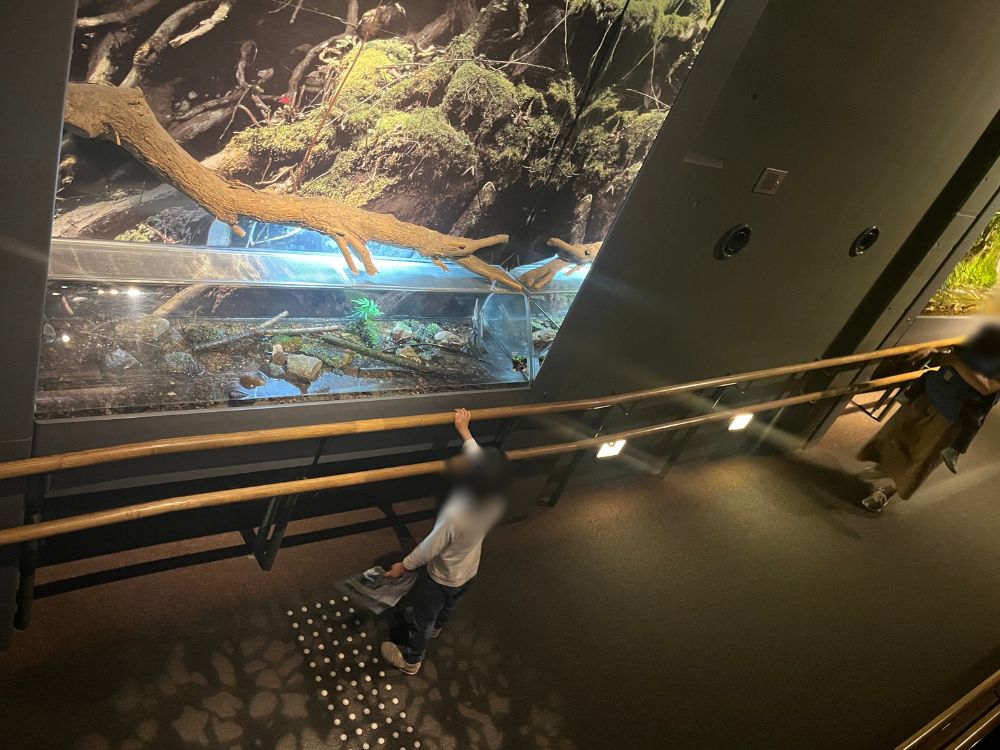
With tanks and displays throughout, even the stairways themselves were fun.
2nd Floor: World Freshwater Regions
The 2nd floor jumps straight out into the world! It’s an area recreating overseas freshwater regions like the Mekong River, Congo River, and Lake Tanganyika.
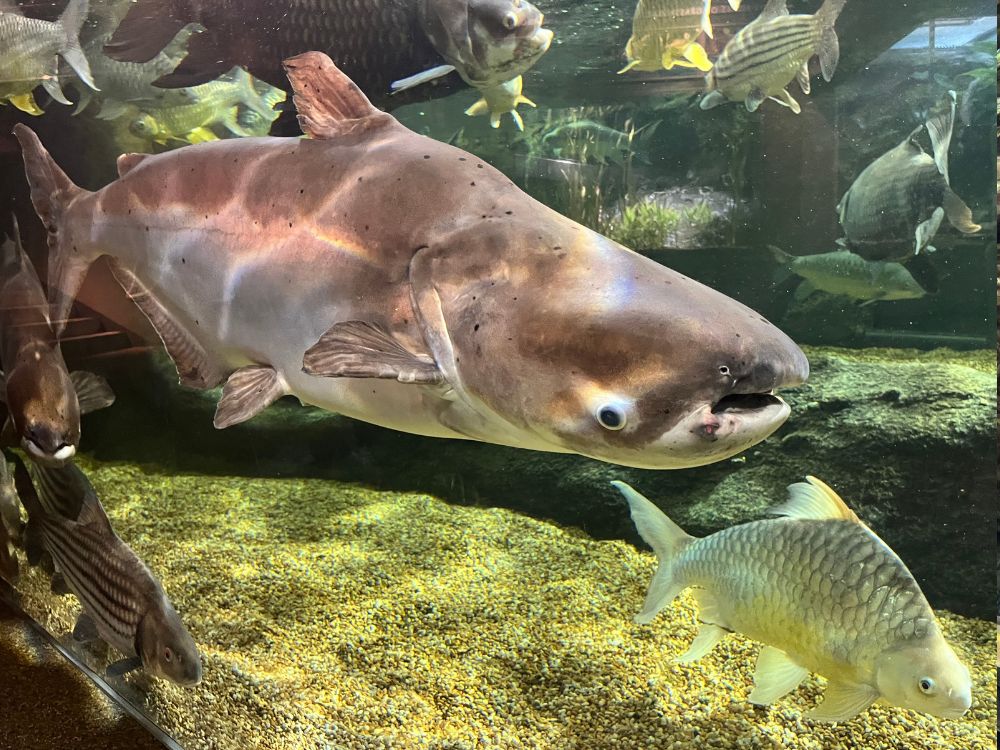
Lots of Mekong giant catfish — the fish that inspired the aquarium’s mascot — are swimming around.
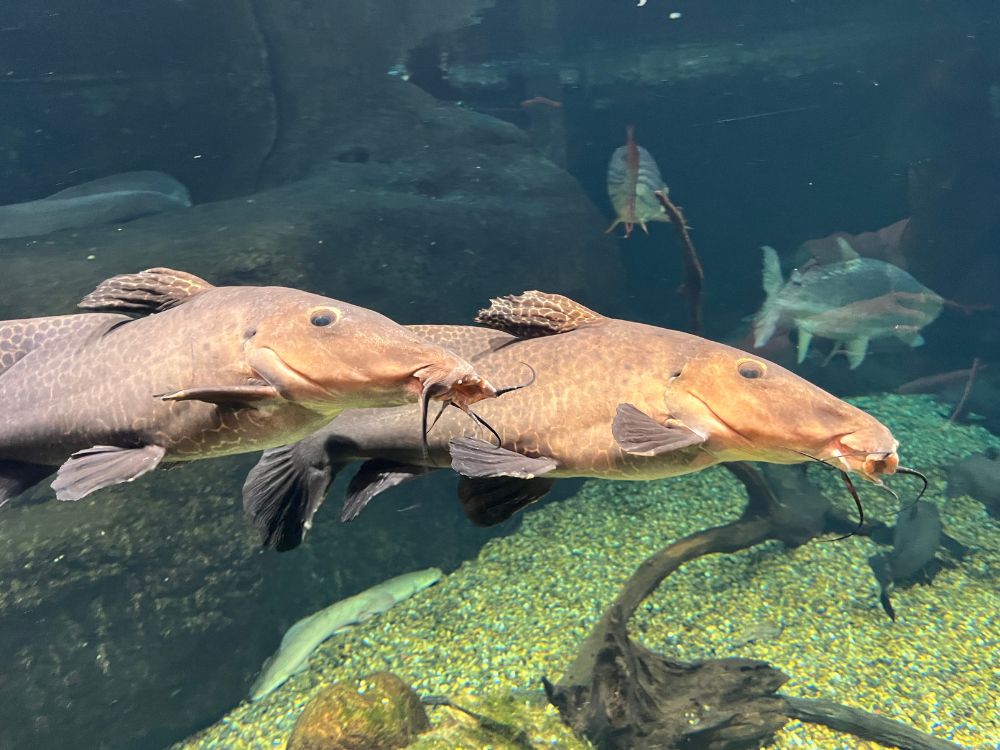
There were fish I’d never seen before (I forgot their names…),
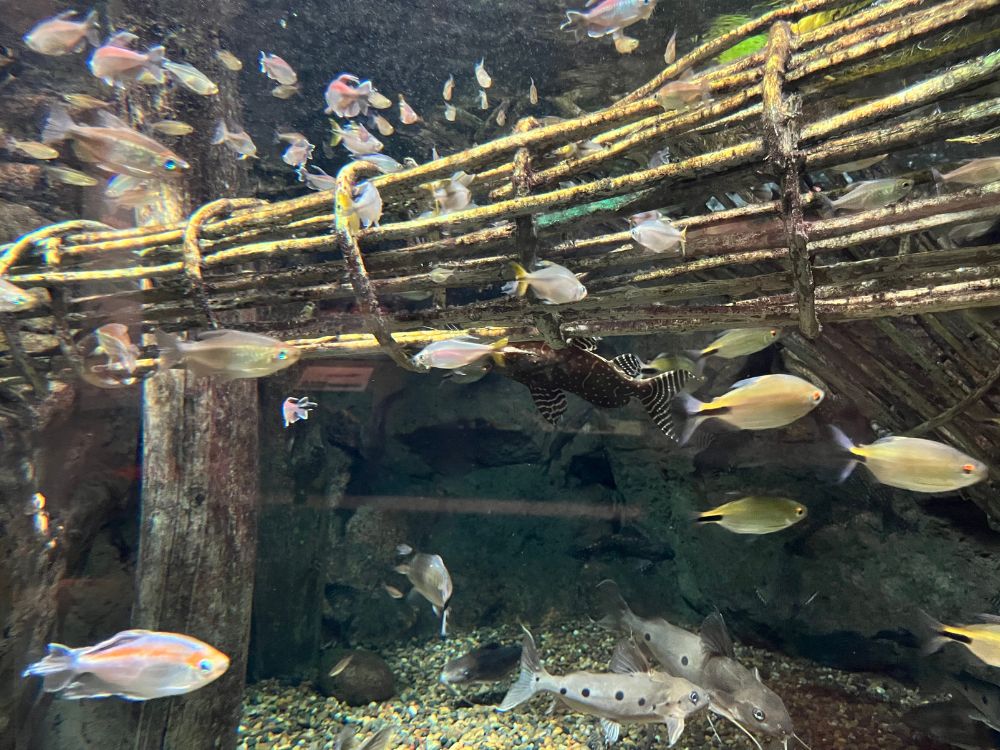
and a lot of tanks styled around fishing scenes and other creative touches.
You can see the Mekong giant catfish, said to be the world’s largest catfish, along with archer fish and cichlids — huge fish and vividly colored species that are rare to see in Japan.
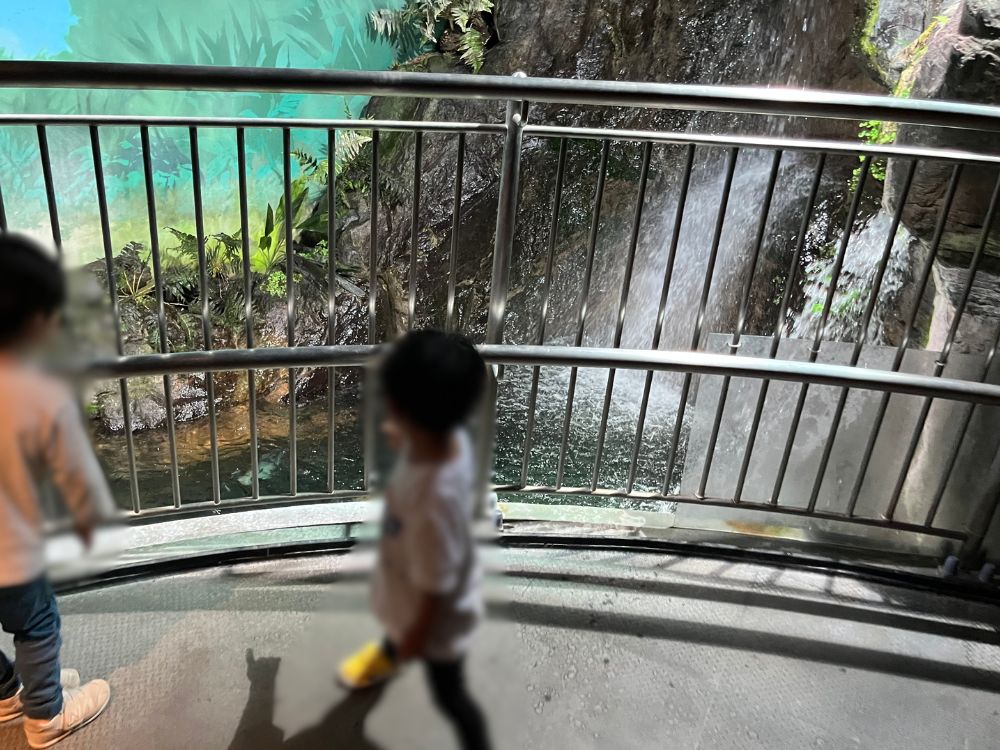
There’s also a big waterfall running from the 2nd floor down to the 1st. The whole aquarium has such a layered, three-dimensional structure that the kids kept getting drawn into looking down.
1st Floor: Amazon River & Hands-On Area
The 1st floor is an area recreating the Amazon River.
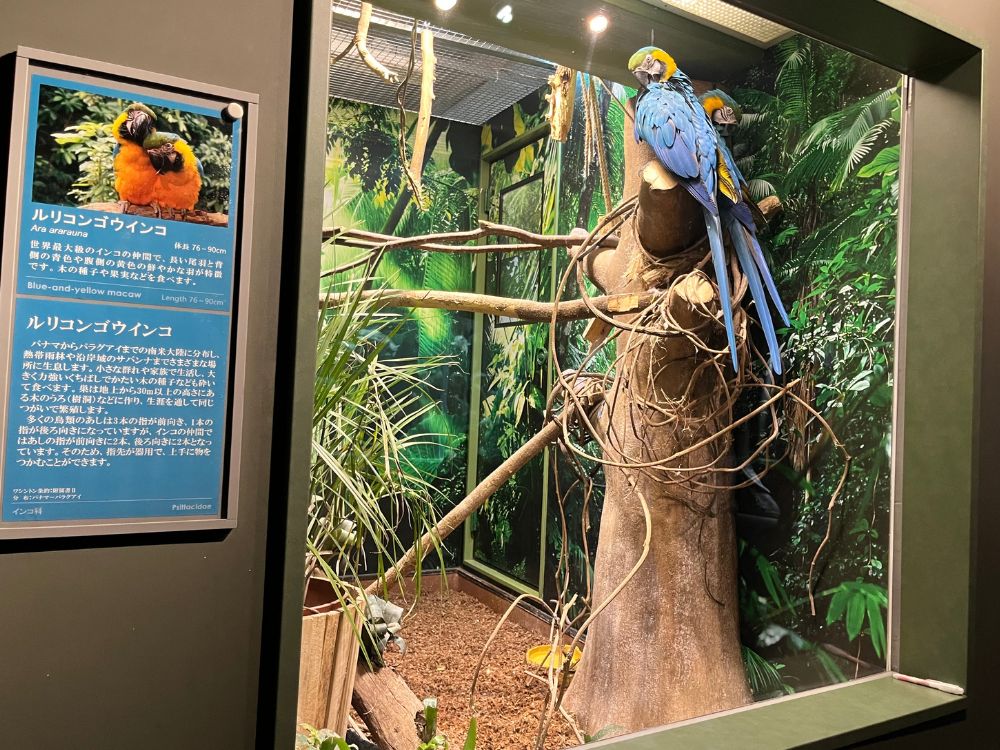
Beyond fish, there are big parrots too,
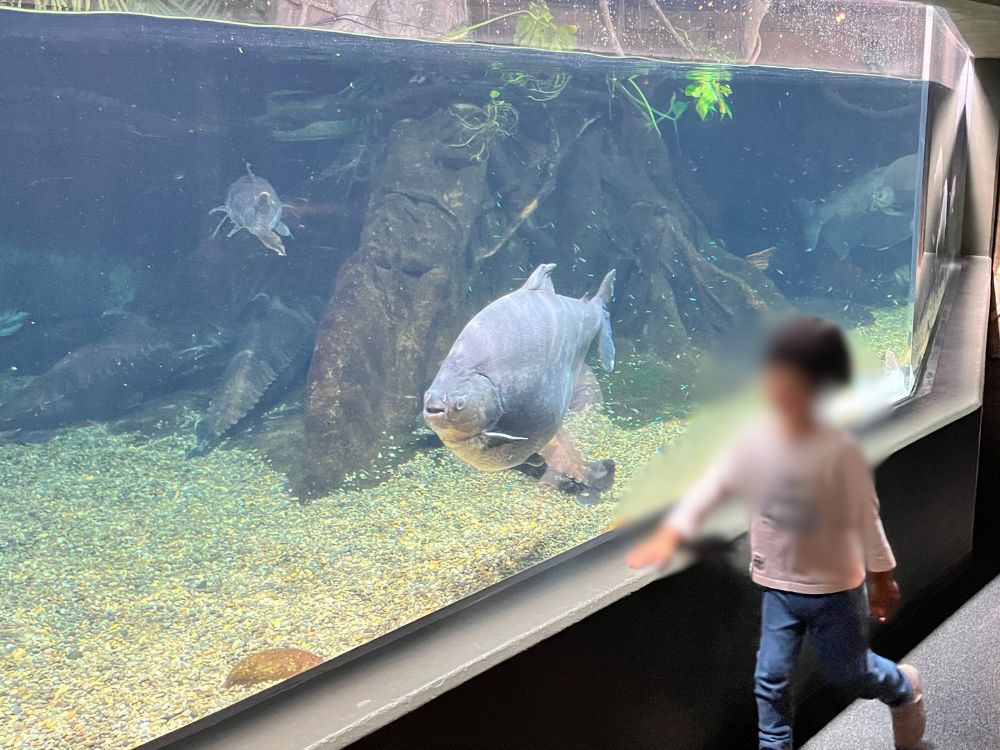
and things like colossoma, maybe?
The pirarucu, one of the world’s largest freshwater fish reaching up to 450cm in length, plus silver arowana, piranha, and electric eels — it’s seriously impressive!
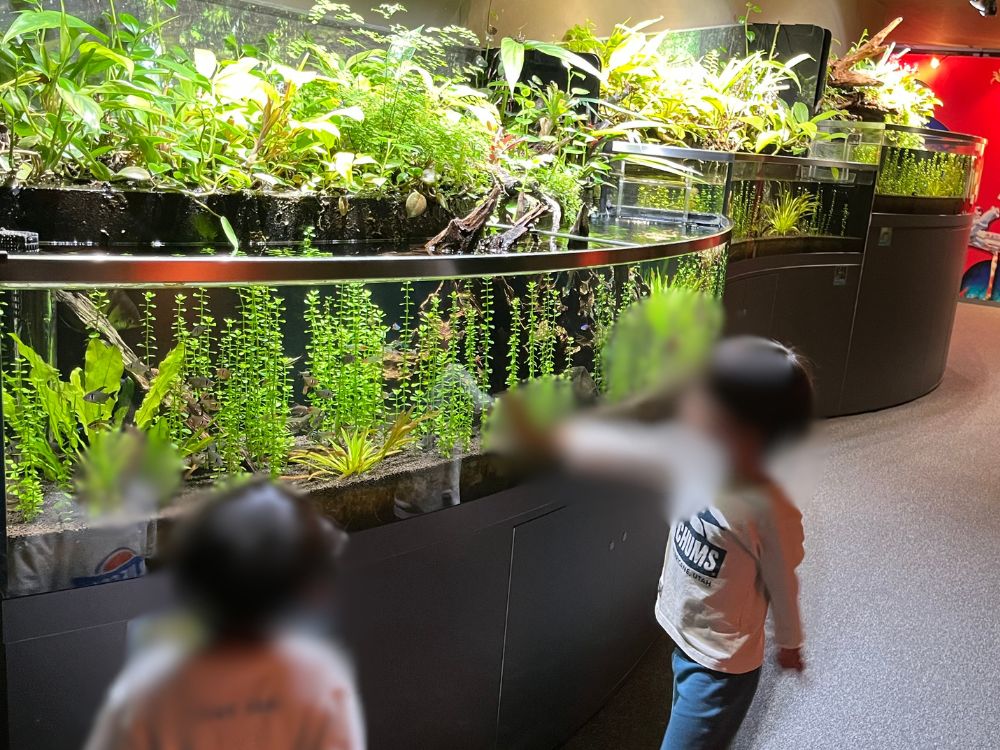
There’s also a multi-tiered aquaponics display, and the kids seemed to be trying to work out how it all functioned.
The learning space on the 1st floor, “Toto Lab,” was really great! There were scissors and paper set out, a display where you can draw your own fish and “swim” it on screen, quizzes, and videos explaining the creatures — our kids were completely absorbed!
“Freshwater Means Plain” Was a Total Misconception! 3 Highlights
An Open Space Filled With the Sound of Water
The whole building is an open space where you can hear the sound of water the entire time.
It wasn’t just about looking at fish through glass — being able to experience the waterfalls and the flow of water as part of the space itself was really lovely.
Drawing Your Own Fish and Watching It “Swim”
There’s a learning space on the 1st floor called “Toto Lab.”
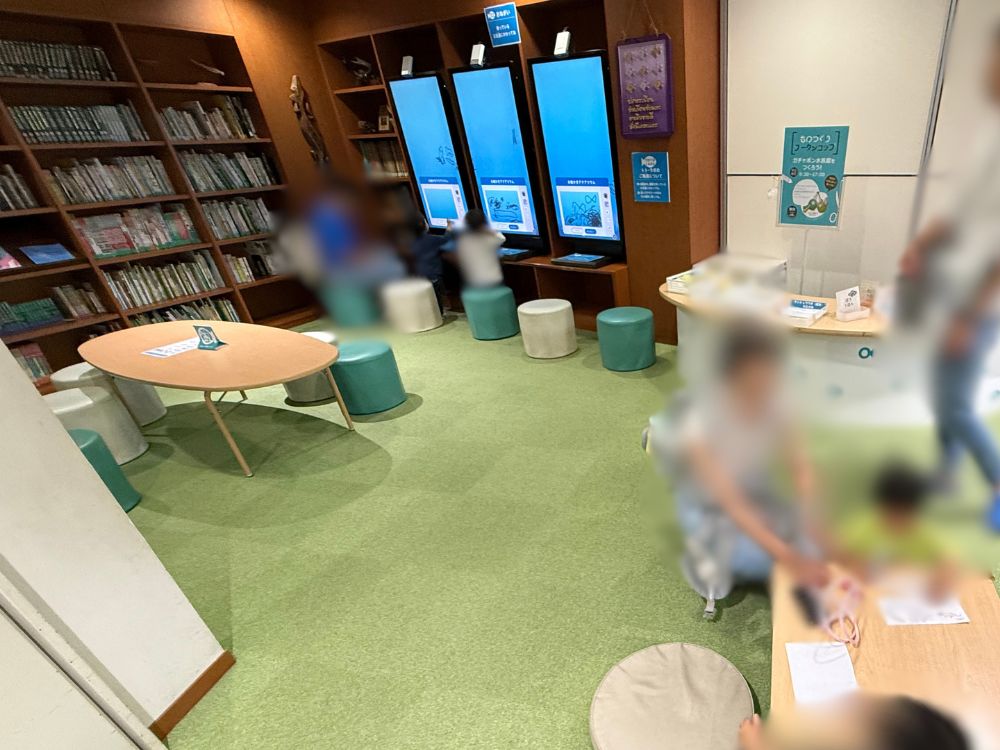
It’s not a huge space, but there are scissors and paper for crafting, and
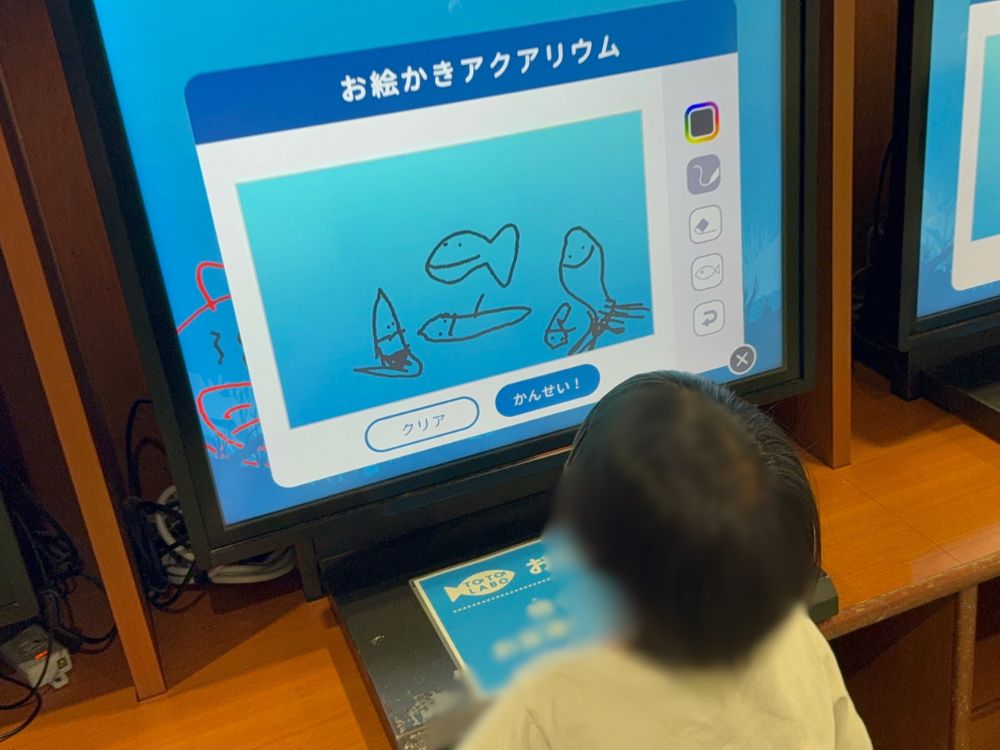
the fish you draw yourself…
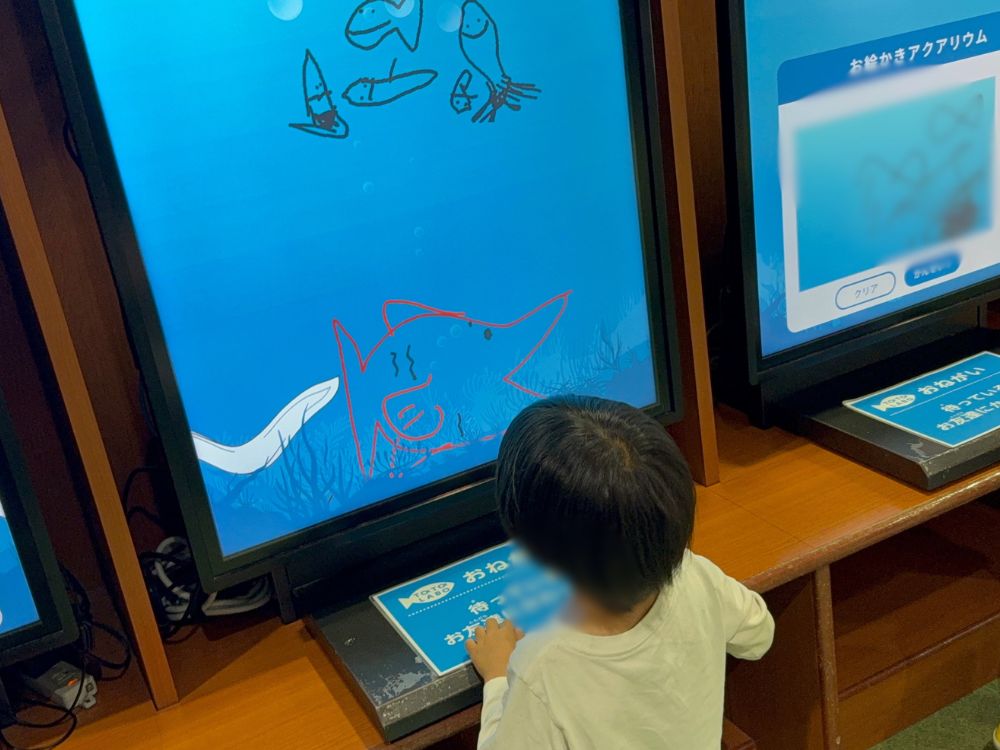
get to “swim” on screen — plus there were quizzes and videos explaining the creatures too.
The spot where you draw your own fish and watch it swim was especially popular. It wasn’t crowded to begin with, and with 4 stations available, we were able to use it freely.
A Huge Restaurant Menu
Just past the exit, the 1st-floor restaurant “AROWANA GARDEN” had a surprisingly huge menu (you can eat there even without visiting the aquarium).
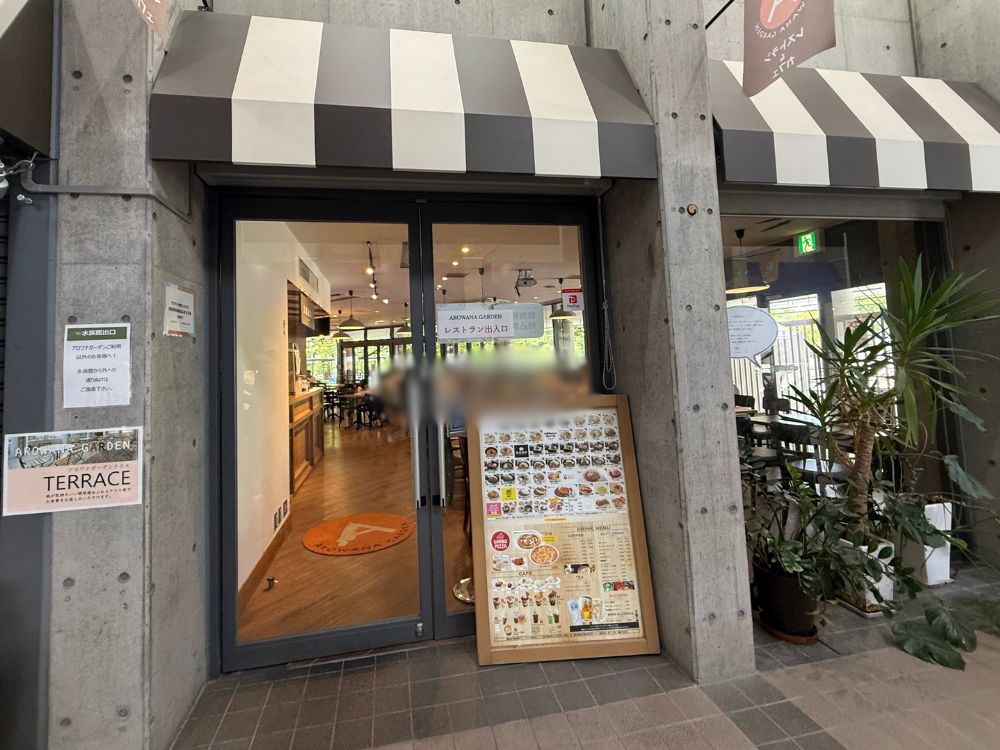
There’s plenty of seating, so you can settle in for a real meal.
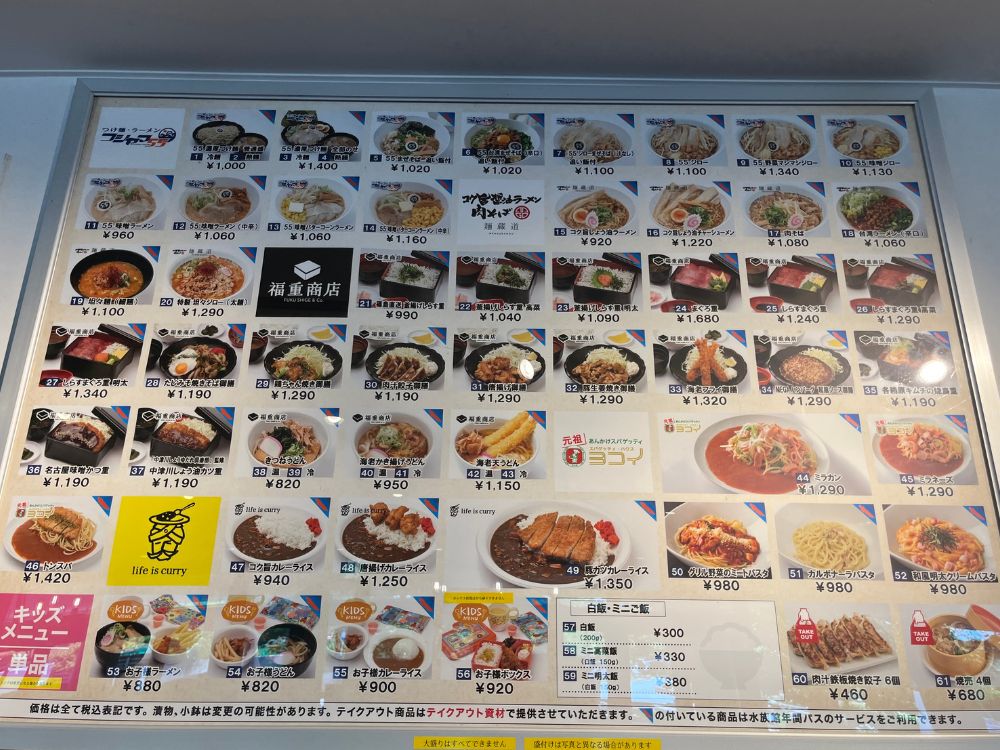
There’s a good mix, from kid-friendly options to things adults will enjoy.
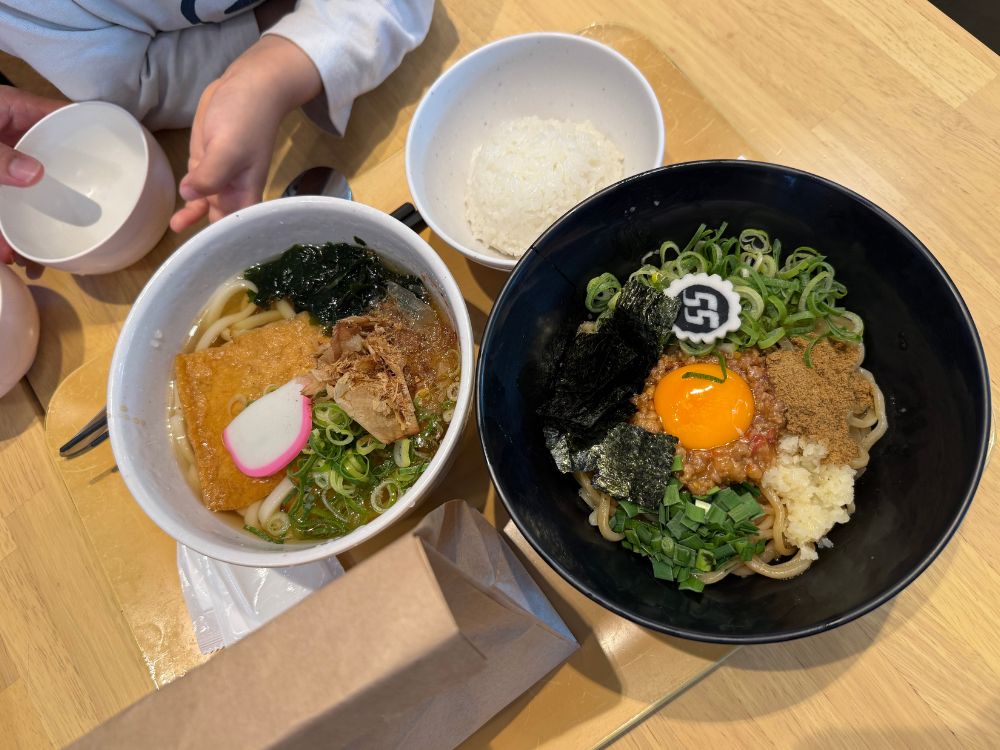
We ordered mazesoba (a brothless ramen dish) and udon this time! Both were delicious!
Info for Families With Kids (Strollers, Diaper Changing, Nursing Room)
The aquarium is connected by slopes throughout, so strollers are totally fine. The walkways are wide, so you don’t have to worry about being in anyone’s way!
It sounds like there’s also free wheelchair and stroller rental at the information desk on the 1st floor.
There are multipurpose restrooms on the 1st and 2nd floors, each with a diaper-changing table. They’re spacious enough to fit a stroller in, so no worries there.
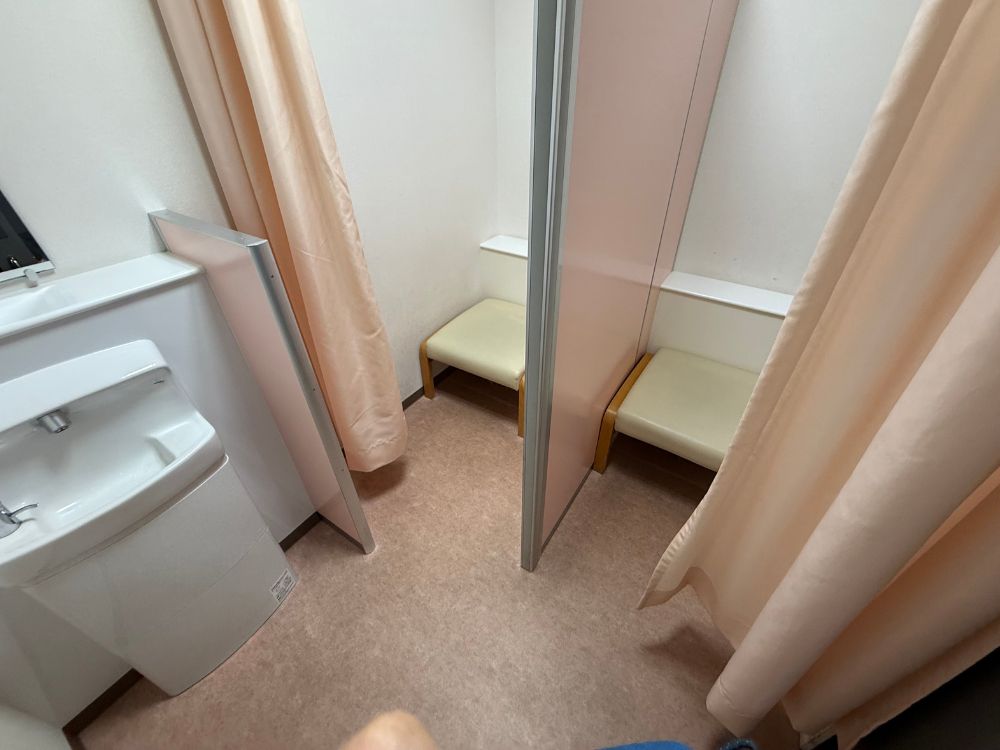
Here’s what the nursing room looks like — it’s on the 1st floor.
How Long to Plan For & How to Get Around
- Aquarium only: 1.5–2 hours
- Aquarium + nearby facilities (Ferris wheel, park, etc.): 3–4 hours
That’s the general estimate, but here’s roughly how it felt based on our own visit ↓
- Just a quick aquarium visit → about 1 to 1.5 hours.
- Aquarium + lunch → until early afternoon.
- Enjoying all of Oasis Park → morning to evening.
If you’re in the middle of a long drive, I think it’s great for stopping by, letting the kids run around, and using the timing to line up with their nap for the next leg of the trip.
Who Is This Best For?
- Anyone wanting a quick stop while driving the expressway: right next to a highway oasis, super convenient!
- Families with kids: hands-on exhibits and nearby facilities make for a full day of fun
- Anyone looking for a rainy-day backup plan: it’s all indoors, so weather doesn’t matter
- Anyone wanting something different from a typical aquarium: freshwater fish have surprisingly a lot to offer!
- Anyone wanting to learn about the wildlife and nature of the Nagara River basin: the environmental education programs are well developed too
In Summary
“Freshwater fish means plain” turned out to be a total misconception (lol).
Sure, the fish swimming around aren’t as colorful, but between their size and being able to feel the flow of the water, there was so much to love.
Not being too crowded is another huge plus, I think.
Highly recommend it as a stop along a longer trip, or as a rainy-day backup plan!
Thanks so much for reading all the way to the end!