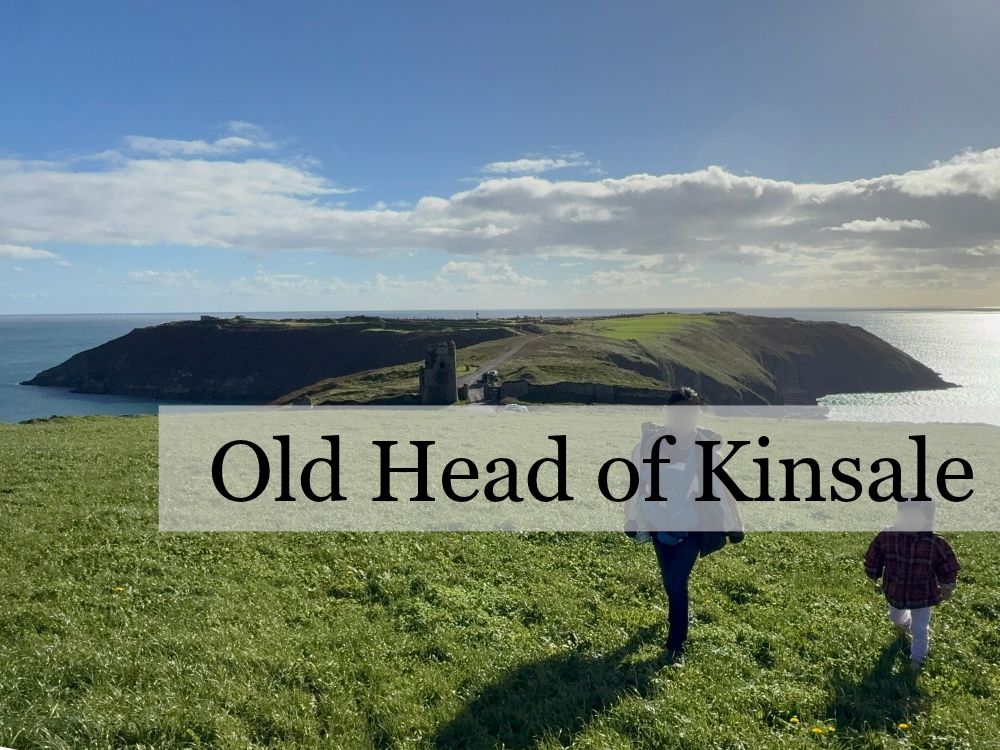
We visited Old Head of Kinsale, a headland near Kinsale, Ireland.
The views from its cliffs are stunning, but it’s also a place with a tragic history — the passenger liner RMS Lusitania was sunk nearby in 1915.
Today it’s home to a signal tower (the Old Head Signal Tower) with a museum attached (the Lusitania Museum).
- Access, parking, opening season, and admission prices
- The history of the Lusitania sinking
- Highlights of the signal tower and museum (artifacts recovered from the wreck)
- The free scenic viewpoint, and safety notes
- Café information
- Our actual visit schedule
- What to wear
- Where to stay nearby
Basics
Getting There
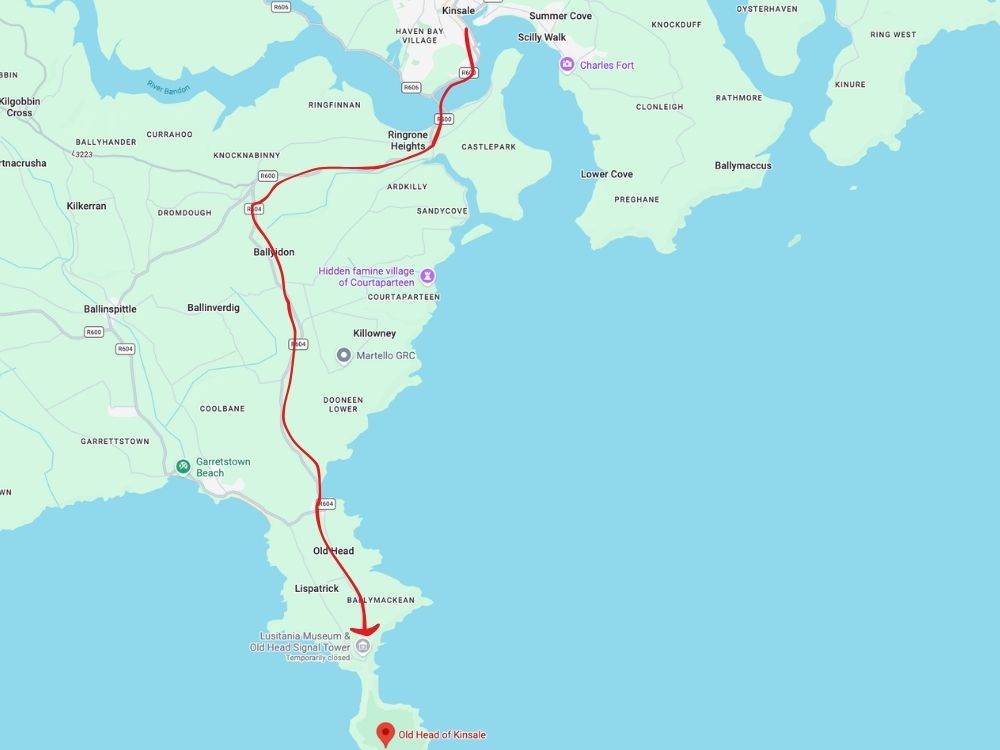
It’s about a 15-minute drive from Kinsale. By bus, the Local Link 253 takes about 20 minutes from Kinsale and costs around €4 (approx. $4.40) one way. A taxi runs roughly €22–27 (approx. $24.20–29.70).
Parking at the Old Head Signal Tower & Lusitania Museum itself is free. There was also parking near the boundary with the golf course (the scenic viewpoint I’ll mention later) — space for about 4 cars.
About Old Head of Kinsale
We wanted to visit somewhere along the coast, and while scouting spots on Google Maps, this place looked like it had some kind of tower and beautiful scenery, so we decided to check it out.
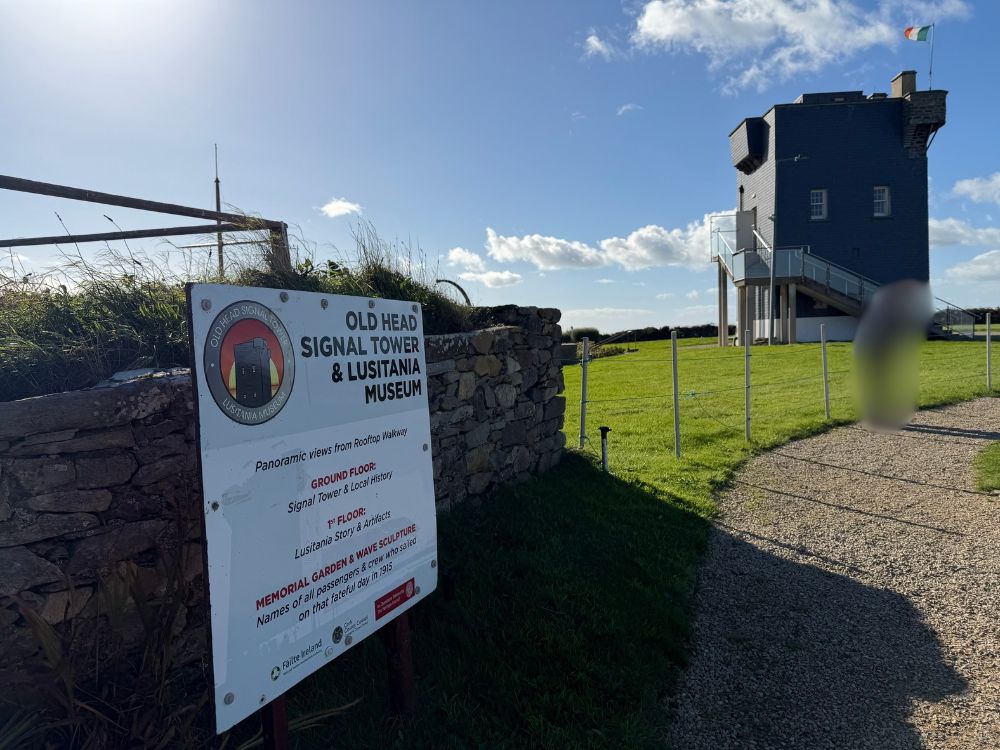
We drove through an area with beautiful scenery and arrived at our destination.
It was only after we arrived that we realized this was some kind of museum.
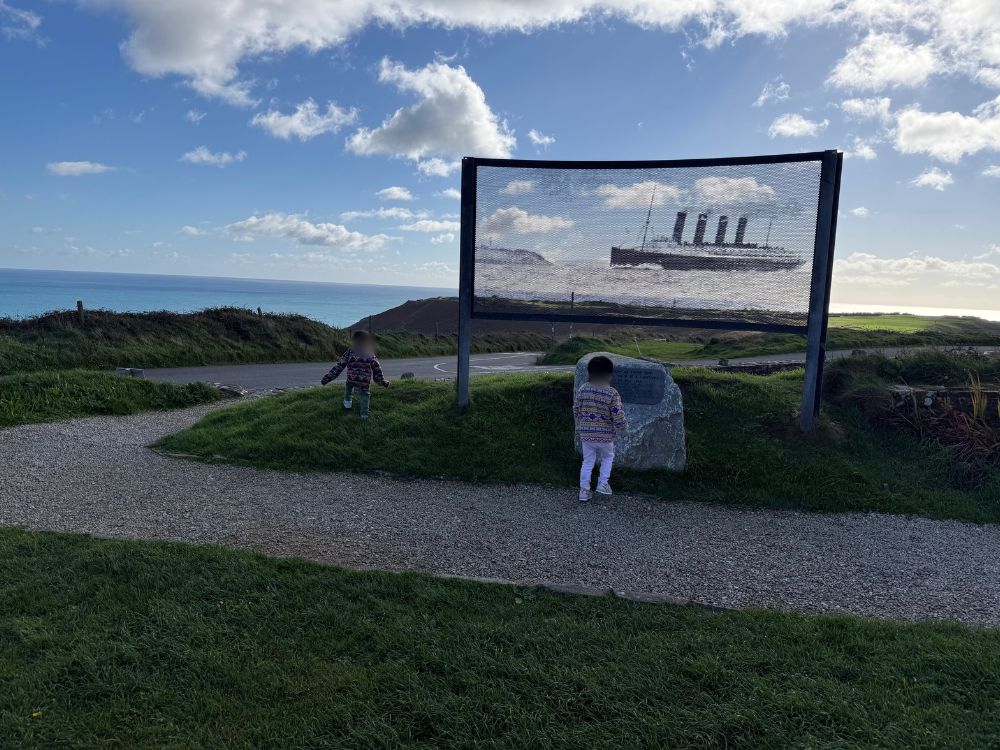
There’s a town in Ireland called Cobh that’s famous as the Titanic’s last port of call, and it has a few monuments and museums of its own.
When we first saw this monument, we assumed it had something to do with the Titanic.
But reading the inscription near the bottom, it said “Lusitania.”

After thinking about it for a moment, it clicked — the Lusitania, the civilian ship sunk during World War I. I’d learned about it in history class, but I never knew exactly where it had happened. The place had been turned into a museum, and being somewhere so historically significant made me a little nervous, but we decided to go inside.
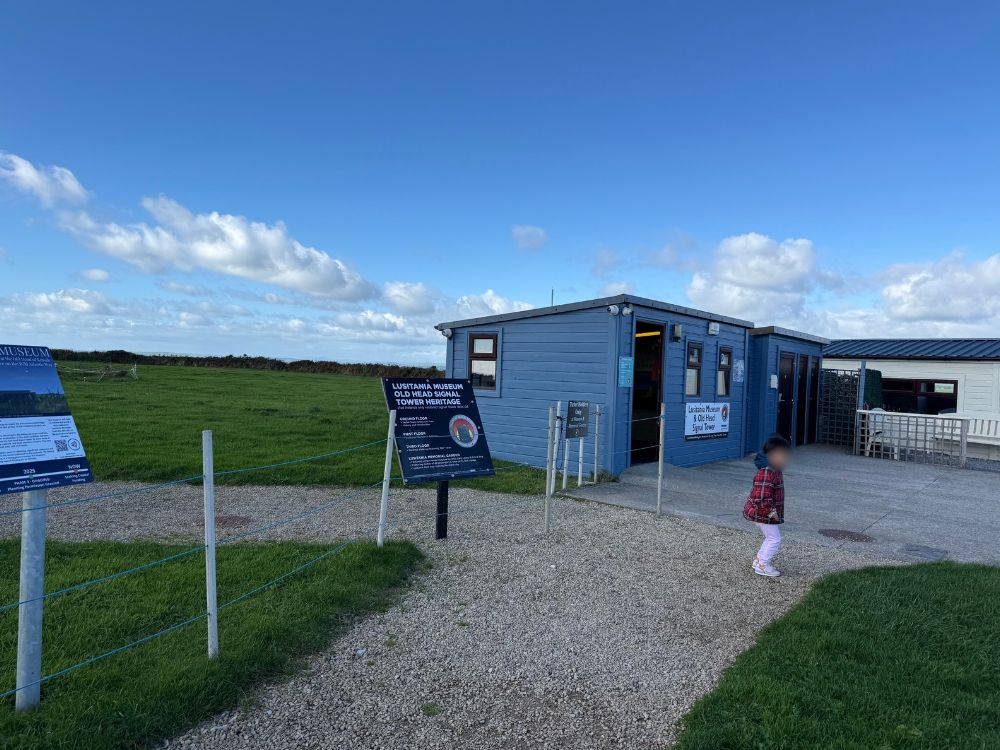
The museum is past a fence, in the paid area.
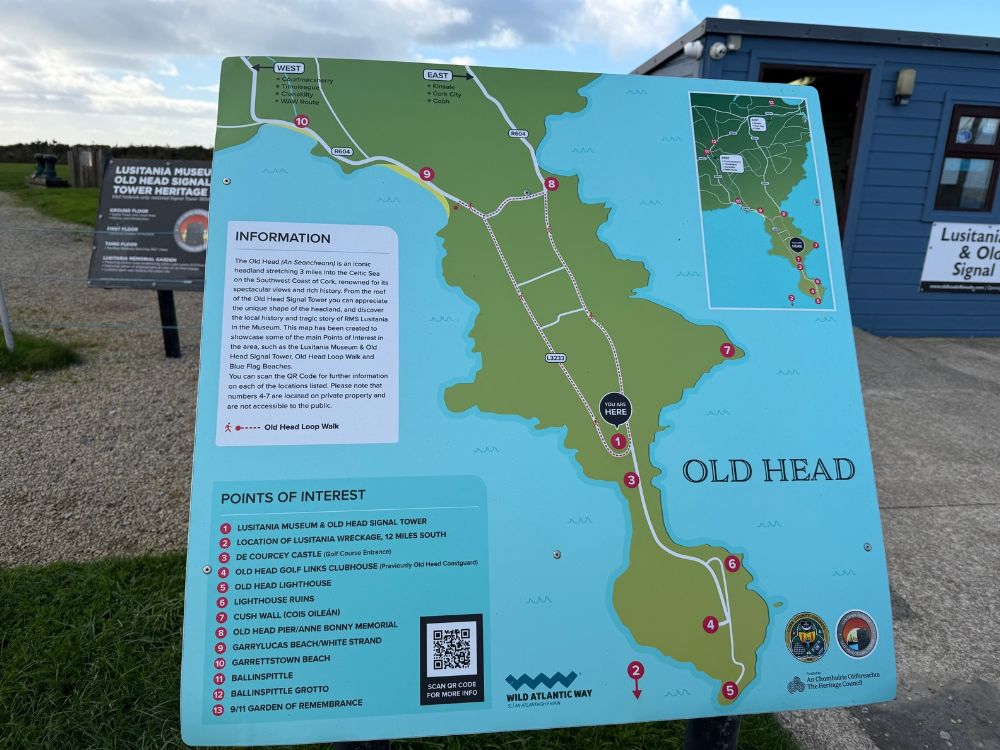
By the way, this spot is roughly at point 3, around the middle of Old Head. The scenic viewpoint is near the base of the headland.
Points 4, 5, and 6 have some ruins, but everything past the base of the headland is a paid golf course, and the general public can’t go in.

This golf course is apparently one of the most prestigious, high-end courses in the world. There are strict rules and requirements, but if you meet them, regular visitors can book a tee time too.
Old Head of Kinsale turned out to be a place with both stunning natural scenery and the Lusitania Museum.
The Lusitania Museum
About the Museum
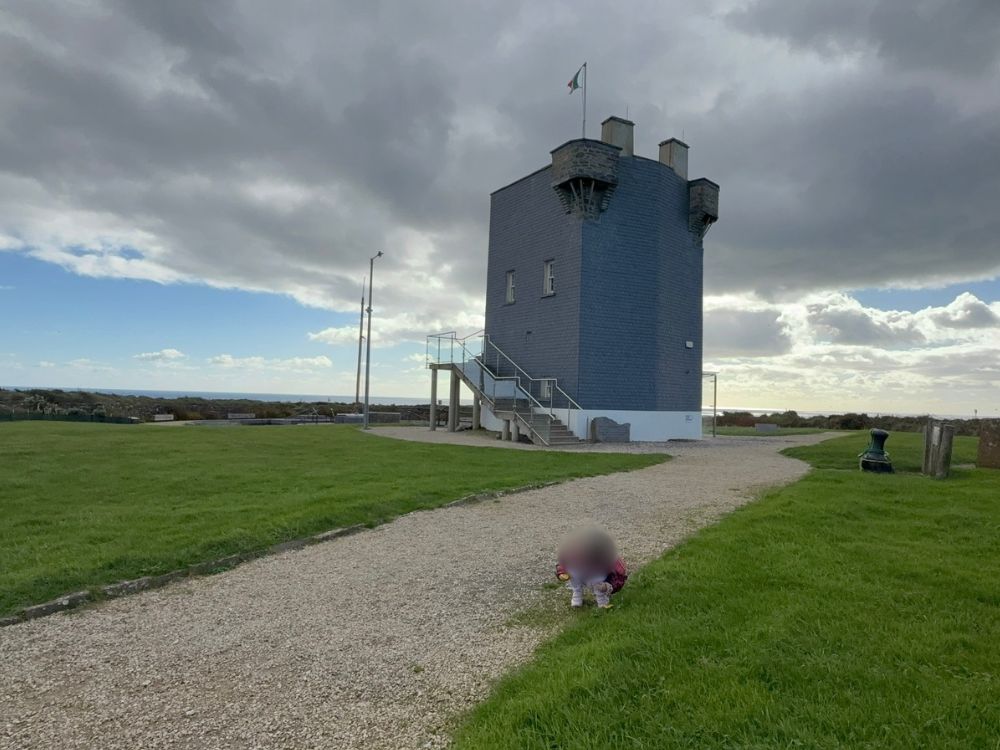
The Lusitania Museum is housed in a historic building — a converted signal tower from the Napoleonic era.
This signal tower was built in 1804, and it’s the only restored Napoleonic War-era signal tower in Ireland (several unrestored ones still exist).
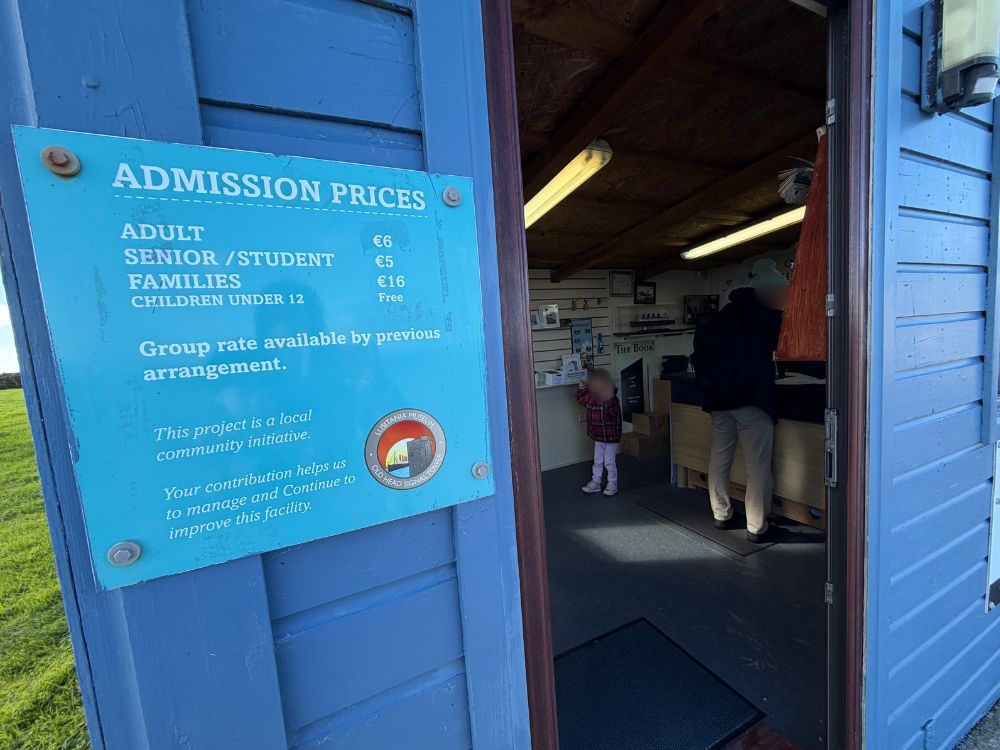
You need to pay admission to go into the museum.
Opening Season & Admission
The museum is open from March 14 to November 1, seven days a week, from 10:00 AM to 5:00 PM (for the 2026 season).
Admission Prices
Adult: €6 (approx. $6.60)
Under 12: Free
Family Ticket (2 adults + 2 children): €16 (approx. $17.60)
The History of the Lusitania Sinking
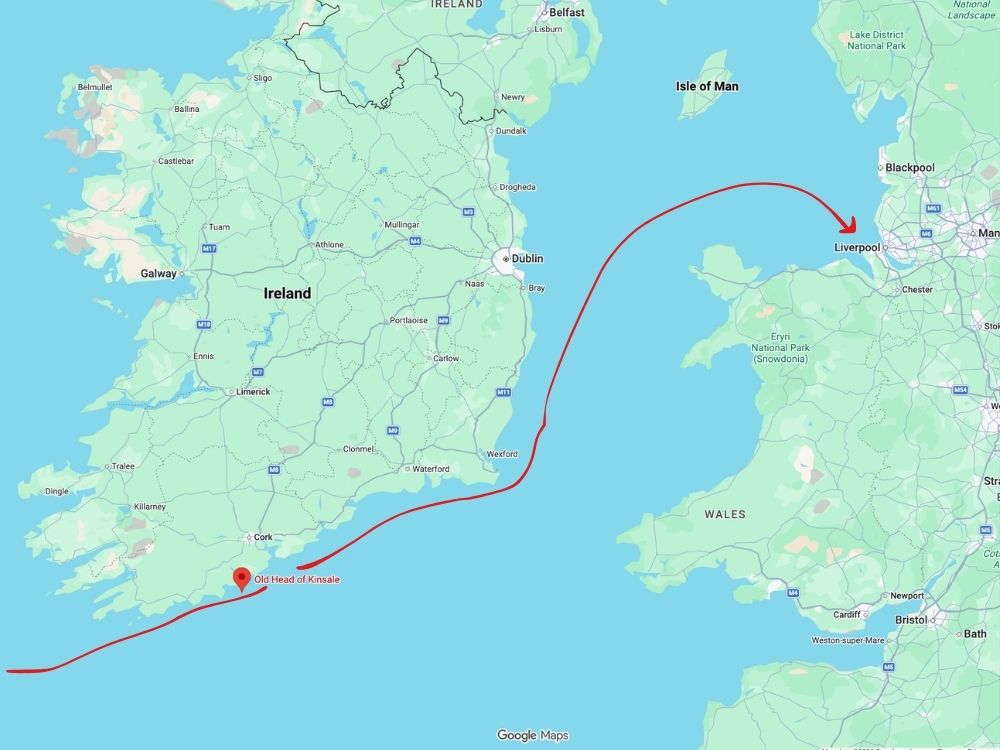
On May 7, 1915, the RMS Lusitania was torpedoed by the German submarine U-20 about 18km off the coast of Old Head of Kinsale, while sailing from New York to Liverpool. She sank in roughly 18 minutes. An estimated 1,198 people died, and 761 survived.
Many of the civilians on board were heading home — some to visit family, others returning for good to build a house with money they’d saved up in America. The ship sank so quickly after the torpedo hit that it led to a huge loss of life.
The first to rush to the rescue were fishermen from the nearby port towns, including Kinsale.
I’ll stick strictly to the historical facts here.
At the time, World War I was in full swing, and the German Empire and Britain were at war. Many new weapons were introduced during WWI, and submarines were among the ones adopted by multiple nations. The German Empire is particularly known for its unrestricted submarine warfare, targeting merchant and civilian ships to carry out commerce raiding — cutting off supplies to the Allied powers (Britain, France, Italy, Imperial Russia) to wear down their ability to keep fighting. This is said to be the first time this kind of commerce raiding was carried out using submarines.
There was a declared zone for this campaign, though attacks sometimes happened outside it too. The waters around both Ireland and Britain fell within the designated war zone. Normally, sinking a civilian ship would involve a warning or an inspection first (though wartime conditions meant there were always exceptions), but submarines couldn’t risk giving away their position, so civilian ships were often attacked without warning the moment they were spotted. That said, it wasn’t entirely without warning — the German Embassy had placed a newspaper notice warning passengers not to sail, right around the time the ship departed New York.
The US hadn’t entered the war yet at this point, but it was supplying the Allies, shipping food and ammunition over to Britain. In fact, by the later years of the war in 1917, Britain had to move to rationing due to shortages of grain and other goods, so the impact of this supply line was significant. The Lusitania was a civilian liner, but there’s a theory that she was also secretly carrying munitions. Whether the passengers knew about this at the time is unclear, but what’s certain is that a great many uninvolved civilians lost their lives.
There are various theories as to why the Lusitania sailed through such dangerous waters in the first place. There were ways to manage the risk — torpedoes could be evaded by sailing in a zigzag pattern, the Lusitania herself was quite fast, and there was even a possibility of a Royal Navy escort (though in the end, there was none). But that day, fog had reduced visibility, and the ship happened to sail right into the submarine’s line of fire — a combination of bad luck that’s also thought to have made the torpedo impossible to dodge.
By the way, the Titanic had sunk back in 1912, about three years before the Lusitania. It’s said that the Titanic’s death toll was made worse by not carrying enough lifeboats for everyone on board. Having learned that lesson, the Lusitania carried enough lifeboats for all her passengers — but she sank so fast, in just 18 minutes, and listed so heavily to one side, that the lifeboats on that side couldn’t be lowered, which ended up driving the death toll up anyway. Because of this, ships afterward began adopting mechanisms that could launch lifeboats even when a ship was listing, along with lifeboats that could be deployed more quickly.
The Titanic, incidentally, was ordered and operated by the White Star Line, while the Lusitania belonged to Cunard Line. White Star Line was absorbed into Cunard Line in 1934.
The sinking of the Lusitania was reported by newspapers around the world, and much of the coverage condemned the German Empire for attacking a civilian ship (some of these period newspapers and reports are on display at the museum). As a result, Germany scaled back and temporarily suspended its unrestricted submarine warfare — but about three months later, in August 1915, another ship, the Arabic, was sunk. Both incidents had American passengers aboard, and criticism of Germany grew within the US. Possibly as a result, Germany held off on unrestricted submarine warfare until February 1917 (only the unwarned, indiscriminate attacks were halted — attacks within the bounds of international law continued).
In the end, two years later, in April 1917, the US entered the war on the side of the Allies — and the Lusitania’s sinking is remembered in history books as one of the events that helped lead to that. But rather than just reading about it as history in a textbook, this museum is a valuable place to actually learn about the real victims and the records from that time.
Inside the Museum
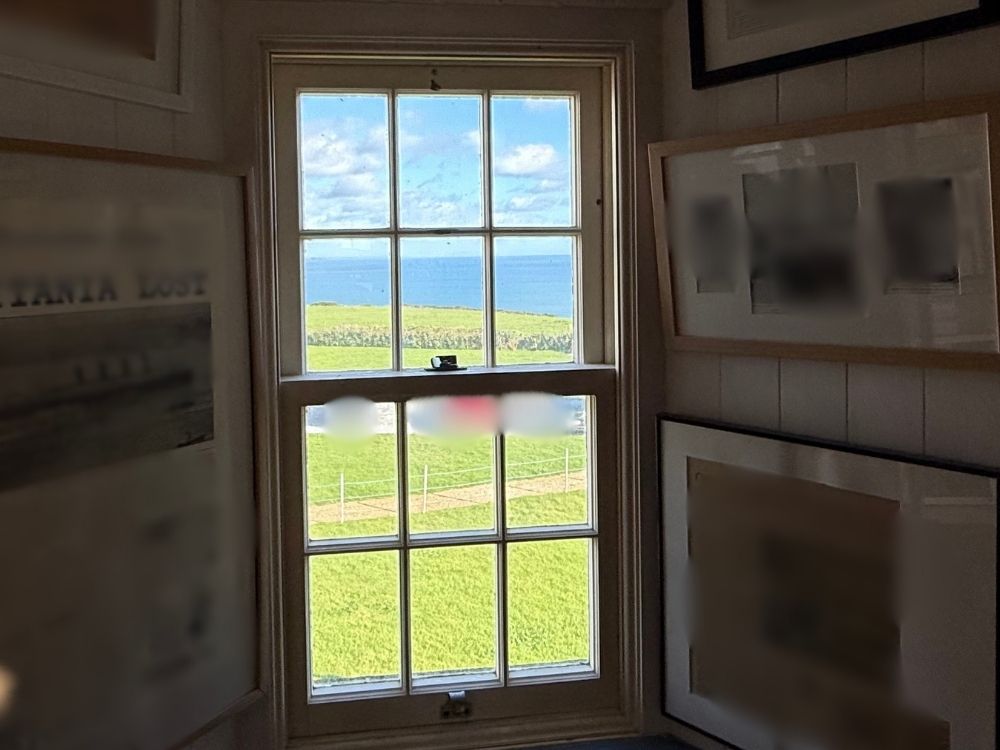
Inside the museum, you’ll find items recovered from the wreck — things like dishes and deck chairs that were actually used on board — along with newspapers and written accounts from the time.
*We’ve blurred this photo.
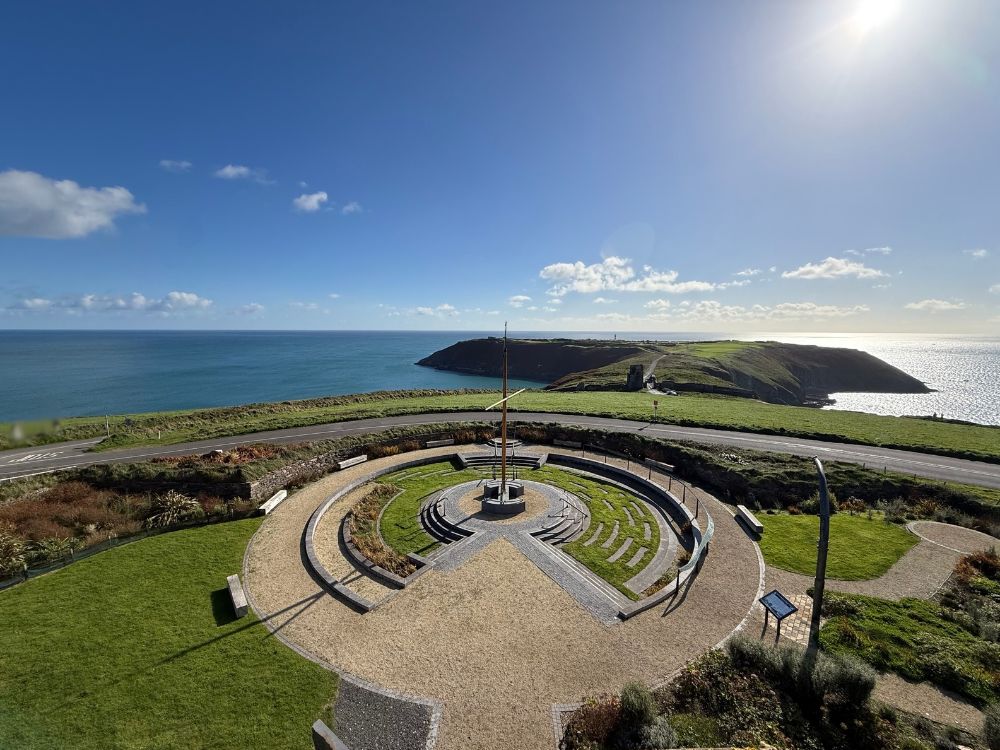
You can climb to the top of the signal tower, and from the watch post, you get a sweeping view of the cliffs and the sea.
It’s probably the highest point around, so you can see all of Old Head from up there.
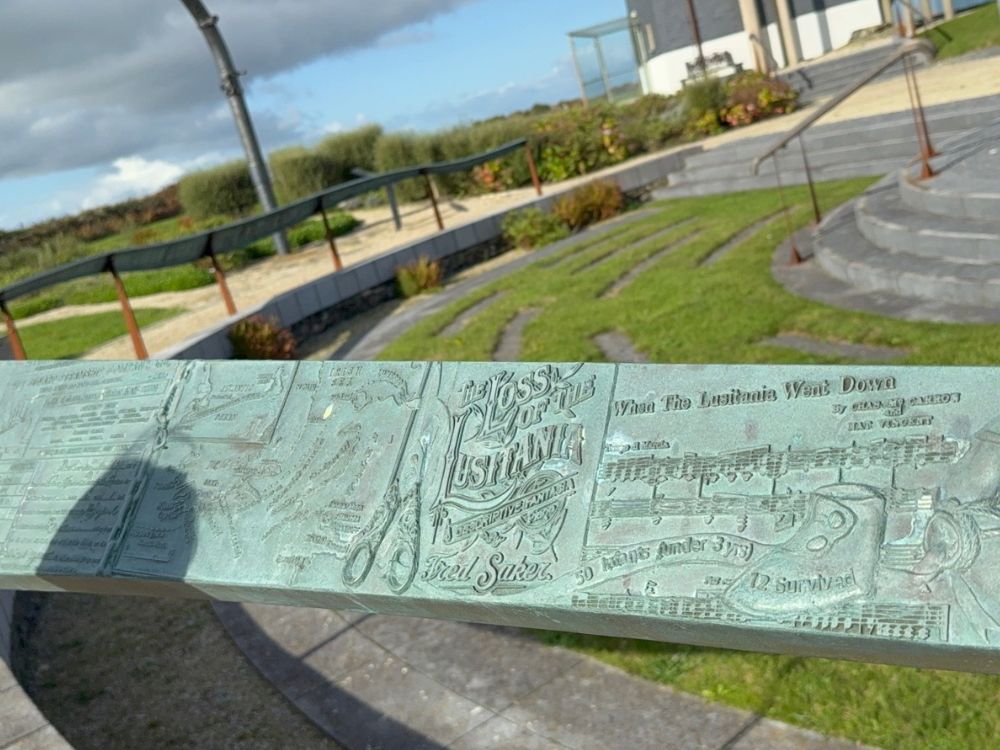
Outside, there’s a monument inscribed with the names of the victims and depictions of what happened.
*Since this is a museum, we’re avoiding posting photos of the exhibits themselves.
The building has two floors. The second floor covers the Lusitania, while the first floor covers the Napoleonic history behind the signal tower itself. At the time, Napoleon, who had taken control of much of Europe, was considering an invasion of Britain. Since Ireland is close to France, 81 towers were built along the Irish coast to watch for his advance. If an approach was spotted, the news would be relayed using flag signals. The methods and history behind all of this were on the first floor, and I found it fascinating.
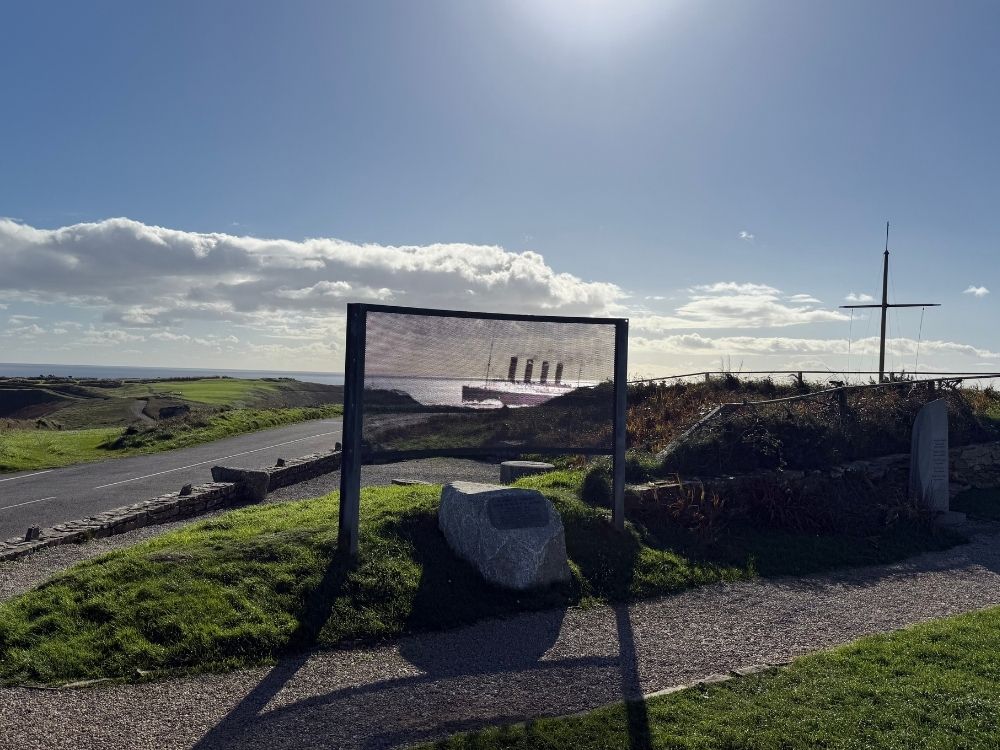
We didn’t notice this at first, but this monument is designed so that, if you line it up with the cliffs just right, you can see where the Lusitania would have been sailing.
Café
There’s a café on the grounds called “Grounded at the Old Head Café.”
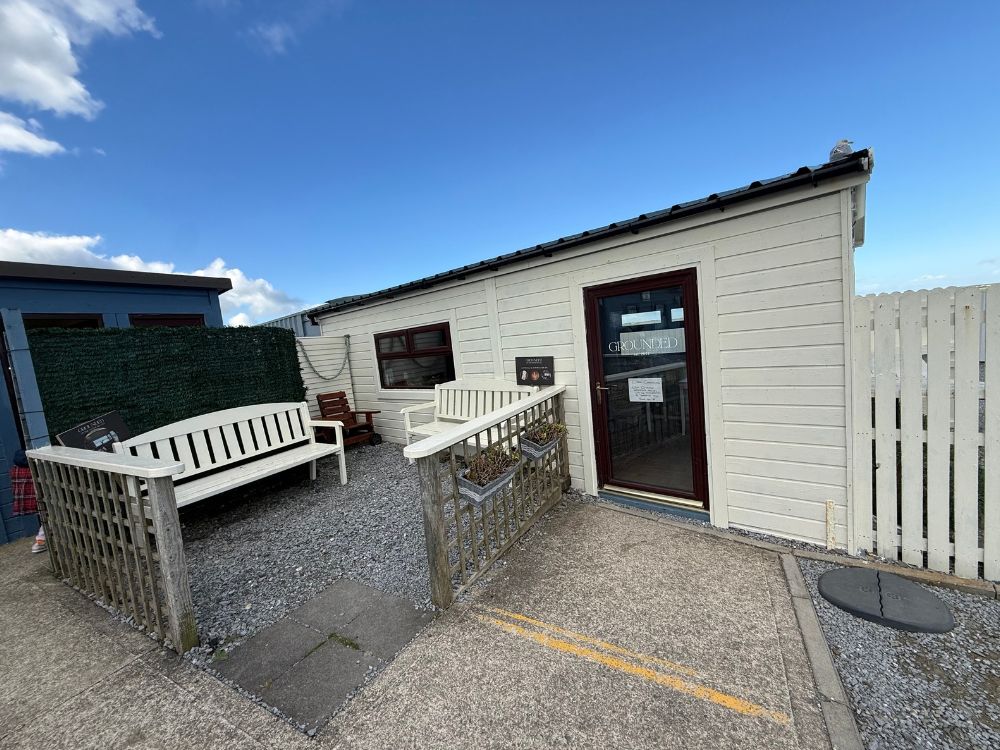
We visited in mid-October, and it wasn’t open when we were there — the posted hours said Sundays only. (When we looked it up online, it said the café operates throughout the museum’s open season, so this may have changed.)
The Scenic Viewpoint
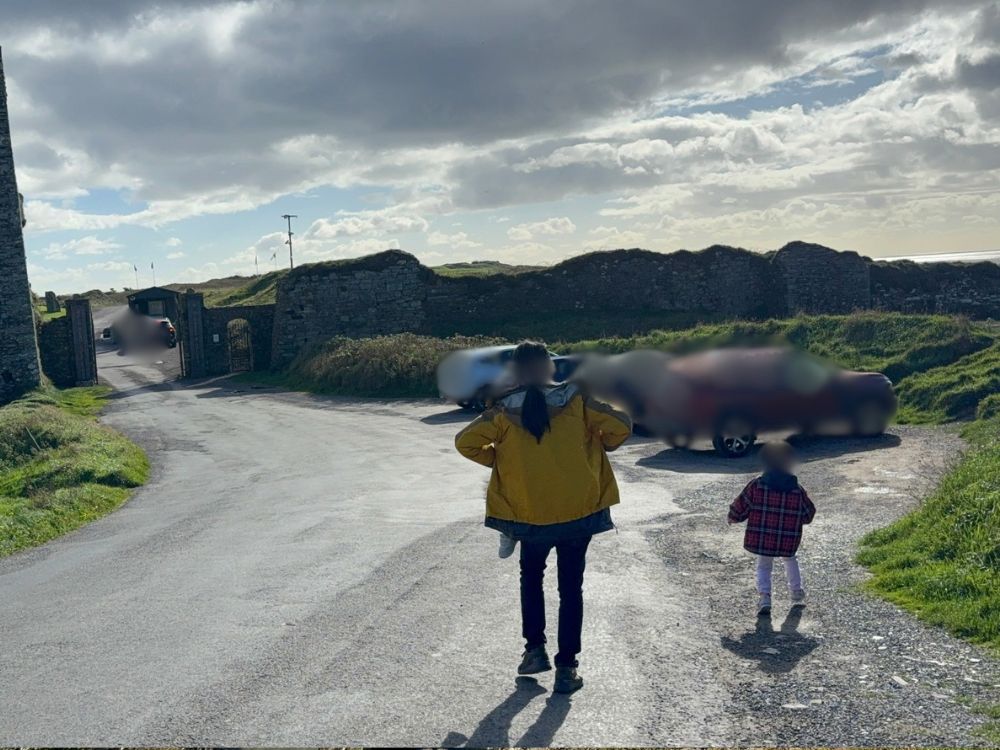
The staff at the museum’s front desk told us there was a great view a little further on, so we walked over to check it out (it’s right where the headland meets the golf course).
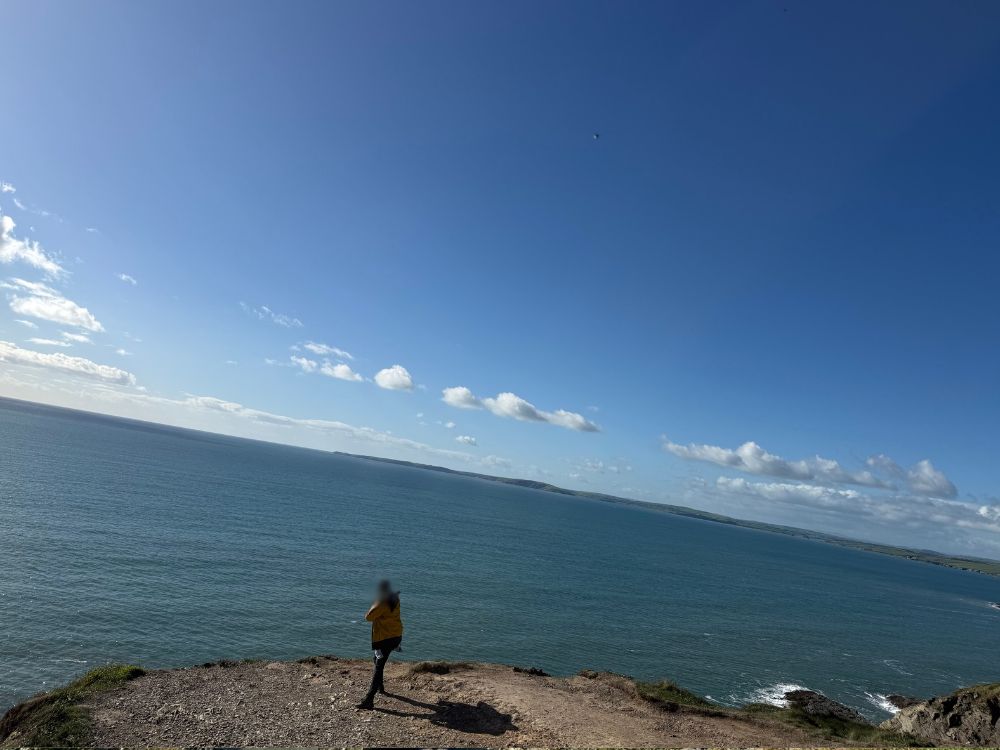
After a few minutes of walking, we reached the cliffs, and beyond them was nothing but horizon as far as we could see!
!This area is left completely natural, with no fences. If you were to lose your footing, you’d fall straight down the cliff. We saw some people standing right at the edge, but please be very careful.
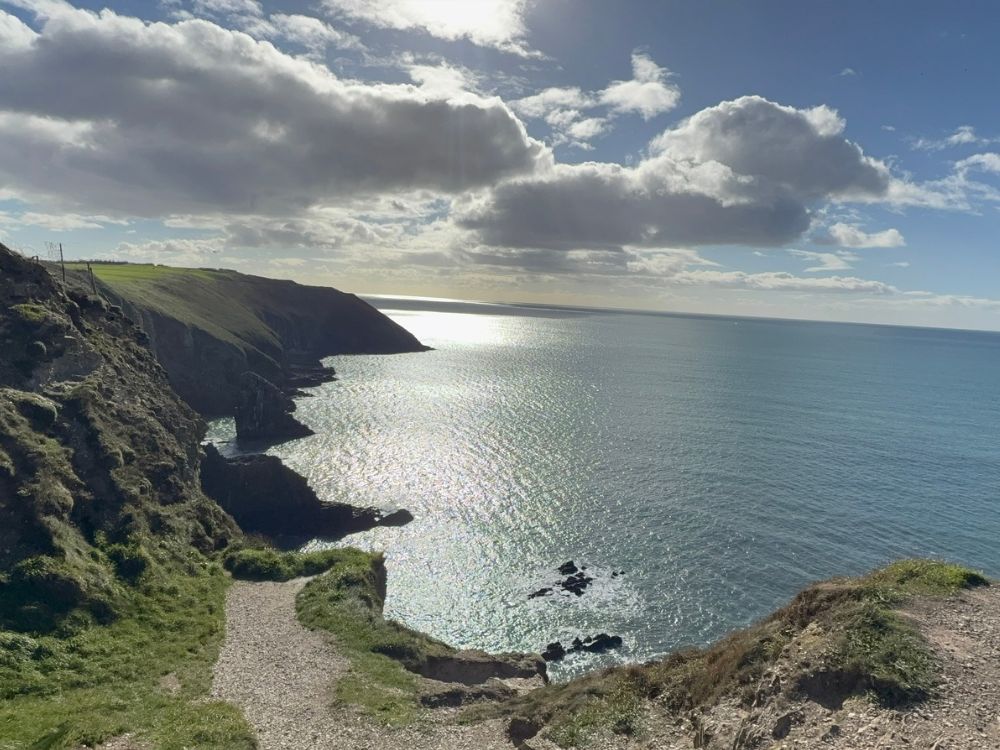
It’s hard to capture in photos, but you really get to experience the Old Head coastline firsthand.
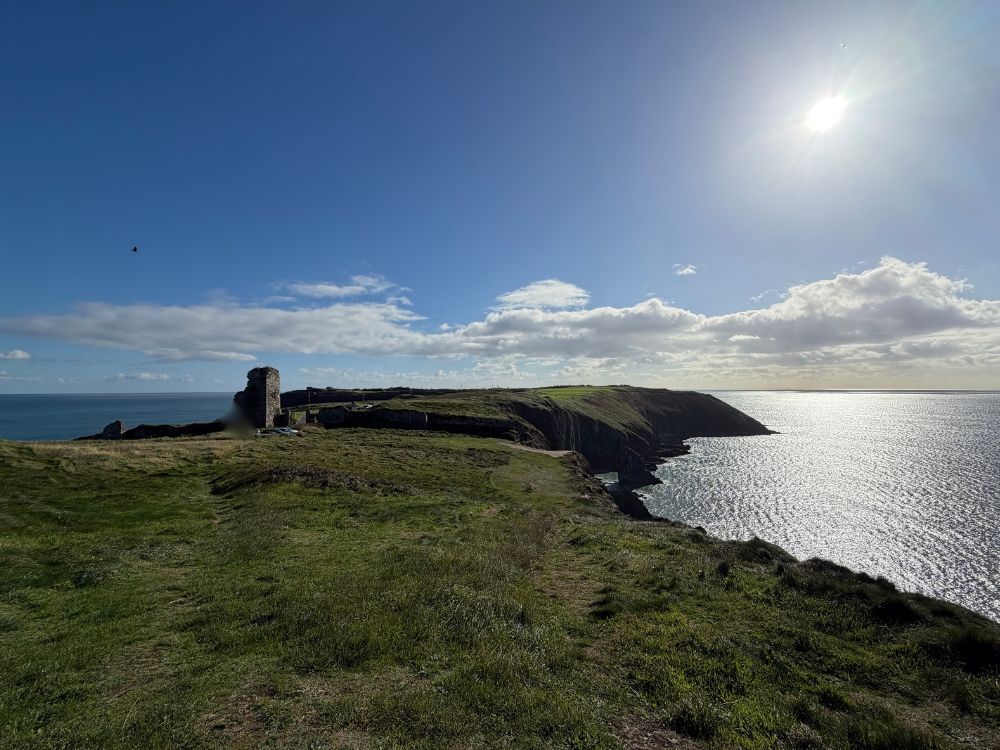
Climbing up a bit further, you get a full view. There’s a lot of grass, and the ground can be wet, so outdoor-appropriate clothing is a good idea!
Between the stunning scenery, the fear of imagining what would happen if you fell, and knowing the Lusitania still lies at the bottom of the very sea in front of us, it left me with a complicated feeling that’s hard to put into words.
We came here after visiting the museum, so our kids seemed to understand this was where the ship had sunk, and they took it all in with surprisingly solemn expressions.
We saw some people who’d come just to see this free area, but if you’ve made it this far, we’d really recommend visiting the museum too.
Our Visit Schedule with Kids
For visiting the signal tower area and the monument, the general estimate is about 1 to 1.5 hours.
- Around 1:00 PM: Arrived, bought tickets, and headed into the museum
- Spent about 40 minutes in the museum
- Explored the outdoor area next to the museum (about 1 hour total by this point)
- Around 2:00 PM: Headed to the scenic viewpoint
- Around 2:40 PM: Back at the car
Our kids were eager to get outside, so we only spent about 40 minutes in the museum, but if you want to read everything thoroughly, I’d plan on more time than that.
Personally, I think an hour would feel too short, so I’d plan for around 2 hours.
If you’re playing the golf course, we were told to plan for around 6 hours.
What to Wear
Since it’s right at the tip of the headland, it’s an extremely windy spot. If you’re visiting in winter, we’d recommend bringing a warm coat.
!You can walk freely right up to slippery spots with no fences in place, so make sure to wear shoes that are easy to walk in and won’t slip.
Where to Stay Nearby
Old Head of Kinsale is about a 15-minute drive from the town of Kinsale, so it’s well connected — we’d recommend basing yourself in Kinsale for sightseeing.
In Summary
Old Head of Kinsale turned out to be a place where you can both learn about the history of the Lusitania at the museum and take in a stunning view from a completely natural, unfenced cliff.
It’s also a place with real historical weight, and many visitors come specifically to pay their respects to those who lost their lives.
It’s windy, and the cliffs can be dangerous, so please dress appropriately and stay safe if you visit!
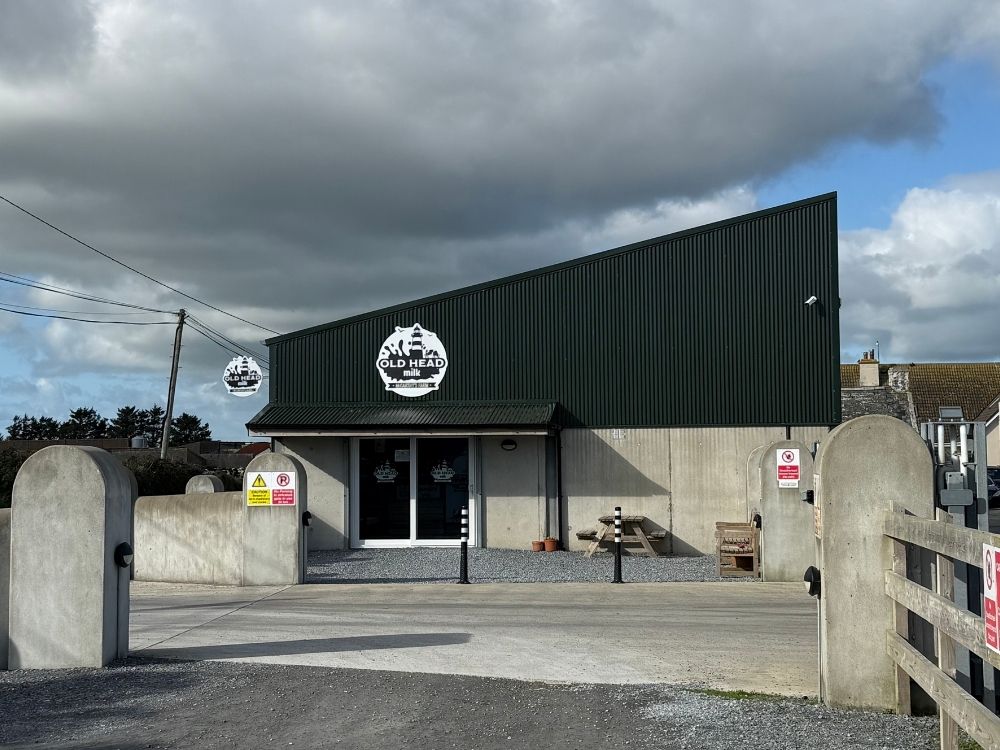
On the way back, we came across an unmanned milk vending machine connected directly to a farm.
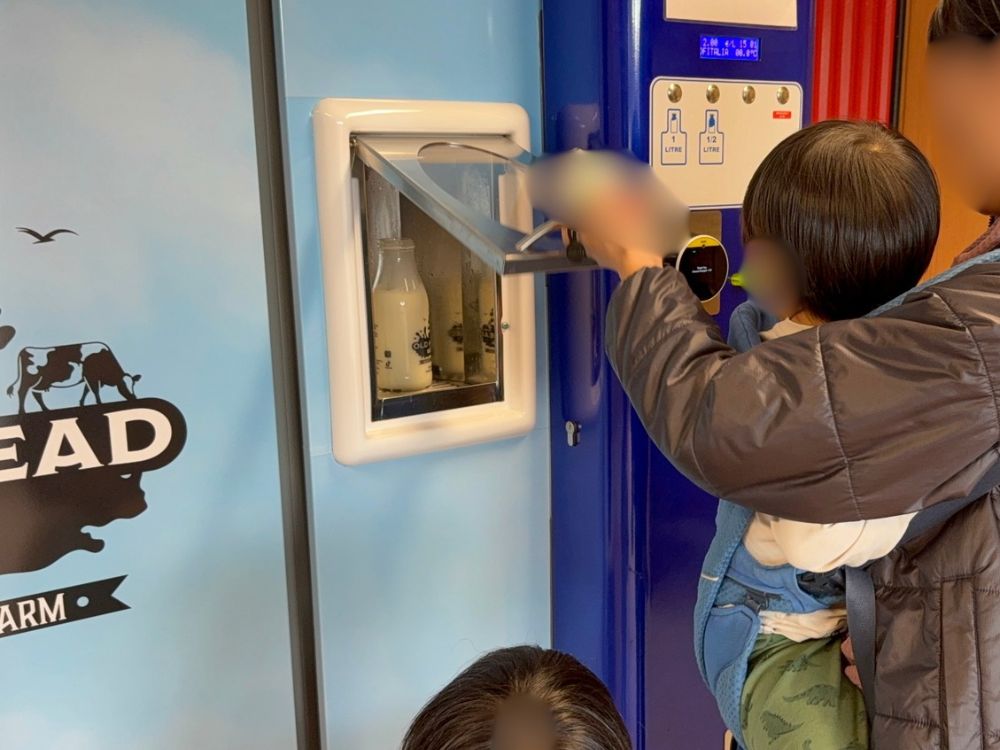
The system works by buying a token first, then placing it in the slot where the milk dispenses. If you bring your own bottle, you can refill it too. It looked like locals come here regularly to buy milk.
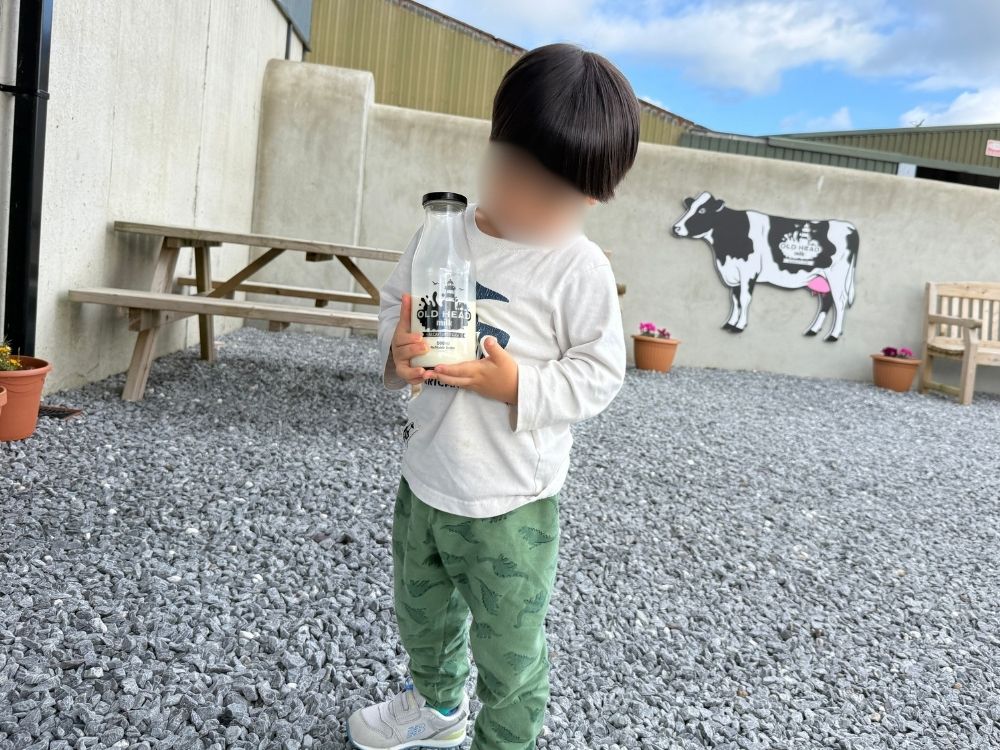
The bottles, designed with an Old Head motif, were really cute!
!If you use a half-size bottle, it can slide too far in and shift out of place, since the machine is built for larger bottles. We’d recommend setting it around the middle instead.
The milk had a light, mild flavor! The unmanned vending system itself felt novel and fun. Though I’ll admit the parking area had quite a few flies, which was the one thing that bugged me (ha).