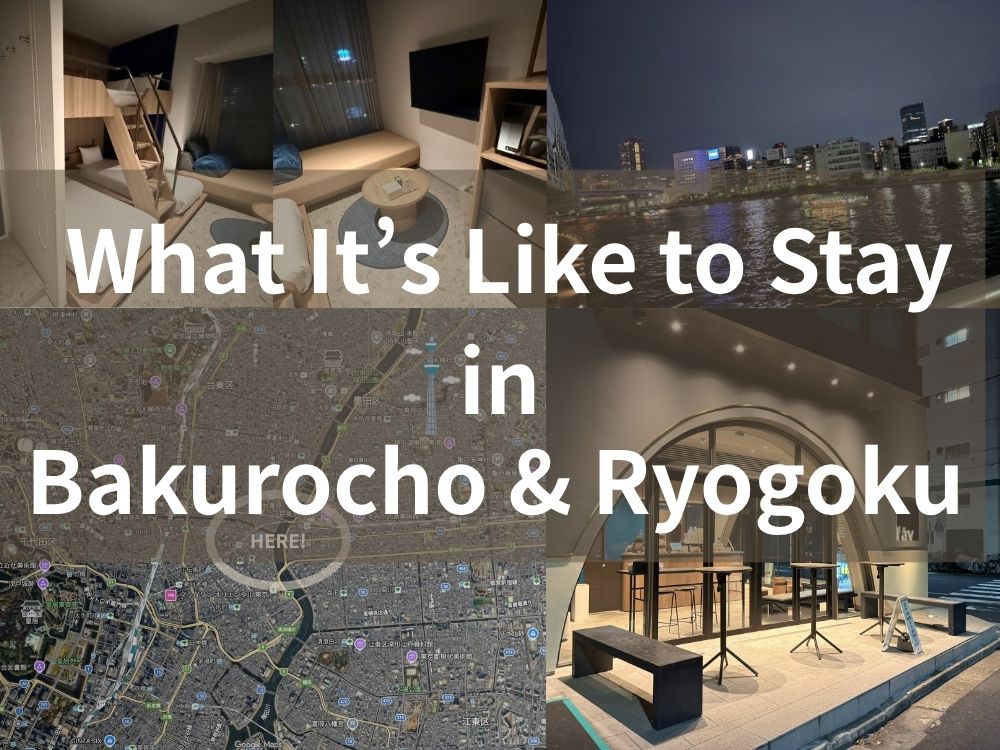
I had plans to meet friends in Tokyo, and since one of them was heading home by highway bus, we decided to walk her to Tokyo Station together… and promptly got lost. I later learned that Tokyo Station has 6 separate bus boarding areas!
By the time we got our bearings, we’d missed her bus. The next one was at 9 PM — too late, especially with kids in tow — so on a Saturday night in Tokyo, we had to find a last-minute hotel. My criteria: same-day booking, reasonable price, close to Tokyo Station, and able to fit 2 adults + 3 kids.
We ended up at FAV Tokyo Ryogoku. After actually staying, I realized the Ryogoku / Bakurocho area is a genuine hidden gem. This article covers the hotel review plus everything that makes this neighborhood special!
- Why the Ryogoku / Bakurocho area is a hidden gem
- How prices compare to other Tokyo hotel areas
- Who this area is best for
- Honest review of FAV Tokyo Ryogoku
Ryogoku / Bakurocho Appeal #1: Unbeatable Access
The biggest draw of this area is access. Let me break it down.
Nearby Stations & Train Lines
There are 6 stations and 10+ train lines within walking distance — making this one of Tokyo’s most well-connected hubs for sightseeing. Here’s where each station can take you.
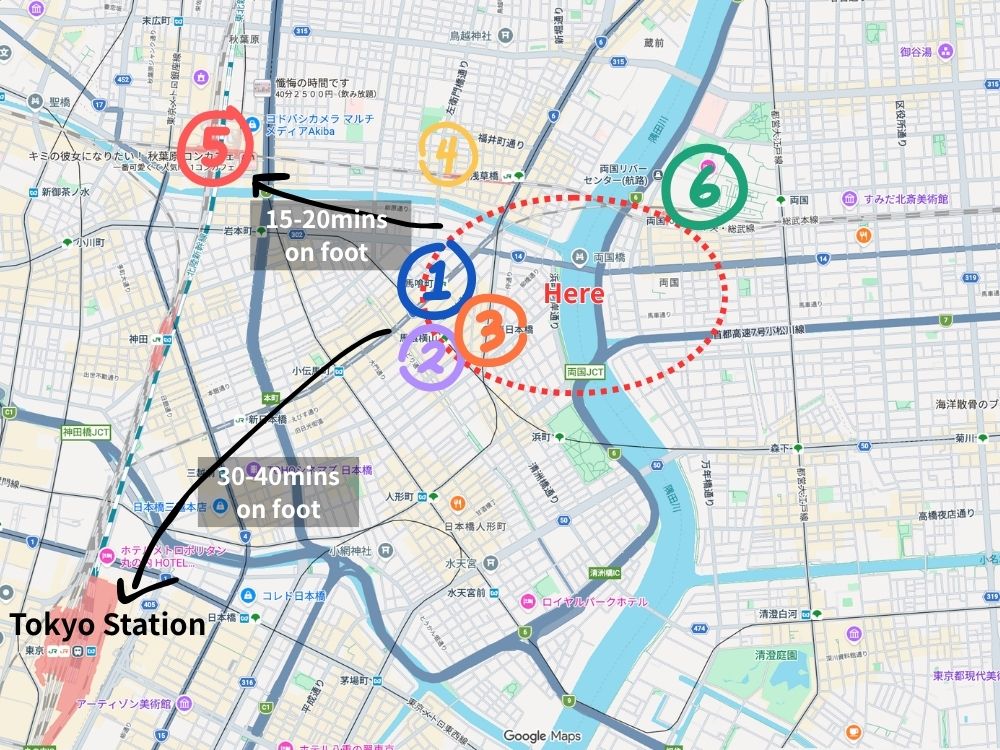
| No | Station | From Bakurocho (walk) | Lines | Where it takes you |
|---|---|---|---|---|
| 1 | Bakurocho | — | JR Sobu Line Rapid | Tokyo Station (1 stop, 3 min) / direct to Yokohama, Chiba, and Narita Airport |
| 2 | Bakuroyokoyama | ~3 min (underground passage) | Toei Shinjuku Line | Shinjuku, Jimbocho, Kudanshita |
| 3 | Higashi-Nihombashi | ~5 min (underground passage) | Toei Asakusa Line | Asakusa, Oshiage (Tokyo Skytree), Haneda Airport, Narita Airport |
| 4 | Asakusabashi | ~10 min | JR Sobu Line Local / Toei Asakusa Line | Akihabara, Ryogoku, Shinjuku / Asakusa, airport access |
| 5 | Akihabara | ~9 min | JR Yamanote / Keihin-Tohoku / Sobu / Hibiya / Tsukuba Express | Tokyo, Shinjuku, Shibuya, Ikebukuro, Ueno, Tsukuba, Roppongi |
| 6 | Ryogoku | ~13 min | JR Sobu Line Local / Toei Oedo Line | Kinshicho, Shinjuku / Roppongi, Aoyama-itchome, Tsukishima |

Bakurocho is pronounced “ba-ku-ro-cho.” The huge selling point: Narita Airport ↔ Bakurocho ↔ Tokyo Station all on one train line. The name might not be familiar, but the access is genuinely world-class.
I’ll use Bakurocho as the base point in this article, but as the table shows, there are multiple stations within walking distance — giving you flexibility in every direction.
Tokyo’s train network is famously complex. Even if stations share the exact same name (like “Ryogoku” or “Asakusa”), the actual platforms and exits can be hundreds of meters apart depending on the train company (JR vs. Subway lines).
Missing this detail can mean a long, unexpected walk—especially tough with heavy luggage or kids. Always check which specific train line and exit are closest to your destination before you head out!
Where You Can Get to by Train
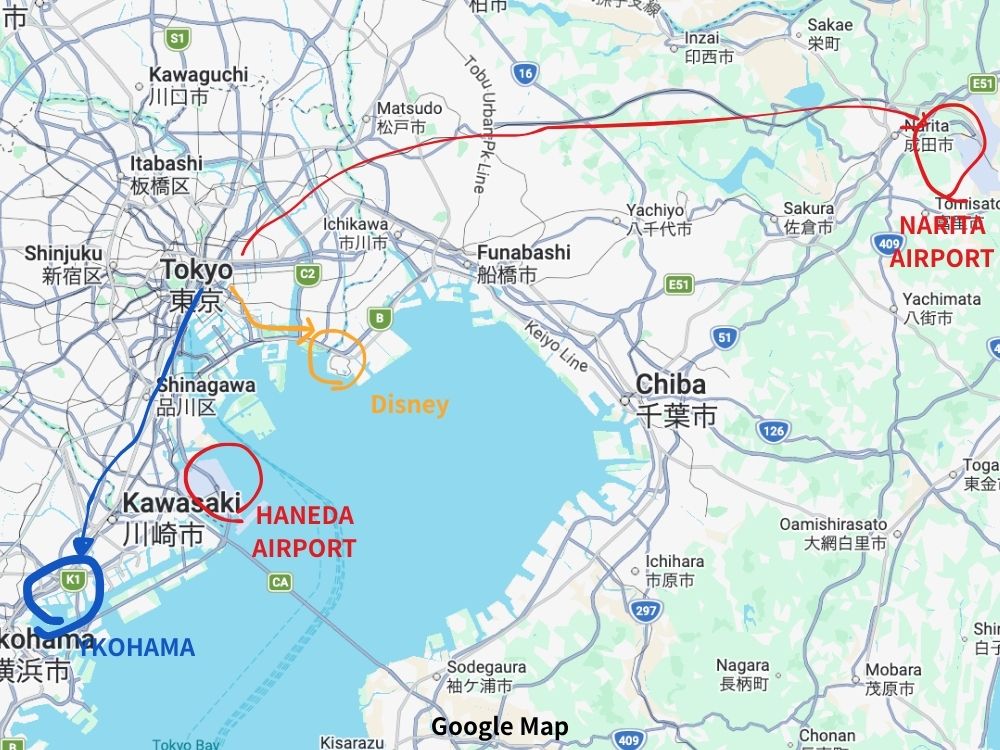
Access from both Narita Airport and Haneda Airport is excellent — it’s perfectly positioned as a bridge between your arrival and wherever you’re going next.
Yokohama and Tokyo Disney Resort are both under an hour away, making this area a great base for Tokyo sightseeing or a stopover hub.
Tokyo Station — the main hub for highway buses and Shinkansen bullet trains — is right next door, so access to Yamanashi, Tohoku, and other regional destinations is also easy.
- Narita Airport (NRT): Direct via Keisei Narita Sky Access Line — no transfers (the biggest selling point!)
- Haneda Airport (HND): ~40 min on the direct Toei Asakusa Line
- Tokyo Station: ~5 min (2 stops) on JR Sobu Rapid Line
- Akihabara: ~15 min walk / 1 stop by train
- Asakusa & Tokyo Skytree: ~10 min by train / a relaxed river cruise on the water bus is also recommended
- Yokohama: ~1 hour direct on JR
- Ryogoku Kokugikan (Japan’s main sumo arena): Walking distance
- Tokyo Dome, Nippon Budokan, and other concert venues: Within 30 minutes
- Tokyo Disneyland: ~45 min via Tokyo Station
Ryogoku is a sacred place for sumo fans!
The Ryogoku Kokugikan hosts the Grand Sumo Tournament three times a year (January, May, September). If you stay during a tournament, you might even spot rikishi (sumo wrestlers) walking around the neighborhood!
There are also many restaurants in the area serving chanko-nabe (the traditional hot-pot dish that sumo wrestlers eat) — so it’s a great area for anyone wanting to experience traditional Japanese culture!
Ryogoku / Bakurocho Appeal #2: Reasonable Prices
Compared to famous central Tokyo areas like Shinjuku, Ginza, and Ikebukuro, hotel rates in the Ryogoku / Bakurocho area are significantly lower.
For example, if you arrive at the airport in the evening, your options are usually to stay near the airport or push on toward where you’ll be sightseeing the next day.
What I always wrestle with: staying at the airport means more travel time the next day, but staying right in central Tokyo just to sleep feels overpriced.
The Ryogoku / Bakurocho area hits that sweet spot — close enough to your destination, but with hotels priced fairly for a place that’s mostly meant for sleeping.
Access to Tokyo Dome and Nippon Budokan is also excellent, so this area is perfect for concert and event travelers too!
“Nothing Going On” — In a Good Way
Being slightly removed from the busy entertainment districts means quiet nights and good sleep. The low prices come from being “nothing special” — but if your goal is rest, that’s exactly what you want.
It feels like a perfect travel rest stop — somewhere you don’t feel guilty about just sleeping and heading out early the next morning.
This isn’t the area for late-night food crawls or nightlife, so it won’t suit travelers wanting to bar-hop or eat out late. If you don’t have dinner included with your hotel, plan to pick something up beforehand or grab food from a nearby convenience store (konbini).
Ryogoku / Bakurocho Appeal #3: Skytree Views & Riverside Calm
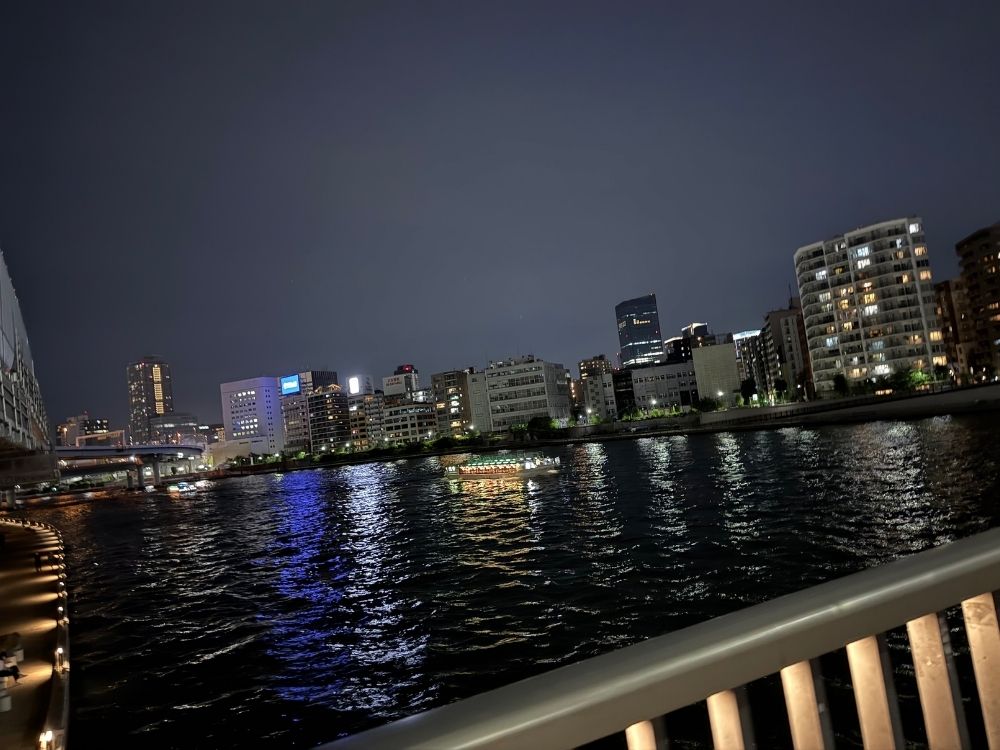
The Kanda River and Sumida River flow through the area, giving it a peaceful, almost rural feel. Yakatabune (traditional Japanese houseboats with dinner) cruise by — it’s an area worth staying in just for the sightseeing.
You can also see Tokyo Skytree from here — so you still feel that “Tokyo” atmosphere.
Lots of people are out walking in the neighborhood. It feels like a calm, grown-up version of Tokyo — not the chaotic-bright Tokyo you see in movies.
Who This Area Is Best For
People stay in different areas for very different reasons. Here’s a quick rundown of who I think this area suits best.
- Travelers using Narita / Haneda Airport: overwhelmingly easy access
- Travelers wanting cheap pre/post-trip Tokyo stays: significantly more affordable than central Tokyo hotels
- Concert / event travelers: easy access to Tokyo Dome, Nippon Budokan, and other venues
- Sumo fans attending Ryogoku Kokugikan tournaments: walking distance!
- Tokyo Disney travelers (pre/post-trip stays): easy access via Tokyo Station
- Highway bus travelers: near Tokyo Station, works well for late-night/early-morning bus departures
Our Stay at FAV Tokyo Ryogoku
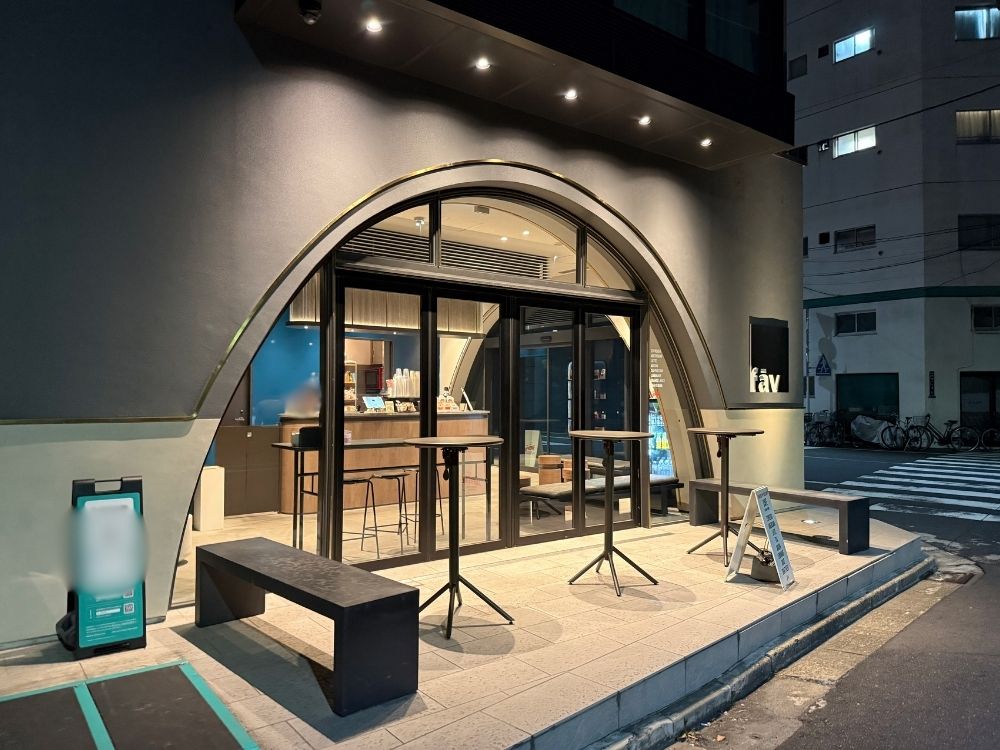
Access & Location
About 8-minute walk from Bakurocho Station — cross the bridge and the hotel comes into view. The hotel’s official site lists it as a 5-minute walk from Ryogoku Station, but we came from Tokyo Station, so Bakurocho (a one-train ride, no transfers) made more sense.
⚠️ Use the East Exit at Bakurocho Station — it’s the shortest route to the hotel. However, the elevator is only at the West Exit. If you have a stroller or large luggage, use the West Exit.
The West Exit walk takes a bit longer, but you pass the river with Tokyo Skytree clearly visible — it felt more like a nice evening stroll than a long walk.
Check-In
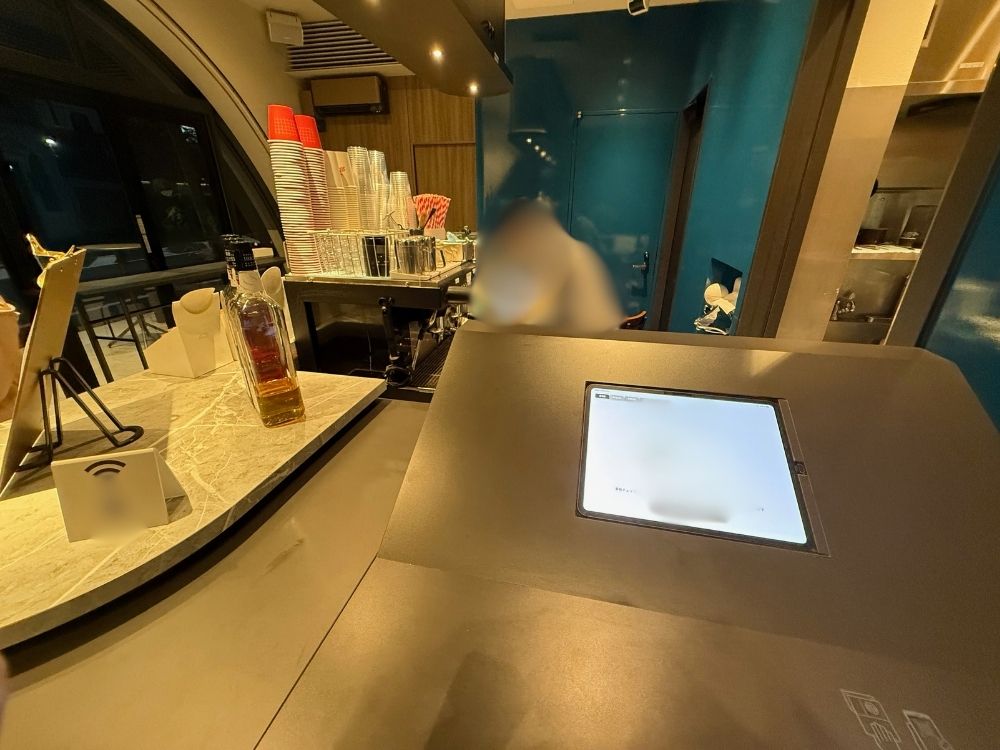
Staff were present at the front desk, but check-in itself was done at a kiosk.
You enter your reservation number and required details (phone number, etc.), and the screen displays a QR code along with your room number.
Just snap a photo of the QR code — when you reach your room, scan the QR at the door and it unlocks.
The Room
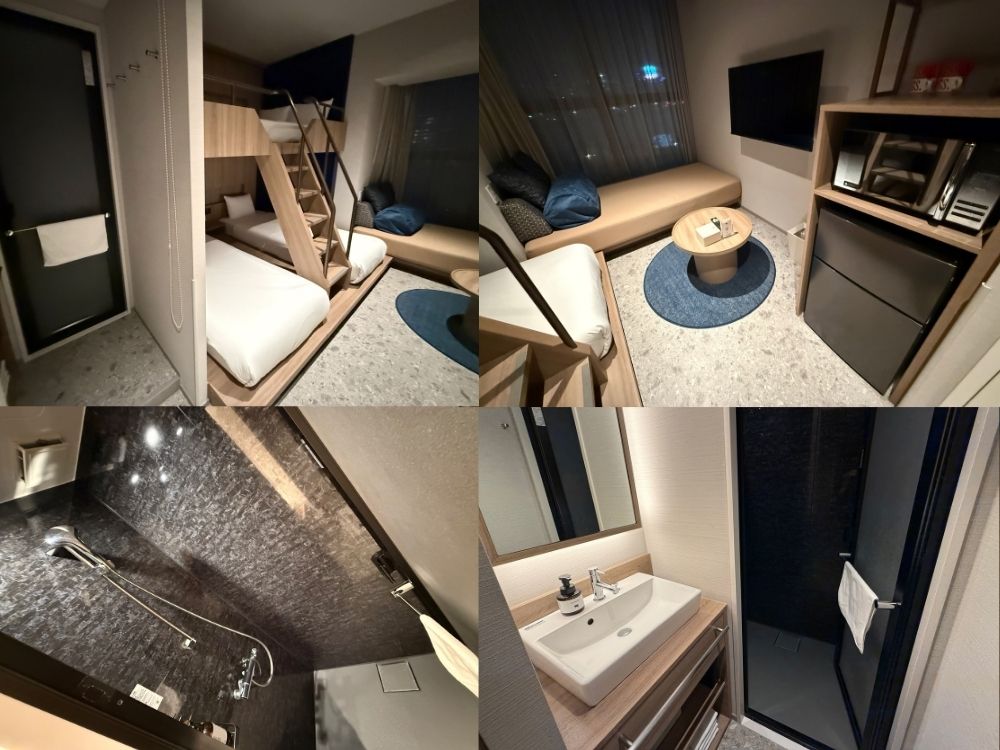
The room is compact, but very clean and has everything you need.
The practical layout fits the affordable area — totally sufficient as a base for sleeping.
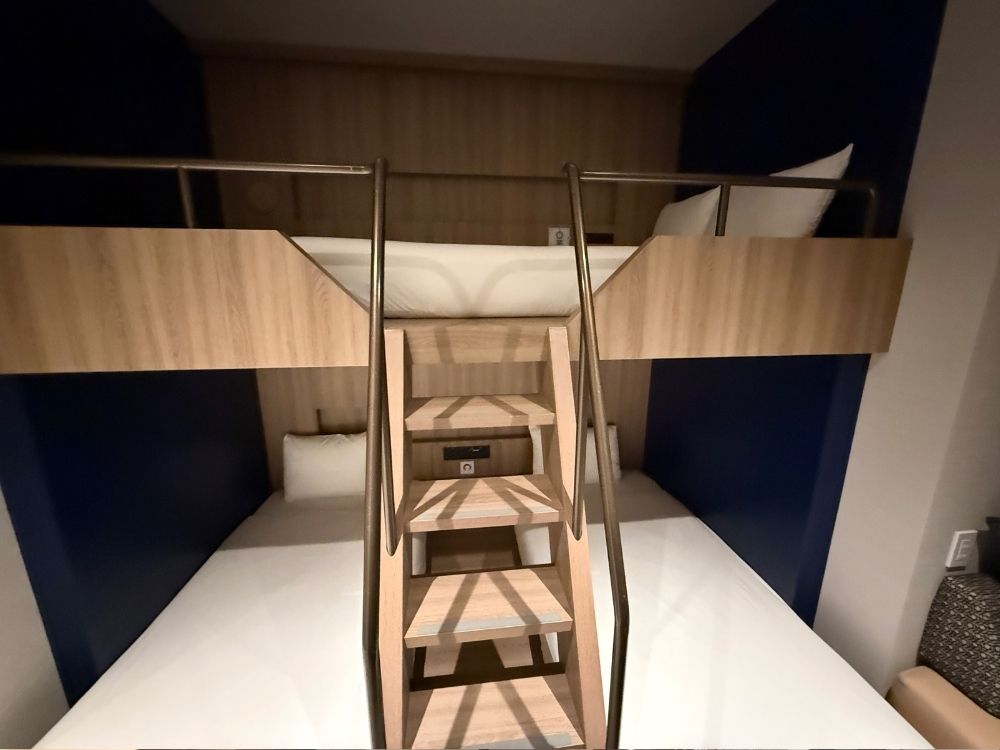
The setup had 4 single-size beds arranged as upper and lower bunks. The lower ones were separated because the stairs go between them.
The upper level has no gap between the mattresses, so you get a bigger usable space.
The kids were thrilled with the bunk bed setup!
The area is quiet, so we slept really well. As a no-frills base for sightseeing — it’s excellent!
Coin Laundry
There’s a coin laundry on the 4th floor.
Looking for Other Hotels in Ryogoku / Bakurocho?
This time we ended up at FAV Tokyo Ryogoku on a last-minute 6:30 PM booking with the tricky constraint of 3 kids — but I realized the Ryogoku / Bakurocho area has many similar hotels.
Most are reasonably priced with convenient locations, so searching by your dates and budget is well worth it.
It depends on the hotel, but in general this area doesn’t have many hotels with onsen (hot springs) or a strong food focus.
Worth checking ahead whether they provide overnight amenities like pajamas and toothbrushes — these aren’t always included.
Bonus Find
While searching, I found an amazing-value hotel right in front of Tokyo Station — even on a Saturday, with affordable rates, beds that can be pushed together (perfect for families with kids), and even an onsen (hot spring bath). Sadly, the policy of counting co-sleeping toddlers as guests meant we couldn’t book 5 people in one room. The room, location, and price were all incredible, so I’m saving it for next time.
Super Hotel Premier Tokyo Station Yaesu Chuo-guchi (with Yaezakura no Yu high-carbonation onsen)Wrap-Up
What started as a last-minute hotel scramble ended with the discovery of the “Ryogoku / Bakurocho area” as a real hidden gem.
Significantly cheaper than the famous central Tokyo districts, with direct one-train access from both Narita and Haneda airports. It works for sightseeing, concert trips, sumo viewing, and so much more. Definitely worth considering for your next Tokyo trip!
Thanks so much for reading all the way through!