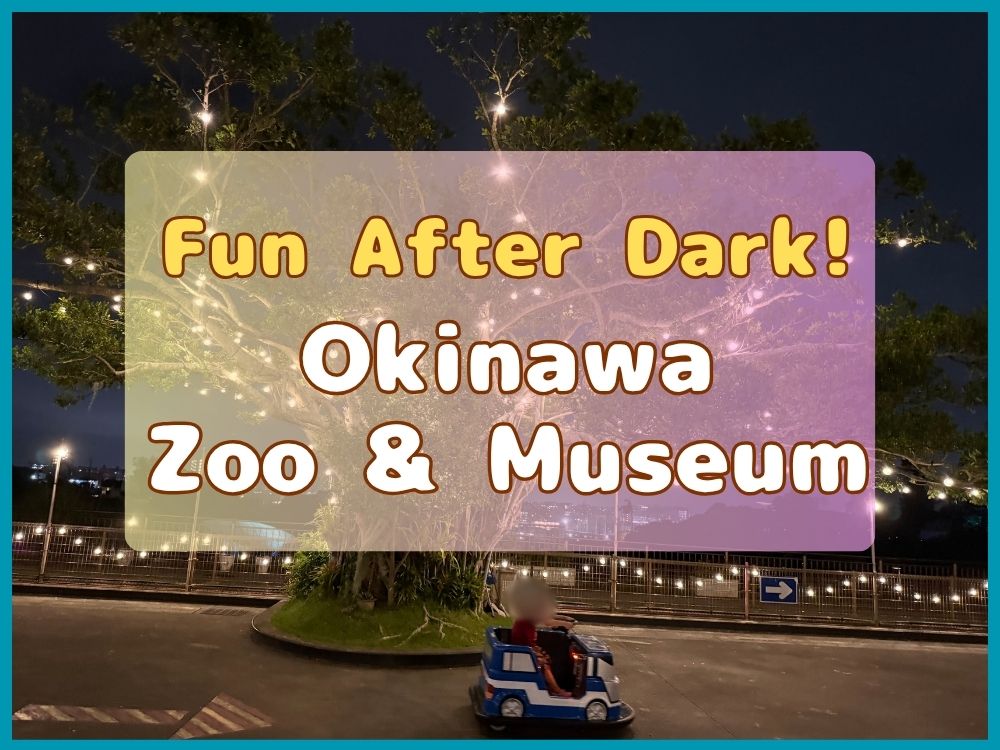
This time, a friend’s family who lives in Okinawa recommended it to us, so we visited Okinawa Zoo & Museum for the first time.
It turned out to be such an amazing spot for families with kids that we couldn’t believe we’d never been before — so we wanted to give you the full rundown!
- The basics of Okinawa Zoo & Museum and how to get there
- Beating the daytime heat with indoor exhibits and water play
- What makes the after-dark “NIGHT ZOO” so great
- What makes it so family-friendly
What Is Okinawa Zoo & Museum?
In Japanese, this park’s name literally translates to “Children’s Land” — a large park built around education and nurturing kids’ hearts and minds through play in nature.

Its official English name is “Okinawa Zoo & Museum,” but in Japanese it’s called “Okinawa Kodomo no Kuni” — literally “Okinawa Children’s Land.” “Kodomo no Kuni” means “Kids’ World,” and it turns out there are several parks around Japan that share this same name.

Legally, it’s classified as a “children’s welfare facility,” which is also why admission is so affordable — one of the best things about this place.
What Makes Okinawa Zoo & Museum Special?
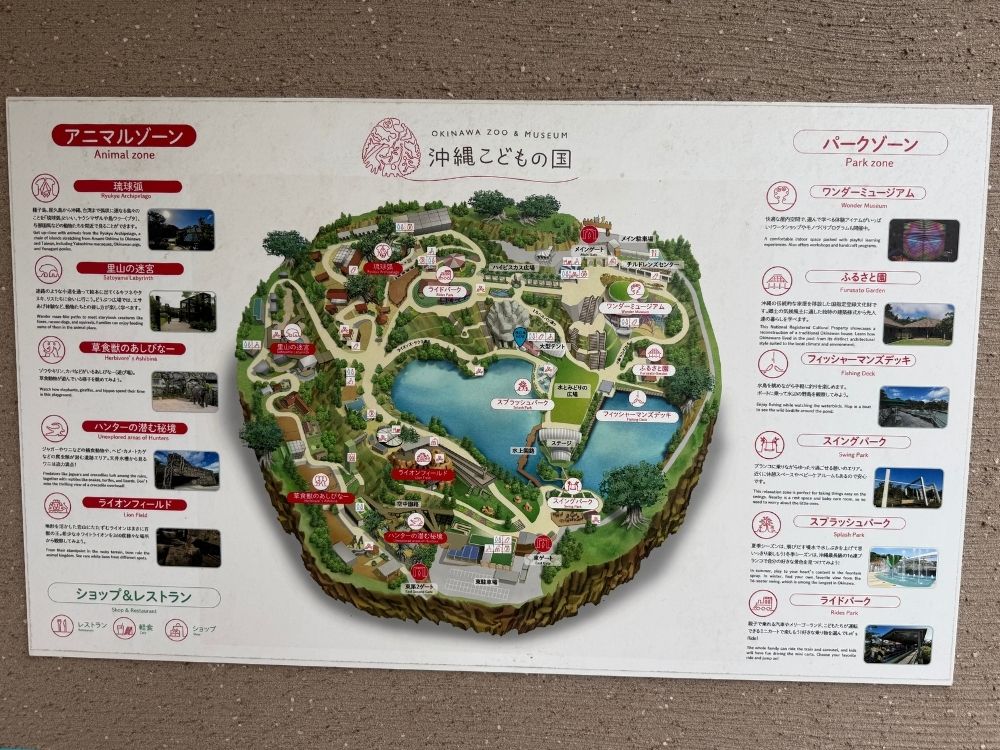
Okinawa Zoo & Museum is a combined experience park built for families with kids, bringing together a zoo, the hands-on learning facility “Wonder Museum,” the water-play area “Splash Park,” an amusement-ride zone, and more.
Let’s walk through each highlight in detail!
Getting There & the Basics
- Address: 5-7-1 Goya, Okinawa City, Okinawa Prefecture (near Kadena Air Base)
- Hours:
- Weekdays 9:30 AM–5:30 PM (last entry 4:30 PM)
- Weekends/holidays 9:30 AM–9:00 PM (last entry 8:00 PM)
- Closed: Tuesdays (or the following day if Tuesday is a holiday), Dec 30–Jan 1
- Admission:
- Age 16+: 1,000 yen (approx. $6)
- Students (high school, college, etc.): 500 yen (approx. $3)
- Age 15 and under: free
- Annual pass
- 4,000 yen (approx. $25) (2,000 yen / approx. $12 for students — high school, trade school, college, etc.)
- Parking: space for about 700 cars. Free.
You can re-enter on the same day just by showing your ticket to the gate staff!
The annual pass pays for itself after 2 visits for students, or 4 visits for a regular adult! If you live in Okinawa, this is a great deal.
Getting Here From Outside Okinawa
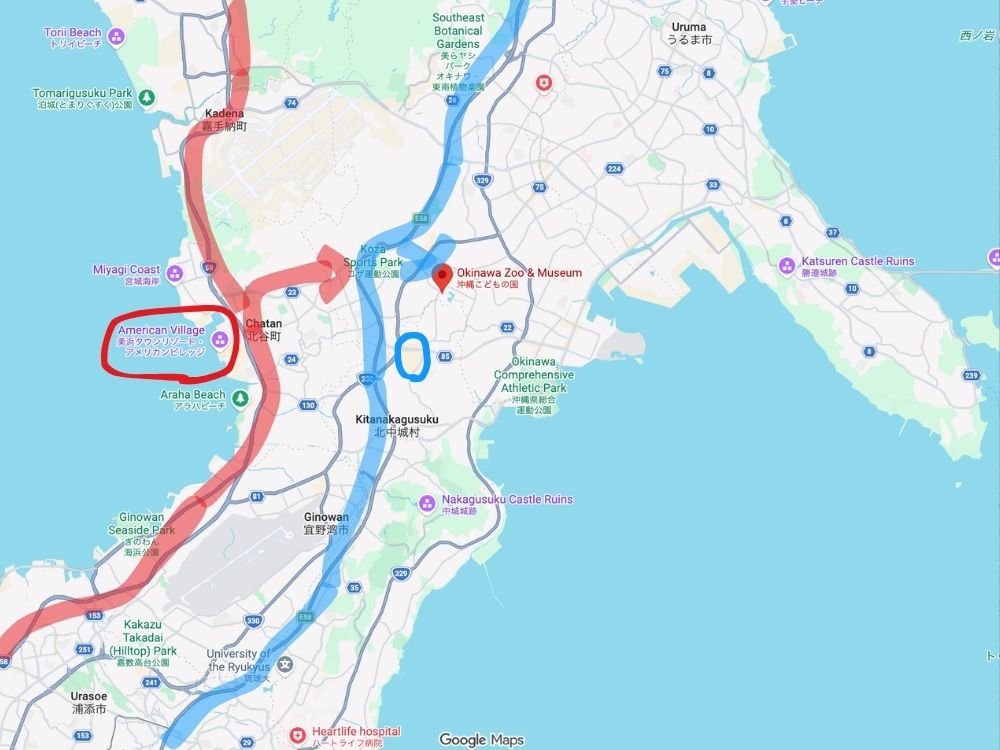
The blue-marked line is the expressway
the red-marked line is Route 58 (a local road running the length of Okinawa).
If you’re taking the expressway, the nearest exit is Okinawa Minami IC.
The nearest landmarks are American Village (the red-circled area) and Aeon Mall Okinawa Rycom (the blue-circled area).
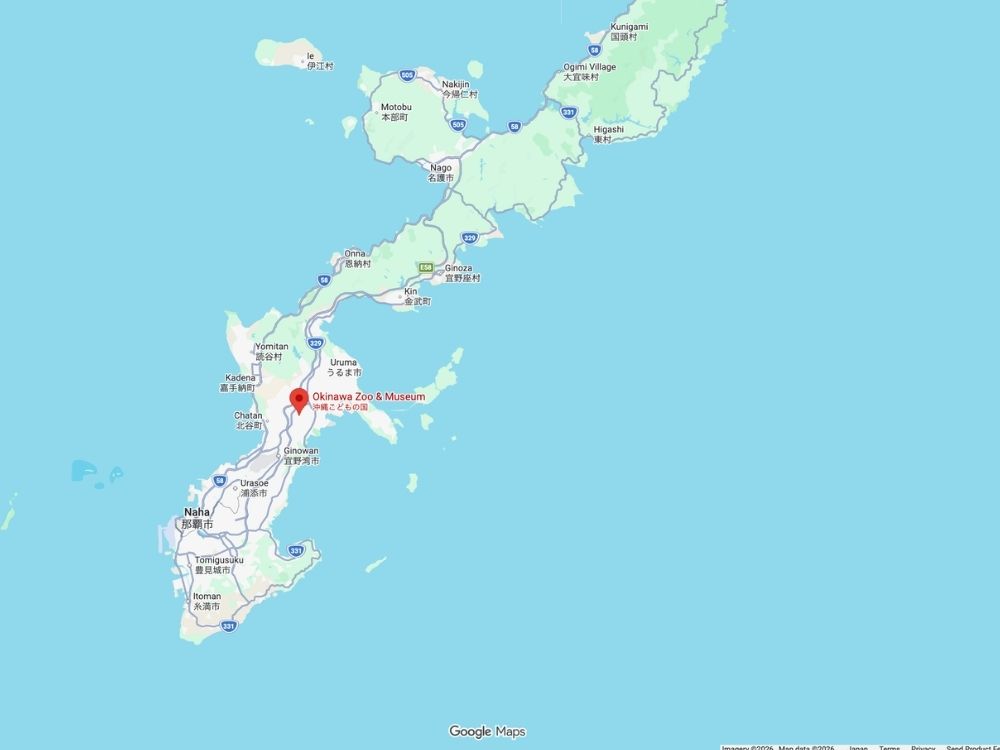
Zoomed out, here’s where it sits — right about halfway between central Okinawa (Onna Village) and the south (Naha City, Naha Airport, etc.).
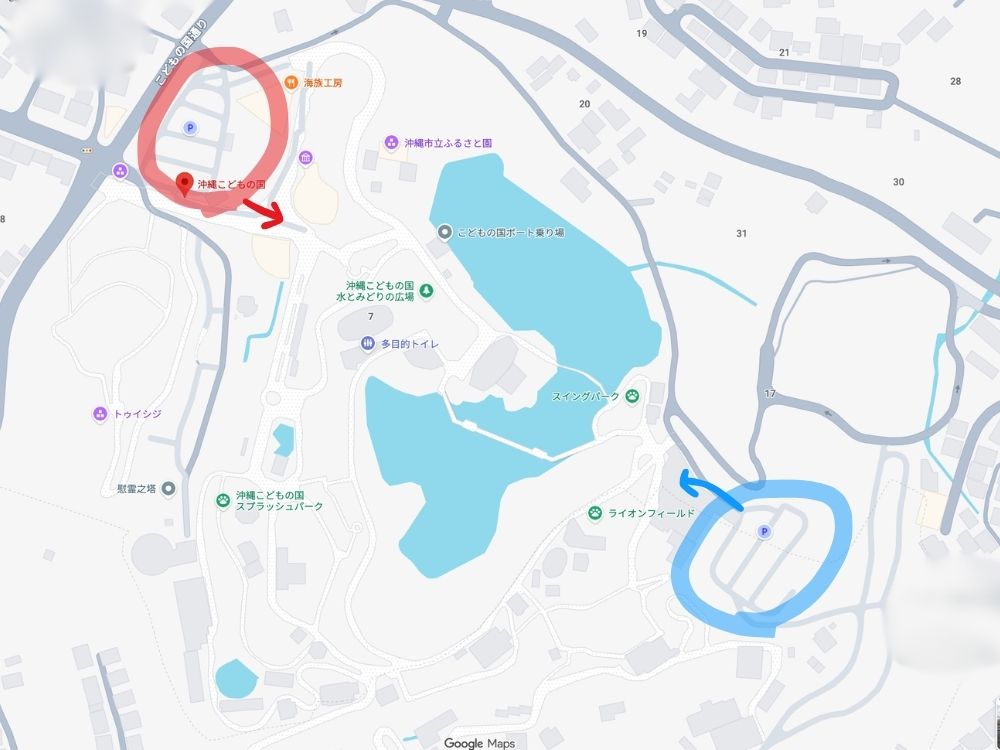
There are 2 parking areas.
One right past the main gate and one closer to the zoo.
To drive in Japan as a visitor from overseas, you’ll generally need all 3 of the following together: your passport, your home-country driver’s license, and an International Driving Permit (Geneva Convention format). Requirements vary by country, so be sure to check before you leave home!
Access from Kadena Air Base and MCAS Futenma
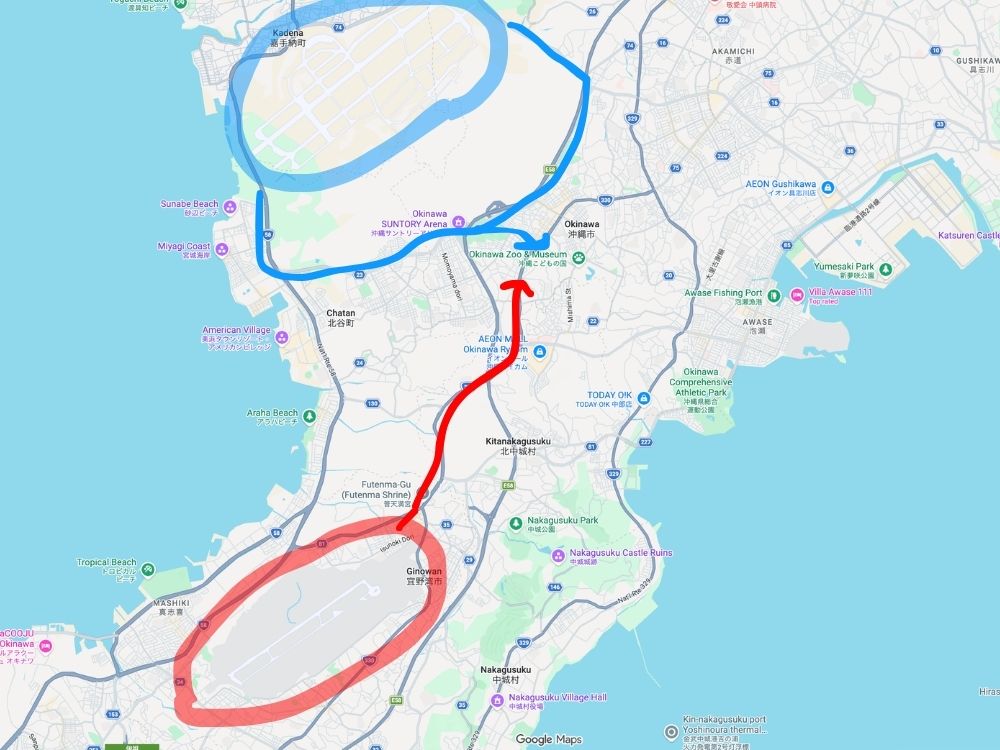
MCAS Futenma (red)
Kadena Air Base (blue)
It depends on which gate you leave from, but either way it’s about a 15–20 minute drive.
The Gates at Okinawa Zoo & Museum!
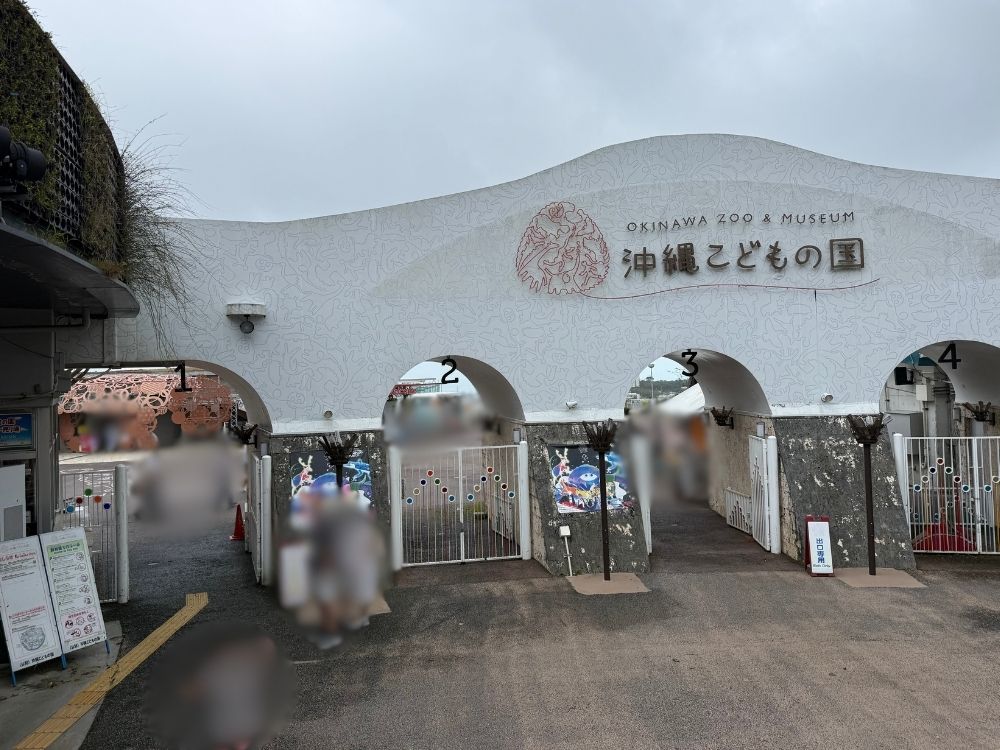
Here’s the entrance on the main gate side.
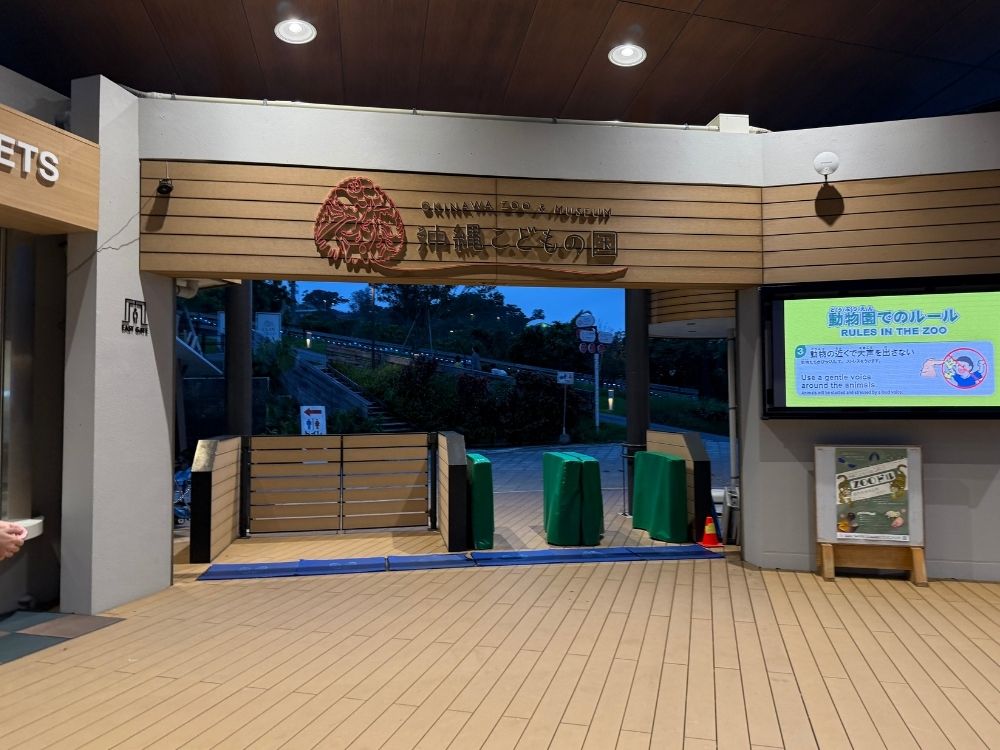
And here’s the zoo-side entrance.
Both have a gift shop attached.
Okinawa Zoo & Museum’s Facilities
Wonder Museum (Indoor Learning Facility)
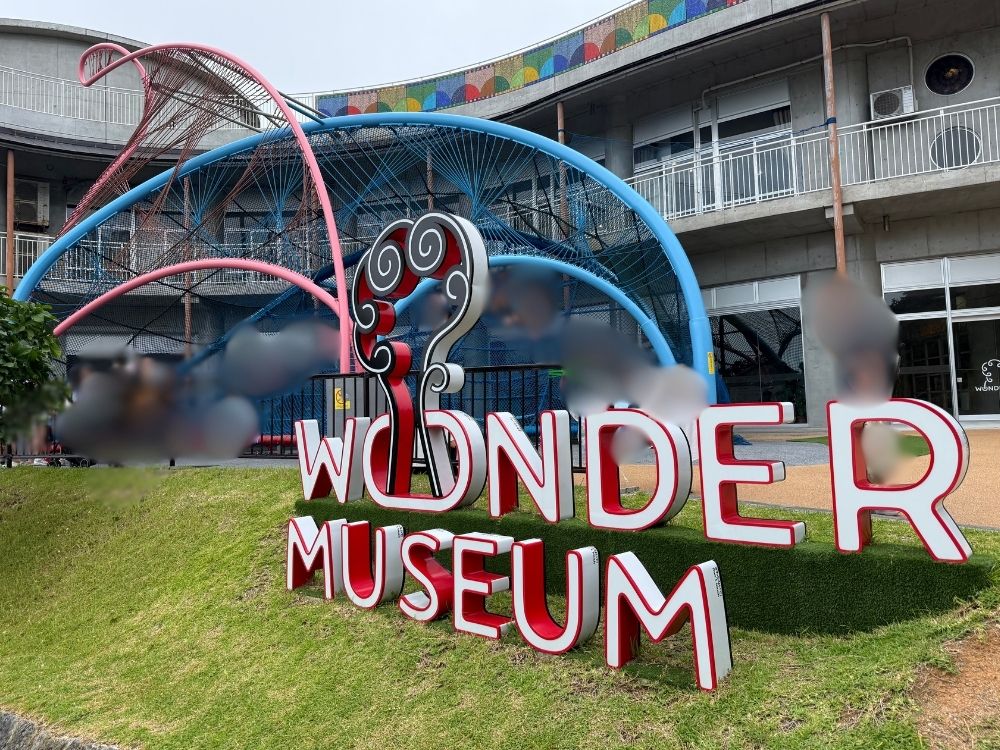
“Wonder Museum” lets kids learn science and physics through play. There are tons of exhibits where kids can launch balls, play with mirrors and shadow puzzles, and more — moving their bodies while their minds are learning too.
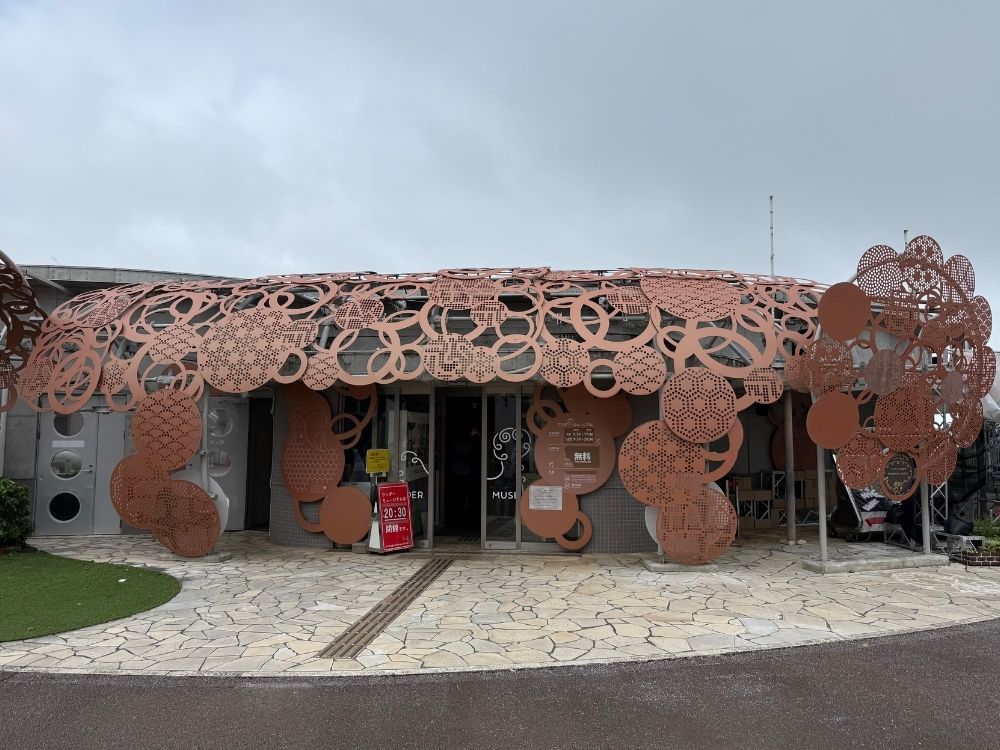
The building is right past the main-gate entrance. Since the park is built on a slope, this entrance is actually the 3rd floor.
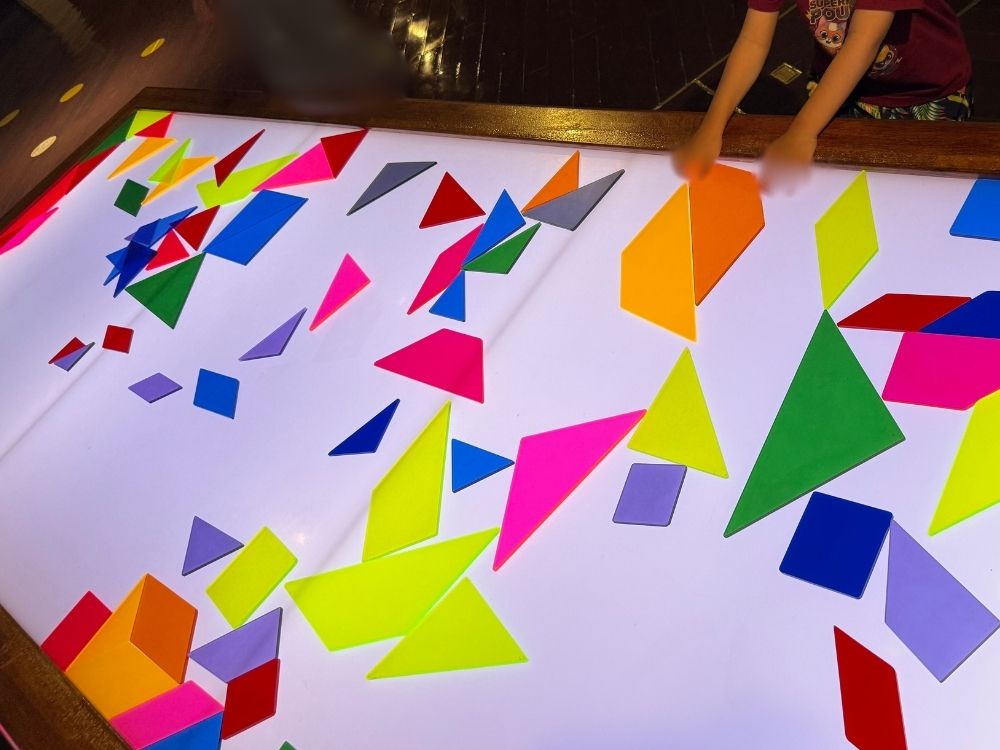
Puzzles where you fit shapes together, and
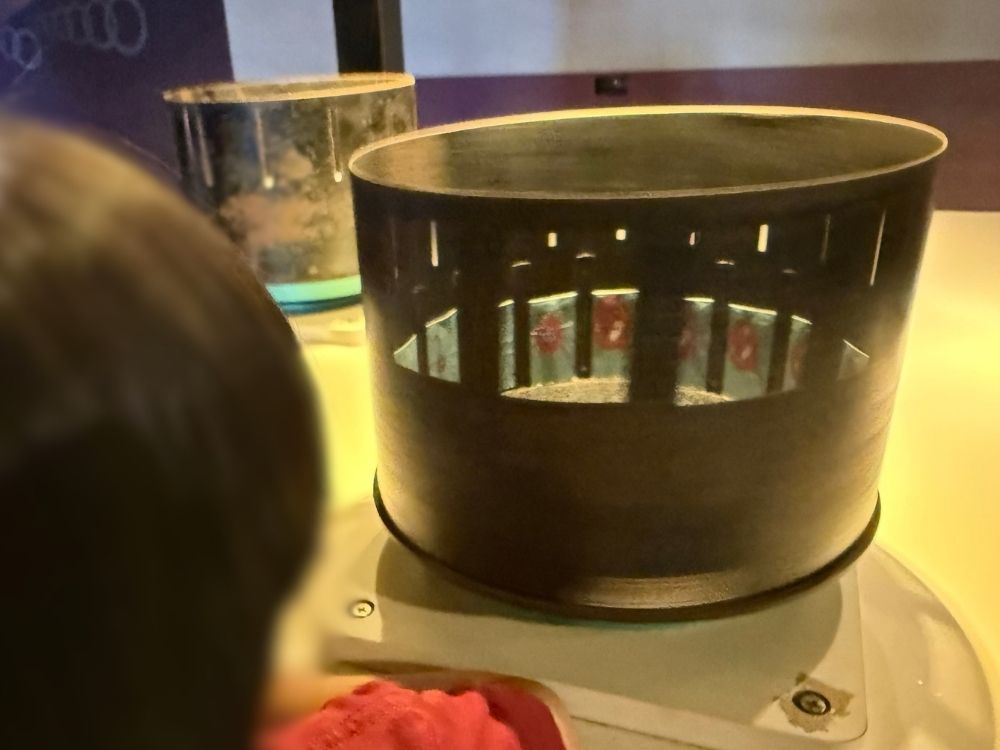
a spinning wheel that makes a picture look like it’s moving.
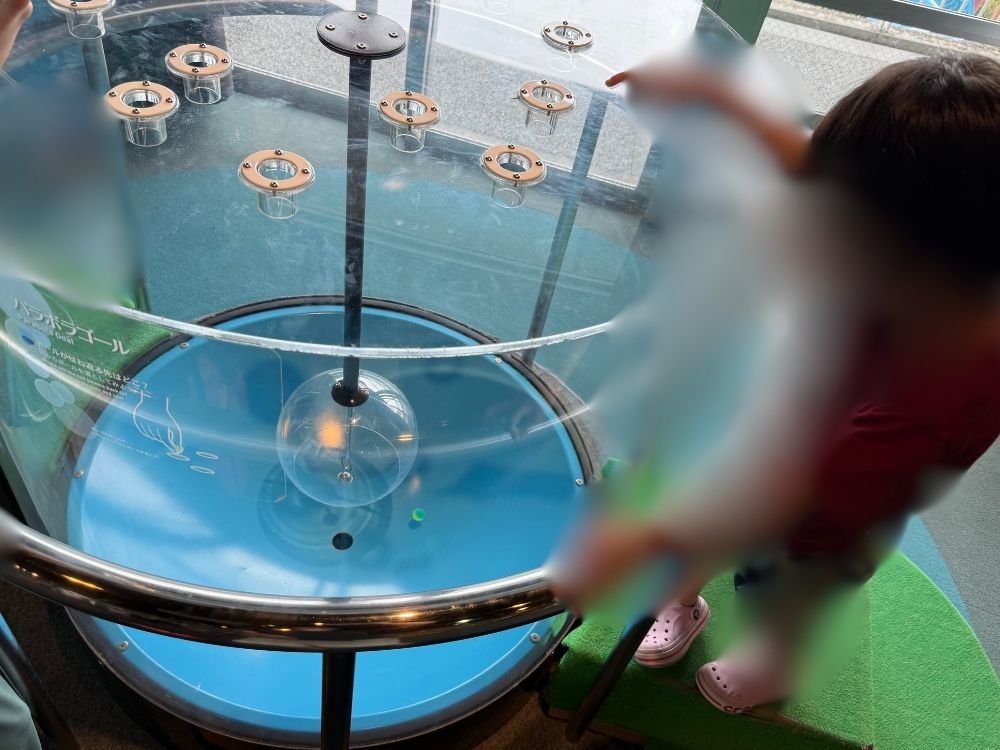
Something that teaches how things bounce back to the same spot.
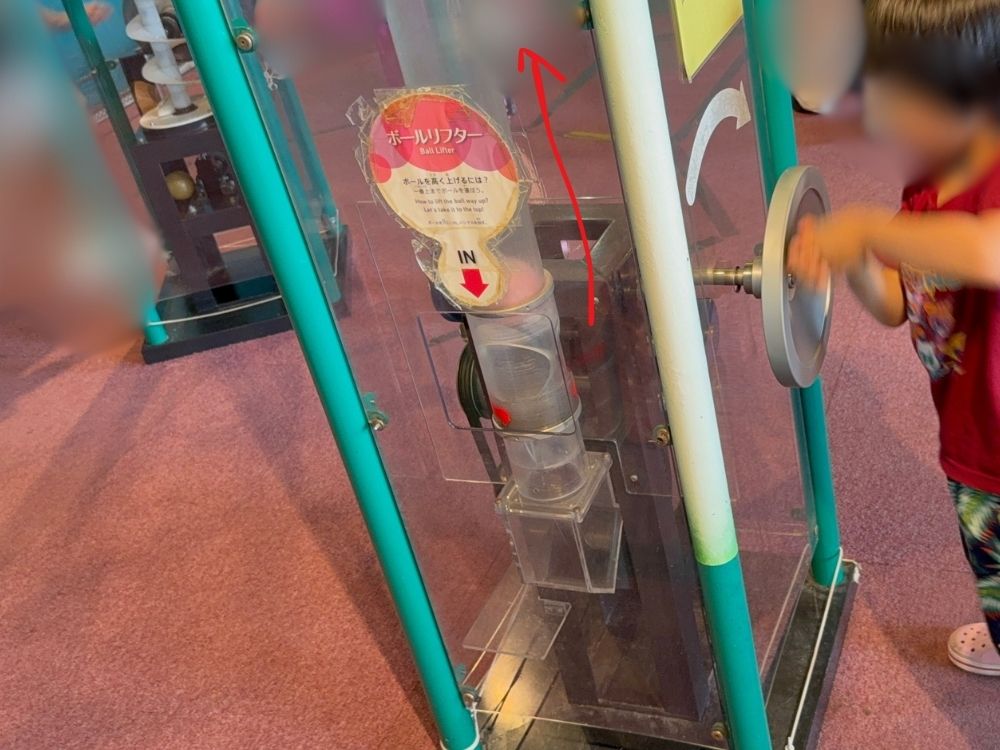
And a hand-crank that carries a ball up along a pipe — all kinds of hands-on play like this.
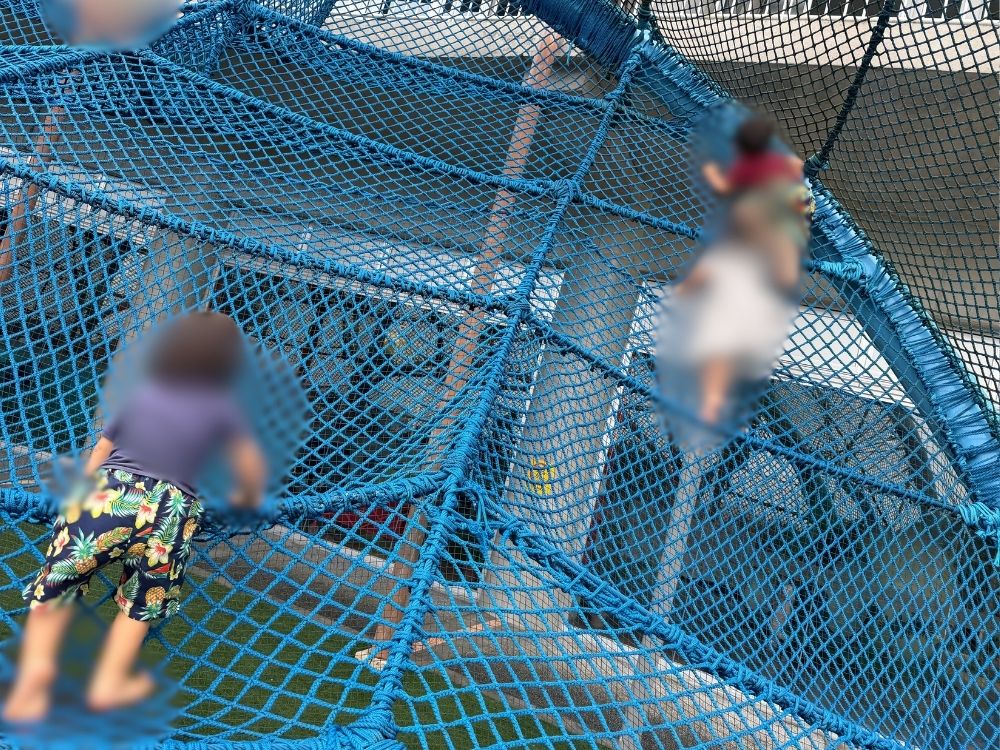
Outside the 1st floor, there’s a climbing net that goes up surprisingly high.
It’s a place where kids can freely touch, play, and learn, without adults needing to step in and say “no, don’t do that” — so kids get to really cut loose. And since it’s indoors, it’s perfect for a hot day!
Splash Park (Wading Pool)
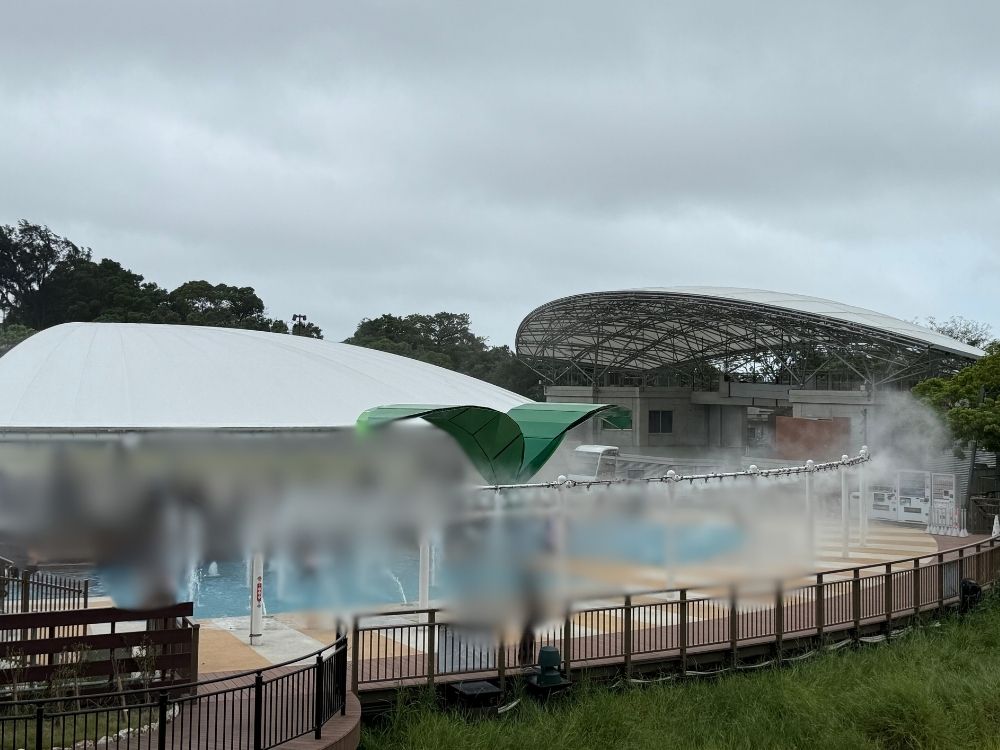
The Splash Park has all kinds of water features to play in — arch fountains, candle fountains, a waterfall, mist showers, and more. It’s about 20 cm (8 in) deep at most, so even little kids can play safely.
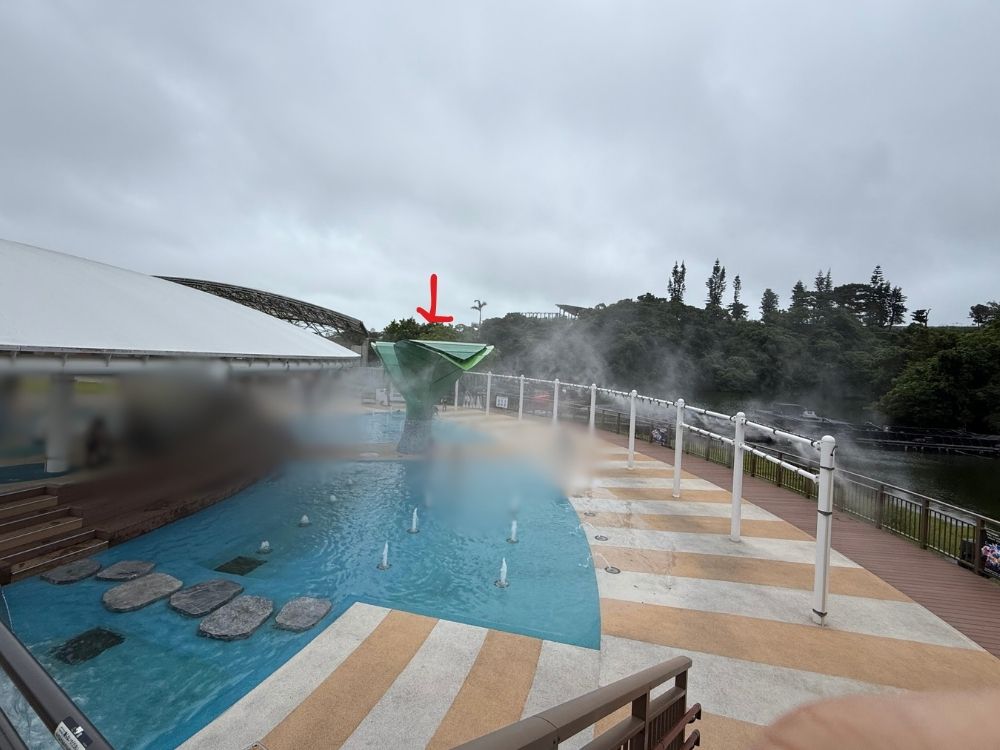
A huge amount of mist pours out from the leaves of this bud-shaped structure in the center.
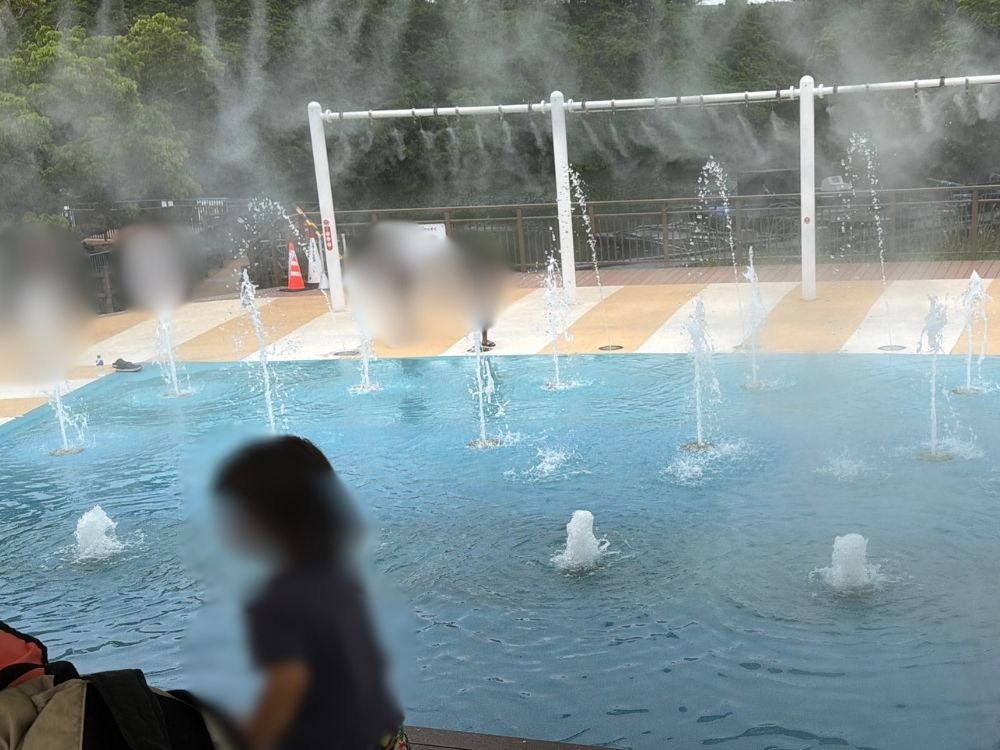
The water’s shallow, but these fountains have some real force behind them — the sheer volume of water is honestly impressive (haha).
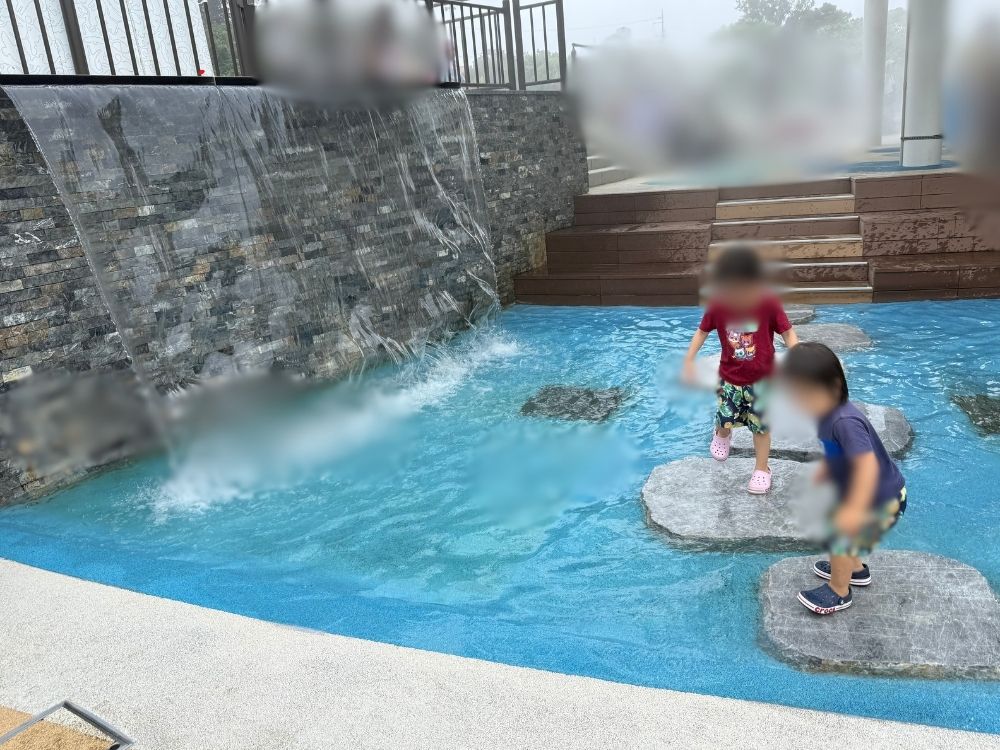
There’s a waterfall too, and it was a popular spot.
At night it takes on a dreamy, night-pool kind of atmosphere, and it’s gorgeous too!
*The night show was cancelled the day we went because of the typhoon, but this is where you’d watch it from.
Note! The benches around Splash Park get wet too, so watch where you set your belongings down. Check a spot before you sit and take a break.
Rides Corner (Texas Train, Carousel, Mini Cars)
The rides corner is easy on your wallet: the Texas Train costs 200 yen (approx. $1.23), the carousel is 200 yen (approx. $1.23), and the mini cars are 100 yen (approx. $0.62). It’s open weekdays 9:45 AM–4:45 PM, and on weekends/holidays until 8:15 PM — a nice bonus that it stays open into the evening.
Dining Inside the Park
We were planning to eat lunch at the restaurant, but…
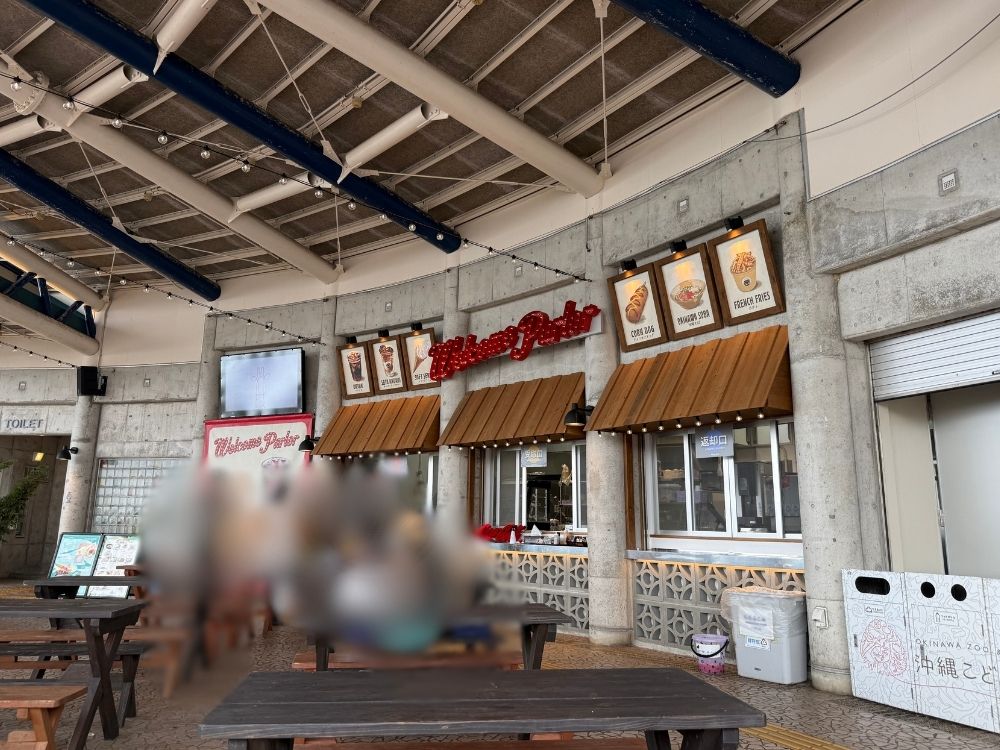
We ended up snacking on ice cream and fries at the Welcome Parlor while the kids played, and before we knew it, it was around 3:30 PM (haha).
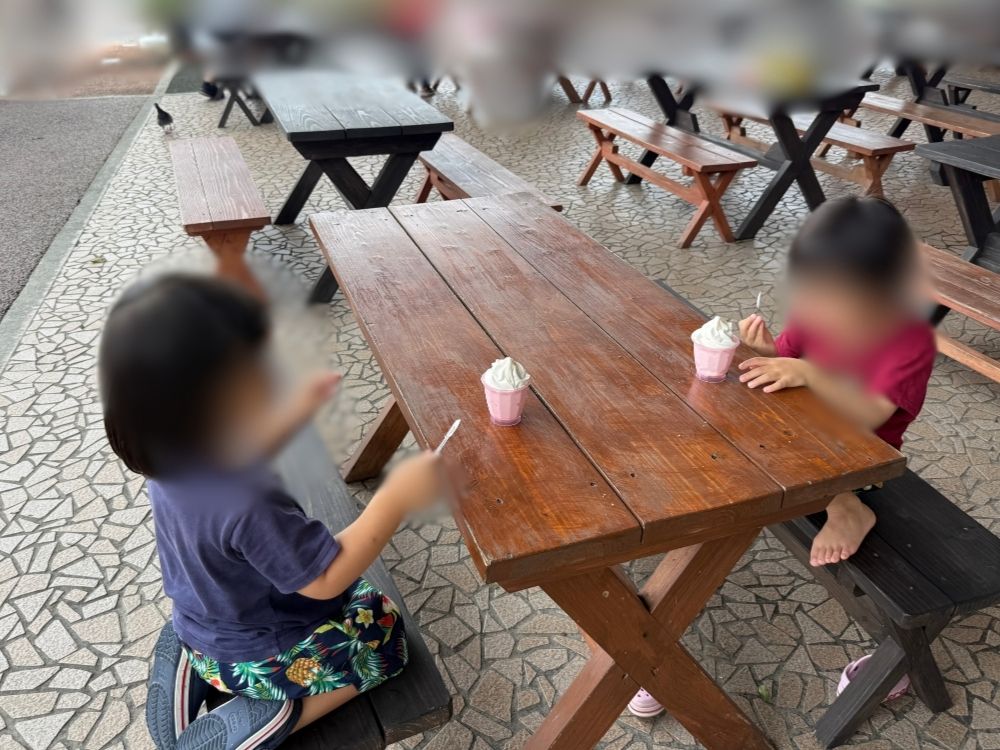
We were happy they had a small-size ice cream option.
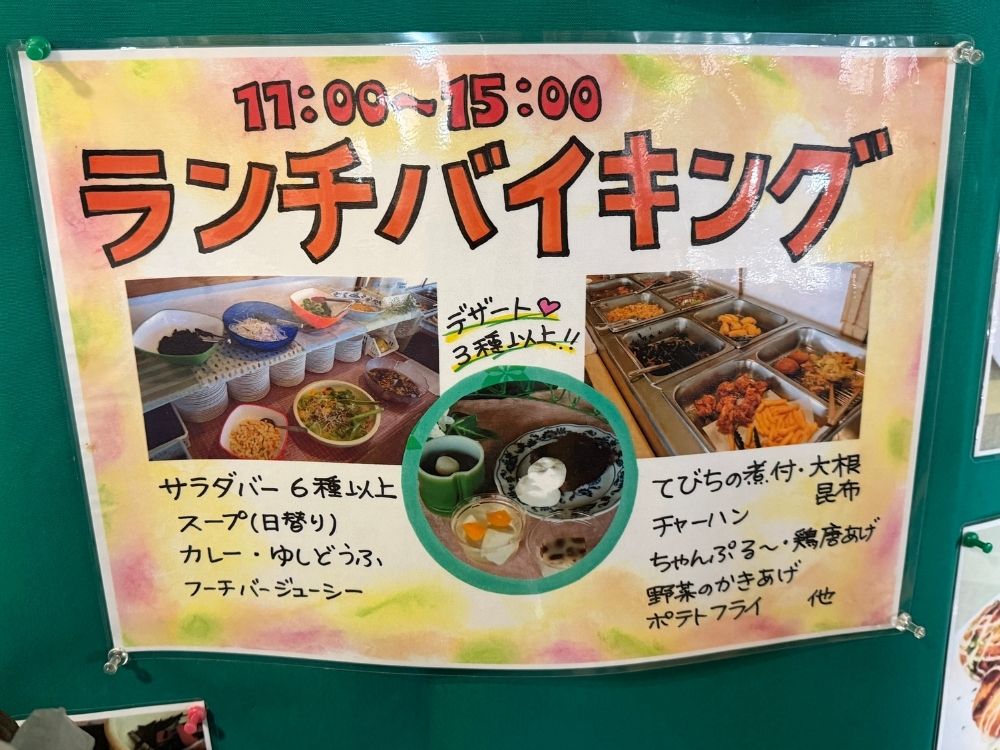
Just before the entrance is a buffet restaurant called “Kaizoku Kobo.”
Last order was 3:30 PM, and we didn’t make it in time (sob).
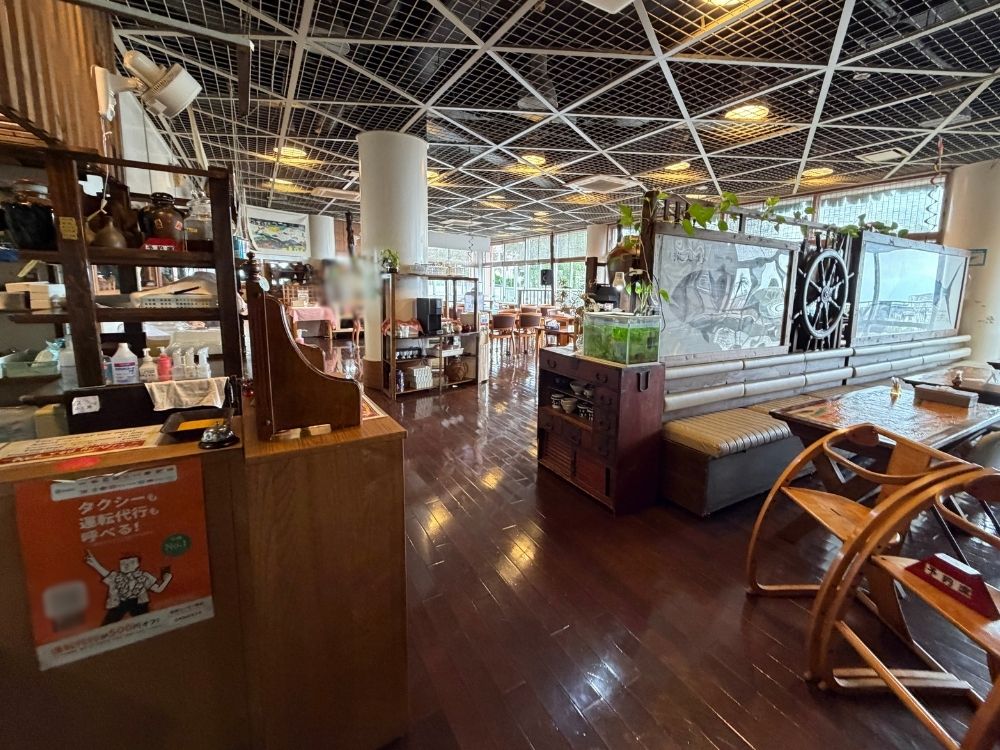
- Lunch buffet: 11:00 AM–2:30 PM
- À la carte menu: 2:30 PM–4:00 PM (last order 3:30 PM)
…is what we were told. It’s closed on Tuesdays, so keep that in mind!
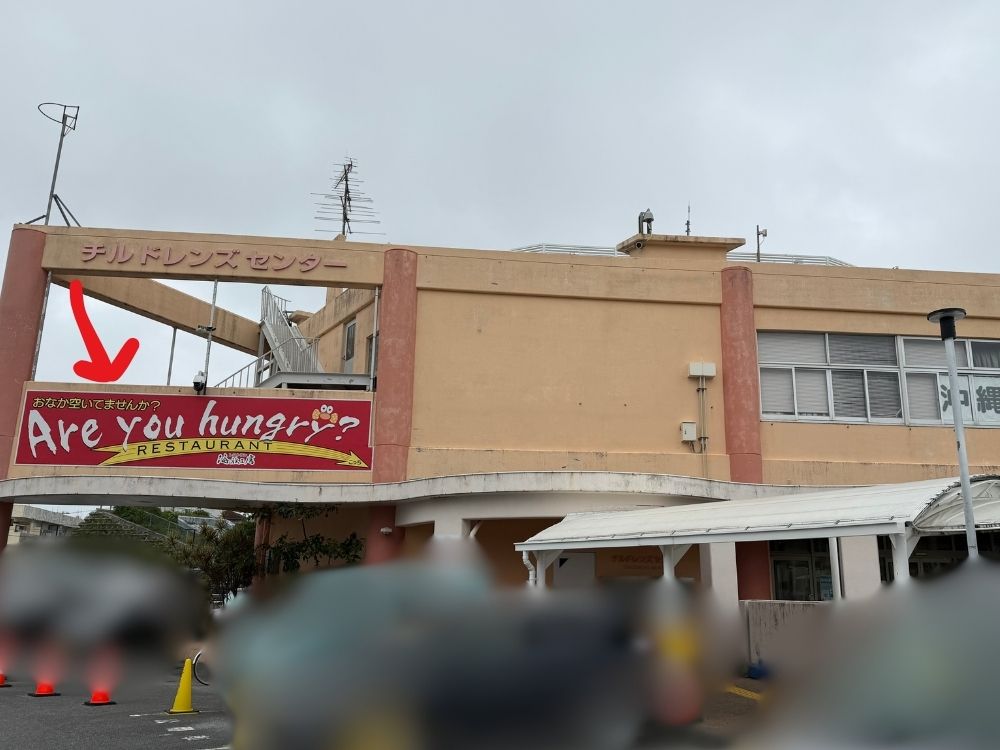
It’s inside the Children’s Center, in the parking area — you’ll need to step back out through the main gate to reach it!
Adults: 1,800 yen (approx. $11) (middle school age and up)
Elementary schoolers: 1,000 yen (approx. $6)
Young kids (ages 3–6): 600 yen (approx. $3.69)
The staff were so kind — it’s all-you-can-eat with dessert included, and they told us to please come back again. We’re definitely planning a rematch.
Lunch at Aeon Mall Okinawa Rycom
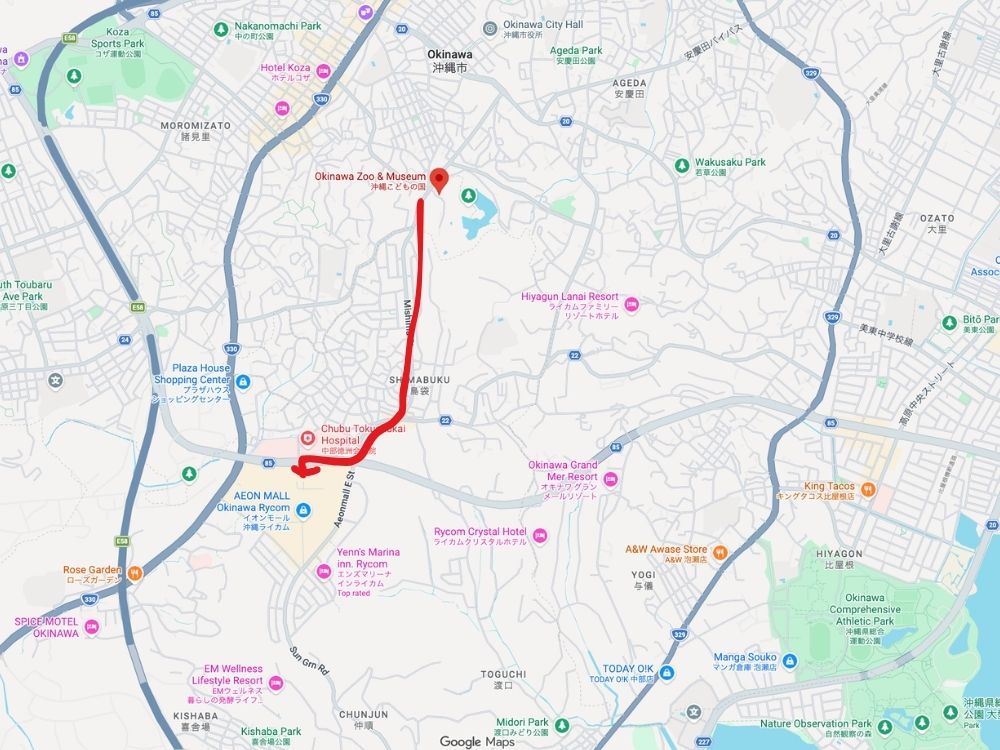
We decided to head to Aeon Mall Okinawa Rycom, about a 15-minute drive from Okinawa Zoo & Museum.
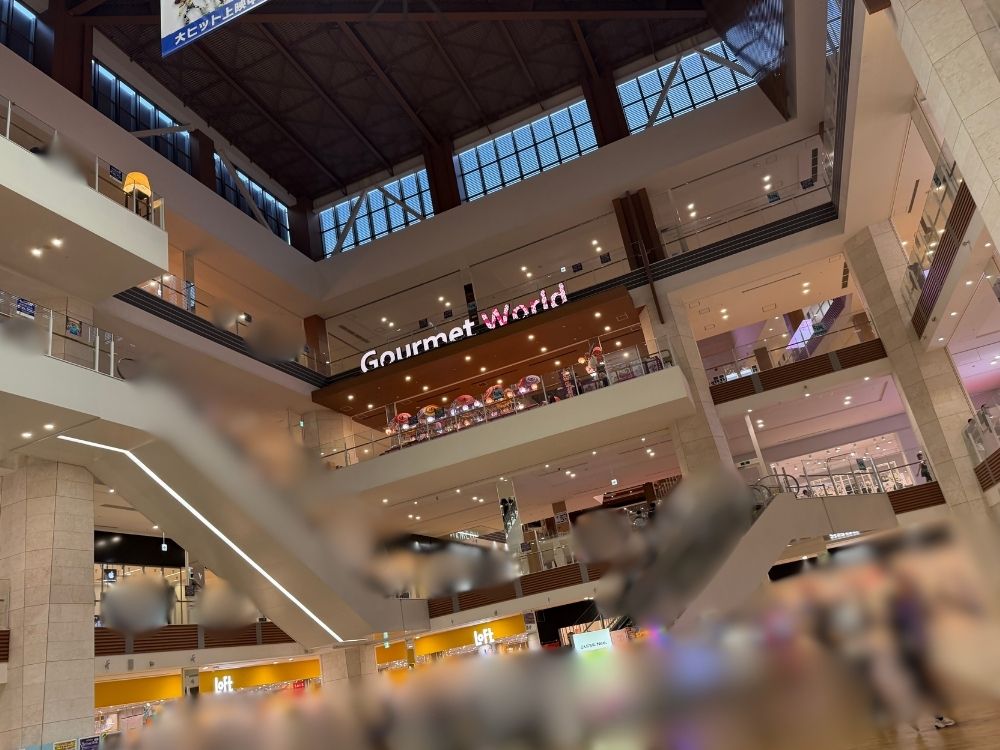
It’s a huge mall with a great variety of restaurants in the food court.
The parking lot gets extremely crowded on weekends and holidays. Between traffic getting in, traffic getting out, and circling to find a spot inside the garage, give yourself extra time! It took us about 20 minutes of searching, and we got lucky finding a space.
Our kids fell asleep while we were stuck in the line to get into the parking garage. Since we wanted to check out NIGHT ZOO, we just let them get a good long rest (haha).
NIGHT ZOO Was Absolutely Incredible!
After lunch, we headed back to Okinawa Zoo & Museum for the thing we’d been looking forward to: “NIGHT ZOO.” It’s open until 9 PM on weekends and holidays.
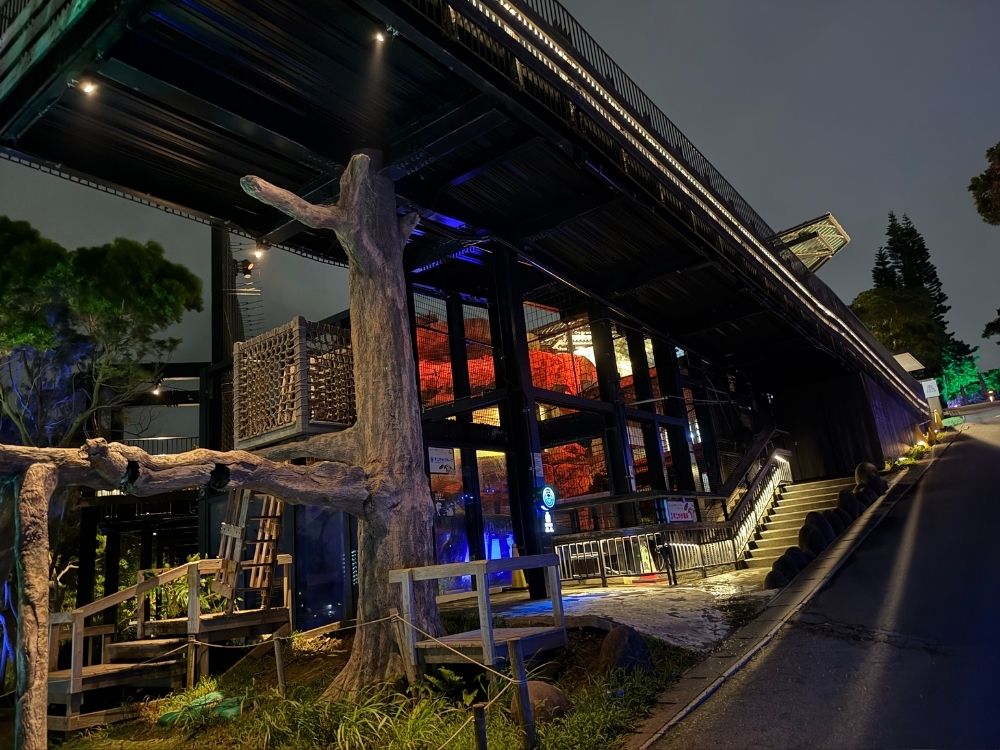
Lit up at night, the park feels completely different from daytime.
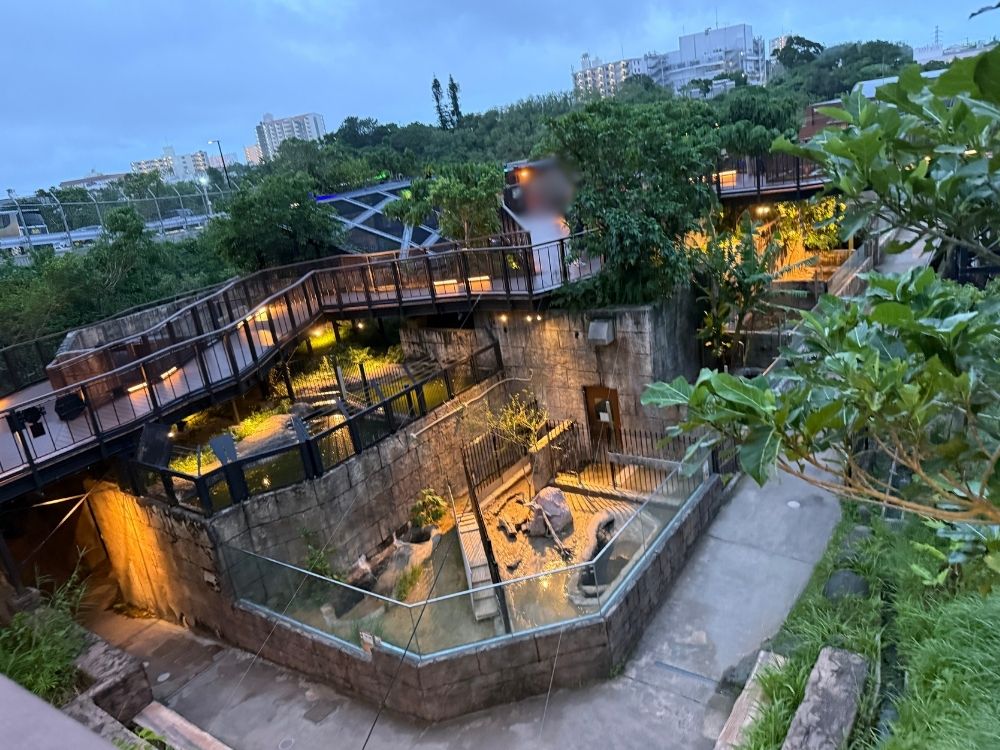
It was a Sunday night, and there was almost nobody else there.
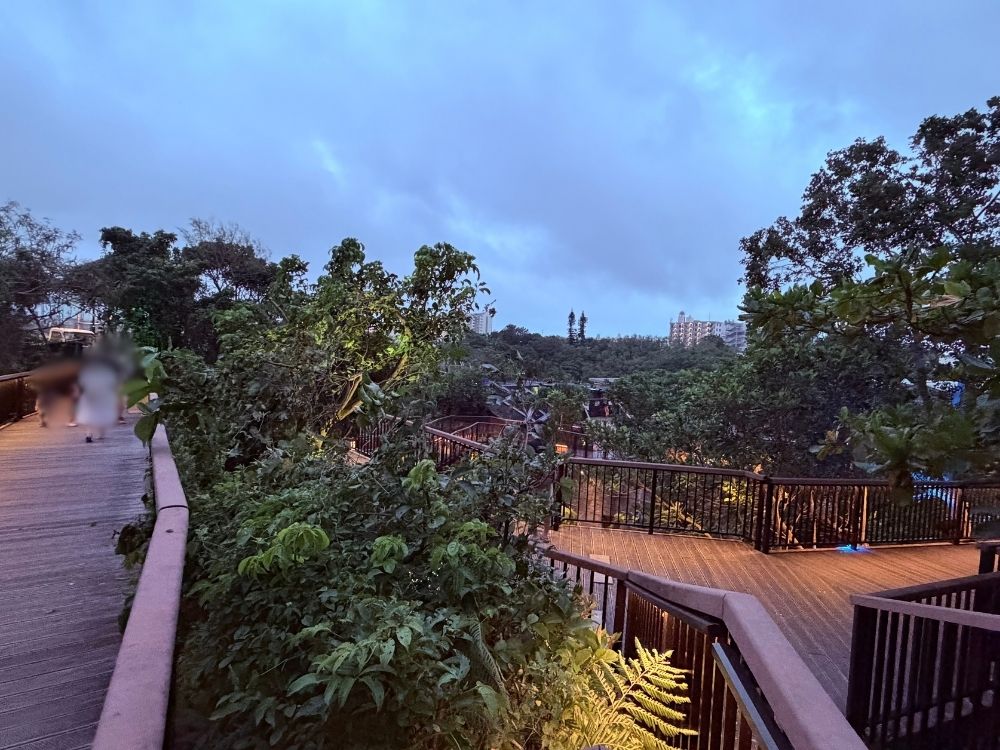
The zone right by the zoo entrance is a single path, but it winds and layers on multiple levels like a jungle — genuinely fun to walk through. The wide path and sloped design are a really nice touch.
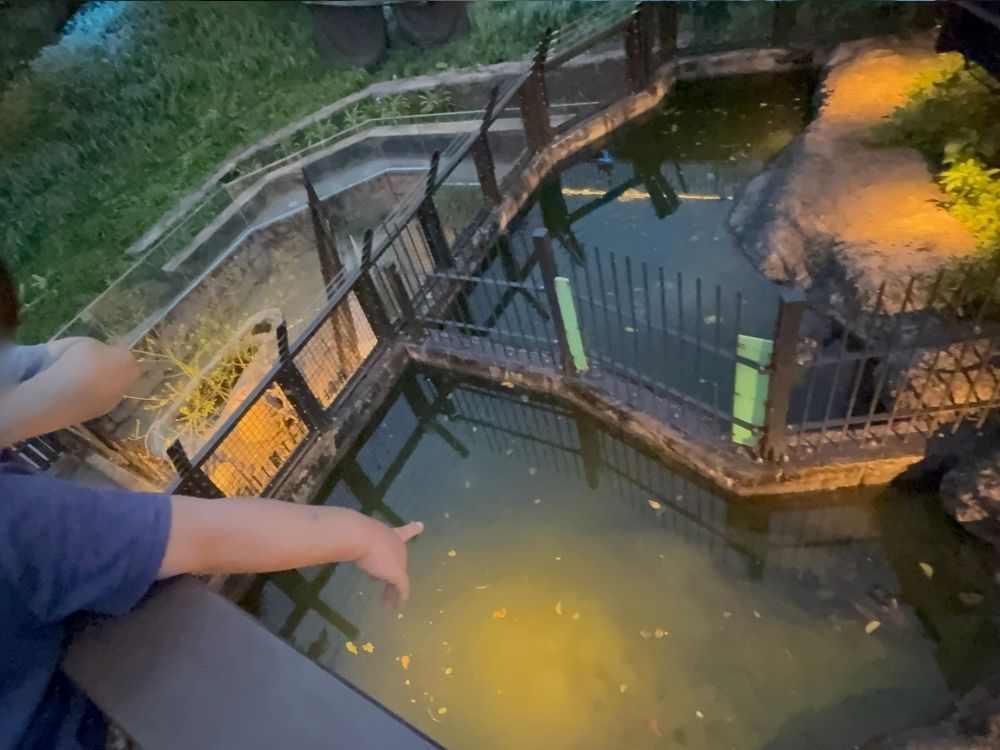
There are crocodiles down below,
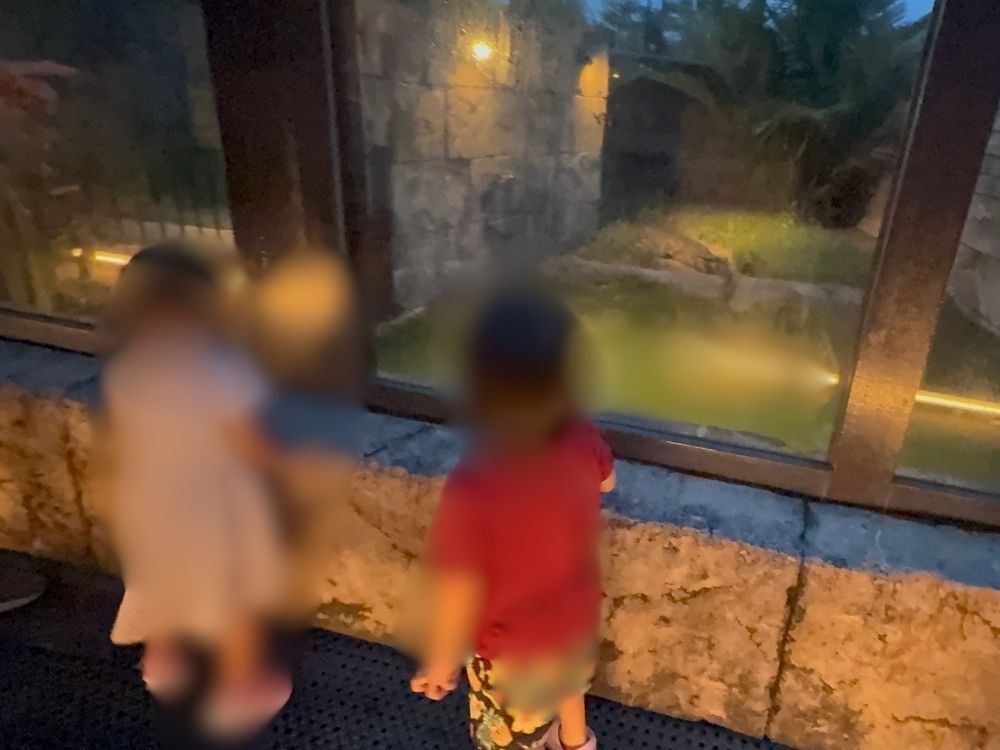
and a different crocodile species over here.
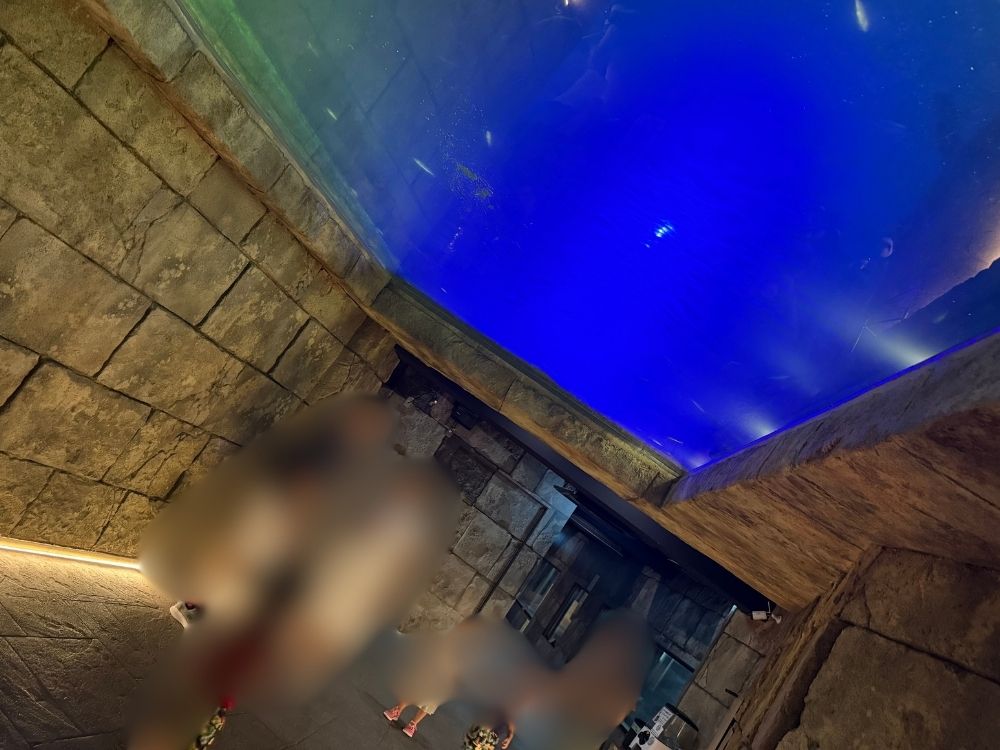
There’s even a tank where you can see the crocodiles from underneath!
Of course, it’s not just crocodiles — you’ll spot plenty of jaguars, armadillos, otters, and more. During NIGHT ZOO, some animals like the otters head inside and aren’t visible. When we asked staff whether a specific animal we wanted to see would be out at night, they were happy to let us know.
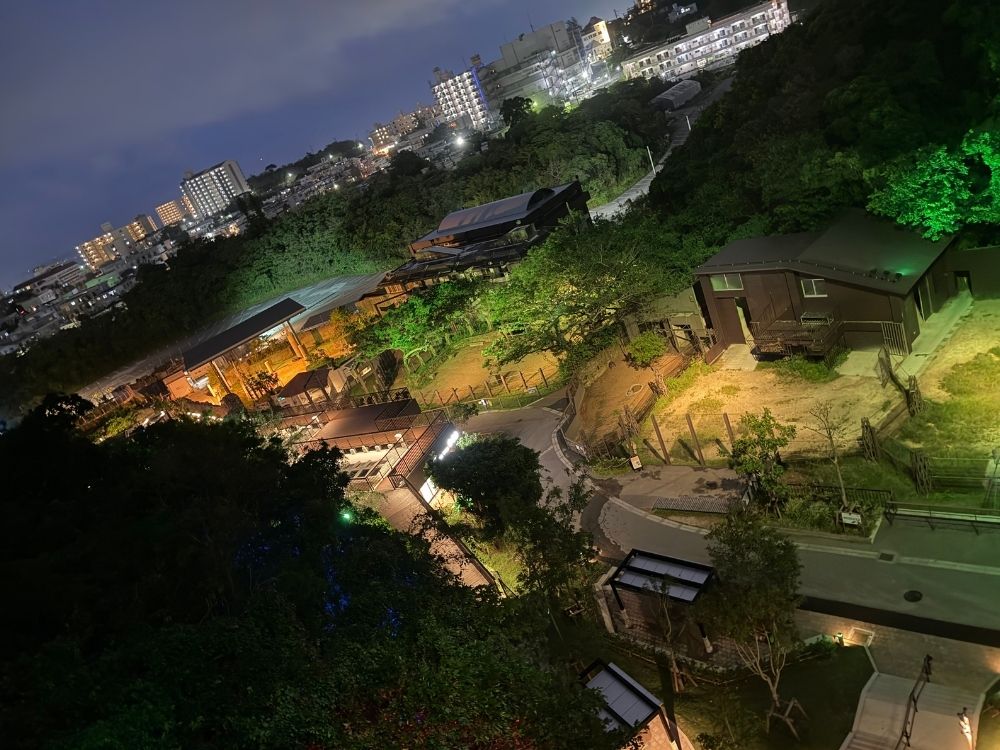
Past the first zone is a savanna-style area, home to elephants, giraffes, and more.
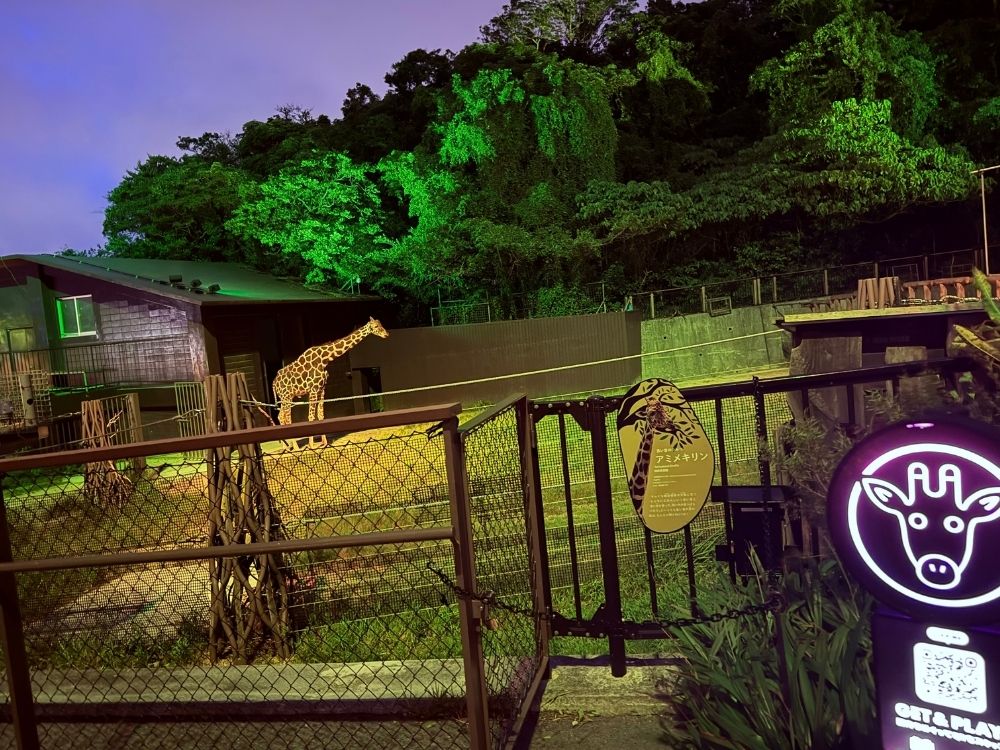
My younger son’s favorite, the giraffe, came right out of its sleeping area for us.
After that nap in the car, the kids were fully recharged and having a blast (haha).
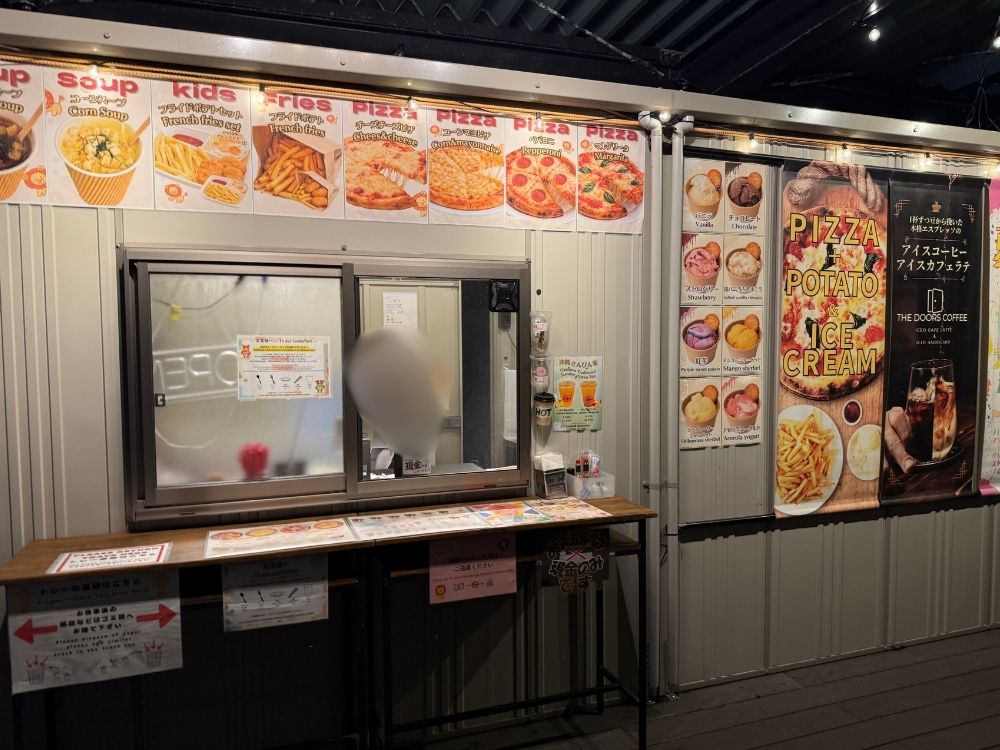
Partway through, there’s a big elevator, and past it you’ll reach the Lion Field.
There was a café here that stays open at night too.
Some animals aren’t on display at night. The giraffes were like that too, but they came and went freely, so we were still able to see them.
Daytime at the Zoo! Animal Feeding Experiences
Since we focused on NIGHT ZOO, we didn’t make it to the daytime zoo zone ourselves, but there are actually feeding experiences with all kinds of animals!
Here’s what’s worth knowing:
- Animals you can feed: hippos, Indian elephants, monkeys, capybaras, goats, and more.
- Cost: about 200–500 yen (approx. $1.23–$3) per cup, depending on the animal.
- Schedule: varies by animal. Most are weekends/holidays only, though some run daily.
Feed is limited in quantity and sold on a first-come, first-served basis.
The detailed explanation on the official site was Japanese-only, but the pamphlet you get once you’re inside the park also comes in English, so that’s the easier way to check the details!
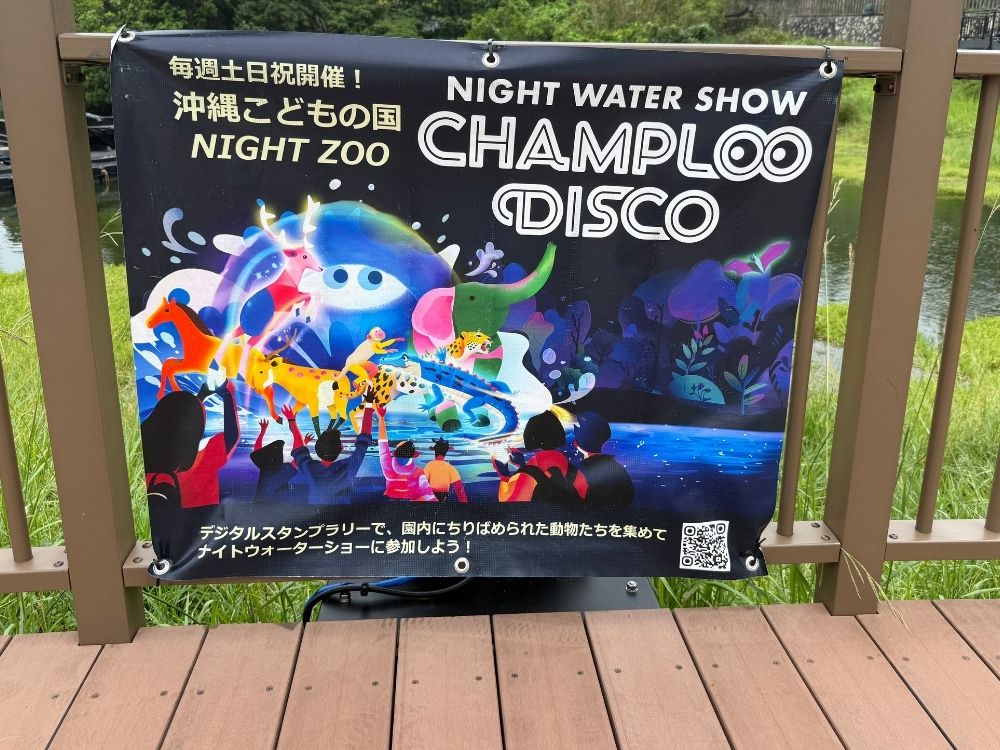
Night Water Show
During Japan’s summer school break, there’s a “Night Water Show.”
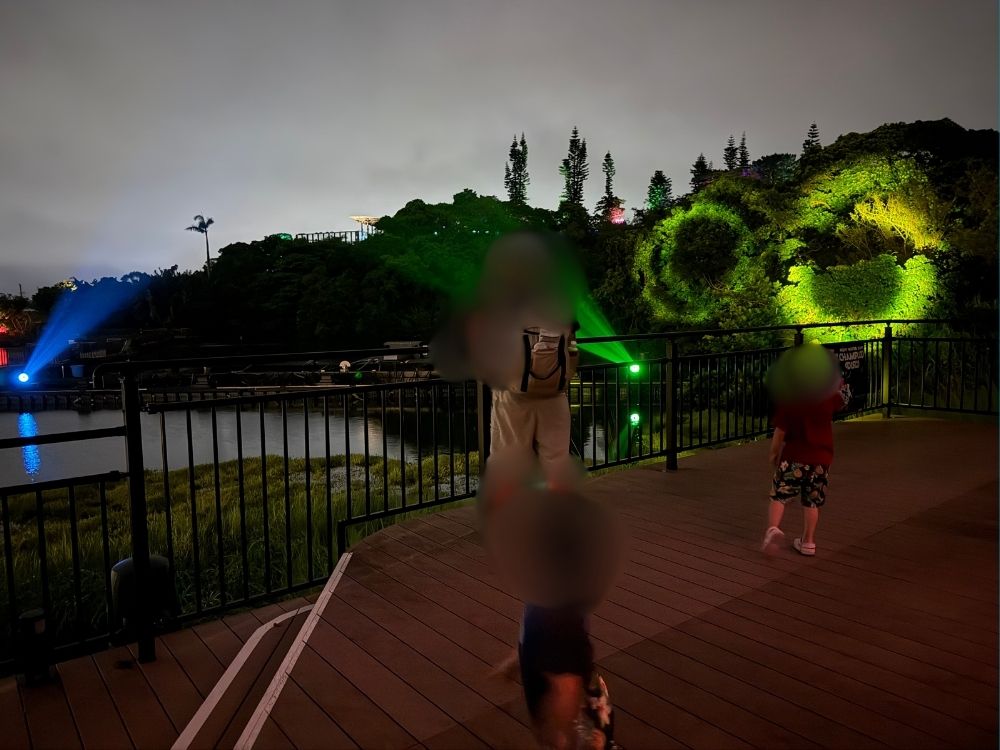
When we visited, the equipment was still being adjusted right after the typhoon, so we couldn’t see the full show — just a bit of projection mapping.
It’s apparently performed on a massive 30 m (98 ft) wide, 15 m (49 ft) tall water screen floating on the surface! And it’s included at no extra cost!
There’s a QR-code digital stamp rally around the park, and apparently there’s a surprise where an animal you customize yourself can be randomly selected to appear in the projection mapping!
The English version of the site only had general information, but the Japanese version also had an explainer video on YouTube!
In 2026, it’s running from Saturday, July 18 through Monday, August 31.
It looks like this runs every year during summer break!
We Tried the Night Amusement Rides Too!
We figured it was just the zoo at night, but it turns out the rides corner also stays open until 8:15 PM on weekends/holidays.
We got to this area around 8:20 PM. Only the mini cars were still running, until 8:30 PM, so we just barely made it in time to ride.
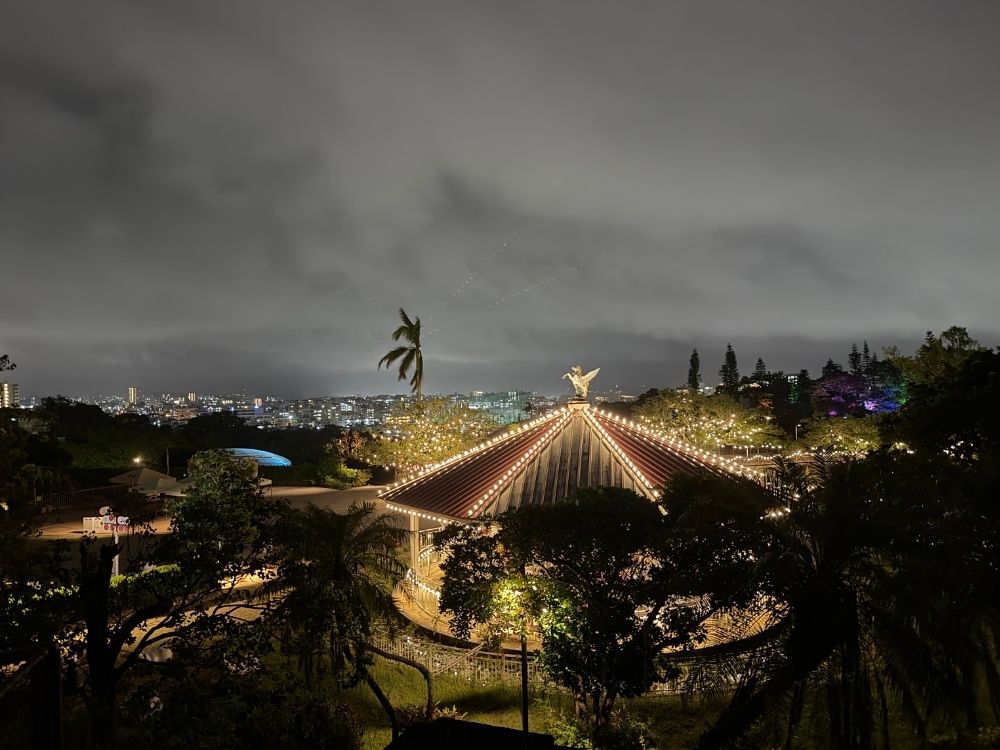
Driving through a lit-up track at night gives it a really surreal feeling.
By the way, kids can drive solo starting at age 3.
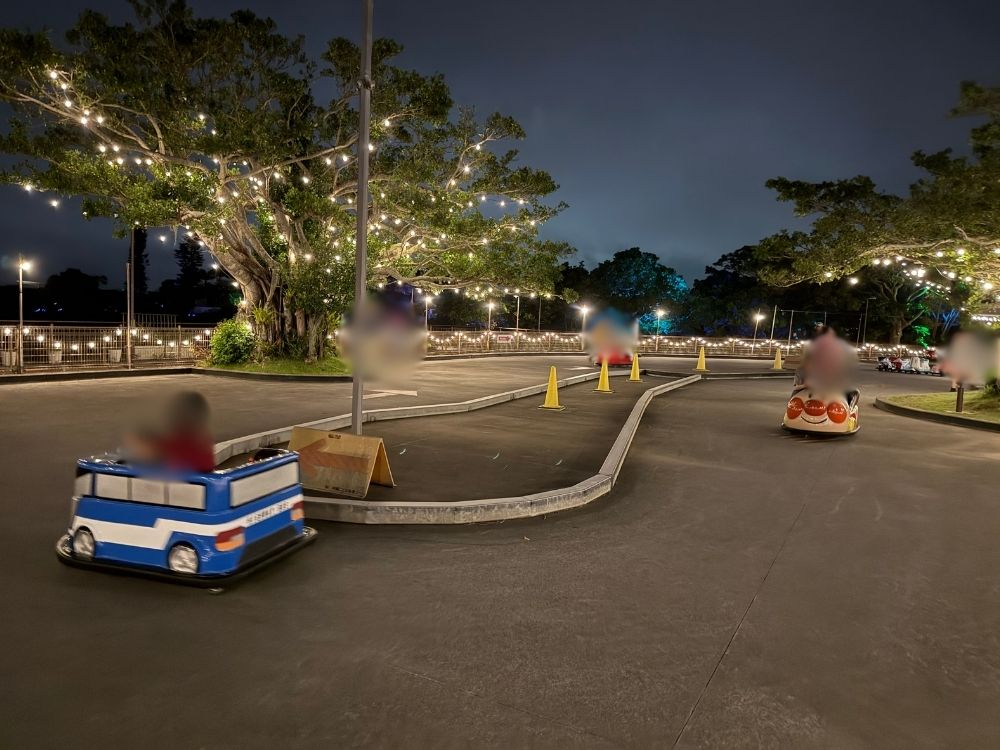
The mini cars are 100 yen (approx. $0.62) per ride, and it’s about 1 lap around the track.
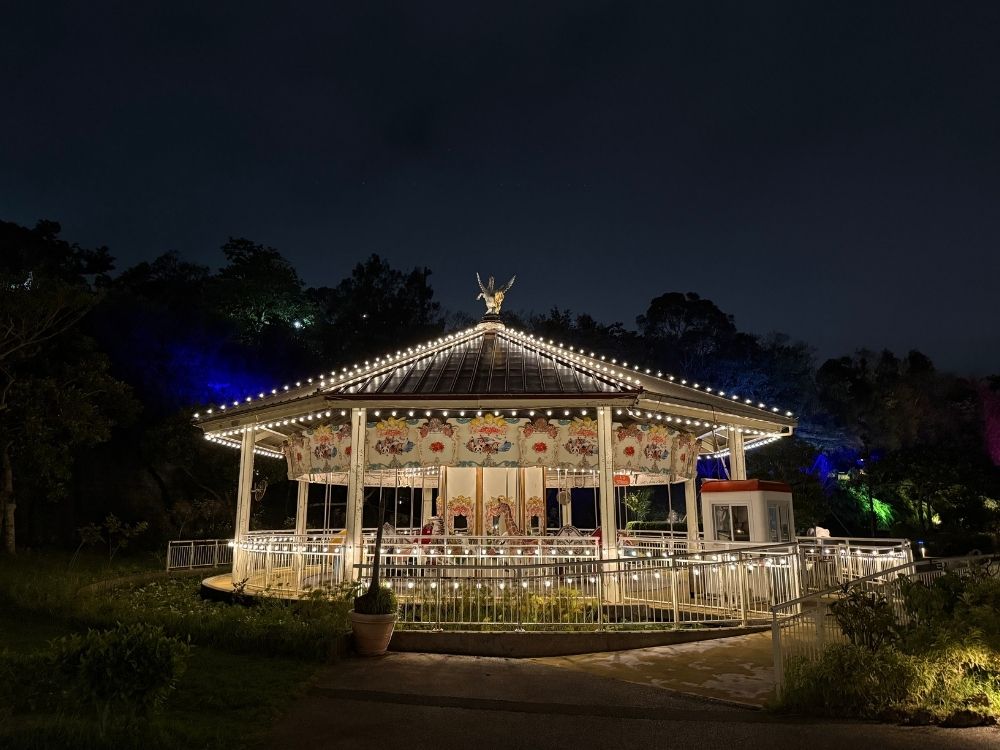
There’s the carousel too (open until 8:15 PM),
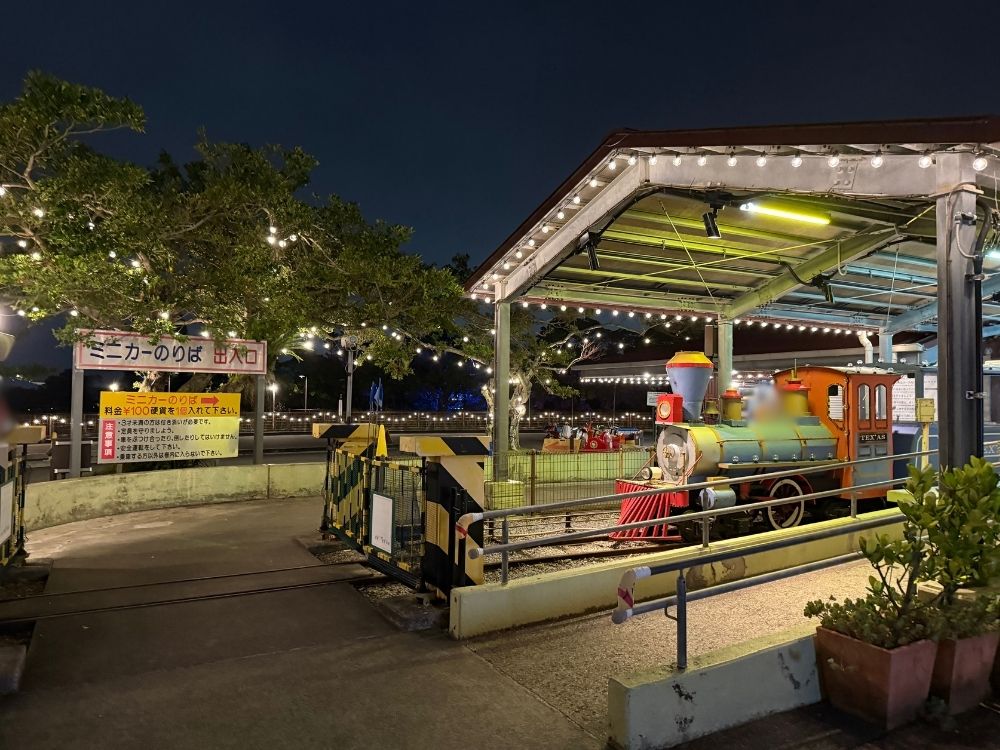
and you can also ride the train that loops around the circuit! (until 8:15 PM)
I’ve never once ridden a mini car this late at night, so honestly, I’m a little jealous of the kids (haha).
By now it was 30 minutes before closing.
Even the walk back to the parking lot turned into an adventure.
A Nighttime Trip Through the Satoyama Labyrinth
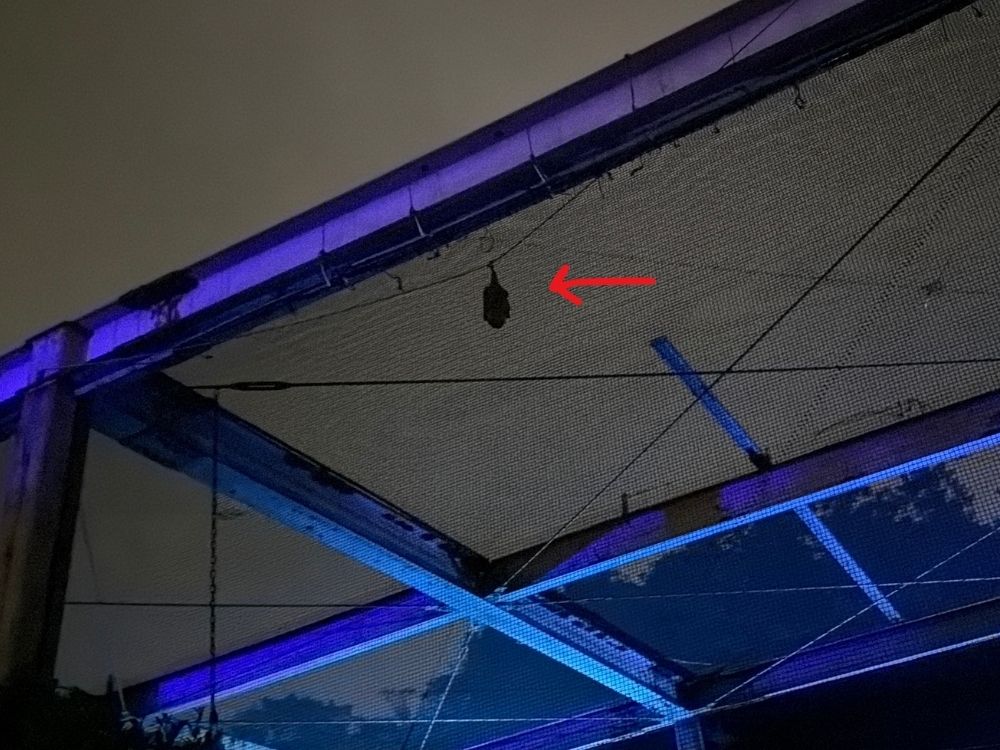
We got startled by a bat we assumed was inside an enclosure, but was actually loose outside,
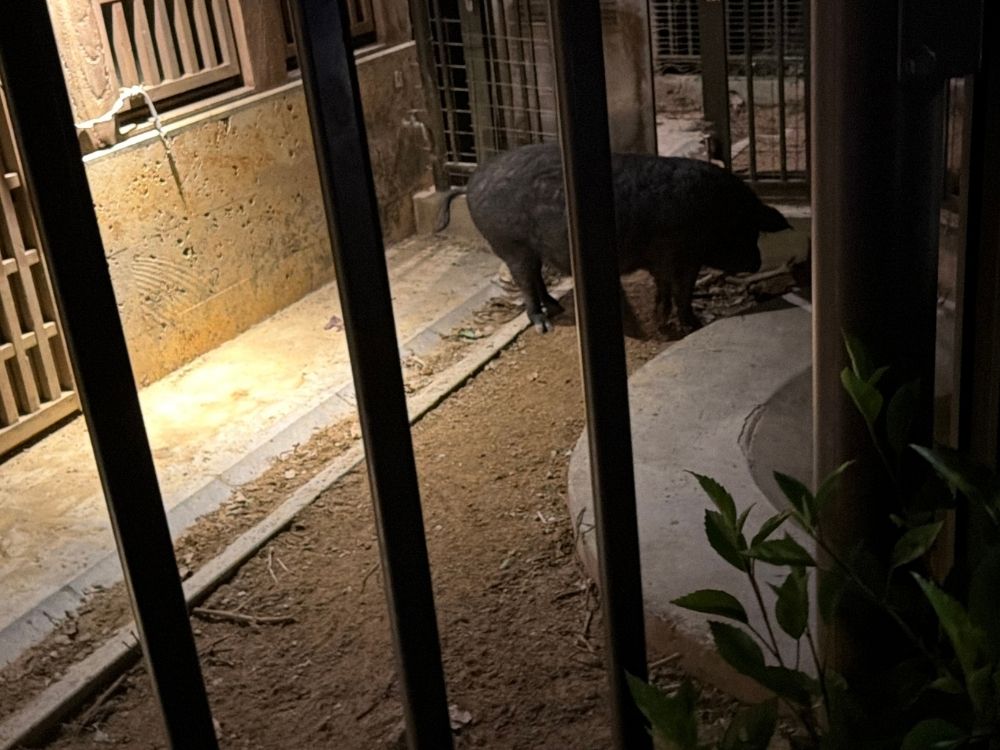
and hurried toward the parking lot past some very energetic pigs.
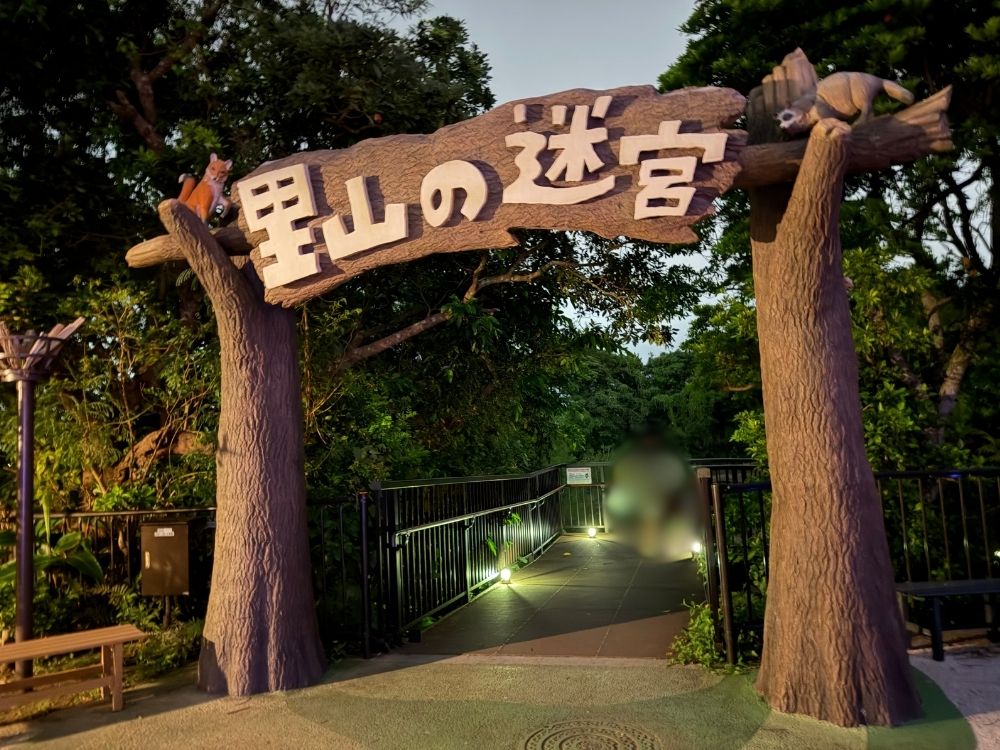
There was a shortcut available, but the name “the Satoyama Labyrinth” (a maze themed around Japan’s traditional village-woodland landscapes) pulled us in, so we decided to check it out.
It was darker than we imagined — genuinely a labyrinth.
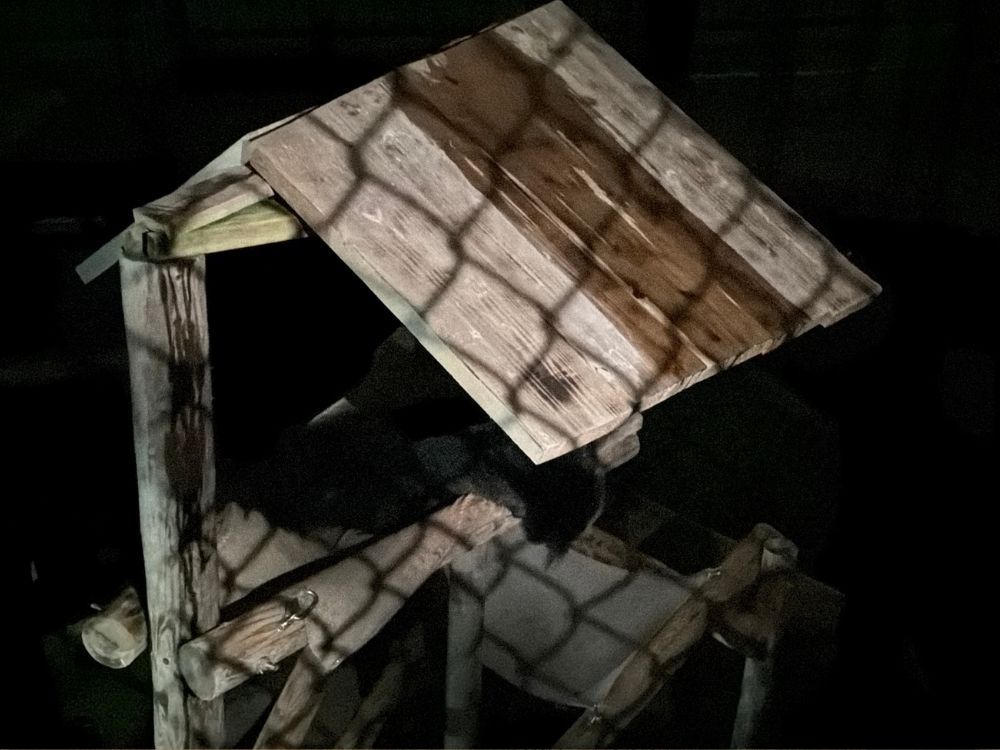
There was something near a dimly lit spot, but we couldn’t make it out even up close (it was a binturong, which is hard to spot to begin with).
Bears and other animals were up and moving around too.
We were thinking, isn’t this a little too dark and creepy with nobody else around?, when…
Turns out the power was out — but only in the zoo area (haha).
A minute earlier there hadn’t been a soul around, and suddenly a bunch of staff appeared and asked us, “Is everything okay?” (haha).
It was right after the typhoon, so it may have been some kind of equipment issue.
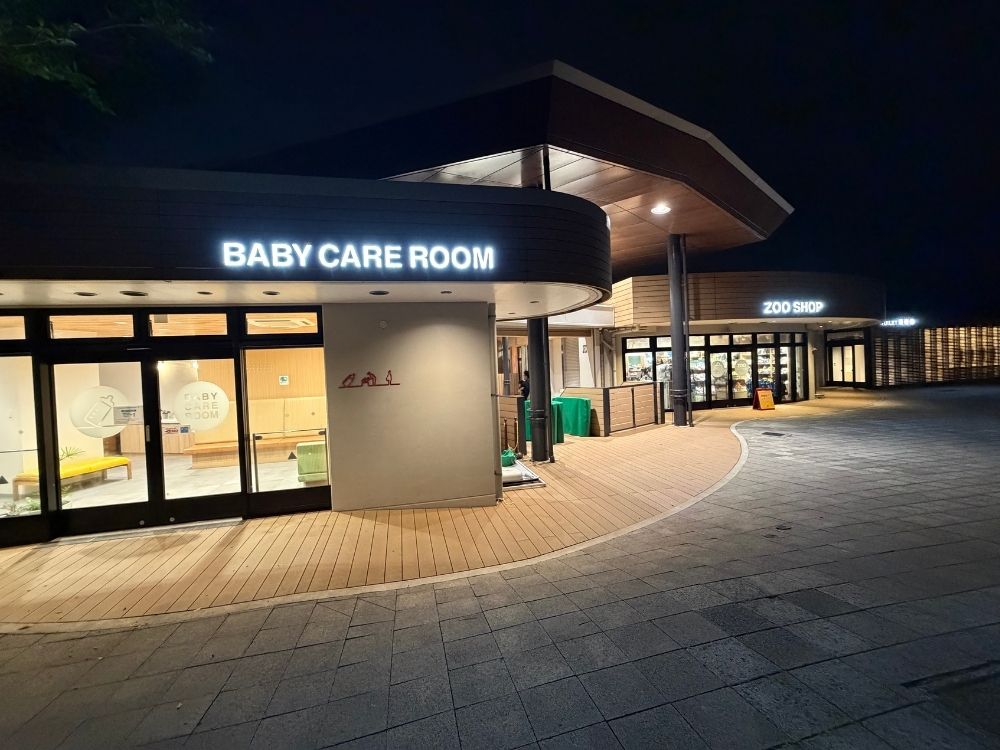
Normally it’s lit up and a bit brighter than this.
By the time we got back near the entrance, the lights had come back on.
The power was out for about 20 minutes, I think. It seemed like a sudden issue — staff were rushing to handle it, and they were really kind about checking in on us the whole time.
Why It’s So Great: Family-Friendly Facilities
The Nursing Room & Changing Tables Are Spotless!
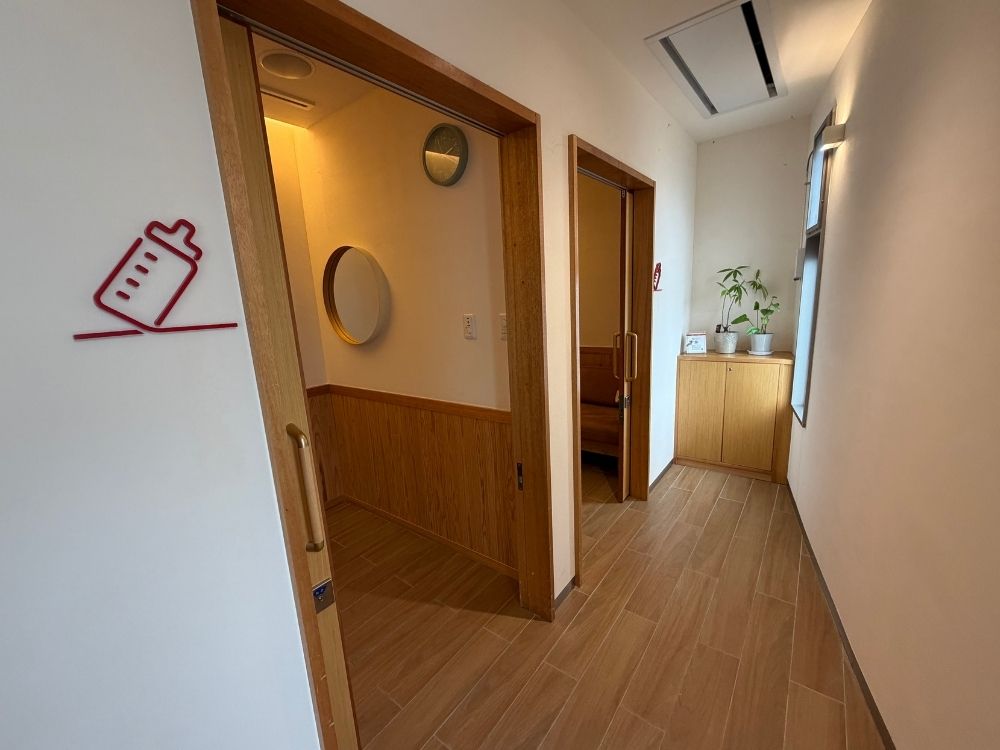
Okinawa Zoo & Museum’s nursing room and changing tables were spotless.
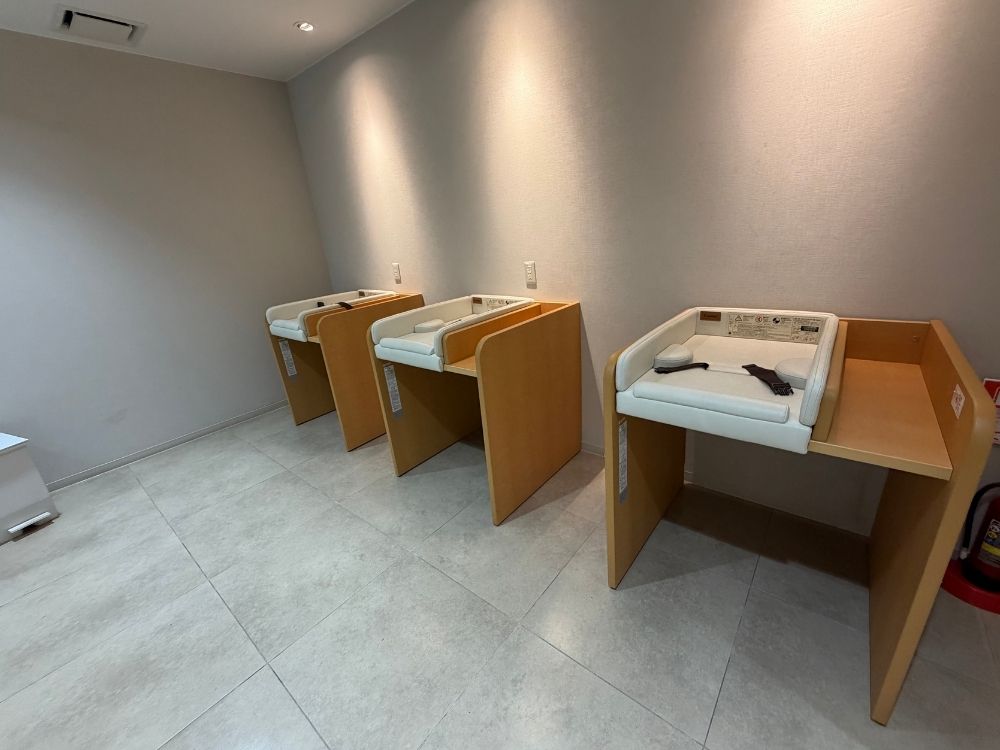
Every changing table we saw was nice and spacious too.
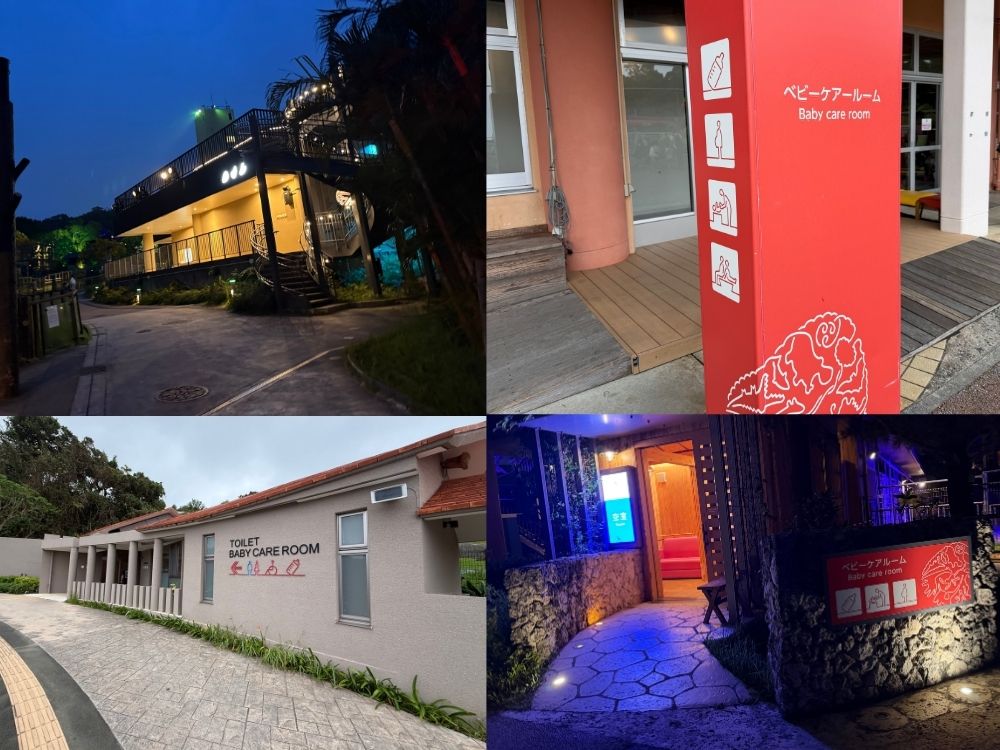
And they’re all over the park.
Both the nursing room and the changing tables had plenty of space, even with a stroller or siblings in tow. Every building was nice and cool inside too, so they’d work well as a place to escape the heat during the day.
Stroller & Wheelchair Rentals Available
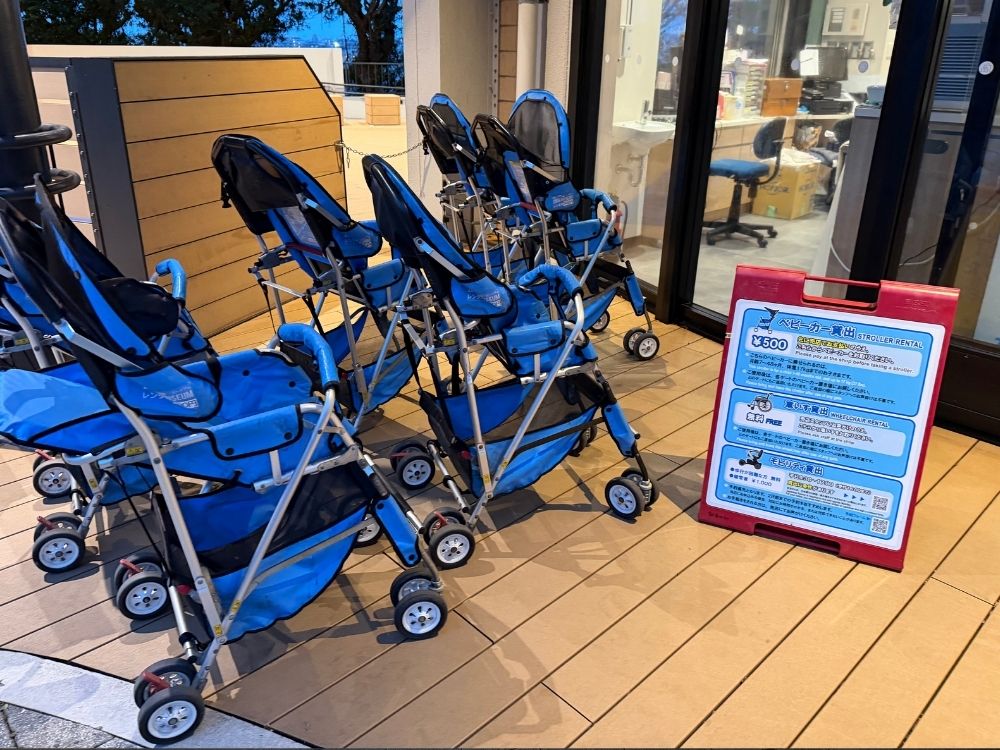
Stroller rental was 500 yen (approx. $3).
Wheelchair rental is free.
There are some slopes, but the park is generally easy to get around with a stroller, so we’d recommend bringing your own!
How to Plan Your Visit
Summer Version
Daytime in Okinawa is hot, obviously. That said, mornings are still a bit cooler since the ocean hasn’t fully warmed up yet (by afternoon, even the breeze feels hot).
- Daytime only? We’d recommend doing the zoo during the cooler morning hours.
- Doing NIGHT ZOO? We’d recommend sticking to the indoor exhibits and water-play areas during the day to dodge the heat.
Winter Version
In winter, daytime temperatures average around 20°C (68°F), and around 15°C (59°F) at night.
NIGHT ZOO seems to run year-round, so it felt like something you could enjoy no matter the season.
All our friends who live in Okinawa were bundled up complaining about the cold, but coming from Tokyo, it felt warm enough to survive in short sleeves (haha)!
It depends on where you’re traveling from, but it does get a little chilly at night, so bring a light jacket!
Who Should Visit
- Families planning an Okinawa trip with kids
- Anyone looking for a plan for a day when naptime is running long and it’ll be a late night anyway
- Anyone who’d rather wait until after dark to play, since the daytime heat is rough
- Anyone who wants a rainy-day backup plan (there are indoor facilities)
- Anyone looking for a budget-friendly spot that’s still great with kids
In Summary
Okinawa Zoo & Museum turned out to be a hidden gem for families with kids, bringing together a zoo, hands-on learning, water play, and amusement rides all in one place.
NIGHT ZOO on weekends and holidays in particular was fantastic — lit-up scenery, nighttime animal watching, and on top of that, it’s uncrowded and cool even in summer, so we could enjoy it comfortably the whole time.
The facilities overall were really clean and well-maintained.
The indoor facilities also make a great rainy-day backup plan, and it’s genuinely a great fit if naptime runs long and you’re looking at a late night anyway, or if you’d rather wait until after dark to play because of the daytime heat!
We really hope you get a chance to visit!
Thank you so much for reading all the way to the end!