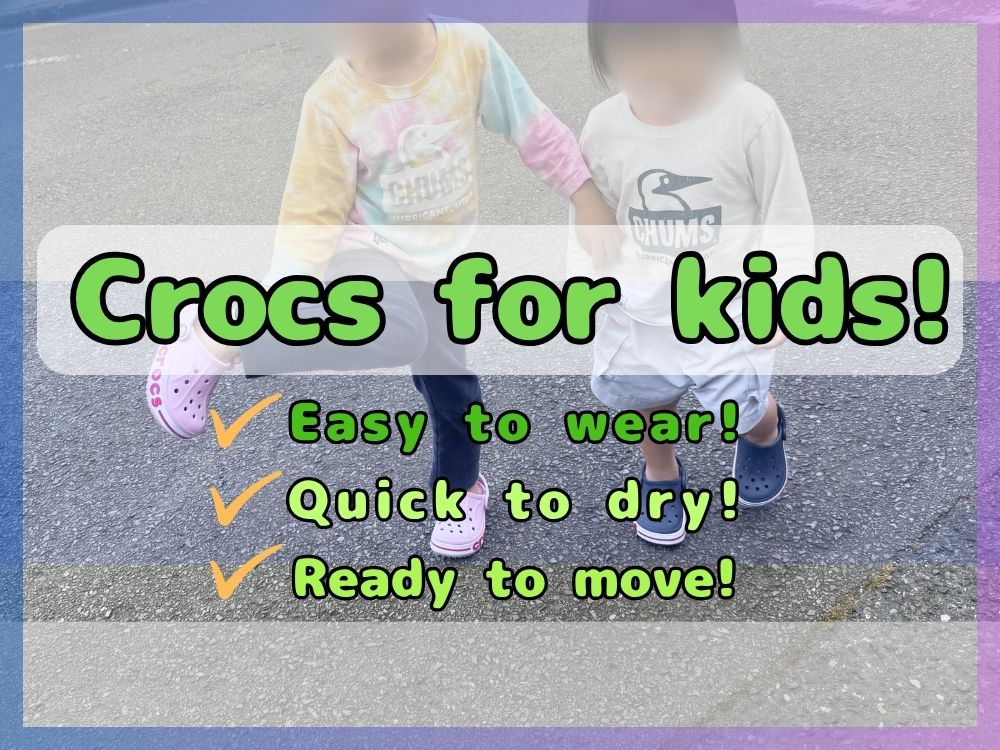
Picking sandals for kids is surprisingly tricky. I live in Japan and have tried various brands available here.
But the one we ended up sticking with was Crocs.
In this article, I’ll share why we made the switch and how to pick the right pair.
- Common mistakes when picking kids’ sandals
- Why our family ended up choosing Crocs
- Differences between genuine Crocs and Crocs-style knockoffs
- Holes vs no-holes — pros and cons compared
- Tips for sizing

Prices vary by country, so please read these as reference prices for Japan. I’ll add notes whenever something is Japan-specific — hope this helps!
Kids’ Sandals We’ve Tried & Why They Didn’t Work
As I mentioned, we’ve tried various sandals over the years — New Balance, ASICS, IFME (a popular Japanese kids’ shoe brand designed by Japanese podiatrists), and others. Each had its strengths, but plenty of frustrations too.
Let me walk through each one.
Frustration #1: Hard to Walk in Unless the Fit Is Perfect
Sandals are tough to walk in unless they fit just right.
On top of that, the better-quality ones are expensive. Since sandals are worn barefoot, sizing has to be precise — but my kids outgrow them quickly. Picking a quality pair that’s good for growing feet often runs ¥4,000–5,000 (~$26–32).
I started looking for something that works even if a bit loose, that fits with socks on, and that can keep being worn into winter.
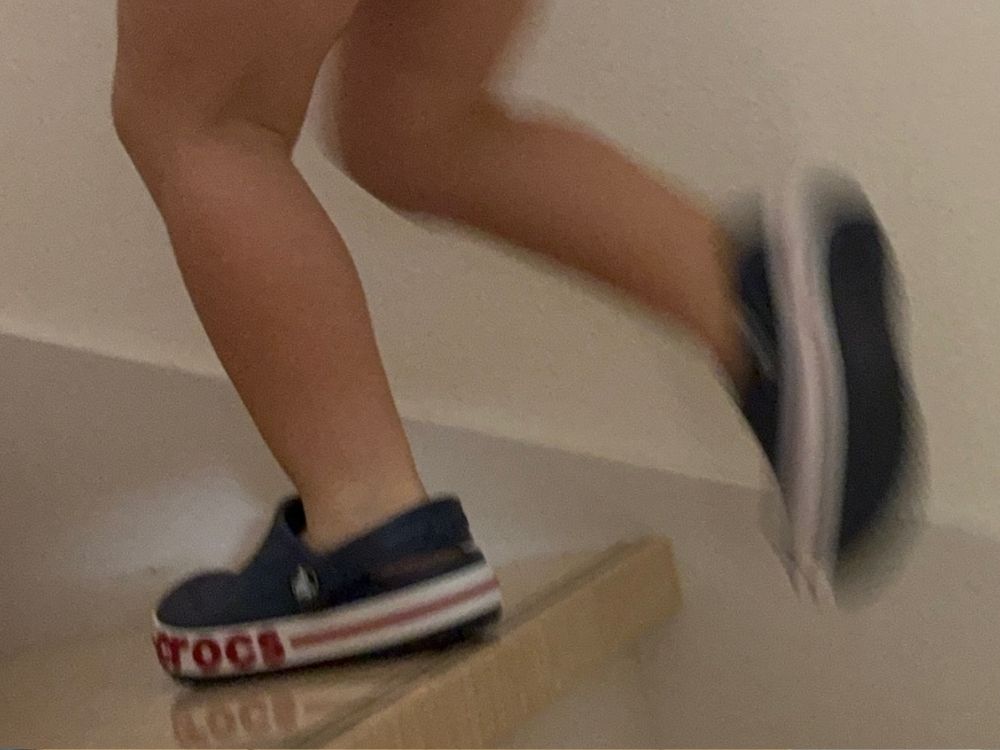
Trying them on at home — my son must have felt how well they fit because he ran up the stairs in them.
Frustration #2: Wait for the Right Size → Sold Out
With my older son, I once bought sandals on sale by guessing what size he’d need. By peak summer, they were already a bit loose.
The following year I waited until closer to summer to get a perfect-fitting pair — only to find his size had sold out.
I started wishing there was a brand where sizes didn’t run out so easily.
Frustration #3: Fabric Sandals Don’t Dry
This was the biggest issue with typical sandals.
When kids play in shallow water-play areas (in Japan we call these “jabu-jabu ike” — shallow public splash pools in parks, common in summer), they switch from shoes to sandals and get soaking wet within minutes. We have to carry wet sandals home — but fabric ones take forever to dry.
You can’t really wear them on the train back, and stuffing them in a bag makes them stink. Then if it rains later, even washed-and-hung sandals stay damp.
“Mama, they’re still wet, I don’t wanna wear them” — heard that more than once (lol).
I started wanting a non-fabric, easy-to-walk-in sandal.
Frustration #4: Not Easy to Slip On
Sandals, like shoes, usually need to be properly put on with both hands.
Then one day I was visiting a friend, and I saw their kids slipping on Crocs and casually walking between their house and the grandparents’ house next door. That’s when it clicked — “Yes!! THIS is what I’ve been looking for!” (lol)
Highway rest stops, quick bathroom trips at campsites, hopping out at a convenience store — for short-duration use, Crocs are unbeatable.
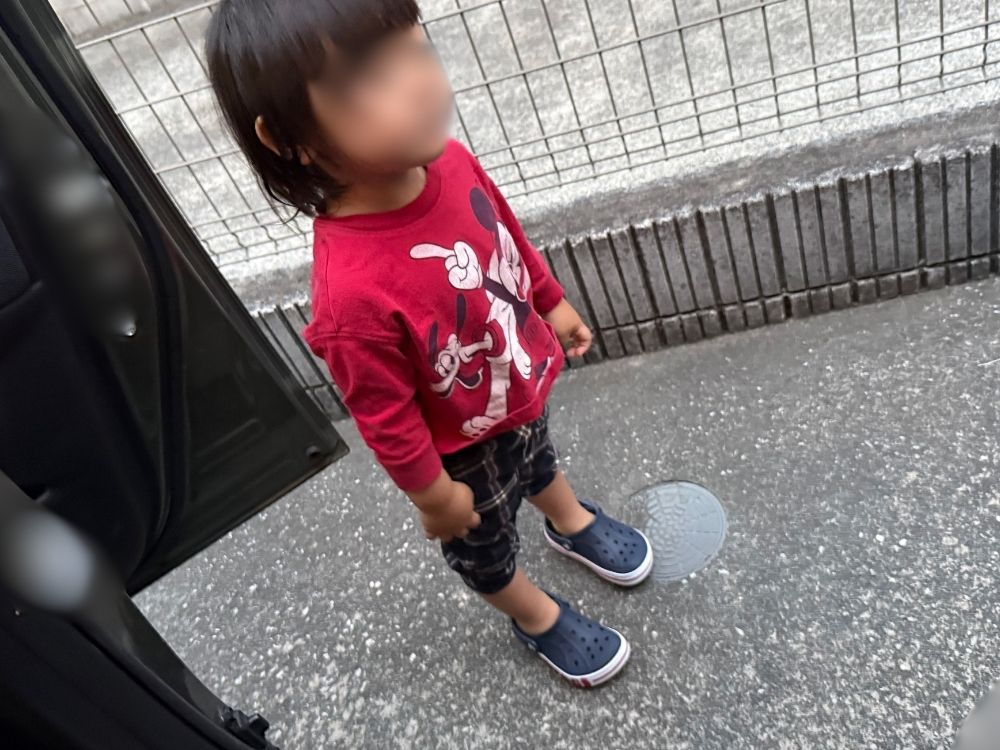
Even getting out of the car, he can now put them on himself and hop out quickly.
Frustration #5: Can’t Handle Light Rain
Japan has a rainy season (tsuyu, June–July) when rain is frequent, and summer often brings sudden squall-like downpours. Even a quick supermarket trip can mean walking through puddles in the parking lot — shoes get soaked, and they often don’t dry by the next day.
Crocs solved all of this.
Last year I visited a friend in the Philippines and the adults all wore Crocs. When it rained overnight and the leaves were still wet in the morning, I could chase the kids around without a second thought.
That said — we hadn’t bought Crocs for the kids yet at that point, so we ended up drying their soaked shoes every single day (lol).
Why We Choose Genuine Crocs
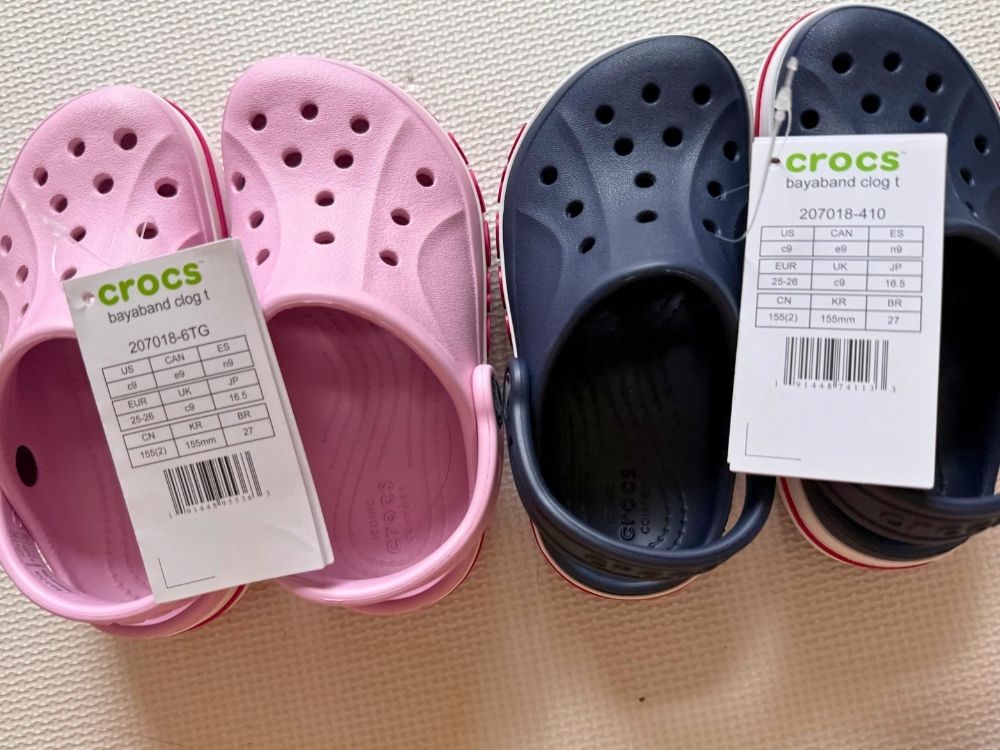
Honestly, any Crocs-style sandal could work. But there are two reasons our family sticks with the genuine Crocs brand.
- The price gap with knockoffs is surprisingly small (still cheaper than buying other sandals)
- Genuine Crocs have less-slippery soles — safer
- Better foot fit
I used to wear Crocs-style knockoffs myself. Partly from long-term wear, but the soles wore down fast and got slippery quickly.
The first time I put on real Crocs, the sole was noticeably thicker and more solid — they look the same but feel completely different to walk in. Since I planned to use them in the rain and at river-play spots, I wanted something safer and more comfortable.
Crocs used to feel expensive to me, but during Amazon Japan sales you can pick up genuine Crocs for under ¥3,000 (~$19).
I checked a knockoff at AEON Mall (a major Japanese family-oriented shopping mall chain) — and it was about ¥1,700 (~$11). The price gap was much smaller than I expected, which is another reason we go genuine.
※Apparently, Crocs in Japan tend to be more affordable than in many other countries — worth knowing if you’re visiting!
Solving the “Won’t Wear Them” Problem
This depends on the kid, but I’ve definitely bought sandals only to have them refuse to wear them. The toddler “no” phase especially — they reject everything, and the sandals get outgrown before they’re ever worn.
Genuine Crocs let you add Crocs Jibbitz™ charms — small decorative accessories like Disney characters and cute designs.
Wearing them plain is the most budget-friendly, but turning Crocs into “their own personal sandals” is one of the perks of going with the real thing.
As a side note — Jibbitz™ charms have Japan-exclusive series featuring uniquely Japanese motifs like Mt. Fuji, Shiba Inu dogs, ramen, and capybaras in hot springs. They release new ones regularly! Globally popular designs like Pokémon and Super Mario are available worldwide. Worth checking out!
Side Holes vs No Holes — Which to Choose?
One thing I went back and forth on was whether to choose Crocs with side holes or without. Each has pros and cons, so here’s a general comparison.
| With holes | No holes | |
|---|---|---|
| Breathability | ◎ Comfortable in summer, less sweaty | △ Gets stuffy |
| Water drainage | ◎ Water drains right away after water play | △ Water stays once it’s in |
| Rain & mud splash | △ Water and mud get in through holes | ◎ Keeps water and mud out |
| Sand & small pebbles | △ Gets in easily | ◎ Stays out |
| Foot protection | △ Toes stick out when running; sides hurt if you twist your foot | ◎ Covered all around — safer |
| Weight | ◎ Lighter due to holes | ○ Slightly heavier |
| Best for | Summer water play, pools, river play | After rain, wet grass, everyday use |
Why We Chose No-Holes
We went with no-holes. When I wore Crocs knockoffs myself, I’d had my pinky toe slip out through the holes while running, sides that hurt when I twisted my foot, and pebbles/sand getting in too easily.
Another reason: I wanted to prevent water from getting in through the sides when walking through puddles or wet leaves.
Breathability does take a slight hit, but the top still has holes, so it doesn’t really bother me. For water play, keeping pebbles out from the sides felt more important — so no-holes won.
About Sizing
Here’s the size range available for Crocs in Japan.
| JP | – | – | – | 13 | 14 | 15 | 15.5 | 16.5 | 17.5 | 18 |
|---|---|---|---|---|---|---|---|---|---|---|
| US | C1 | C2 | C3 | C5 | C6 | C7 | C8 | C9 | C10 | C11 |
| EU | – | 17-18 | 18-19 | 20-21 | 22-23 | 23-24 | 24-25 | 25-26 | 27-28 | 28-29 |
| UK | – | 2 | 3 | 5 | 6 | 7 | 8 | 9 | 10 | 11 |
In Japan, kids’ shoes typically come in 0.5cm increments — but Crocs sizing isn’t always evenly spaced.

My older son normally wears 16cm (~6.3in) and my younger son wears 14cm (~5.5in) New Balance 373s.
When we tried Crocs in-store, both of them ended up in 16.5cm (~6.5in) — to my surprise.
My younger son has high insteps, and 15.5cm wouldn’t go on. Technically if you flip the heel strap forward (over the top of the foot, leaving the heel “open”) it would fit, but with the heel locked in place, even with adult help, his foot wouldn’t go in.
As you can see from the size table, 16cm isn’t even made — after 15.5 comes 16.5cm. I thought it’d be way too big, but he adjusted right away. He even loves them.
My ideal sizing guide:
Standard feet → current shoe size + 0.5cm
High insteps → current shoe size + 1cm
Narrow feet → same as current shoe size
Trying them in-store is best, but if you’re worried, just go a size up — your kid will grow into them eventually (lol). One of the great things about Crocs is they aren’t just summer sandals — they work with socks too, and for quick trips year-round.
Like most sandals, they’re not really for long walks. But Crocs are sturdy enough to handle decent walking, and they tolerate a bit of room in the fit.
For toddlers just starting to walk, feet are still small — so even 0.5cm makes a bigger relative difference. Go for an exact fit!
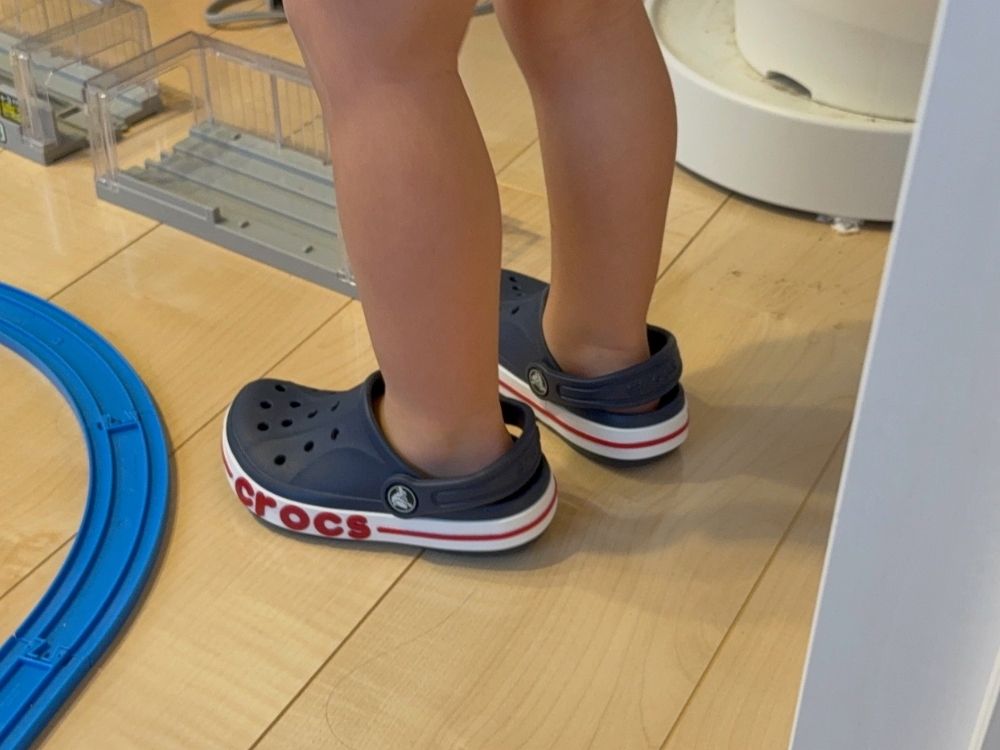
Younger son trying them on at home (normal shoe size 14cm/~5.5in). 16.5cm fits perfectly.
Check size availability!
Wrap-Up
Sandal shopping used to be a yearly headache, but this year we solved it before summer even started. Going slightly bigger means they last longer too — a nice bonus.
Since sandals aren’t worn every day, picking something cost-effective, safe, and easy to use is the smart move. Crocs come through in all kinds of situations — rainy days, water play, quick errands, and more!
Thanks so much for reading all the way through!
Example of solid-sole, no-side-holes Crocs
Recommended Articles for You