I never thought about muscle stiffness as a kid — and then suddenly it became a daily struggle.
Especially after having children. Carrying, nursing, hunching over during childcare — and after my second son was born, the shoulder stiffness reached a completely different level.
It hurt so much I thought I might need to go to the hospital — but I had no way to leave both kids. That’s when I remembered the CoriCoran my husband had given me as a gift.
This article is an honest review based on our real experience — mine and my husband’s.
In Japan, “katakori” (肩こり) — chronic muscle stiffness in the shoulders and neck — is considered one of the most common physical complaints. It’s so prevalent that dedicated medical devices have been developed specifically to address it. If you’ve been living in Japan and find yourself suffering from persistent shoulder or neck stiffness, you’re definitely not alone!
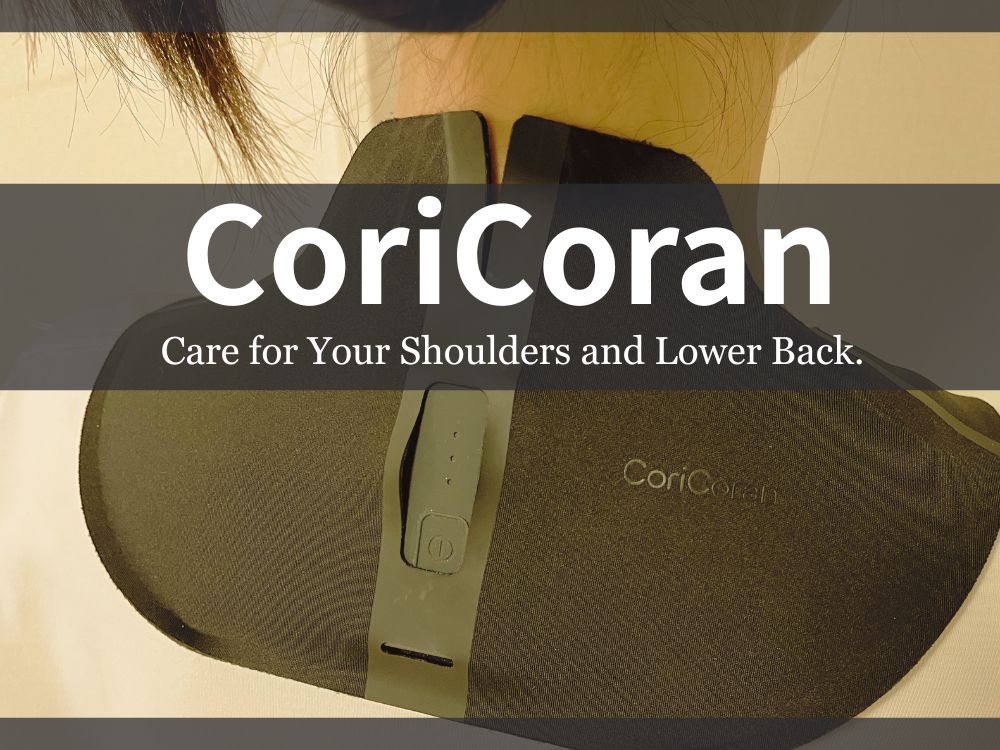
What Is CoriCoran?
CoriCoran is a home-use high-frequency therapeutic device developed by Panasonic Japan. Designed to relieve stiffness in the shoulders and lower back, it holds the only medical device certification in its category in Japan — a significant distinction.
How High-Frequency Therapy Works
Standard massage devices and low-frequency devices (TENS — Transcutaneous Electrical Nerve Stimulation) target muscles directly. CoriCoran’s high-frequency technology works differently: it acts directly on blood vessels.
- Emits approximately 9MHz high-frequency waves (about 9 million cycles per second)
- Penetrates deep into body tissue to dilate blood vessels
- Improved circulation flushes out the metabolic waste products that cause stiffness
There’s none of the tingling or buzzing sensation you get with TENS devices. No sound, no noticeable sensation at all — just a gentle, spreading warmth. You almost forget it’s on.
High-Frequency vs. Low-Frequency (TENS): What’s the Difference?
I found myself wondering the same thing — “I’ve heard of TENS devices, but what makes high-frequency different?” — so I looked it up!
| High-Frequency (CoriCoran) | Low-Frequency (TENS) | |
|---|---|---|
| Target | Acts directly on blood vessels | Stimulates surface muscles |
| Penetration depth | Reaches deep tissue | Works near the skin surface |
| Sensation | No sensation (just gentle warmth) | Tingling / buzzing sensation |
| Usage time | Extended use OK | Max 15 min per session per day |
| Body areas | Shoulders and lower back only | Wide range — legs, arms, back, etc. |
| Duration of effect | Works while in use | Pain relief continues after use |
| Best for | Deep, chronic stiffness | Surface-level stiffness and fatigue |

The tingling electrical stimulation used in orthopedic rehabilitation (similar to TENS therapy) is low-frequency. The non-stimulating version is high-frequency. Because CoriCoran produces no sensation, some reviews say it doesn’t “feel like it’s working” — but its effectiveness has been scientifically validated through joint research with multiple universities and research institutions.
My Honest Review
More Effective for Severe Stiffness Than Everyday Tension!
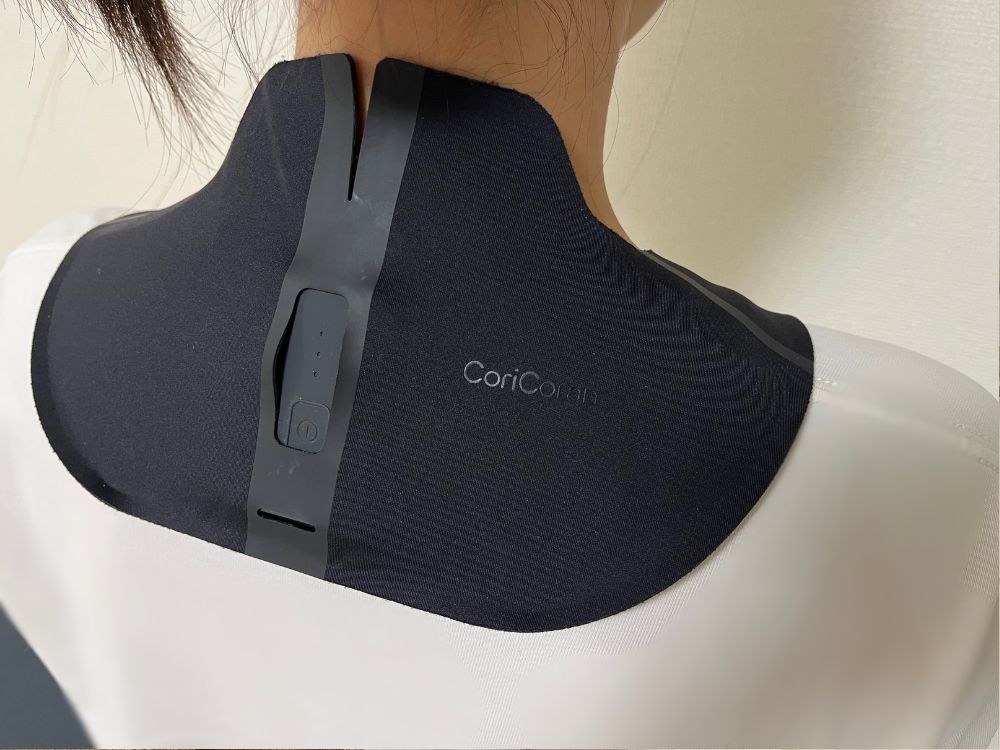
When I first tried it, I noticed a gentle spreading warmth. With kids around I couldn’t wear it continuously, so I used it on and off — but after a while, I clearly felt the difference. The tension had loosened noticeably.
You may not notice much with ordinary day-to-day stiffness — but this device really shines when stiffness has reached an extreme level.
After my second son was born, the stiffness was in a completely different league. Double carrying, double nursing — my body was falling apart. Using it at that absolute limit was when I really felt the effect!
My Nurse Instincts Kicked In — I Had to Experiment!
The manual says it’s for shoulders and lower back only — but with the kids occupied elsewhere, I tried it on a few other areas out of curiosity (and at my own risk). I kept away from the head and chest, but what really surprised me was using it on my legs.
My left leg tends to run colder than my right. When I wrapped CoriCoran around my left thigh, my left leg clearly became warmer. When I switched it to my right, the right warmed up instead. No sound, no visible change — but I could physically feel the improvement in circulation!
Note: The manual specifies shoulders and lower back use only. The above is a personal experience at my own risk. Always read the instruction manual before use.
Things to Know Before Using
- When starting out, keep continuous use to a maximum of 3 hours and build up gradually.
- Improved circulation can occasionally cause headaches or dizziness — my husband experienced headaches when wearing it for extended periods.
- Personally, I found about 20 minutes was enough to feel a clear effect.
Just to be clear — CoriCoran works by improving blood flow to relieve stiffness. It won’t correct postural misalignment or nerve compression, so please keep that in mind!
Current CoriCoran Lineup
We bought ours a few years ago, but as of 2026 the lineup now includes the upgraded CoriCoran Wide 3D and the neck-specific CoriCoran Loop. The CoriCoran 3D and CoriCoran Wide use the same high-frequency device unit — you choose either the shoulder or lower back version when purchasing, and conversion attachments for the other body part are sold separately.
We were using the CoriCoran Wide shoulder version on our lower back too, but wanted more precise positioning, so we eventually bought the lower back attachment separately.
Let me run through the full lineup first, then share my recommendation and the reasons why!
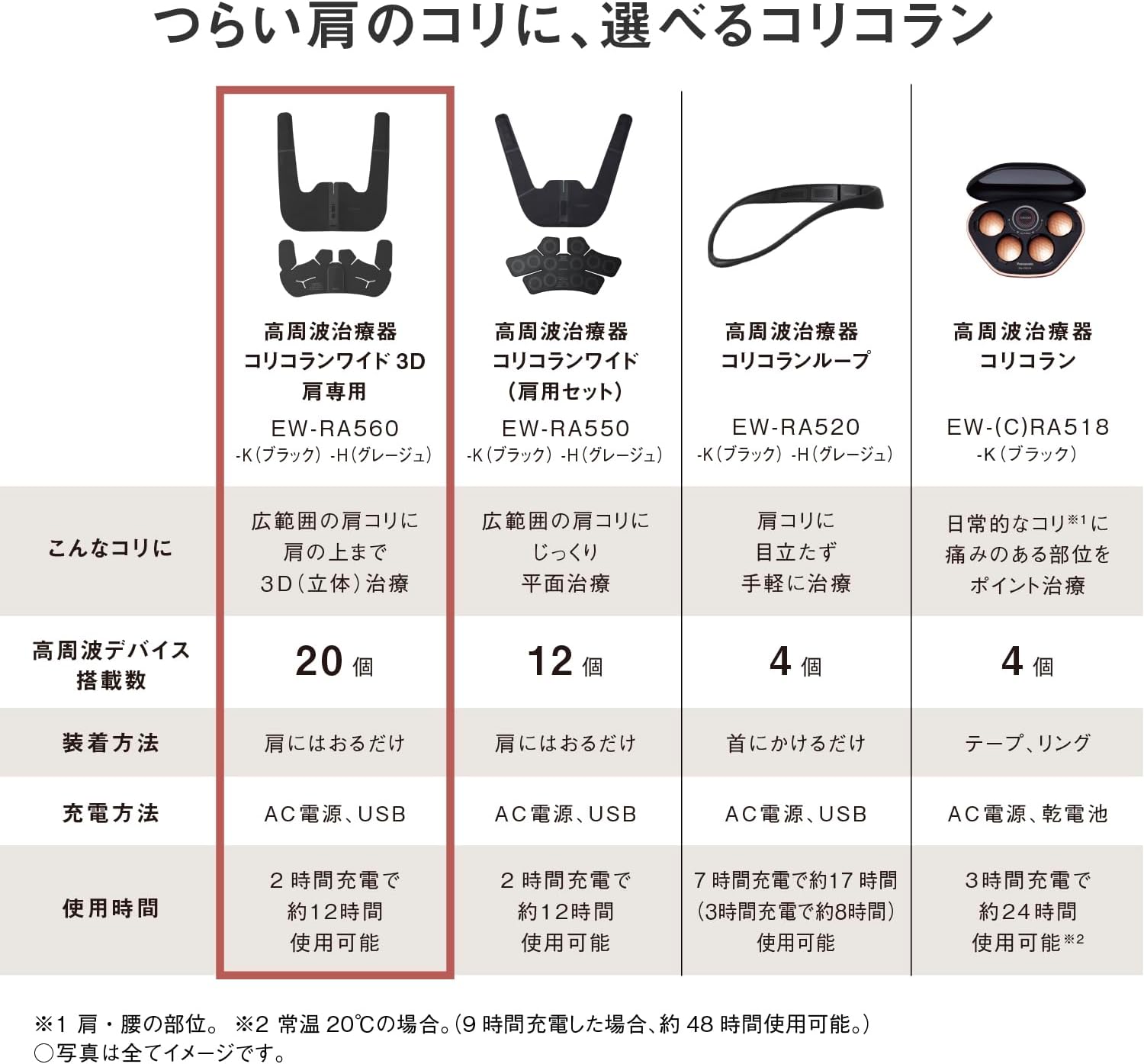
Shoulder Models
The shoulder lineup looks like this. The basic CoriCoran (rightmost in the image) attaches either via included disposable adhesive tape applied directly to the skin, or using the included silicone case that holds the device and clips onto clothing.
I use the CoriCoran Wide — it covers from the base of the neck down over the full shoulder area. It fits snugly against the neck and shoulders, so it stays in place even when you move around.
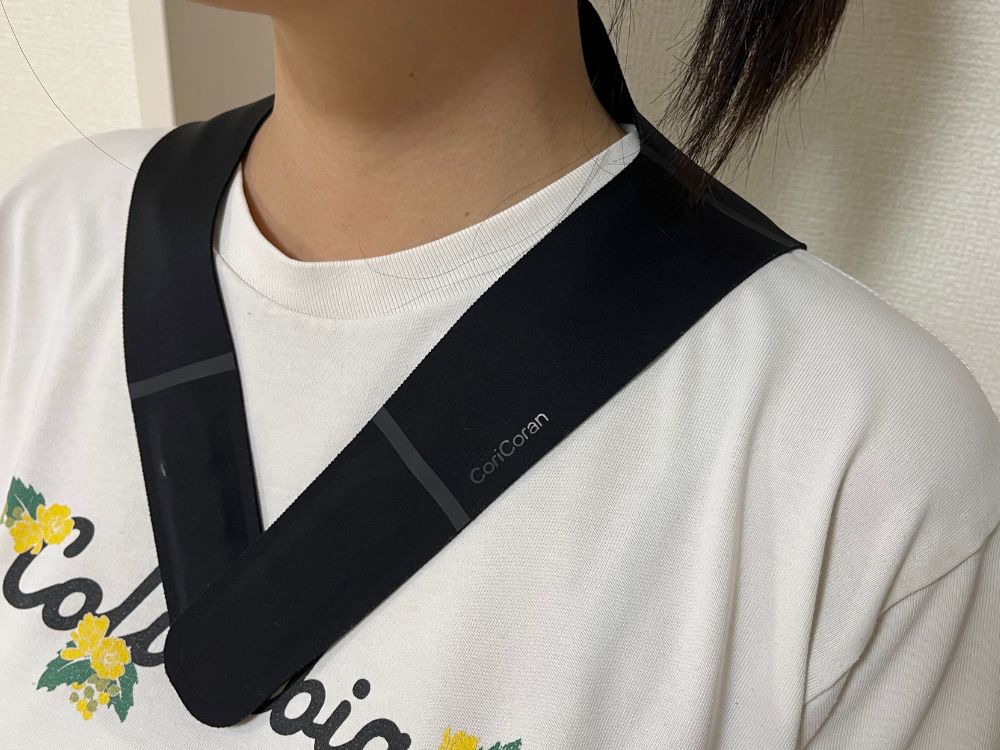
The front clips together with a magnet — it holds firmly in place. The slight weight of the device itself also helps keep it from shifting.
Lower Back Models
The lower back lineup looks like this.
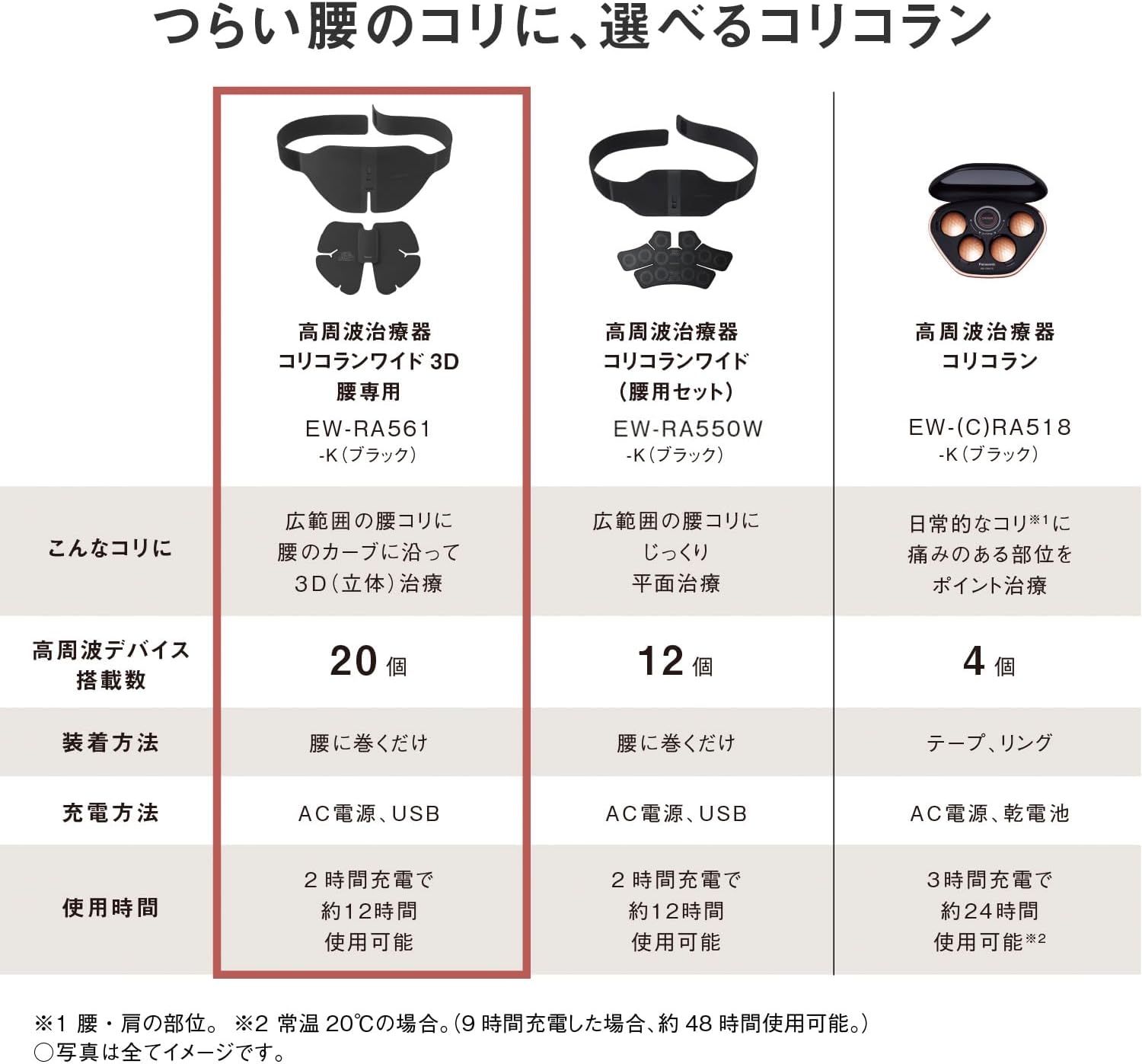
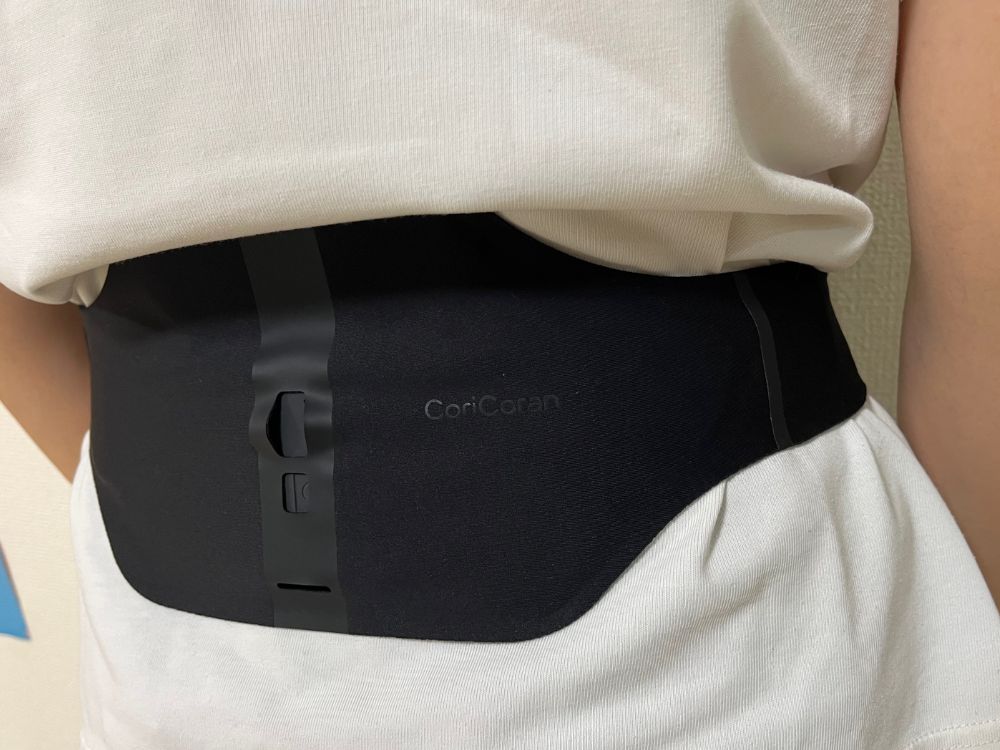
The CoriCoran Wide lower back version uses velcro to secure it — holds firmly and doesn’t shift during use.
CoriCoran Product Comparison
| CoriCoran Wide 3D (Shoulder) | CoriCoran Wide 3D (Lower Back) | CoriCoran Wide | CoriCoran Loop | CoriCoran | |
|---|---|---|---|---|---|
| No. of devices | 20 | 20 | 12 | 4 | 4 |
| Official price | ¥49,500 (~$320) | ¥49,500 (~$320) | ¥38,610 (~$249) | ¥27,720 (~$179) | ¥45,601 (~$294) |
| Shoulder use | Dedicated | ✕ | ✓ | ✓ (neck hang) | ✓ |
| Lower back use | ✕ | Dedicated | ✓ (attachment sold separately) | ✕ | ✓ |
| Attachment swap | Not possible | Not possible | Possible | — | — |
| Notes | 3D wrap covers front of shoulder — wide coverage model | Follows the S-curve of the spine — wide coverage model | Best value — standard model, works for both shoulder & lower back | Hangs around the neck — easy and casual to use | Adhesive patch-style — targets a specific spot |
| Amazon | Amazon | Amazon | Amazon | Amazon | Amazon |
| Rakuten | Rakuten | Rakuten | Rakuten | Rakuten | Rakuten |
| Attachments | — | — | Lower back: Amazon / Rakuten Shoulder: Amazon / Rakuten | — | — |
Prices are based on the official Panasonic website as of May 2026. Amazon and Rakuten often have discounts and point rewards, so you can usually find it cheaper there!
My Recommendation: CoriCoran Wide!
There are a lot of options, but my personal recommendation is the CoriCoran Wide. Partly because it’s what I use myself — but there are a few specific reasons.
- Swap the attachment to use it on both shoulders and lower back
- 12 high-frequency devices is more than enough
The dedicated shoulder and lower back models are designed for maximum coverage of each area, and may deliver stronger results — but I get full benefit from both areas just by swapping the CoriCoran Wide attachment. And with more devices comes stronger circulation stimulation, which can actually work against you if it triggers headaches.
- Placing 4 individual pieces is a bit fiddly
- 4 devices produces a weaker effect
When I first encountered CoriCoran, the only option available was a 2-device version. I didn’t really feel a noticeable effect back then, and I was always nervous about the pieces falling off mid-use — so I ended up stopping. That experience is part of why I now recommend the Wide version.
If the basic style appeals to you, the CoriCoran Loop is easier to use. And if you think you’ll use it on both your shoulders and lower back, the CoriCoran Wide is the clear winner.
The official website suggests working up to a maximum of 12 hours of continuous use — but personally, I strongly recommend wearing it for a short session, then stretching once the blood flow has improved and stiffness has loosened. Nothing complicated — just stretch until it feels slightly uncomfortable.
When you do this, the loosened tension tends to stay even after you take it off — the relief lasts!
Wrapping Up
This isn’t something you’d use every single day — it works best as a stretch companion for those moments when you think “my shoulders are really bad today” or “I need to loosen up a bit.”
For shoulder use, try wearing it for about 20 minutes while rotating and stretching your arms. After taking it off, you should notice it’s clearly easier to tilt your head back and look up!
Shoulder stiffness responds well to improved circulation, so results tend to be more noticeable than with lower back stiffness.
I hope this helps your stiffness ease up and your body feel a little lighter.
Thanks so much for reading all the way through!
CoriCoran Wide
Standard model with 12 high-frequency devices
Attachments
CoriCoran Wide — Lower Back Attachment
CoriCoran Wide — Shoulder Attachment