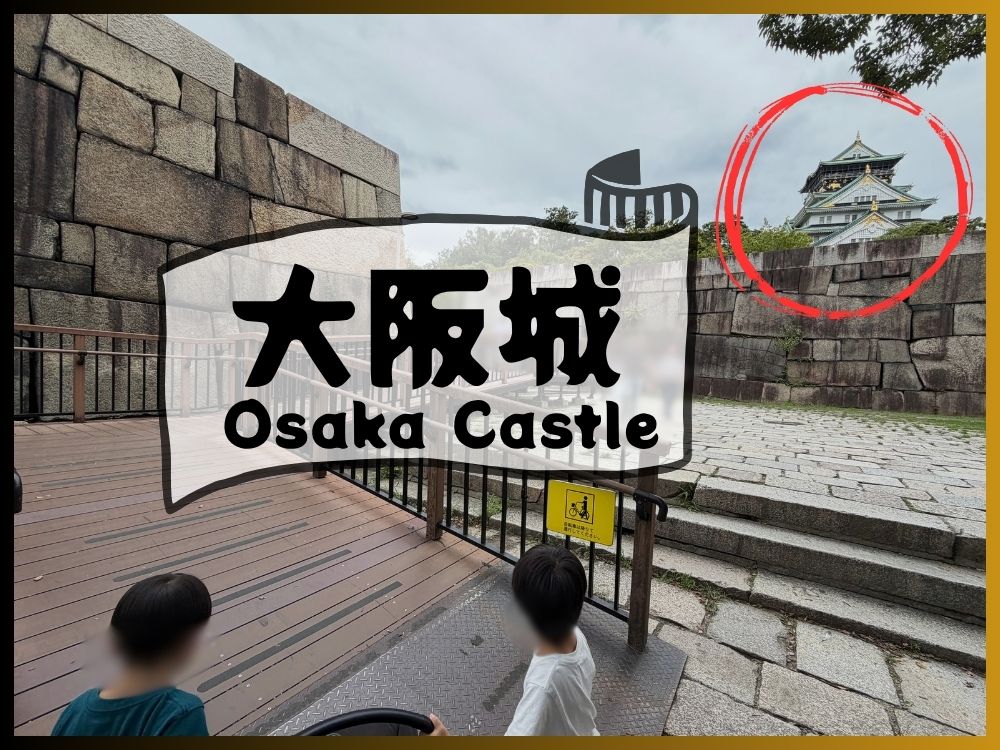
I’d heard Osaka Castle was so “fully barrier-free” that you could enjoy it without worrying about physical strain, so I went to see for myself with my kids (2 and 4 years old).
Here’s an honest report focused on accessibility and family-with-kids info!
- Access, tickets, and admission for Osaka Castle’s main keep
- What’s inside the keep and its accessibility features
- How to get around with a stroller or wheelchair
- The Toyotomi Stone Wall Museum and MIRAIZA OSAKA-JO
- How much time to plan for, and what to wear
What Is Osaka Castle?
Osaka Castle is one of Osaka’s landmark castles, originally built by Toyotomi Hideyoshi and later rebuilt during the Tokugawa era.
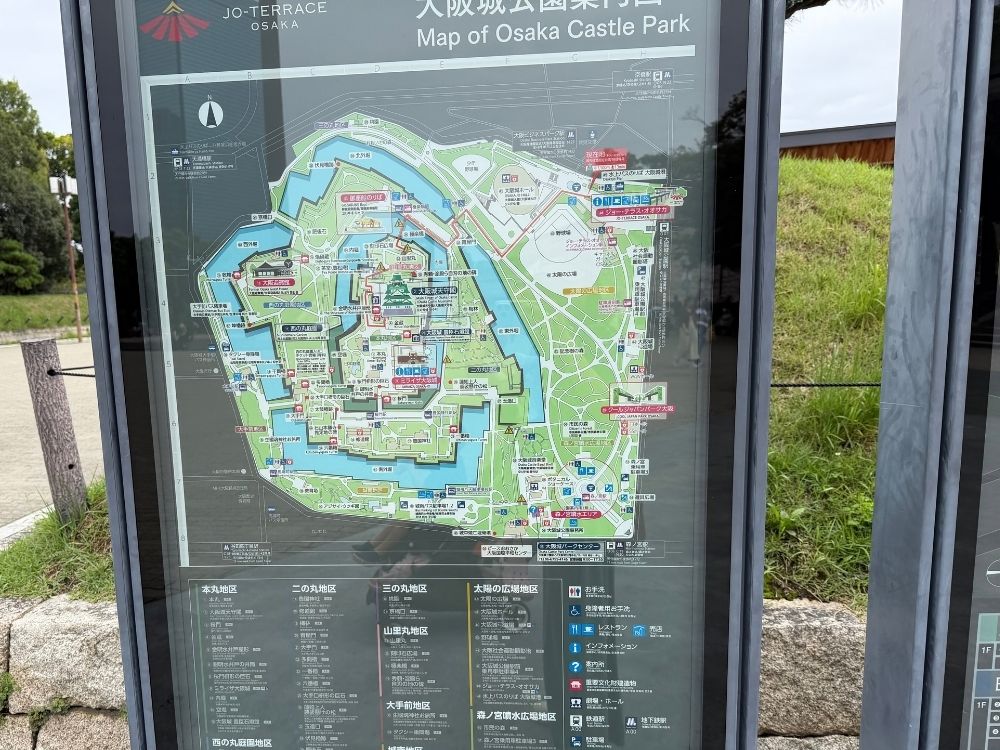
When you hear “castle,” you probably picture the impressive building sitting on top of the stone walls, but the word actually refers to the whole walled grounds.
Osaka Castle’s entire grounds are a park, and it’s huge.
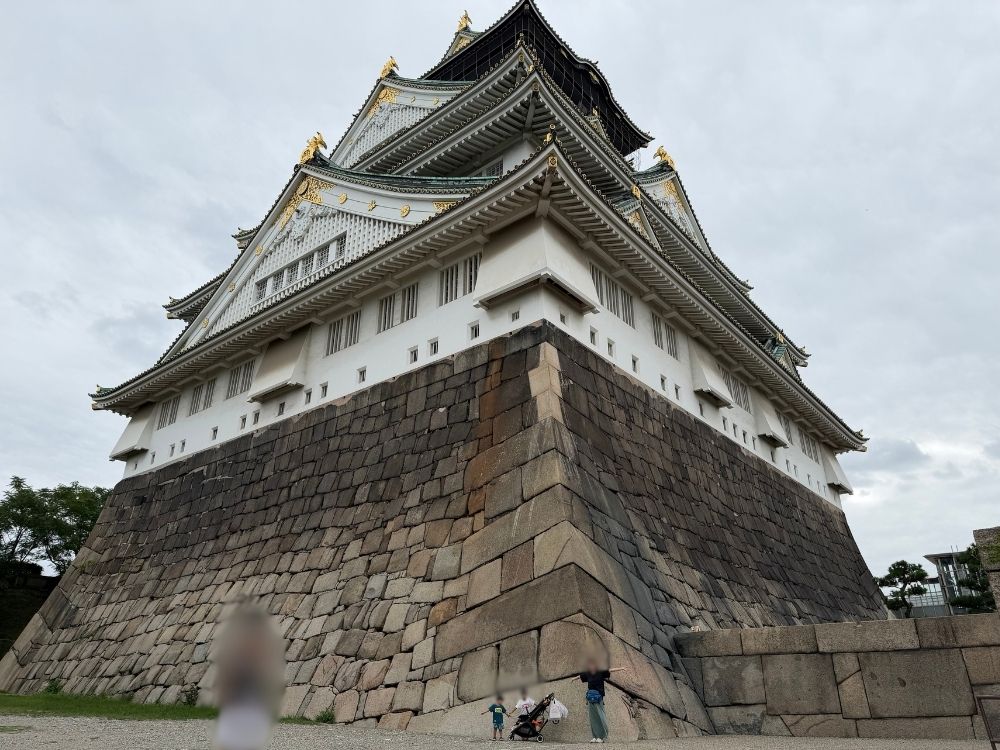
The building itself is called the “tenshu,” or keep.
Many Japanese castles have lost their original keep, and Osaka Castle’s current keep was rebuilt during the Showa era.
It was actually rebuilt almost 270 years after the previous keep was lost, so its original appearance wasn’t fully known – it was pieced together through historical research. Compared to other Japanese castles, the building itself is huge, with real presence.
Access
By Train
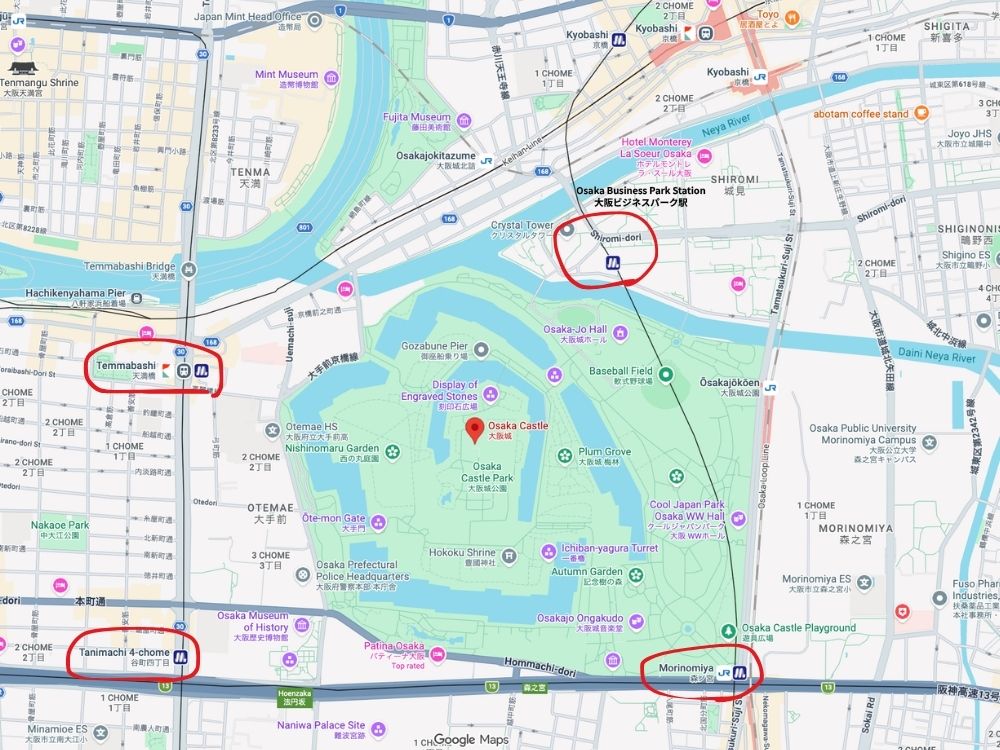
The 6 stations circled in red on the map are the main nearest stations. According to the official website, expect roughly a 20-minute walk from any of them.
- ①Osaka Business Park Station (Osaka Metro Nagahori Tsurumi-ryokuchi Line): about an 18-minute walk
- ②Osakajokoen Station (JR Osaka Loop Line): about a 20-24-minute walk
- ③Morinomiya Station (Osaka Metro Chuo Line/Nagahori Tsurumi-ryokuchi Line, JR Osaka Loop Line): about a 20-minute walk
- ④Tanimachi 4-chome Station (Osaka Metro Tanimachi Line/Chuo Line): about a 20-minute walk
- ⑤Temmabashi Station (Osaka Metro Tanimachi Line/Keihan Electric Railway): about a 19-20-minute walk
- ⑥Osakajokitazume Station (JR Tozai Line): about a 17-21-minute walk
By Car and Parking
- Osakajokoen Station-Front Parking Lot
- Capacity: 171 cars
- Rate: [8:00 AM-10:00 PM] 400 yen (approx. $2.67) per hour on weekdays, 500 yen (approx. $3.33) per hour on weekends/holidays / [10:00 PM-8:00 AM] 200 yen (approx. $1.33) per hour, every day
- Morinomiya Parking Lot
- Capacity: 143 cars
- Rate: [8:00 AM-10:00 PM] 400 yen (approx. $2.67) per hour on weekdays, 500 yen (approx. $3.33) per hour on weekends/holidays / [10:00 PM-8:00 AM] 200 yen (approx. $1.33) per hour, every day
*Neither parking lot has a daily maximum rate, so keep that in mind for longer stays.
About the Road Train / Electric Car
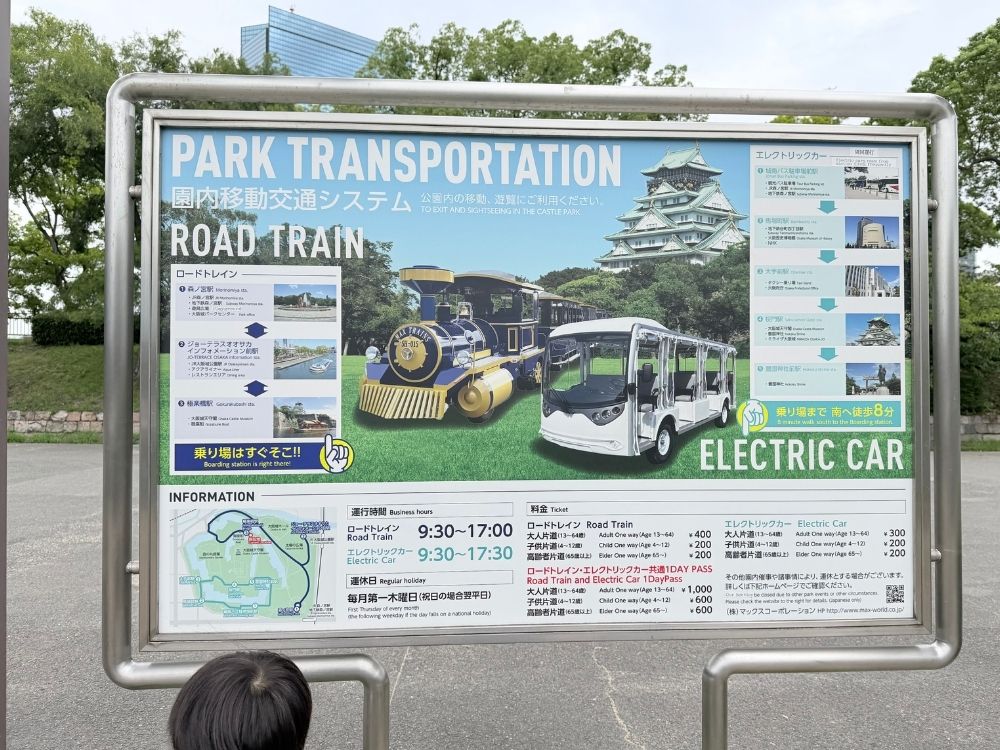
This is a shuttle bus that loops around Osaka Castle Park. It doesn’t go all the way to the keep, but it does take you to the gate just before the steep slope. There are separate routes looping the north and south sides.
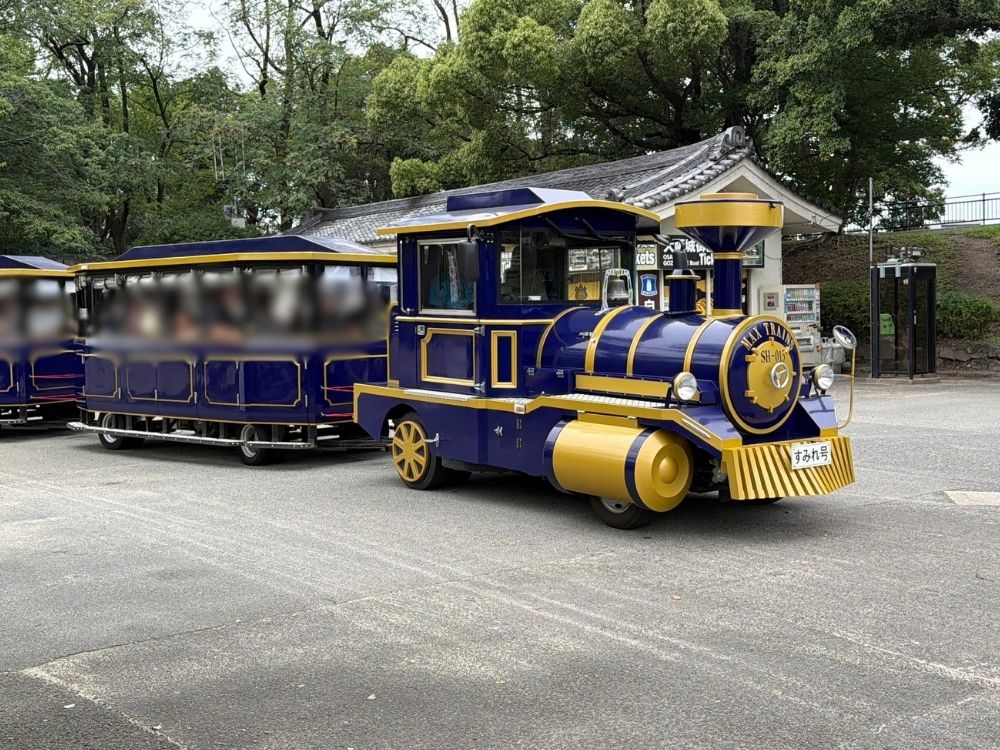
It was pretty packed.
The Walk to the Castle
This time we stayed at Hotel New Otani Osaka, which is very close to Osaka Castle, and walked over from there.
In terms of stations, we came in from the direction of Osaka Business Park Station and Osakajokoen Station.

You just head toward the castle up on the hill.
I think you can get there without getting lost no matter which direction you’re coming from!
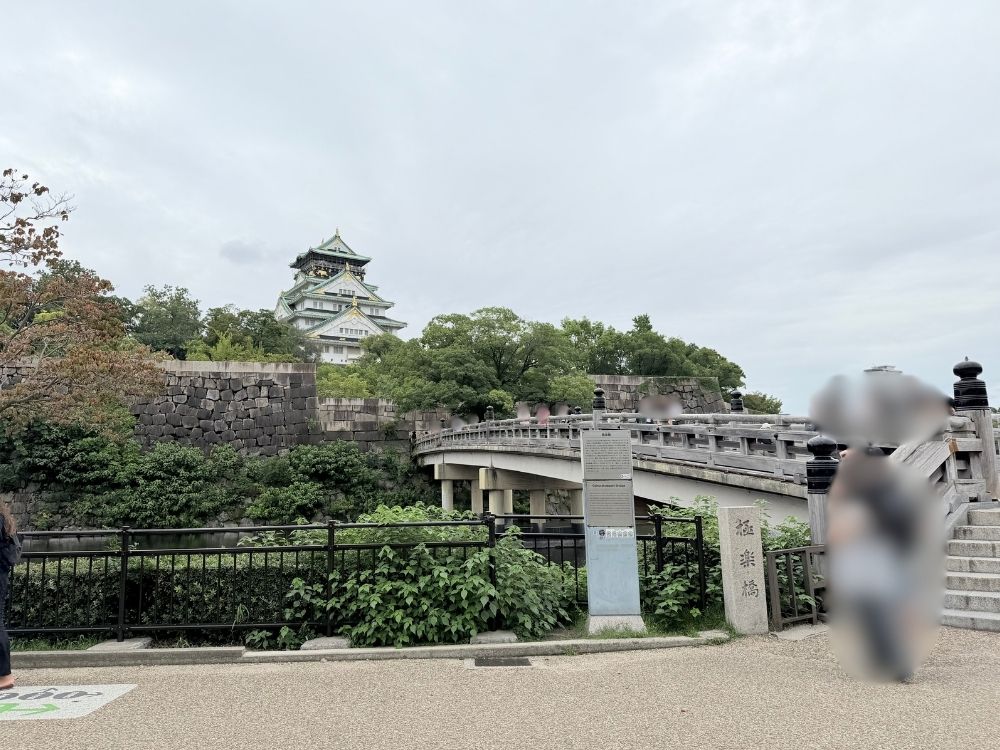
Since it’s surrounded by a moat, you cross a long bridge to get in.
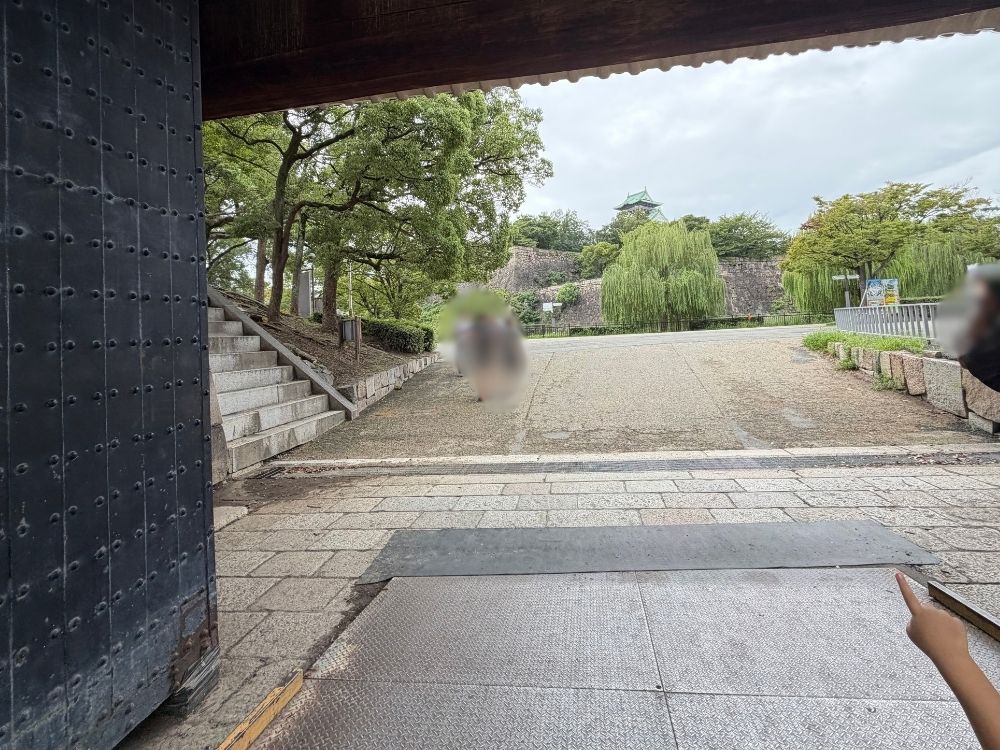
Once you pass through the big gate, it’s a flat, wide path the whole way (this is a castle, after all).
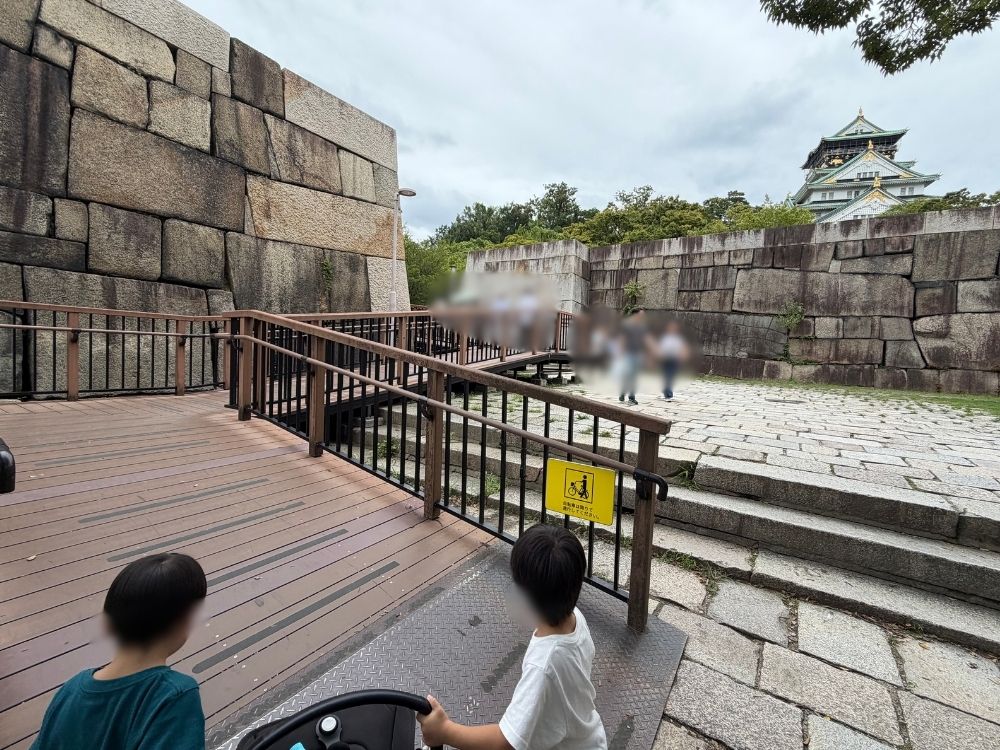
The path looks like this – fully accessible, so strollers roll right along smoothly.
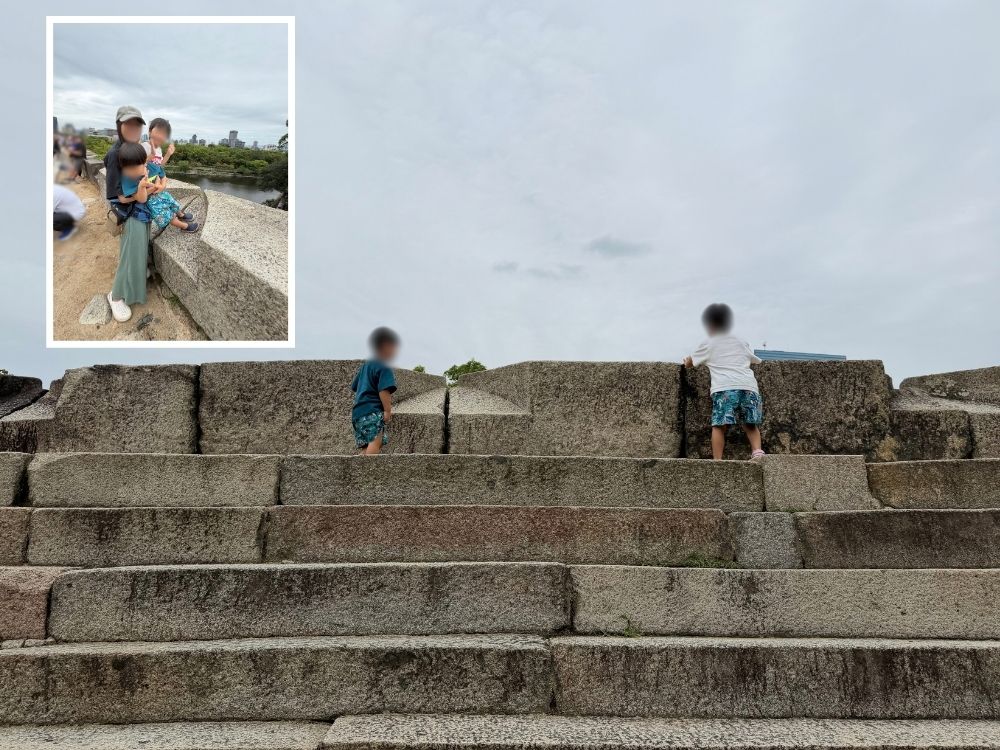
As you climb higher, there’s an area where you can walk right up to the edge of the moat.
It’s pretty high up, so it’s a little scary imagining it collapsing, but there were people sitting right up on the edge (ha!).
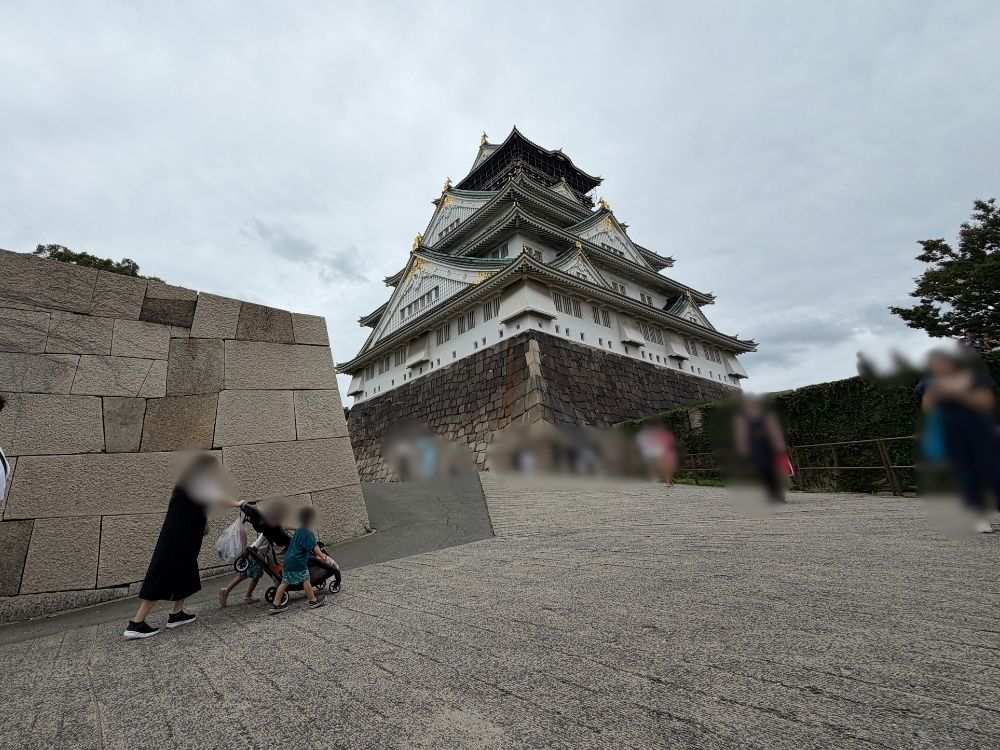
Keep going and you’ll come right up beneath the castle.
Each individual stone is massive – you really get a sense of just how big this castle is.
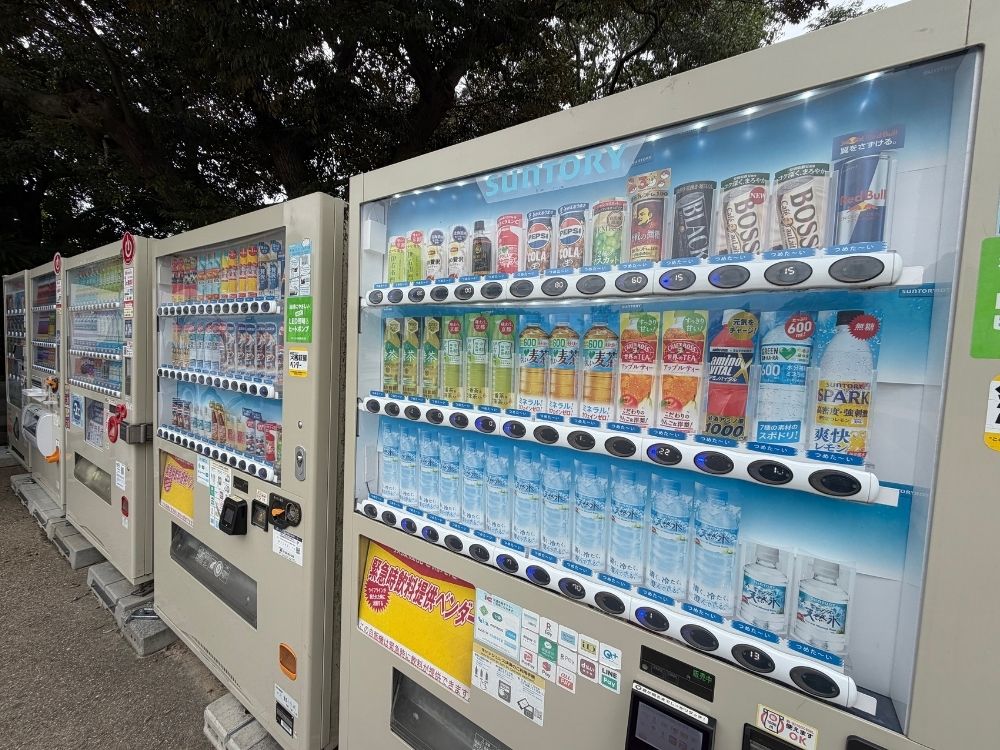
Near the castle, there were also plenty of rest areas with vending machines and benches.
Before You Enter the Keep
Everything up to this point is free to enjoy.
From here on, you’ll need to buy a separate ticket to enter the keep.
Tickets
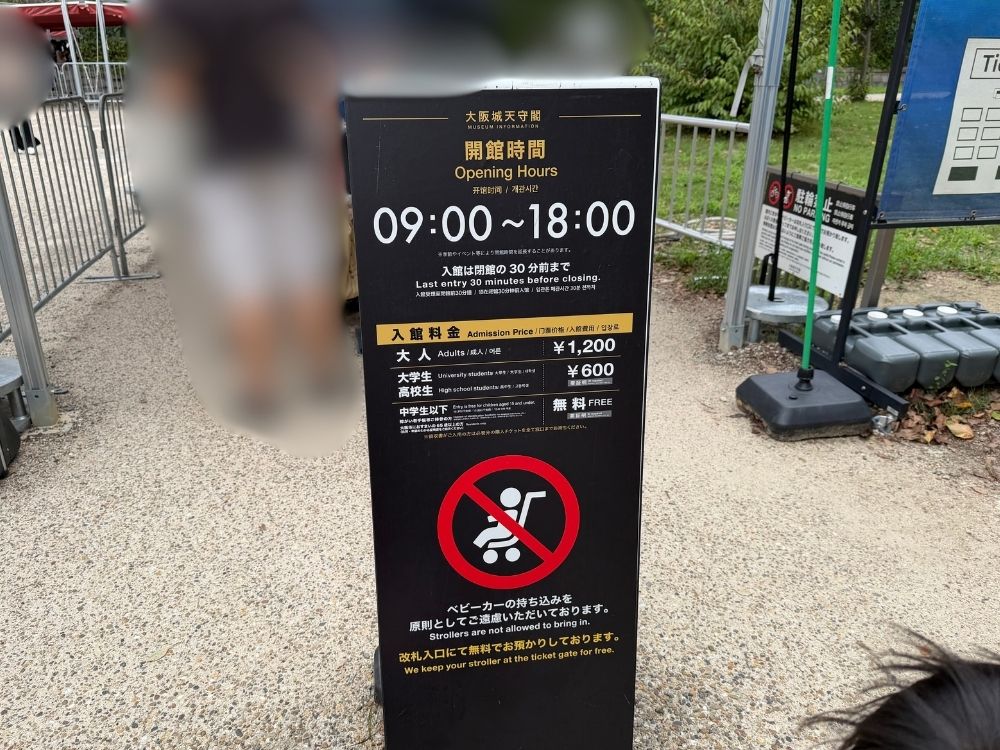
You can buy tickets same-day. Even on a weekday with unstable weather, the line at the ticket counter was about 20 minutes long.
Because of that, buying your ticket in advance is the smoother option.
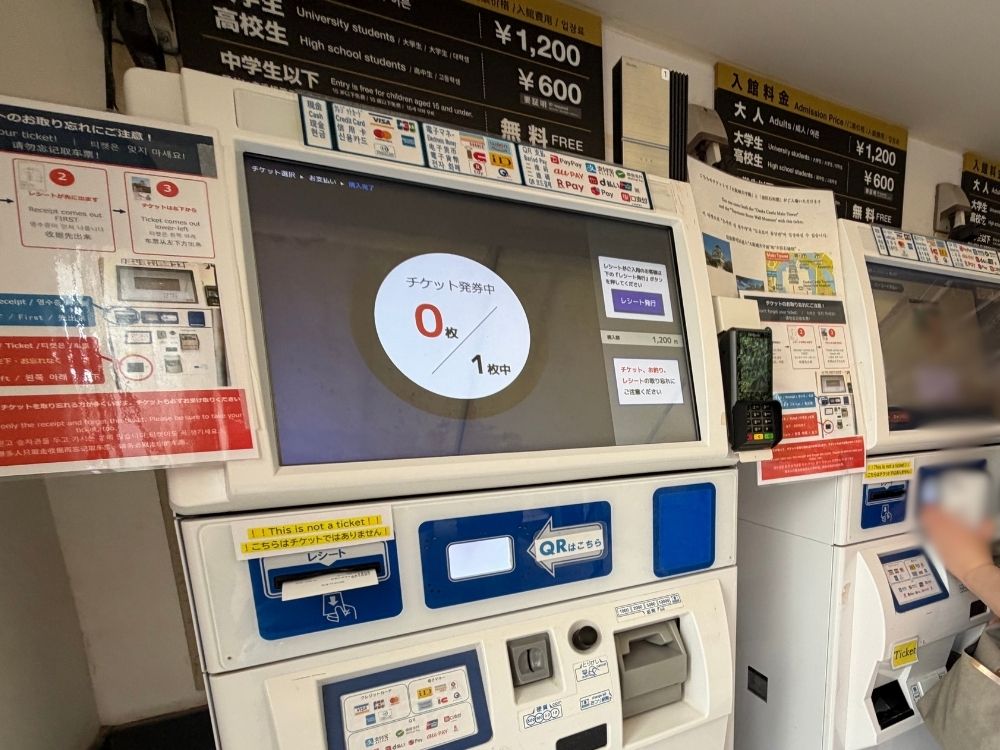
Tickets are purchased from a vending machine (groups should use the counter).
| Category | Price |
|---|---|
| Adults | 1,200 yen (approx. $8) |
| University/high school students | 600 yen (approx. $4) (student ID required) |
| Junior high age and under | Free (some form of age verification required) |
Temporary Baggage Storage
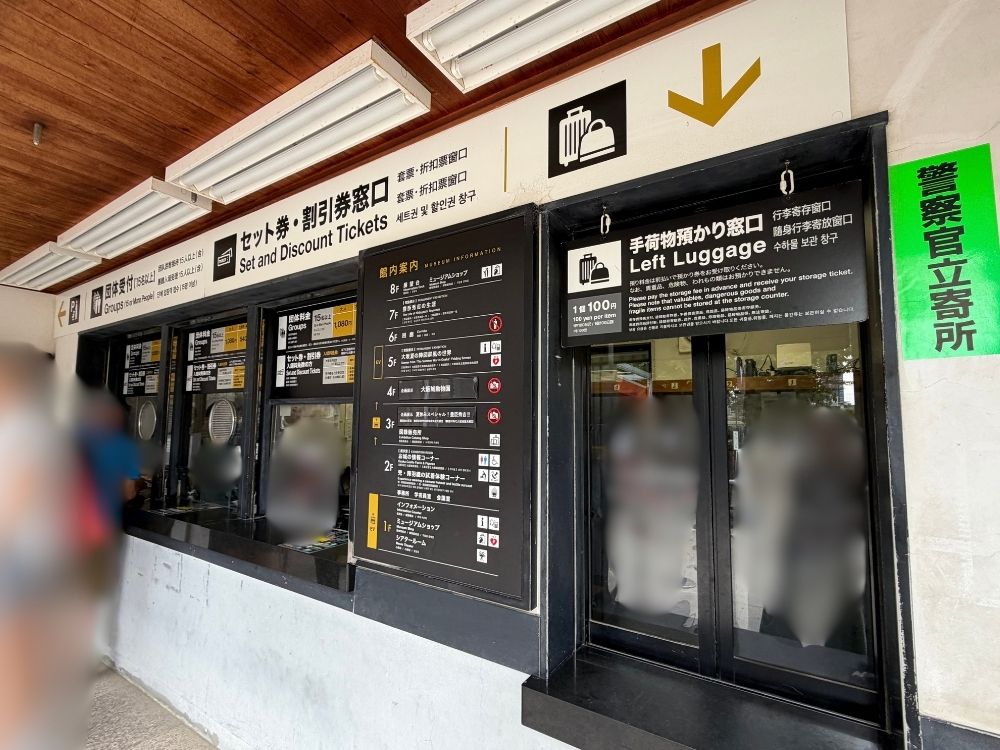
You drop off your bags at this counter next to the ticket booth.
It’s 100 yen (approx. $0.67) per item!
The order for entering the castle
Buy your ticket (in advance) ⇨ drop off your bags ⇨ show your ticket ⇨ stroller storage ⇨ up the stairs into the castle.
Since baggage drop-off comes before the ticket check, I ended up walking all the way to the stroller storage area and then having to go back to drop off my bags.
Going back was possible, but there are a lot of people moving through, so I’d recommend getting everything sorted ahead of time!
About Strollers
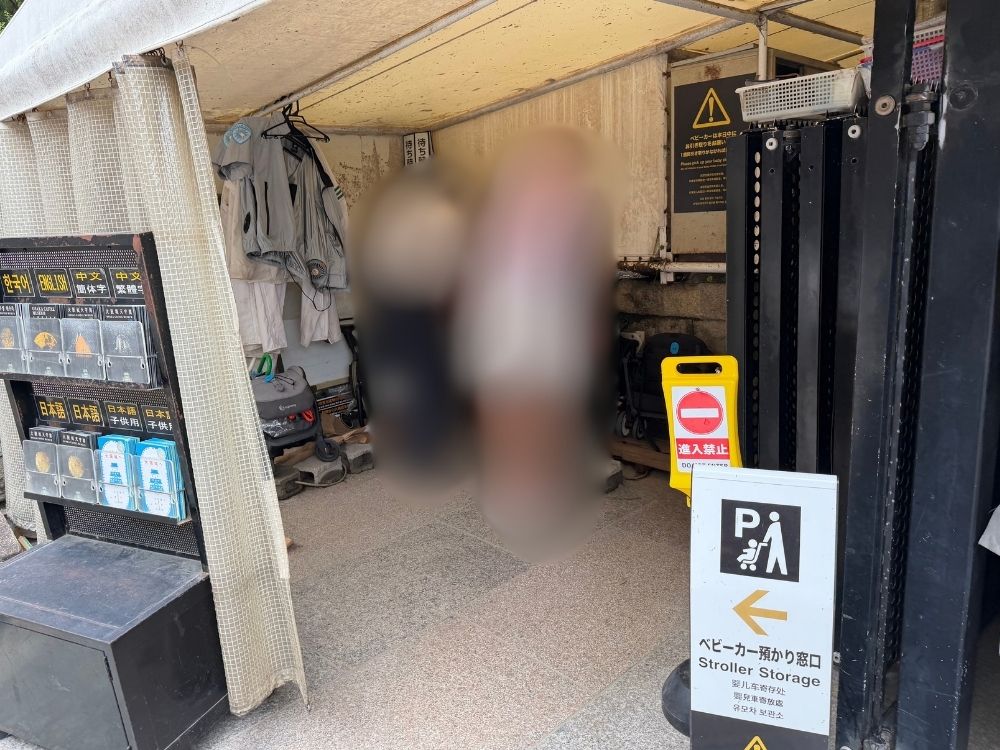
You can store your stroller for free at the entrance.
You fold it up to store it.
While you’re in the ticket line, it’s fine to keep it unfolded.
The inside of the keep is accessible too, so you’re technically allowed to bring a stroller in, but since space is limited, they ask that you store it here whenever possible.
⚠️ The storage area has a roof, but it’s a tent, so water can blow in from the sides, and if you’re near a wall, condensation can drip down onto it.
It was raining on and off during our visit, and the edge of our stroller did get a little wet.
If that’s a concern for you, it’s worth planning around!
If You’re Using a Wheelchair
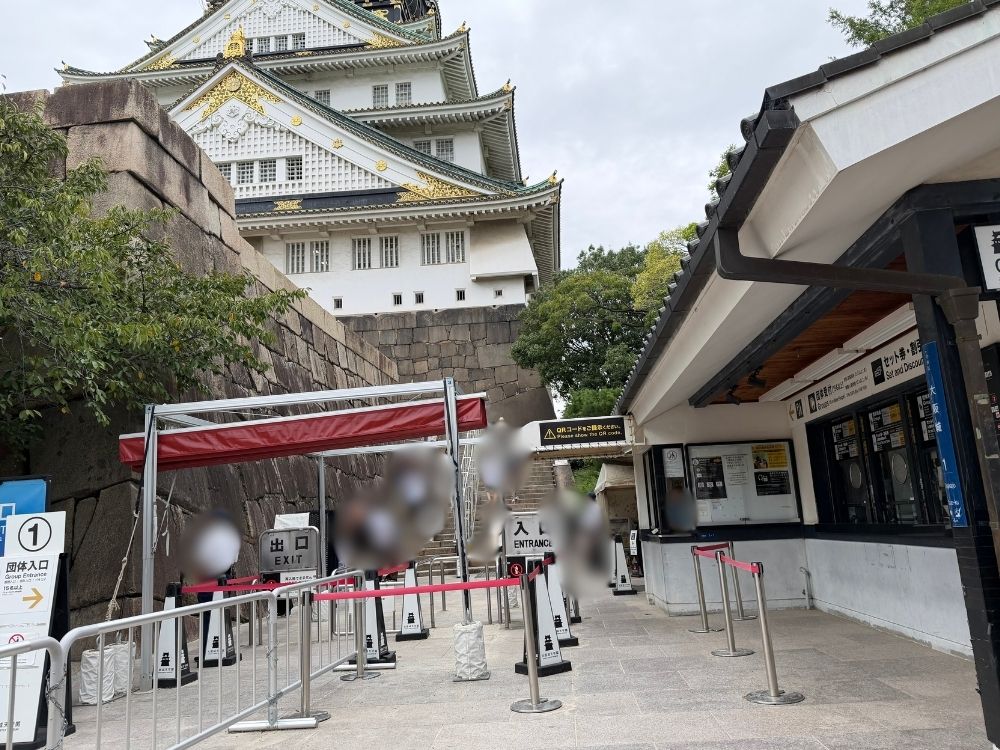
Past the ticket check, there are stairs like this.
If you’re using a wheelchair, there’s an elevator in a different spot that takes you up to the higher floors.
The elevator was a bit out of the way. I think staff will guide you there if you ask!
Inside the Keep
The keep has 8 floors.
Osaka Castle’s keep is one of the few “fully barrier-free” castle keeps in Japan. Plenty of people have covered Osaka Castle already, so this time I’ll focus on what it’s actually like inside from a family-and-accessibility angle.
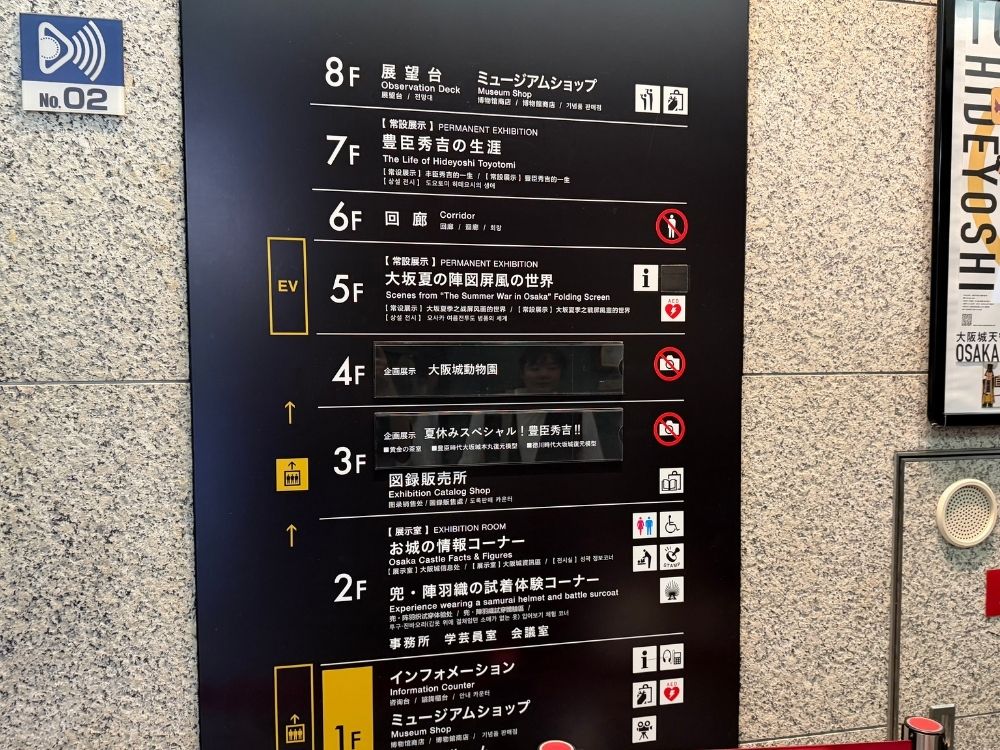
Here’s what the floor map looks like.
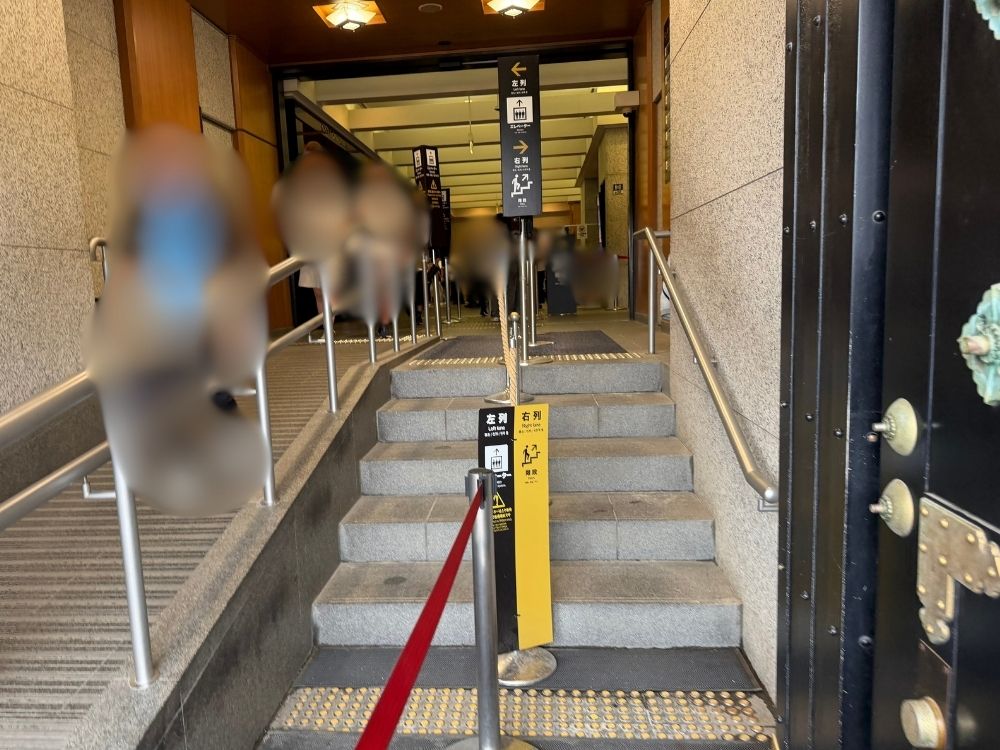
Once you’re inside, there are stairs and an elevator. The elevator side is set up to be easy to get through, accessibility-wise.
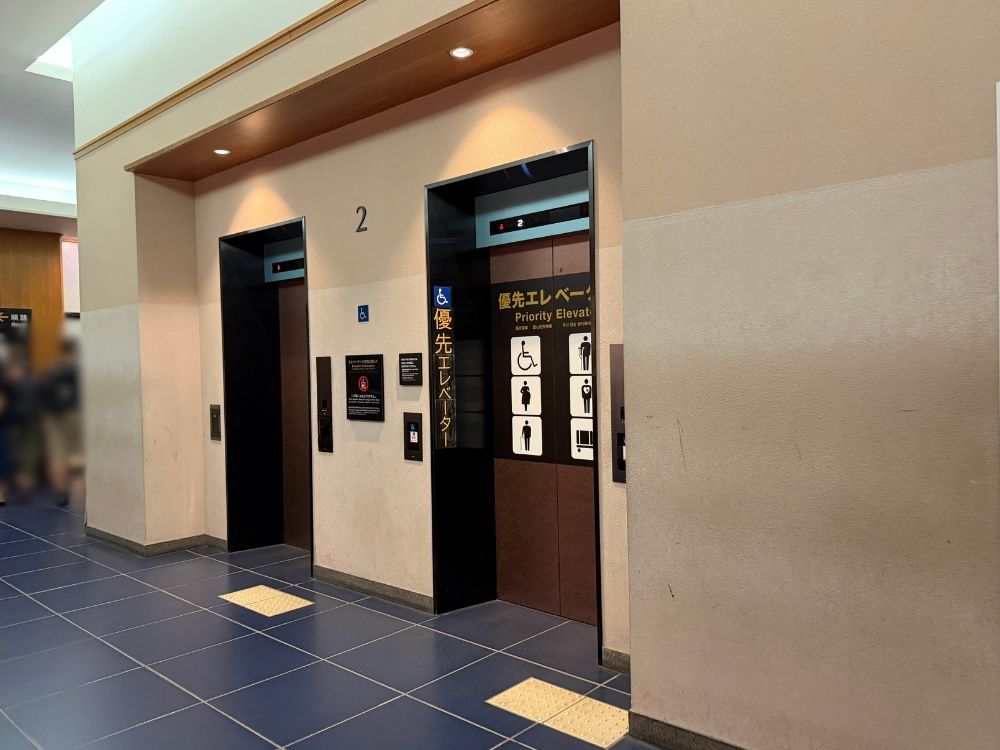
The elevator and stairs are in the middle of each floor, and you make your way around them as you look at the exhibits.
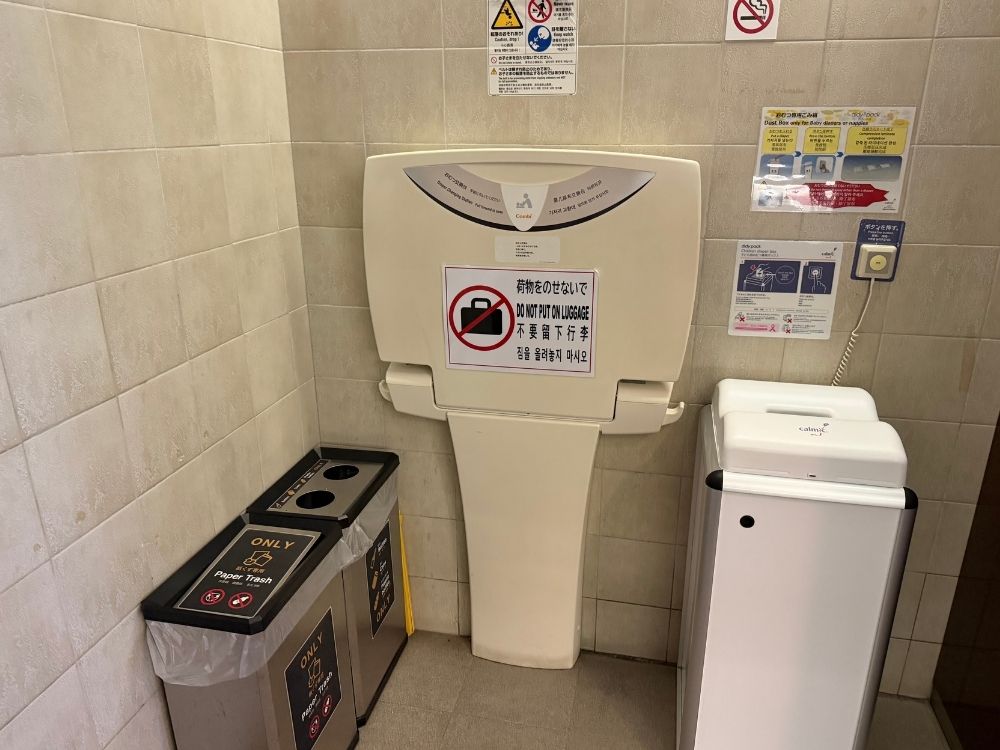
There were restrooms on the 2nd floor too.
There’s also an accessible restroom and a spot for changing diapers.
The 3rd and 4th floors are no-photo areas. You can see models of Toyotomi-era and Tokugawa-era Osaka Castle, along with exhibits on the castle’s history. The exhibit content is said to rotate every 2 months, so what you’ll see depends on when you visit.
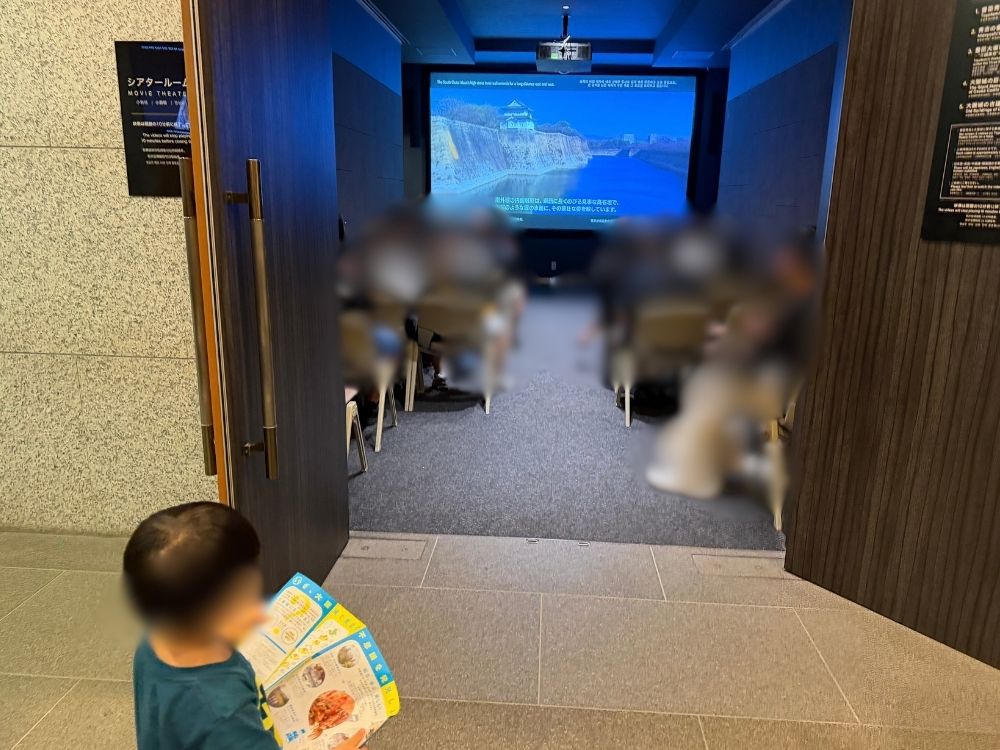
There’s a theater-like area,
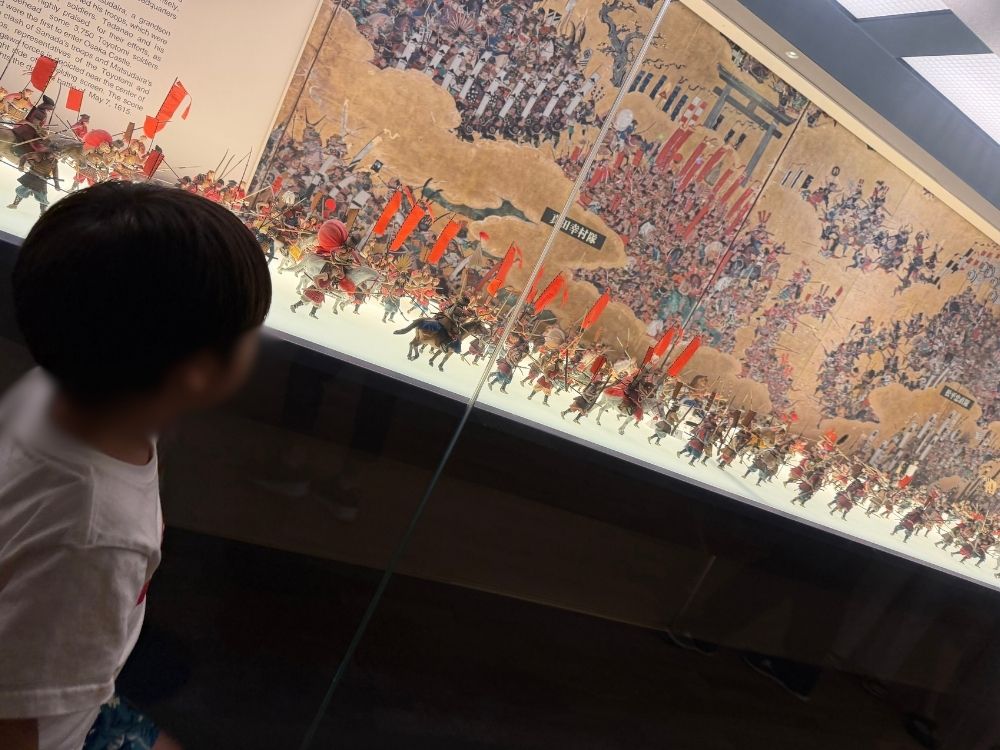
and areas with models recreating old paintings too.
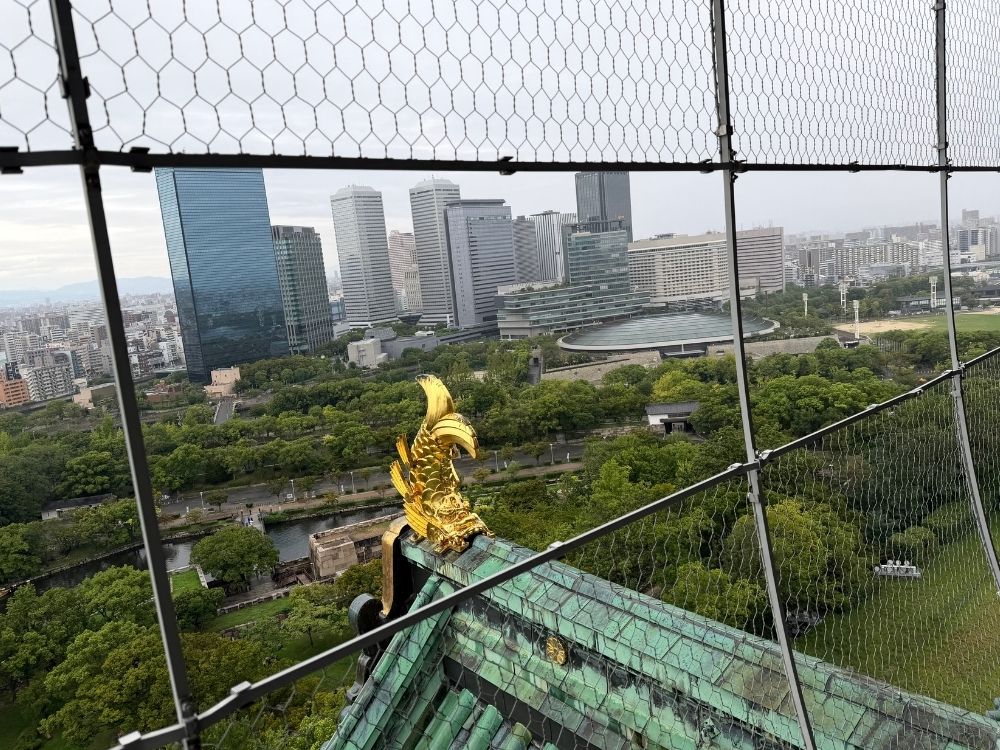
The 8th floor is the top floor.
You can walk all the way around the outside of the keep.
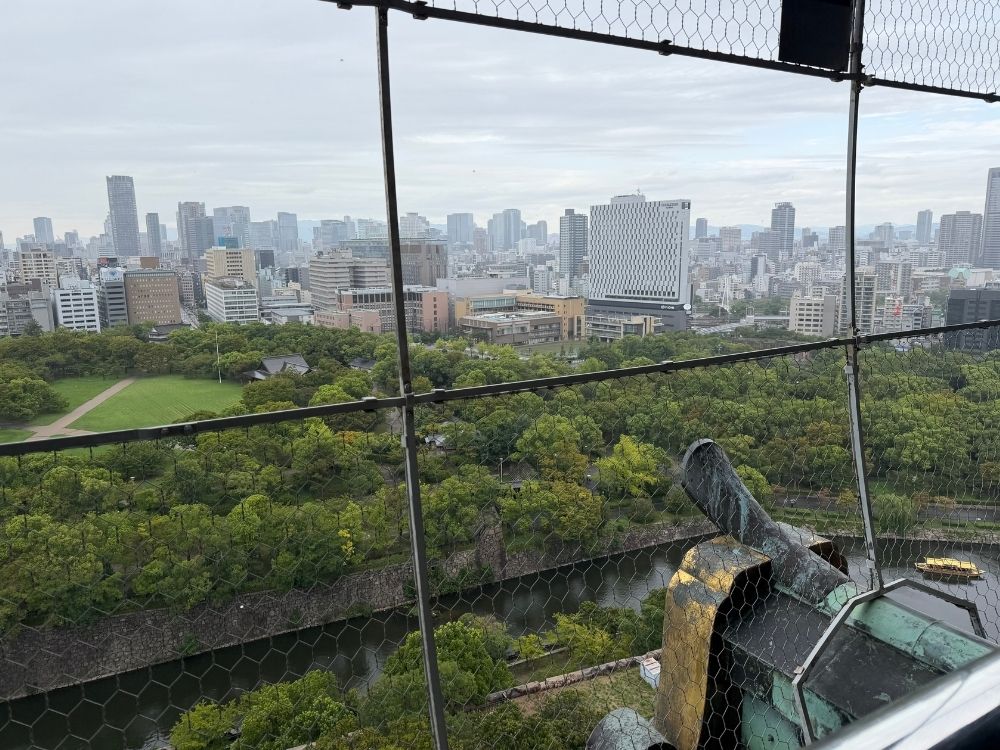
Of course, you can see far into the distance. There’s netting and railings, so it’s quite safe.
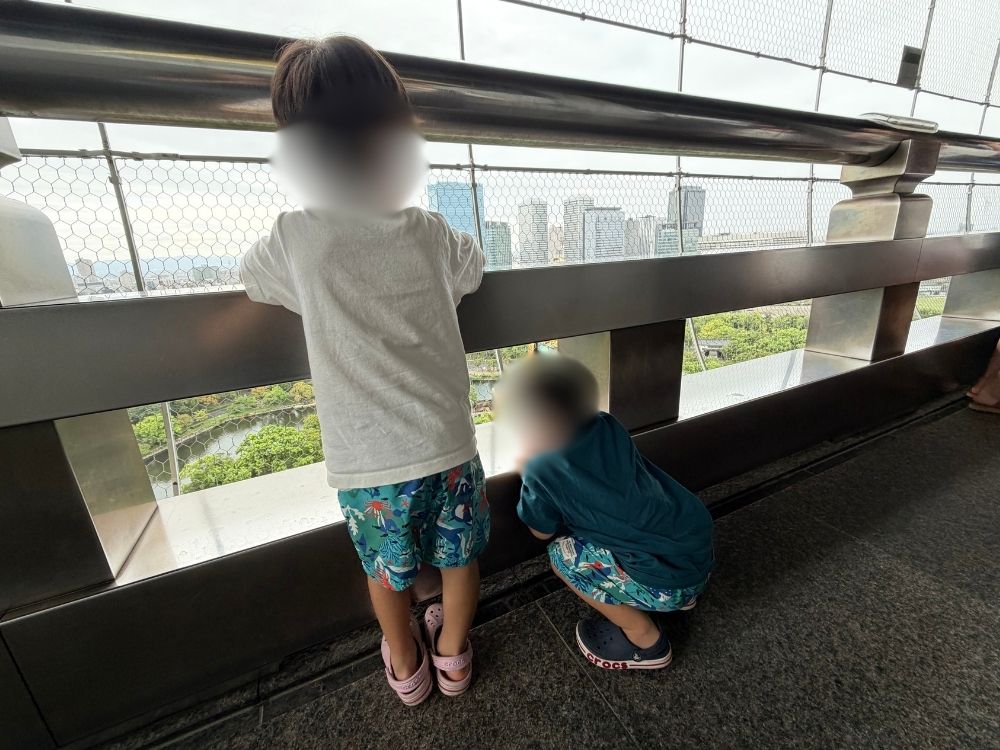
At a kid’s eye level, there are some big gaps between the railings like this, so that’s worth watching out for! (There’s fall-prevention netting beyond it, but still, be careful!)
Right Next Door! The Toyotomi Stone Wall Museum
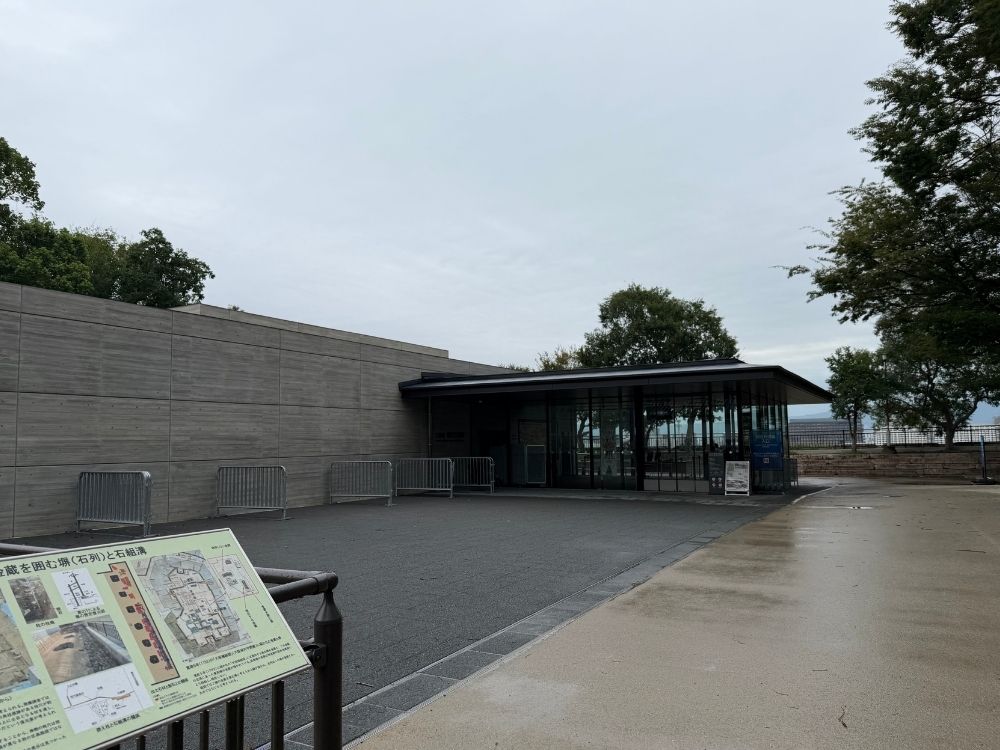
This brand-new facility opened in April 2025, just to the left as you exit the keep.
Your keep admission ticket gets you in – no extra charge.
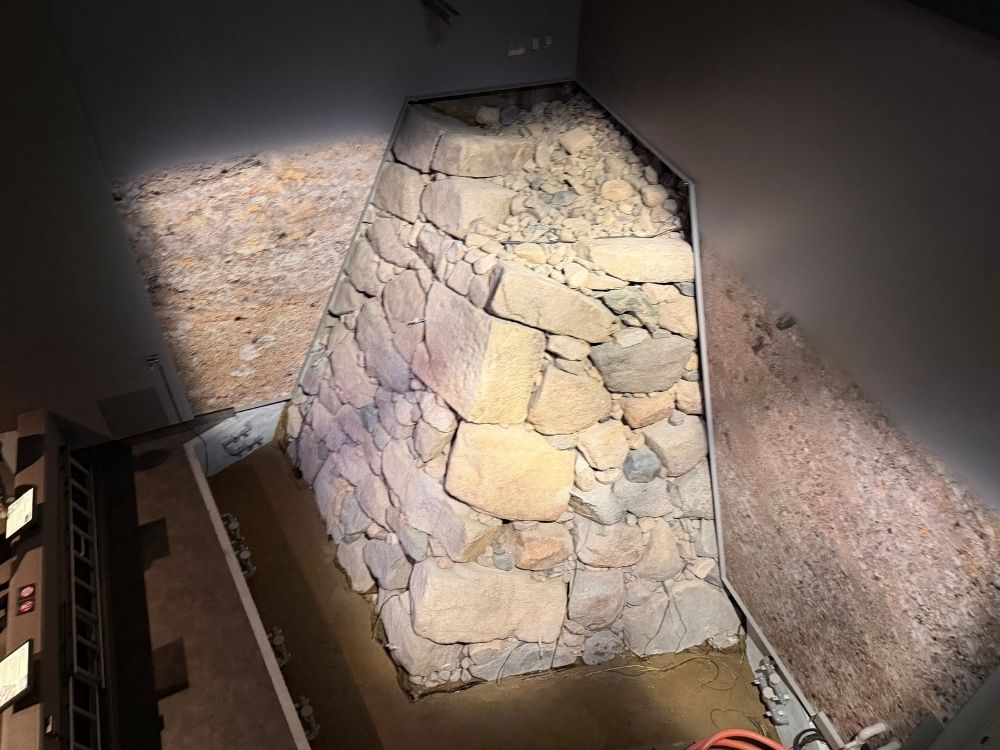
You can go underground to see stone walls that have survived from 400 years ago.

As a history nerd, I put together some notes on why there are stone walls underground. It got long, so feel free to skip this if you’re not into it!
The fact that there are stone walls buried underground is one of the more interesting quirks of this castle’s history.
The Osaka Castle built in the Toyotomi era burned down in the Summer Siege of Osaka (1615), the final battle that ended the Toyotomi clan. The stone walls buried underground here are from that period, and you can still see traces of discoloration from the fire. The same fire, fanned by strong winds, also burned down the surrounding castle town.
The town’s reconstruction began around 1615, right after the siege, and once that was underway, the Tokugawa shogunate began rebuilding Osaka Castle itself around 1620, mainly for military reasons. During that rebuild, nearly everything – including the old stone walls – was buried, and an entirely new set of stone walls (the ones you can see today) was built on top, along with the rest of the castle and its keep.
That raised a question for me, though: building stone walls isn’t cheap, so why not reuse the old ones? And burying literally everything seems like overkill. The explanation you often hear is “erasing the Toyotomi legacy and asserting Tokugawa authority” – and if you ask an AI, that’s probably the answer you’ll get first. But that explanation felt a bit thin to me, so I looked into it and thought it through myself.
- Reusing the old stones would actually have cost more
– The fire from the Summer Siege burned hot enough to turn many buildings to ash. Stones exposed to that kind of prolonged heat lose structural strength, so they avoided reusing them (this was an important stronghold facing western Japan, after all).
– The stone walls excavated underground here use “nozura-zumi,” a rough, unshaped stacking method typical of the Sengoku (Warring States) period. The Tokugawa rebuild instead used “kirikomihagi,” a precisely fitted, gapless stone-joining technique the Tokugawa favored – so the old stones simply didn’t match the new specifications. - They upgraded defenses to counter the latest threats
– In the Winter Siege of Osaka, the Tokugawa side is said to have used culverins and sakers – cannons purchased from England. Accuracy wasn’t great by today’s standards, but being surrounded and bombarded day and night made them extremely dangerous. Anticipating that cannons like these would become the norm going forward, it’s likely they widened the castle and moat to keep cannons farther away, while building things higher to make it easier to aim back from the castle side.
There were probably some symbolic and political reasons too, but I think the main goal was modernizing the old Osaka Castle to hold up against the latest military threats.
By the way, the keep rebuilt in 1626 later burned down again in 1665 after being struck by lightning. In medieval Europe too, tall castles were falling out of favor as cannons advanced, so between that shift and the shogunate’s financial troubles, it seems there just wasn’t enough demand to justify rebuilding it again (the keep itself never actually served a real defensive function anyway).
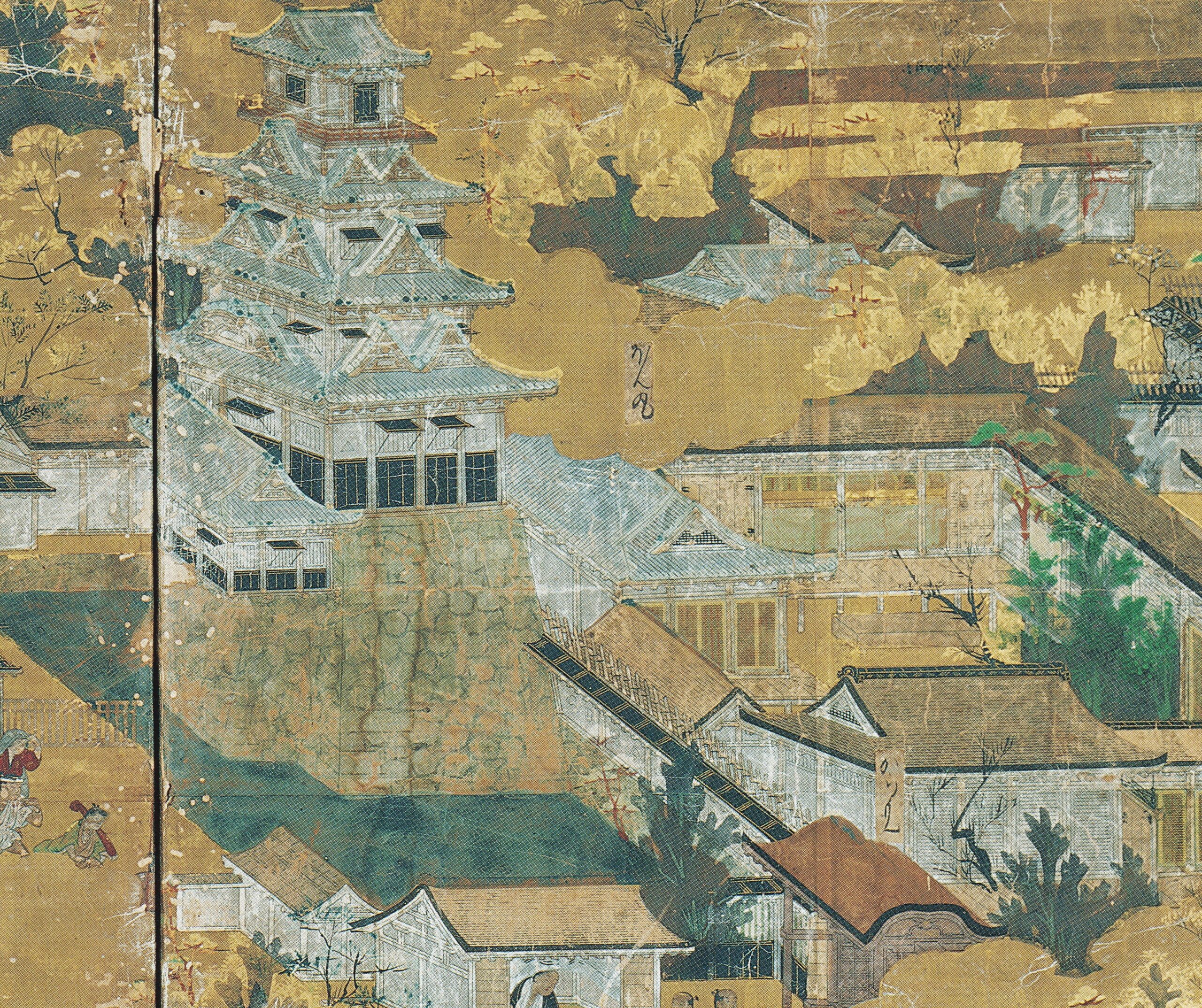
Architectural drawings survive from the Tokugawa era, but for the Toyotomi era, we only have folding-screen paintings (“byobu”) to go on, so its color and shape are largely educated guesses. The current keep was rebuilt in 1931, blending design elements from both eras.
Source ↓
How Much Time to Set Aside
It’s a compact space – just the basement and 1st floor – so plan on about 30 minutes. If you want to look closely at everything, you can stay a bit longer.
Accessibility
There’s an elevator here too.
If you ask a staff member, they’ll show you the way!
MIRAIZA OSAKA-JO
This is a complex right next to Osaka Castle with souvenir shops, restaurants, and cafes.
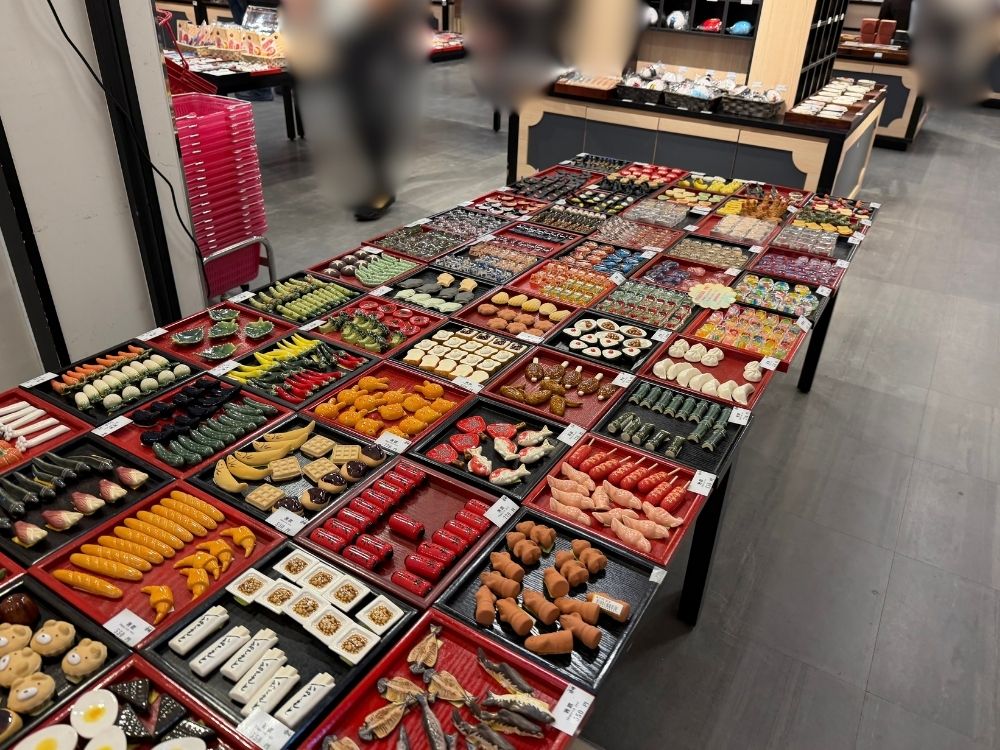
The souvenir shop carries plenty of souvenirs from all over Japan, not just Osaka.
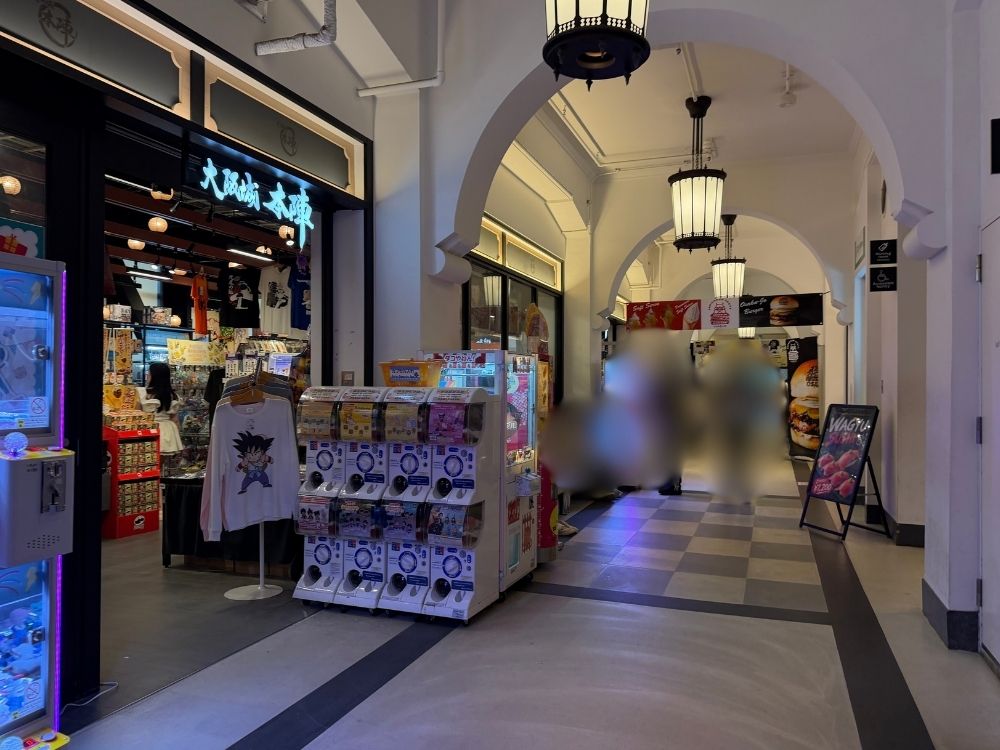
The 1st floor had the souvenir shop, a Tully’s Coffee cafe, and spots for casual food like burgers and takoyaki.
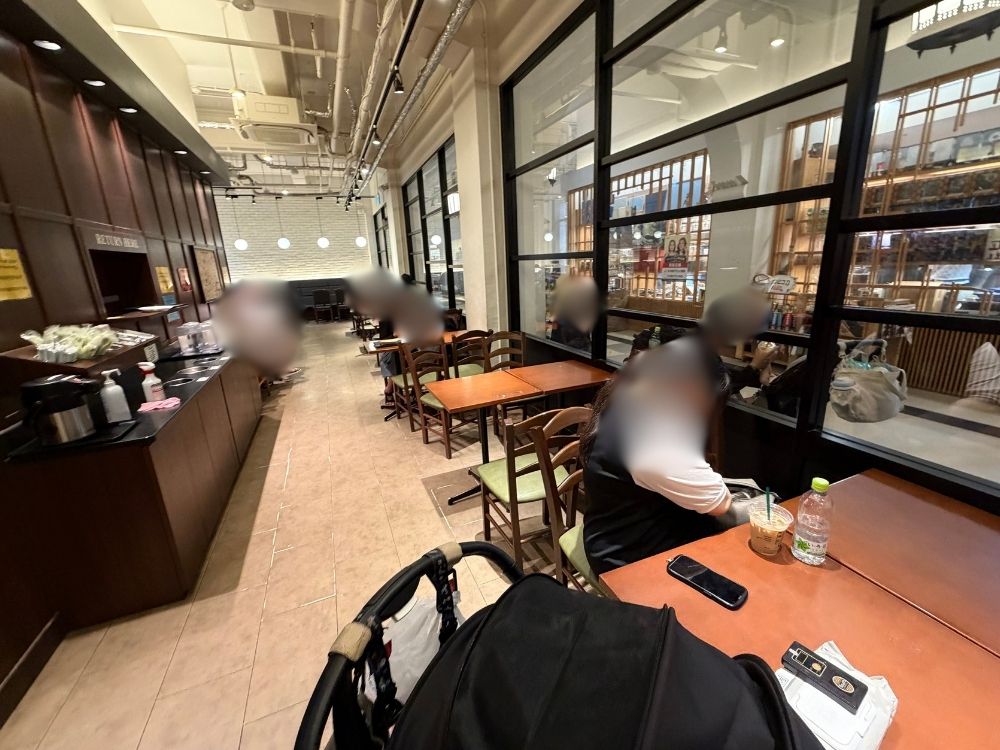
This time, our kids had fallen asleep and it was raining outside, so we took a break at Tully’s Coffee.
It was a weekday, but a lot of people seemed to be getting their orders to go, so there were plenty of open seats inside.
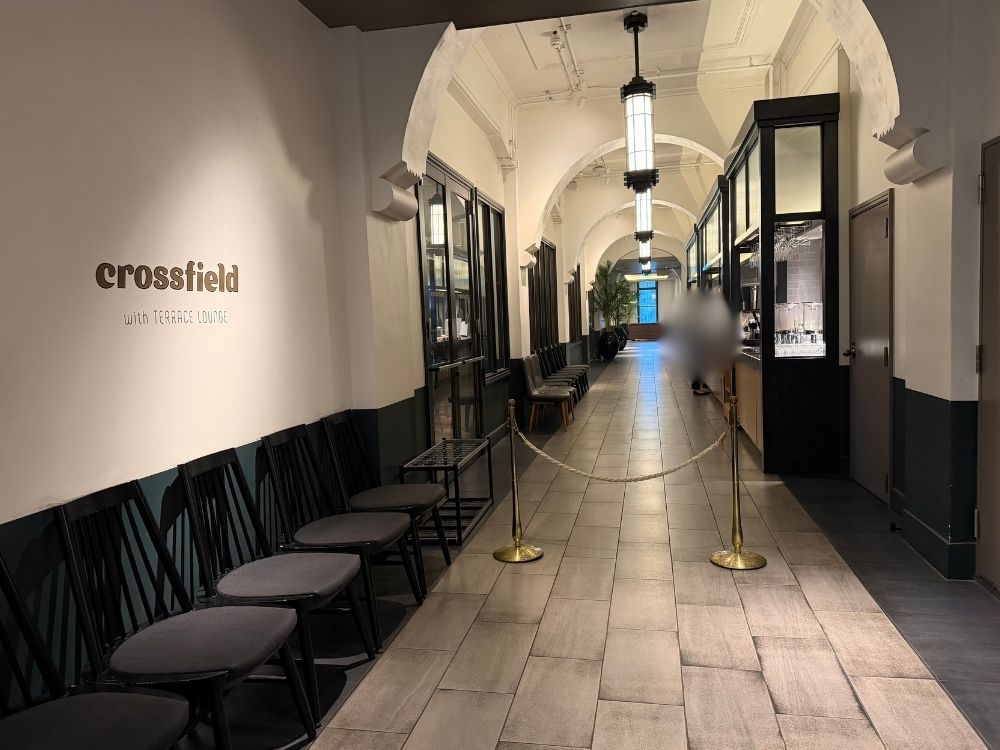
On the roof, there’s a modern Italian restaurant called “Bluebirds Rooftop Terrace,” where you can apparently dine with a view of the castle.
*We didn’t actually eat there ourselves – this is from our own research – but it’s only open seasonally from March to October, so keep that in mind depending on when you visit.
What to Expect from the Restaurants
1st floor ⇨ Casual, easygoing atmosphere, open until 5:30 PM.
2nd floor and up ⇨ These felt like a bit more of a dressed-up atmosphere. For restaurants on the 2nd floor and above, I’d recommend booking ahead to be safe!
How Much Time to Set Aside
Here’s a summary combining general info with our own experience for Osaka Castle and the surrounding area.
Typical time needed for an Osaka Castle visit
Just the inside of the keep: about 1-1.5 hours.
Taking your time with the whole park and gardens included: about 2-3+ hours
Our Timeline
12:00 PM ⇨ Arrived and walked around
1:00 PM ⇨ Lunch from our takeout
2:00 PM ⇨ Went into the keep to look around
3:30 PM ⇨ Visited the Toyotomi Stone Wall Museum
4:00 PM ⇨ Took a break at Tully’s in MIRAIZA OSAKA-JO
6:00 PM ⇨ Arrived back at Osaka Business Park Station
We spent about 1.5 hours inside the keep and just over 30 minutes at the Toyotomi Stone Wall Museum, but including the surrounding area and breaks, we ended up staying about 6 hours total.
You can definitely breeze through if you want to, but there are also plenty of spots to relax, including benches and restaurants.
Because of that, I got the sense that a lot of people end up staying longer than they expect.
You can only enter the keep itself until 6:00 PM, but the park is open 24 hours.
It’s also lit up at night, so it’s a place you can enjoy from morning until night!
What to Wear
Osaka Castle Park is big enough to have its own park train running through it, so comfortable, easy-to-move-in clothes are a good idea.
Seasonal Notes
There are benches here and there, plus the indoor spots mentioned above, but it’s a park, so you’ll mostly be outside.
In summer there’s not much shade, so come prepared for the heat, and in winter it gets cold quickly whenever you stop moving, so bundle up!
In Summary
Compared to other Japanese castles, Osaka Castle’s building itself is huge, and it made a real impression on us.
Not just the path to the castle, but the inside of the keep too has an elevator, making it a rare, fully barrier-free castle.
Of course, after being rebuilt multiple times, it’s not exactly how it looked originally, but you can enjoy it without worrying about physical strain, and getting to see the castle change with the seasons across such a big park felt really special.