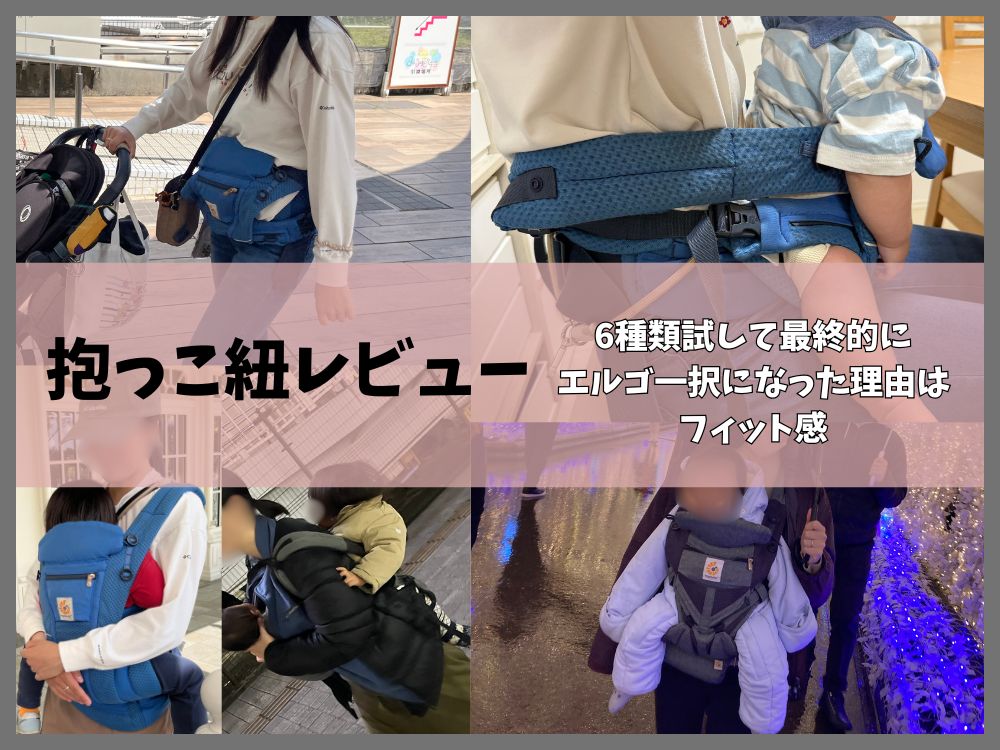
When my older son was born, I bought two baby carriers: Konny and Ergobaby.
My older son loved being carried so much that our Ergobaby got pretty worn out.
When my younger son was born, I wanted to try other options as a backup carrier, and ended up trying 6 different carriers in total.
After comparing and using all of them extensively, Ergobaby ended up winning by a landslide, and in this post I want to go into detail on why, along with the pros and cons of the other carriers.
- Honest impressions from using 6 different baby carriers
- Why Ergobaby wins, and tips for getting the most out of it
- What to know for getting long-term use out of a carrier

Since this is long, if you jump straight to the “Ergobaby Omni Classic” section from the table of contents, you’ll see everything great about Ergobaby!
- How Long Do You Actually Use a Baby Carrier?
- A Thorough Comparison of 6 Carriers — Why Ergobaby Won
- Konny
- CUSEBERRY
- Napnap Twin Carrier
- Ergobaby Compact Type
- Ergobaby Omni Classic
- Ergobaby Omni Breeze
- A Quick Aside: Downsides of Front-Buckle Carriers
- Why I Don’t Use a Hip Seat
- Points to Consider When Choosing a Baby Carrier
- Ergobaby Series Comparison Table
- In Summary
How Long Do You Actually Use a Baby Carrier?
How long you use a baby carrier really varies a lot from person to person.
With my older son, I had a pretty rough delivery (lol), so I wasn’t really able to get around confidently with a carrier until he was about 3 months old.
With my younger son, I was already using one by 10 days old.
My older son is now 4.5 and my younger son is 2.5, and we’re still using carriers regularly to this day.
Because you end up using it for so long, I honestly want you to pick something good that will last.
I think choosing one solid carrier from the start, rather than replacing several cheap ones over time, ends up being better both for your wallet and your body.
A Thorough Comparison of 6 Carriers — Why Ergobaby Won
To cut to the chase, for long-term use, I think Ergobaby is the only real choice.
The main reasons are how well it fits your body, how easy it is to put on and take off, and how versatile it is.
That said, every carrier I tried had its own pros and cons, so let me review each one.
Konny
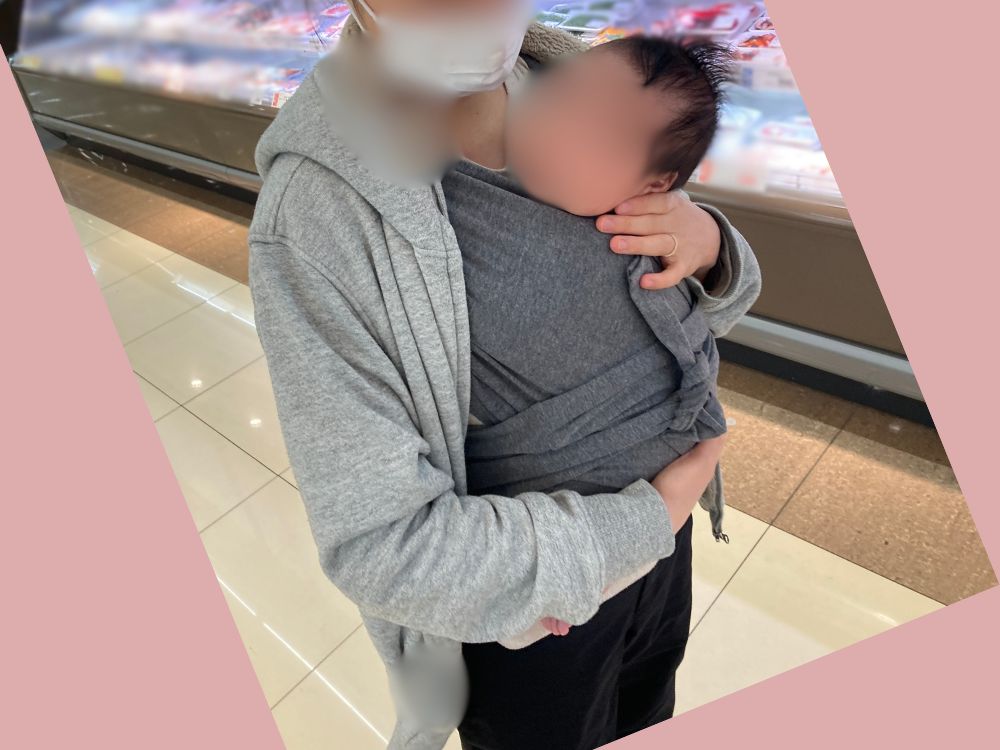
Konny is a carrier that originated in South Korea. It’s popular because it has no buckles, so it packs down like an item of clothing, and it hugs the body closely, which helps babies feel secure and sleep easily.
Some newer models now have adjustable sizing too, so couples can share the same carrier — the lineup has really expanded!
What Was Great
Unbeatable for newborns.
A tiny newborn gets completely swallowed up in an Ergobaby, but with Konny, they fit snugly.
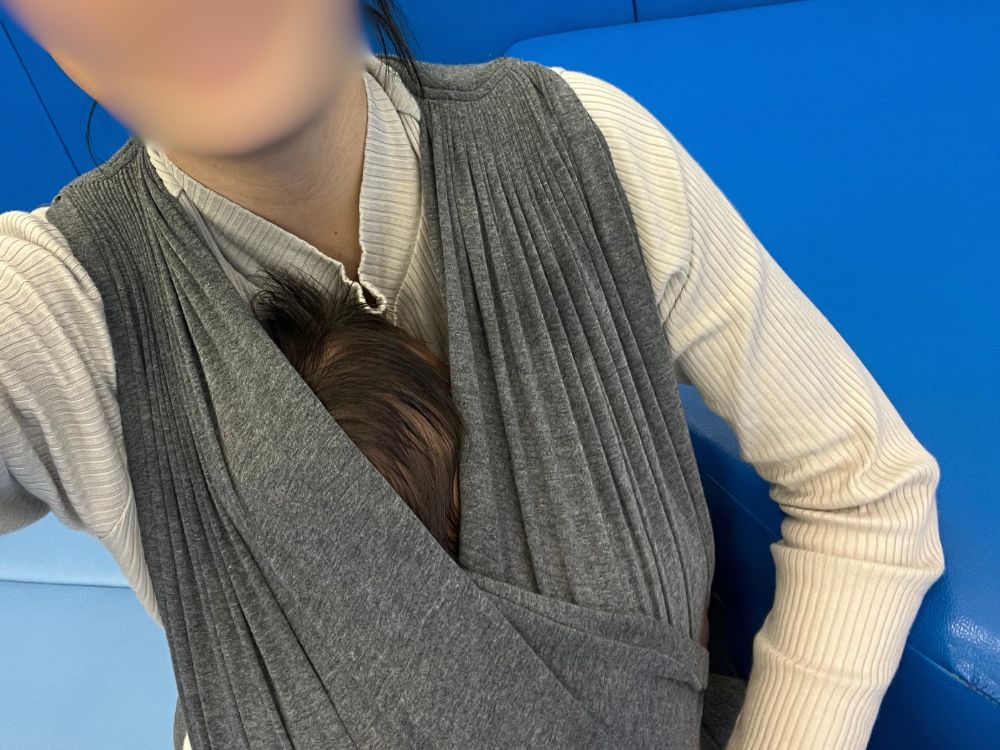
Their whole face tucks in and they’re held nice and snug.
They’re tucked in, but they can still breathe just fine, and since their head is supported too, there’s no risk of it flopping backward even before their neck is steady.
Downsides I Noticed
- No waist support → I think it’s better for your back to fully switch to Ergobaby once your baby is around 5kg.
- Your whole shoulder is locked in place, so it’s hard to raise your arms or reach forward — not great for doing chores.
This photo is from when my older son was 2 years 2 months and my younger son was 2 months. Since Konny’s waist doesn’t have a belt to get in the way, pairing it with Ergobaby lets you do front-carry and back-carry at the same time like this — it actually works surprisingly well!!

There’s a mesh version and a regular version, but babies sweat a lot and aren’t great at regulating their body temperature. Between the summer heat and warm indoor heating in winter, we’d recommend the mesh version year-round!

When my younger son was little, we’d pair this with the Ergobaby Classic like this so we could carry both kids at any moment (lol).
CUSEBERRY
CUSEBERRY (a Japanese baby carrier brand) is a carrier made entirely in Japan by a specialty baby-carrier maker, designed to fit Japanese parents’ body types.
It’s popular for how easily you can get your baby in and out through the front zipper, being able to keep the carrier on even while wearing a jacket, and how safe it feels for babywearing on your back.
By the way, when I asked an AI about typical Japanese body type characteristics, it said “petite and slim, a flatter build, and slightly shorter limbs.”
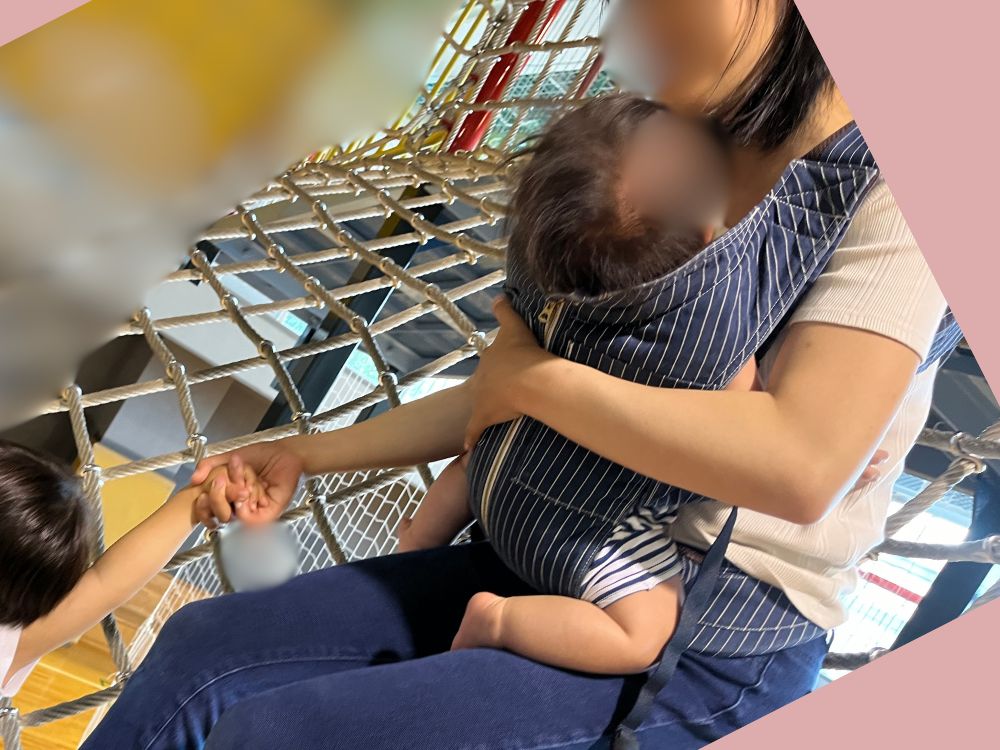
What Was Great
Your baby is tucked snugly into a pouch before you carry them, which gave me a real sense of security.
Since your baby is nestled into the pouch, there’s no worry about them slipping out, and babywearing on your back is easy too.
The shoulder padding is seriously substantial — true to the reviews, it’s thicker than Ergobaby’s.
What I Thought After Using It
Babywearing on your back is generally recommended from around 6 months, but my younger son wasn’t exactly a “generally” kind of baby (lol).
I heard from a friend who’d had her second child about half a year before me that she’d been carrying hers on her back since 3 months old, and since my younger son was a solidly built baby too, I decided to try it.
Since he was fully wrapped in, the transition to babywearing on my back felt reassuring.
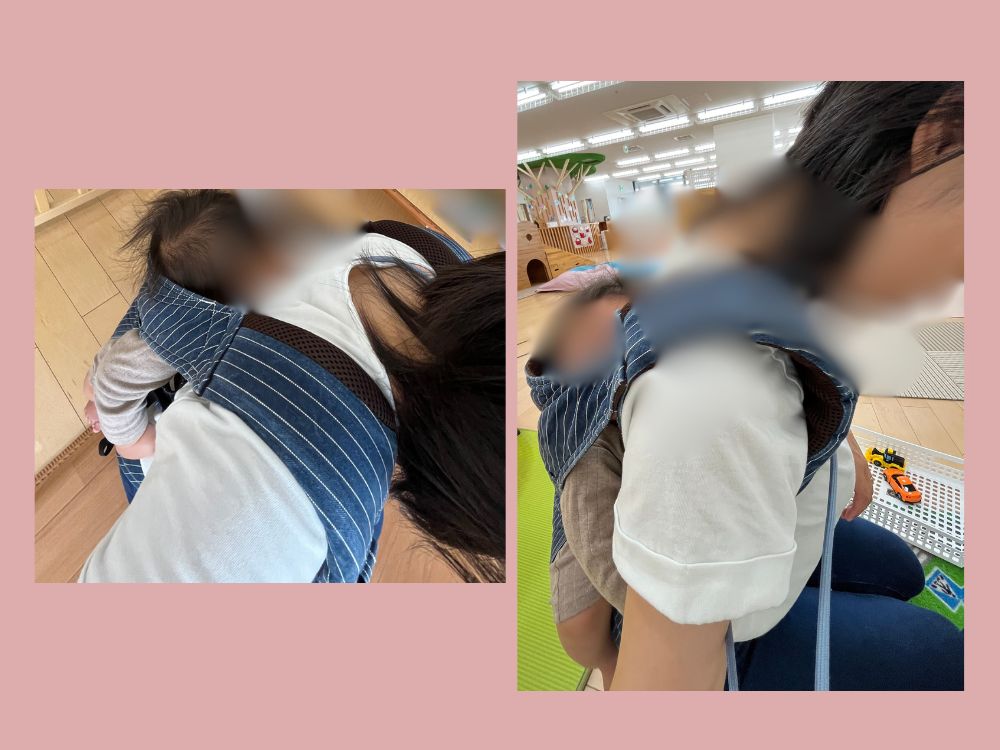
My shoulders were definitely comfortable, but I couldn’t adjust the straps on the pouch part where my baby sat, so I couldn’t get him fully snug against my body, and
he seemed cramped in there, so we stopped using it.
Side note: when babywearing on your back, you can feel through your own back whether they’re breathing! If you have someone around to help, they can check whether your baby looks uncomfortable, and if not, you can always check with your phone’s front camera!!
Downsides I Noticed
- My younger son was a pretty solidly built baby, and he seemed cramped. I bought mine secondhand, and I noticed a lot of near-unused listings from people who resold it for the same reason.
- It goes on easily enough when your baby cooperates, but when they’re crying and thrashing around, getting their legs into place, pulling everything snug, and zipping it up felt like a lot of effort.
- Since you can’t pull the fabric snug against yourself, I found that even when the carrier fit me fine, my baby would sway around inside it.
Napnap Twin Carrier
My older son loved being carried — right up until the night before my younger son was born, we were still out on walks with him in a carrier.
Even after my younger son arrived, I really wanted to be able to carry both of them at once, so even though they weren’t twins, I decided to get a twin carrier.
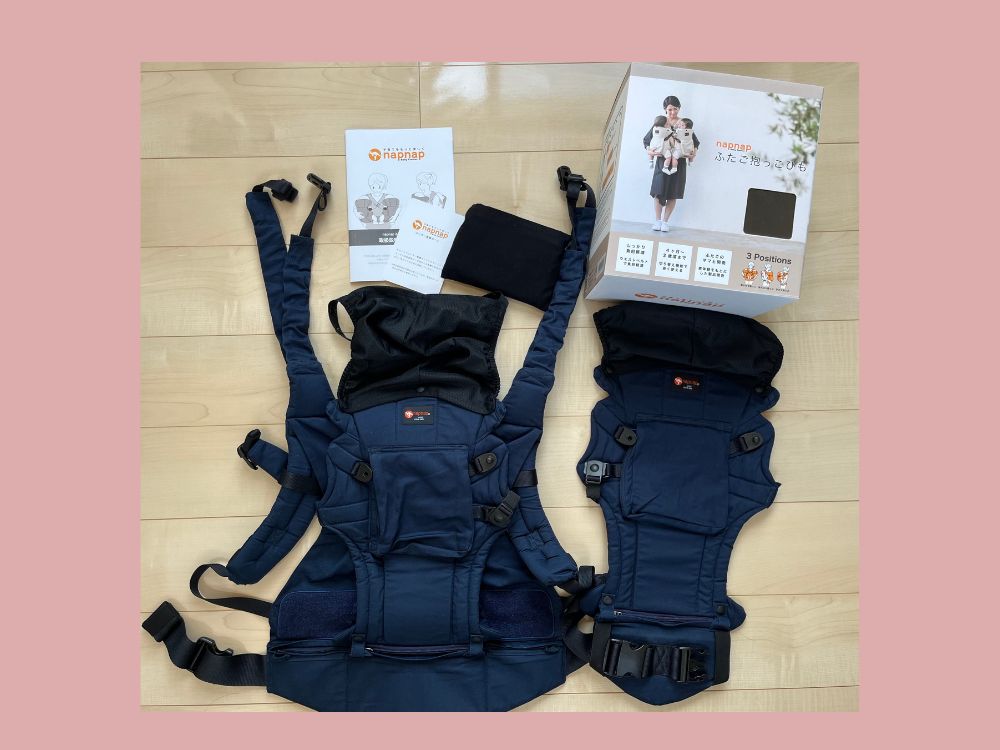
What Was Good
The advantage of this product is that it has 3 different ways to use it.
- Carrying both kids in front, one in each arm-like position
- Carrying both kids, one in front and one on your back
- Using just the front for a single child
What I Thought After Using It
To state the obvious, the carrier itself felt heavy (it weighs 1,270g).
Since I was used to Ergobaby, needing to fasten 2 buckles per child — sometimes 4 total — meant it took a while to get used to.
Even a small 2-year-old (around 10kg) felt like they’d outgrow the sizing, so I didn’t think it was suited for long-term use.
I bought mine new and ended up reselling it secondhand, and I noticed a lot of nearly-unused listings out there too. A lot of the reasons given were things like carrying two kids was too heavy or two Ergobabys were easier to use.
I also tried Napnap’s single-child carrier (a Japanese baby carrier brand) in store, but I found the buckles and strap adjustments harder to use than Ergobaby’s. I’m not sure if it was the stiffness or angle of the front panel fabric, but it also felt like it squeezed too tight, so I didn’t end up buying it.
Ergobaby Compact Type
After giving up on the twin carrier, I started looking for a backup carrier.
My younger son was already at a weight where Konny would hurt my hips and shoulders too much, so I was looking for something with a waist belt, the ability to carry facing forward, and something lightweight and compact.
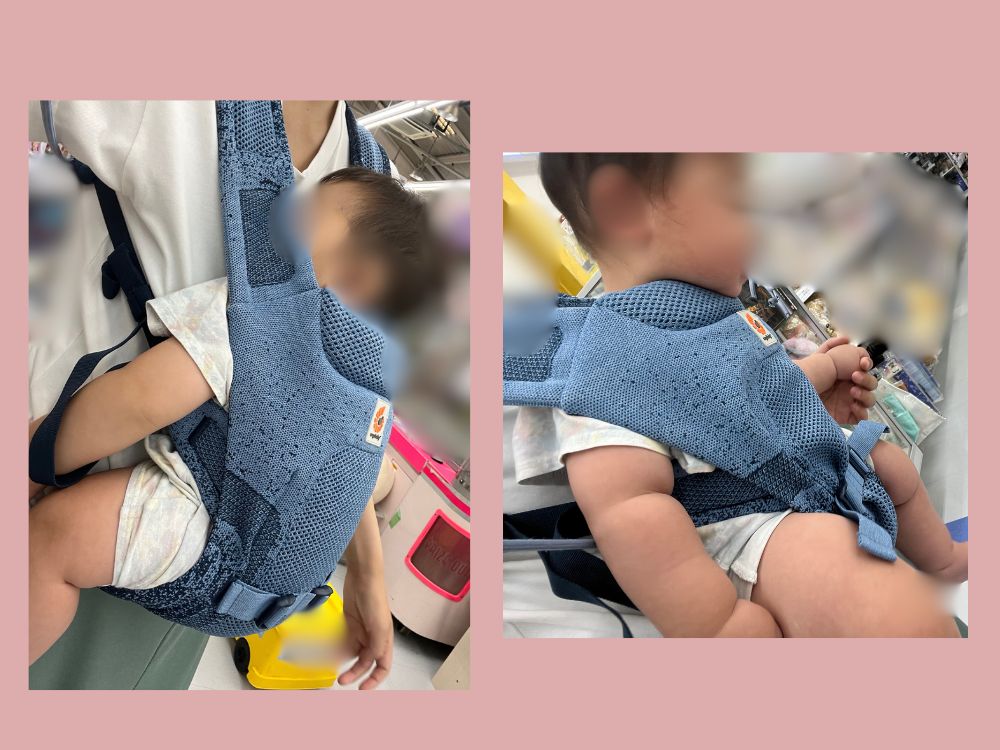
What I Thought After Using It / Downsides I Noticed
The shoulder and waist support were weak, so I ended up mostly using my main Ergobaby anyway (lol).
This particular product isn’t sold anymore, but one I seriously considered instead was the Ergobaby AWAY.
I didn’t choose it because it can’t do forward-facing carries, but if you rarely carry your baby and just want something to stash in the stroller, I think this one is a great option!

Ergobaby EBC AWAY
Ergobaby Omni Classic

What Was Great & What I Thought After Using It
The shoulder straps have solid padding, and the waist support is plenty sturdy.
Whether I use it at 160cm tall or my husband uses it at 173cm, you can freely adjust the length of the waist, shoulder, and back straps, so it flexibly fits even with a real height difference between us.
Ergobaby’s General Body-Size Range
Height range: approx. 150cm – 190cm (approx. 4’11” – 6’3″)
Waist: approx. 60cm – 132cm (approx. 24″ – 52″)
As you can see above, the adjustment range is wide, so one carrier can work for any gender or body type.
Compared to the other carriers, the straps glide smoothly, so it’s really easy to adjust.
Also, forward-facing carries are easy to do, which is another big plus!
There are so many ways to use the Ergobaby Omni series and so many benefits that I decided to put together a separate article on it.
Downsides I Noticed
If there’s a downside, it’s that small babies feel like they get swallowed up in it.
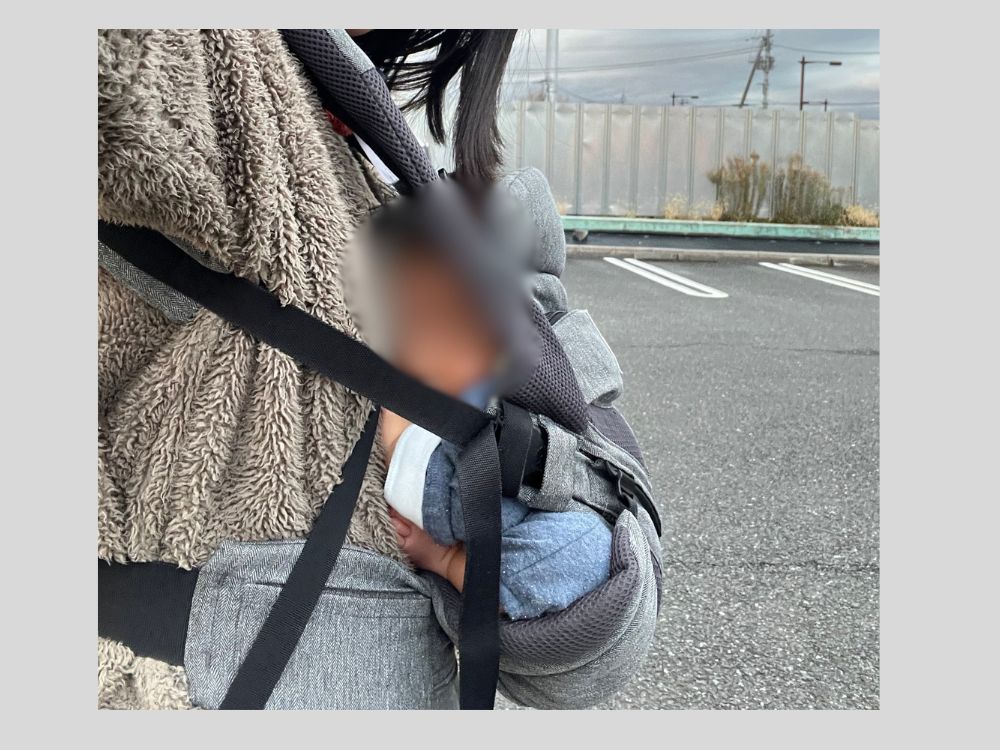
It’s usable from newborn age, but when you actually put a newborn in, it looks like this and makes you nervous, thinking “are they breathing okay?” or “are their legs okay?” (lol)
Weight gain from newborn to 1 month old is huge, and both of my sons gained more than 1kg (about 2.2 lbs) in that first month alone. There’s a lot of individual variation, but even as my older son got noticeably heftier, I still felt nervous putting him in the carrier.
I think you can use it with peace of mind if you stick with Konny until they’re in the upper 4kg range, then switch to Ergobaby once their body feels a bit sturdier.

Ergobaby OMNI Classic
Ergobaby Omni Breeze
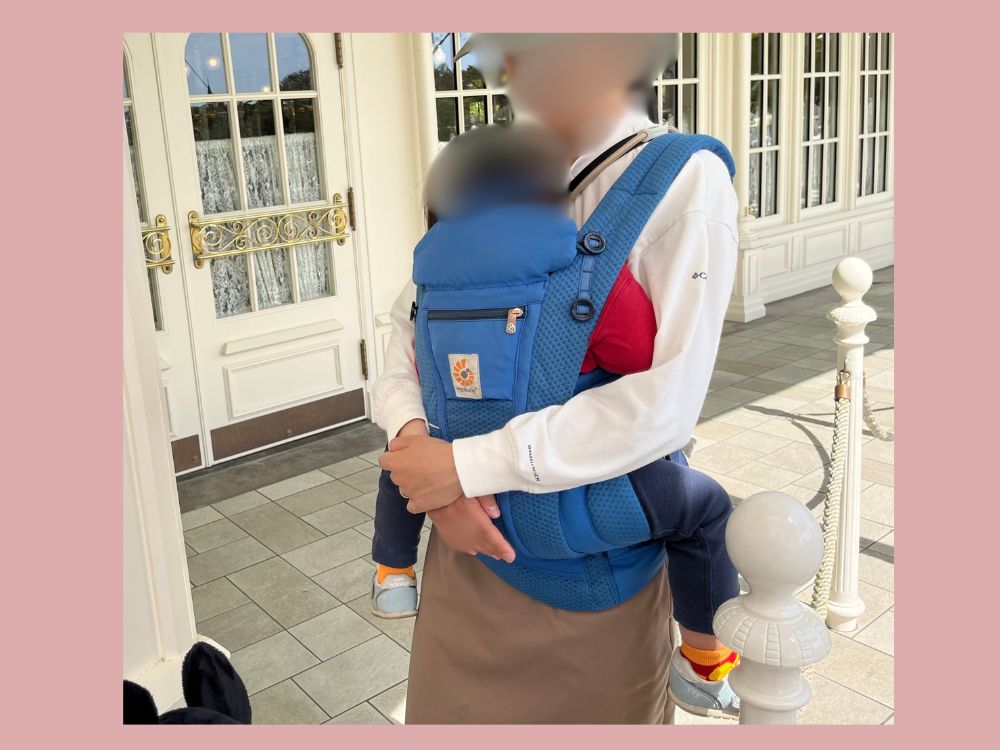
What Was Great & What I Thought After Using It
I stepped on the back buckle of my Omni Classic and cracked it, so I replaced it with this one. Between Ergobaby’s 4-way carriers, I don’t think there’s a huge difference once you’re actually using them.

Even now that my older son is 4, I still use this carrier for things like naps while we’re out and about.

When they’re napping, sitting down in a chair and loosening the straps so they rest on your lap makes it much more comfortable.
It stays stable even with both hands free, so you can go ahead and eat a meal while they nap!
It’s really durable, and since it’s adjustable, it flexibly fits not just different adult body types but your kid’s changing size too — that’s the biggest reason it lasts you so long.
Downsides I Noticed
When using it for a forward-facing carry, this part can press in a bit and sometimes leave a mark on their legs, but that’s about it.

Ergobaby OMNI Breeze
Any of the types are easy to use, so pick whichever design or color you like — but definitely go with the mesh version!
A Quick Aside: Downsides of Front-Buckle Carriers
The typical advantages of front-buckle carriers are being able to put your baby down without triggering the “back switch,” working fine even if you’re not very flexible, being able to put the carrier on and take it off without removing your jacket, and making babywearing on your back easier.
The Buckles Are a Hassle to Fasten
What I mean is that you have to fasten 4 buckles every time you carry your baby.
When you’re choosing your first carrier, especially, you’re probably picturing a newborn while you shop.
But kids grow bigger, and stronger, and more powerful.
You’ll end up in situations where your kid is screaming “I don’t want to be carried!!” and thrashing around while you’re trying to get them in. In that situation, Ergobaby just needs one buckle in the back, while a front-buckle carrier means fastening 4 buckles while they’re thrashing.
If you really want a front-buckle carrier, I’d recommend one with magnetic buckles. I also tried Aprica and BabyBjörn in store, and while I think you’d get used to them, personally I found them harder to operate.
Harder to Fit In As Your Kid Grows
There’s no telling how fast your kid will grow. There’s just too much individual variation in when they’ll hit a given weight.
While researching front-buckle and front-zip carriers, I kept seeing secondhand listings saying things like “reselling because my kid hates it” or “reselling because my kid got too big.”
In fact, the CUSEBERRY carrier felt cramped on both of my sons. Front-buckle carriers do let you adjust to some degree, but when we tried one in store on my 2-year-old — who still fits comfortably in his Ergobaby — it looked pretty tight.
Since I wanted something I could keep using even as my kids got bigger, this was one reason I didn’t choose it.
There’s Fabric Between You and Your Baby
With a front-buckle carrier, there’s an extra layer of fabric between you and your baby. How closely you can pull your baby against your own body is key to reducing strain on your back and shoulders, and this extra layer makes that noticeably harder.
To get a good fit for both yourself and your baby, you have to adjust your own straps first, then go back and adjust all 4 buckle straps. I found this to be a real hassle.
Also, not many people breastfeed while babywearing, but I imagine the extra fabric in front would make that harder too — another downside.
And honestly, it’s just hot. Especially in summer, it’s like wearing a thick vest at all times even when you’re not carrying anyone — with Ergobaby, it’s more like wearing a light stomach band. Using CUSEBERRY, I really felt the heat.
Why I Don’t Use a Hip Seat
I actually did try a hip seat once.
It arrived, I opened it up, and then I never used it even once — because it was “bulky, put a lot of strain on my hips, and required both hands free.“
I decided to just get really good at using a regular carrier quickly instead (lol).
Points to Consider When Choosing a Baby Carrier
I’ve covered a lot here, but since you’ll use a carrier for a long time, you should pick one you genuinely like. I love Ergobaby, so I’ve talked up its strengths a lot, but even if new types of carriers come out in the future, here are the key points I think are worth keeping in mind when choosing one.
- Choose something breathable
- Pick one that can do face-to-face, forward-facing, and back carries!
- Something adjustable
- Buckles and strap adjustments that operate smoothly
- Something simple (you won’t use extra features like pockets much anyway)
- Pick a type where pulling the side straps backward tightens them! → With the opposite design, it’s harder to loosen when taking your baby out.
When your kid is around 1 and still small, using a carrier works fine, but once they start wanting to walk more, you’ll end up going back and forth between carrying them and letting them walk over and over. At that point, a simpler set of features becomes much more practical.
Ergobaby Series Comparison Table
There are several types within the Ergobaby lineup. Here’s a comparison of the features to help you decide!
| Comparison | Omni Deluxe | Omni Breeze | Omni Classic |
|---|---|---|---|
| Newborn-ready | ✅ | ✅ | ✅ |
| Forward-facing carry | ✅ | ✅ | ✅ |
| Back carry | ✅ | ✅ | ✅ |
| Breathability | ◎◎ | ◎◎ | △ (warm in summer) |
| Shoulder padding | Thin, slim | Thin, slim | Thick, substantial |
| Number of pockets | 6 | 3 | 2 |
| Price range | approx. 36,850 yen (approx. $245.67)+ | approx. 33,990 yen (approx. $226.60)+ | approx. 29,700 yen (approx. $198.00)+ |
| Best for | Prioritizing features & design | Balanced, most popular (discontinued by the official brand) | Winter babies, sensitive skin |
| Product Links |
The Omni Classic isn’t mesh.
I’d say pick whichever design or color you like between the Omni Deluxe and Omni Breeze!
In Summary
After trying 6 different carriers, I ended up back with Ergobaby. What felt right when my older son was born ended up needing improvements as he grew, and having a second child brought a whole new set of realizations too.
Kids grow heavier and taller and keep changing constantly, so it’s important to choose a carrier that can adapt right along with them.
Ergobaby comes in a lot of color variations too, so find a design that matches your style! It’ll end up being your best partner.
Thanks so much for reading all the way to the end!